



Impromptu No. 1 analysis with Stephen Kovacevich
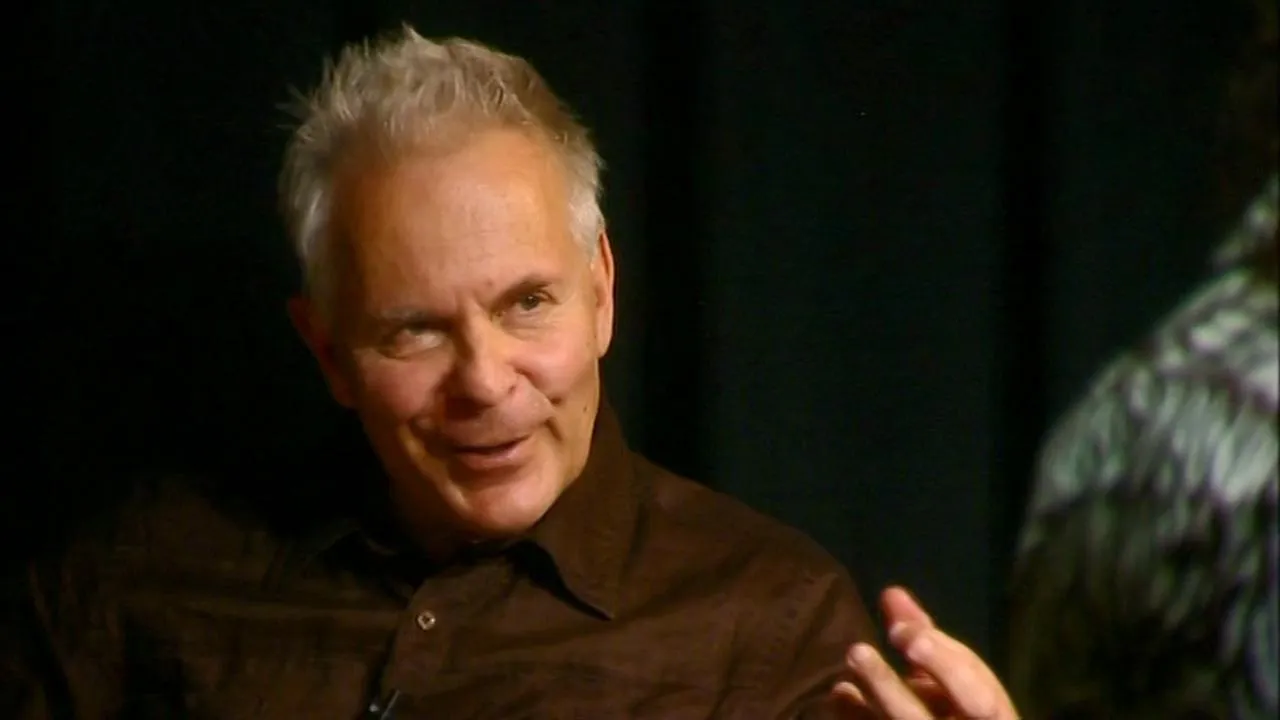
In this online piano lesson, Stephen Kovacevich works with a student on Schubert's Impromptu Nos 1, Op 90, on the piano.
What's in the course
3 lessons (0h 41m) · 1 free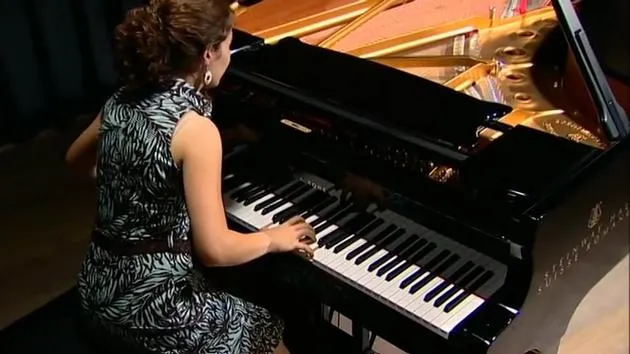
Lesson transcript
Music Lesson
Instructor: You. The way you play this piece goes right to the center of the problem of how we choose tempo. Now, I have the impression that you're a musician who very much loves the small details, which you show. And I can hear that you. These details and harmonic changes and certain lyrical things, and you show them, but you don't look at how slow you're playing.
- Is it too slow? Yes.
Now, the problem is, of course, we're all, especially now, politically correct. It says allegro molto moderato. And of course, above all, you must. Schubert is always slow and molto moderato. You know, we're intimidated. But if you thought it was too slow, why did you play too slow then?
Student: That's interesting. I think I wasn't really concentrated.
A Great Pianist's Experience
I won't mention the pianist, a great, great, great pianist, who played the Schubert B flat in London. It was so... I mean, a great pianist. No disputing this. But it was so slow. He took the repeat in the first movement, and you could hear the audience go, "Now, I want you to play."
- Warning: I don't want you to fall, if possible, into ala breve. But I don't want to hear this.
Try it again. I don't expect you to be comfortable, but I want to see if we can. Okay? Don't get shtook. Yes.
Adjusting the Tempo
Tempo: It still can be perhaps a little quicker, but let's work at this tempo now. But you haven't decided whether you want to do really staccato or you want to use your foot, and you do both. A few chords staccato and a few chords without, it's disturbing.
By the way, all these people who play, it's hard to be evaluated and talked about in front of everybody, your friends, your enemies, and God knows who else. But it has to be okay.
Now try it just a little quicker, even if you don't like it.
Student: You used your foot at the end, didn't you?
Instructor: That's beautiful. Then use your foot at the beginning. You cannot change.
The Importance of Expression
Now, you did two things at once. You showed the, I could hear that you responded to the chromatic thing, but I heard you getting crescendo too soon.
What happens if you do the ear? We hear crescendo. We don't actually pay attention to the chromaticism so much. You have to make sure you show what's important, so poco, poco, poco Cristiano. So we hear the chromatic thing from before.
Instructor: Yes. Now let us hear the harmony. Good. Yes.
- Forzato Note: It's not a warm sound there. I don't think he wants that.
From the fortissimo morm: exactly. It must peak a bit.
Instructor: You know what? You could try. If you want to be more... If you play everything loud, it's going to sound like Brahms. So make the voice at the top of your right hand that the C.
- Action: Yes, make that sound. Go on. That's it.
Emotional Connection to Music
How do you feel when you're playing this passage? Do you feel comfortable? Uncomfortable?
You play it very classically. Something he writes, grace notes, which means it cannot be measured. I don't want to hear something that cannot be written down. That's why he writes it as a grace note.
If he wanted something mathematical, just something, it's a poco rubato from here. Fine. Now libra.
Accompaniment Technique
Okay. Now I'd like to ask you in your accompaniment... Pocah. Just a tiny bit, the little counterpoint, you know, from when it's in the bottom of the left hand and when it. Here at the top.
Instructor: Poco, poco, poco. Don't give us a lesson about it, but just show it.
Okay, try it again. It's coming.
Performing in Sixteenths
Now, I want to ask you to jump. How do you play the passage in sixteenths? Can you play, play somewhere in here.
Student: B for you.
Instructor: See, that for me proves it's too slow. You know, there's a side of Schubert, especially when he has these repeated... like the Erlkonig.
I'm not saying it should be so fast like that, but I think you don't show how disturbed the music is sometimes when you...
This passage, it's a little bit like the last movement of the B flat sonata. A little bit. I mean, even if you're miserable now and maybe we'll all be miserable. But I'd like you to try.
We're trying to find a tempo that fits everything.
Trying New Approaches
Try. In a completely different spirit from the way you were prepared today. Try. And somewhere in it. Don't be frightened of it. Let's see. It might be horrible, but try it. Keep it. Go on.
Instructor: This seems to me wonderful now, even if it's a shock for you.
I did a program for the BBC a year or two ago. One of the greatest, well, for me, the greatest pianist that I know is Rachmaninoff.
He recorded one of the Impromptus in the middle session. It's incredibly fast and it's heartbreaking. He goes absolutely wild.
Instructor: I told the radio public, I said, I'm not going to play someone who's supposed to play this music as a great artist, a person who died many, many years ago, and someone who isn't supposed to. And I'm going to play both of them.
The response I got from letters and everything, they all preferred Rachmaninoff rather than the... And you see, I think that we're too... We're on our knees sometimes too much with this great music.
Revisiting Tempo
Now, even if you don't like it, let's say that this tempo is okay. Now when you be, I want to go back to the beginning. I don't expect you to play this tempo, but I'd like you to play a tempo which this can connect to.
In other words, of course, it says molto allegro, molto moderato. If this was a straight allegro, for instance, let's say the Emperor Concerto Beethoven, you know Schubert took his allegro from what he knew.
That would give that person a ticket for slow driving juti.
So in other words, it really could be that allegro molt, that maybe he, you know, the Beethoven movement is D. And he doesn't want bimba dee bom bom. So maybe, but he wants allegro. He doesn't want Andante.
Instructor: Just try the beginning. I'm not, not the tempo that we arrived at, but something that isn't. That is related to it.
Seeking Emotional Depth
Now, go to the passage in triplets from Dimoso. In the triplets, pocatino. Okay. That I find heartbreaking. I find that beautiful. And the other I find, I don't know what I find it. It's correct, but think about it.
Okay, let's go from the wit when it's in 16s. Yes.
Instructor: You see, there's an anguish to the music which is, you're too classical.
And the princess. You have to shape it. Shape.
Encouragement for Improvement
Try from. From here. Or you Papa. Puppy, puppy. Now agitated.
Instructor: Excellent, excellent. Play it again. And this be bomb, show the... You know, the.
And if it moves a little bit and comes back, don't be.
Student: Okay, good, good. Beautiful. Go on now.
Conclusion of the Lesson
Okay, now that's normal playing. But he asked for something special here. Pianissimo. And I'm going to sing. I'm going to sing it two ways, the way you did it, even if it's not quite right.
You know. But you did take time. It's pianissimo. I think he wants it, actually.
You know, it's not so Belcanto always. Schubert sometimes has this distance from emotion.
Instructor: Try from.
And this was all good now. And when you come here, it's pianissimo. It's rare that he writes pianissimo.
And then really try it. Try anywhere that's good for you now.
Reflection on Performance
Instructor: How did that feel?
Student: Yeah. And I think it works. I would recommend to think of... This is a surprise. This high, surprise soprano.
Don't show us that it's... you know.
Instructor: Okay, now how I forget...
3 lessons
0h 41m of structured video lessons
Advanced video features
Slow down, loop a passage, follow along
Mobile, tablet & desktop
Practise wherever you are
100% satisfaction guarantee
30-day money-back guarantee
Meet your guru
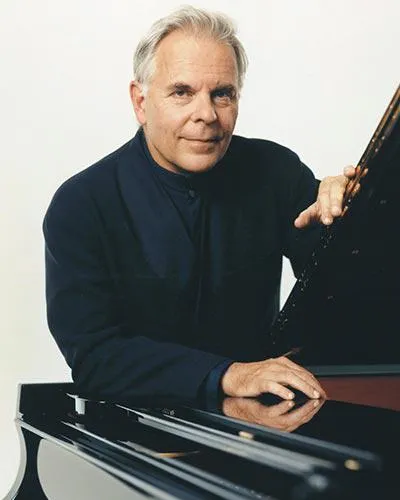
Meet your guru
Stephen Kovacevich is one of the most searching interpreters at the keyboard, winning unsurpassed admiration for his playing of Beethoven, Brahms, Mozart and Schubert. Alongside his long and distinguished career as a soloist he has conducted for many years, earning warm praise for his work with orchestras throughout the world in repertoire from the 18th and 19th centuries.
Born in Los Angeles, he made his concert debut as a pianist at the age of 11. At 18 he moved to England to study with Dame Myra Hess. His international reputation has been built both on his concert appearances, renowned for their thoughtfulness and re-creative intensity, and on the highly acclaimed recordings he has made throughout his career.
Kovacevich has enjoyed two long-term relationships with recording companies, first Philips and then EMI. His concerto recordings for Philips, including Beethoven, Schumann and Bartok, have long been staples of the catalogue. As an exclusive EMI artist, he recorded both Brahms Piano Concertos with the London Philharmonic Orchestra and Sawallisch. The other great projects of his work with EMI were a compelling series of Schubert Sonatas and a set of the 32 Beethoven Sonatas completed in 2003, hailed as one of the most authoritative ever recorded. His recording of the Diabelli Variations for Onyx won the 2009 Classic FM Gramophone Editor's Choice award.
Studying with Kovacevich is a direct line into that interpretive mind: how he shapes a phrase, finds the architecture in Schubert, Beethoven and Chopin, and turns technique into music that genuinely means something. It is a rare chance to learn this repertoire from a pianist who has spent a lifetime living inside it.







