



Die Noten hohes E und F - Griffweise und Übungen
Mit
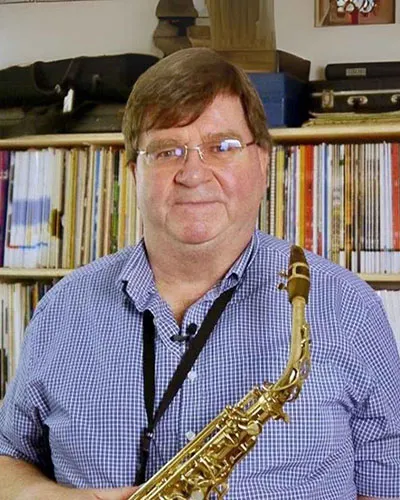
James RaeJames Rae zeigt die Griffe für das hohe E und F auf dem Saxofon, einschließlich des zusätzlichen 'Front-F', mit Übungen zum Festigen der neuen Noten.
Copyright © 2023 Universal Edition (London) Ltd., All compositions by James Rae except where otherwise indicated.
Das steckt im Kurs
20 Lektionen (0h 46m) · 1 gratis
Transkript der Lektion
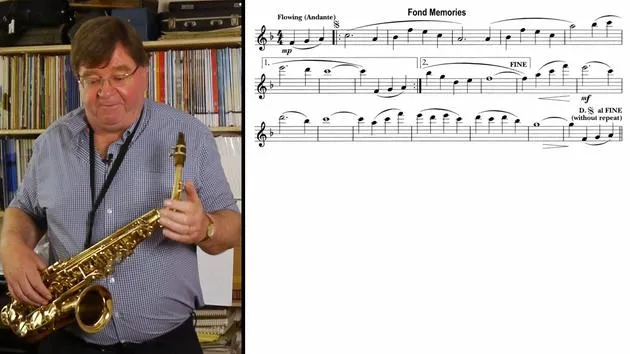
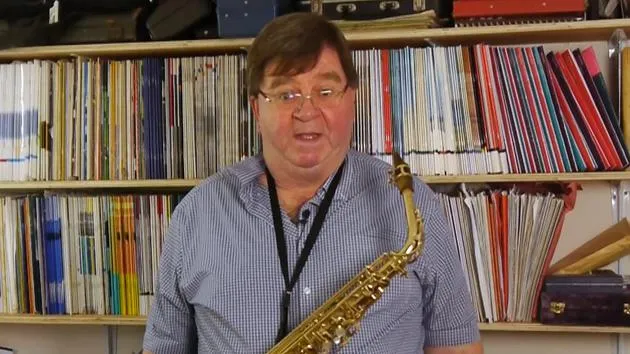
Saxophone Top Notes: E and F
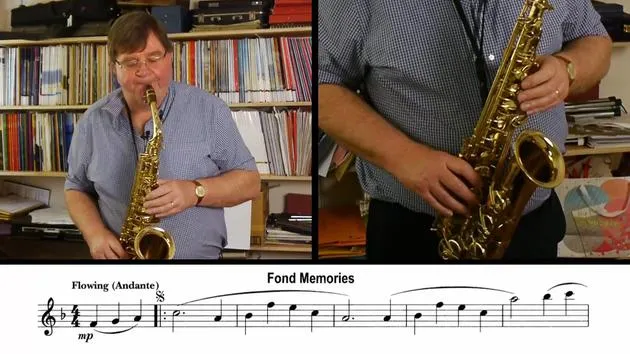
Now we come to two top notes on the saxophone: top E and F.
Top E
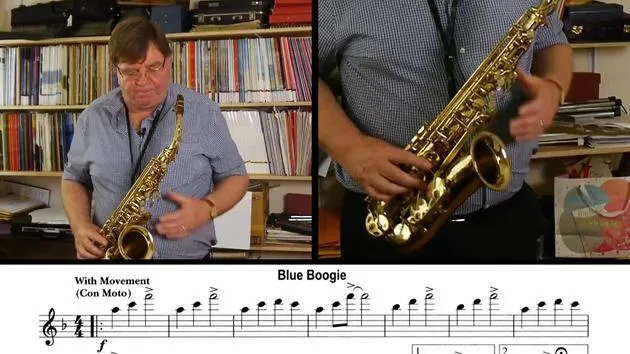
- The top E is played in a similar way to E flat (D sharp).
- Use two palm keys here, plus the top of the three keys located on the instrument.
- To play E flat, simply add one key to make it into E natural.
- Always maintain a relaxed throat position while playing.
Transition to F
- When we're on top E, it's easy to transition to F because all these keys remain down.
- To play F, bring in the key with the middle finger of the left hand, which opens the key at the very top.
Auxiliary Top F
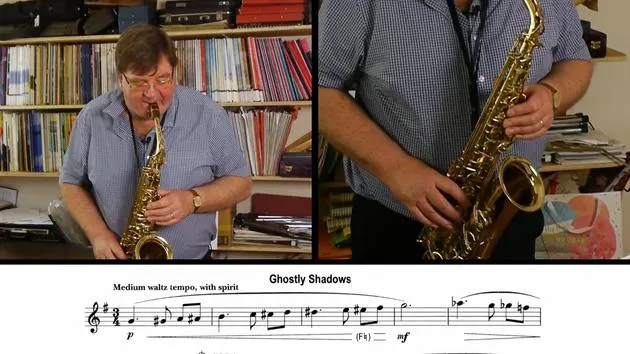
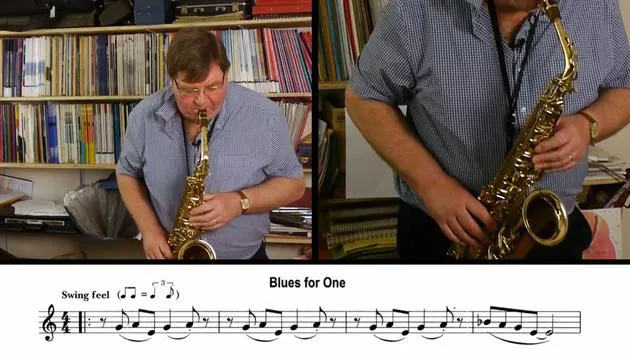
There is another fingering for F, which we use in arpeggios, known as auxiliary top F or front F.
- To play this, press C and press the very top key.
- On some saxophones, it's a spatula. On others, it's a pearl disc like the B key, but they serve the same function.
- It's quite an easy shift because you're just bringing down one finger, but it is a slightly more resistant note to play.
- Make sure you use lots of air support; it's very handy in arpeggios as it saves scrambling for the side keys.
Exercises
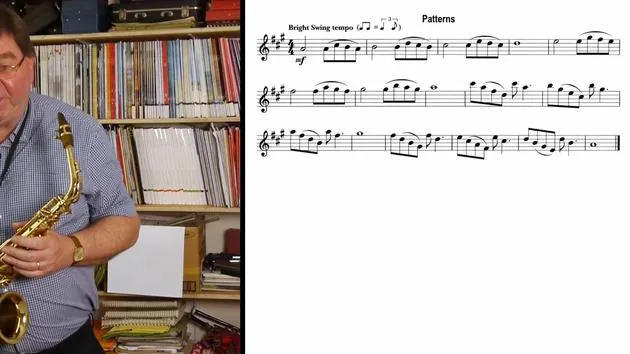
Exercise 1:
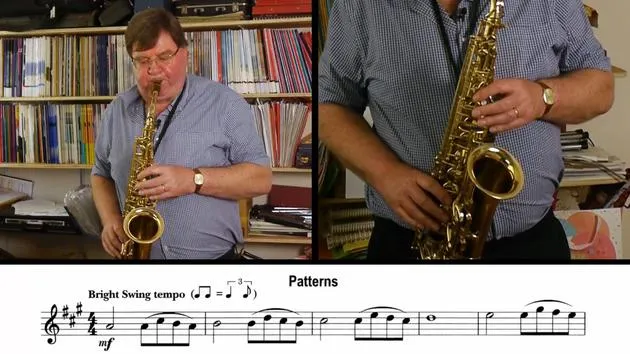
- Focuses on a workout for transitioning from D to E.
- Ensure that your two fingers work as one when approaching E from D.
- Avoid catching E flat.
Exercise 2:
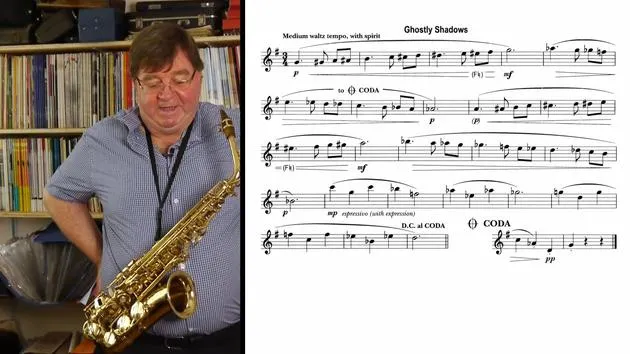
- Designed to improve top F by approaching it from below, step by step.
Exercise 3:
- Covers the scale of F major over two octaves.
- Always aim to produce a smooth sound at the top, especially from D up to F.
- When you connect these notes, they should come out smoothly.
Using Auxiliary F
As we touched on earlier, using the auxiliary F simplifies the transition from C to high F.
- It involves a nice and easy action, although it is a more resistant note compared to side F, which leads to a smoother arpeggio.
Smooth Study in F
- Smooth study in F is similar to previous sections: scale ascending in thirds.
- You can utilize auxiliary F for the final leap, and it can also be used on the way down.
Octave Study
- Similar to previous exercises, go all the way up, and again you can use front F for that final leap.
- This ensures it speaks clearly!
20 Lektionen
0 Std. 46 Min. strukturierte Videolektionen
Erweiterte Videofunktionen
Verlangsamen, Passagen loopen, mitlesen
Handy, Tablet & Desktop
Üben, wo du willst
100 % Zufriedenheitsgarantie
30 Tage Geld-zurück-Garantie
Lern deinen Guru kennen
Lern deinen Guru kennen
James Rae wurde 1957 in Tyneside geboren. Von 1975 bis 1979 studierte er Klarinette, Bassklarinette, Klavier und Komposition an der Guildhall School of Music and Drama, bei den Professoren Yona Ettlinger, Stephen Trier, Meriel Jefferson beziehungsweise Patric Standford. Seit er die Guildhall verlassen hat, verfolgt er eine höchst erfolgreiche und abwechslungsreiche Laufbahn in drei Bereichen: als Interpret, Komponist und Lehrer.
James Rae hat in zahlreichen Produktionen des West End und des Royal National Theatre mitgewirkt, darunter Sir Peter Halls preisgekrönte Oresteia mit Musik von Sir Harrison Birtwistle, und er hat zahlreiche freie Engagements bei einigen der führenden Orchester und Ensembles des Landes erhalten. Er ist der Leiter des Phoenix Saxophone Quartet, das im Laufe der Jahre viele Konzerte und BBC-Sendungen bestritten und das Gesamtwerk von Carey Blyton auf zwei Alben aufgenommen hat, 'The Return of Bulgy Gogo' und 'Sherlock Holmes meets Dr Who'.
Als Komponist ist James Rae einer der meistveröffentlichten Autoren pädagogischer Bläsermusik Europas, mit über 250 Publikationen, die hauptsächlich bei Universal Edition erschienen sind. Zu seiner Musik gehören instrumentale Studienbücher, Sonaten, Schulen, barocke, klassische und Jazz-Transkriptionen sowie zahlreiche Bände mit Duetten, von denen viele in allen großen Prüfungslehrplänen für Blasinstrumente weltweit vertreten sind. Er hat außerdem vier Musicals für Schulen mit Mike Cornick geschrieben, und zu seinen größeren Auftragswerken zählen The Turn of a Wheel, ein bedeutendes Werk für Blasorchester, das im November 1999 für die North Tyneside Concert Band uraufgeführt wurde, deren Gründungsmitglied er als Junge war, sowie die Ouvertüre Moving On aus dem Jahr 2012.
James Rae war umfassend als Lehrplanberater und Komponist sowohl für das Associated Board als auch für das Trinity College London tätig und maßgeblich an der Entwicklung der Blattlese-Anforderungen für Holzbläser bei beiden Prüfungsverbänden beteiligt. Als Lehrer hatte er zahlreiche Positionen im staatlichen wie im privaten Sektor inne und arbeitet derzeit an der King's College School Wimbledon, wo er das Wind Orchestra und die Concert Band leitet, sowie an der Shrewsbury House School in Surbiton, wo er drei große Ensembles und eine Kammergruppe betreut. Diese Lehrerfahrung zieht sich durch seine Saxophon-Reihe für MusicGurus, die dich Schritt für Schritt von deinen allerersten Tönen bis zu einem sicheren, stilsicheren Spieler führt: First Notes, New Keys & Low Notes, Expanding Your Range, Scales & High Notes, Extended Range & Rhythm, und Polish & Style.







