



B grave, doubles croches, staccato - doigté, introduction et exercices
Avec
James RaeJames Rae présente le B grave – l'une des notes les plus délicates au saxophone – ainsi que les doubles croches et le staccato, avec doigté et exercices.
Copyright © 2023 Universal Edition (London) Ltd., toutes les compositions sont de James Rae sauf indication contraire.
Le contenu du cours
22 leçons (0h 58min) · 1 gratuites
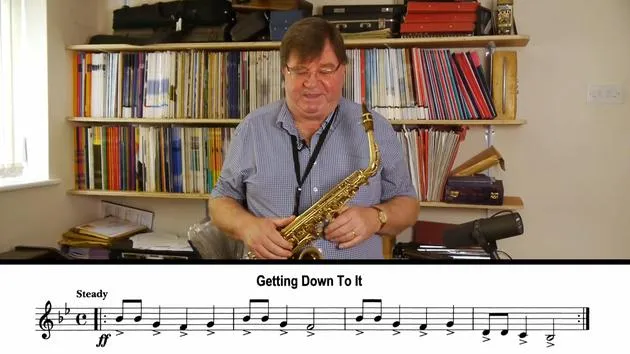
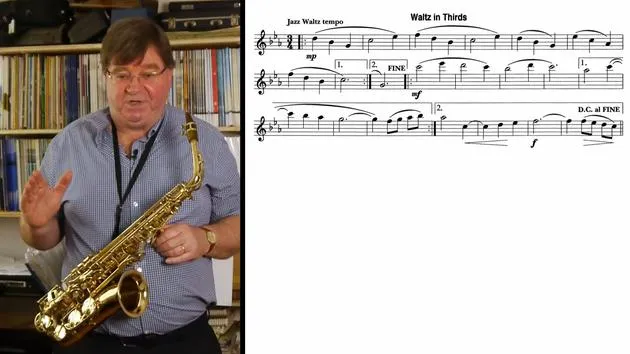
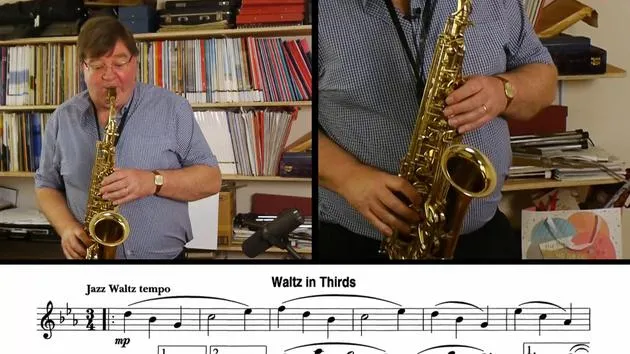
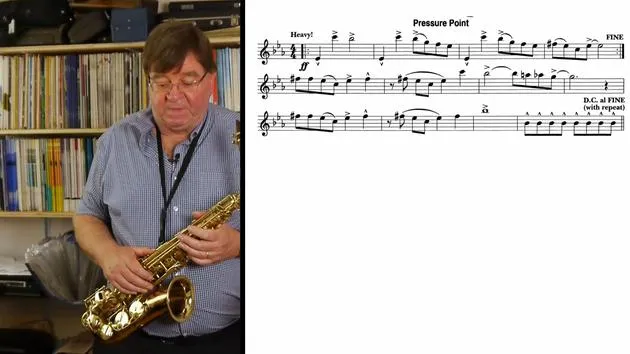
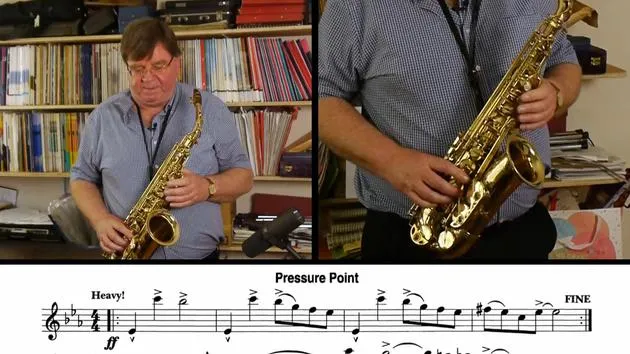
Transcription de la leçon
Saxophone Lesson: Mastering Low B and Staccato
Introduction to Low B
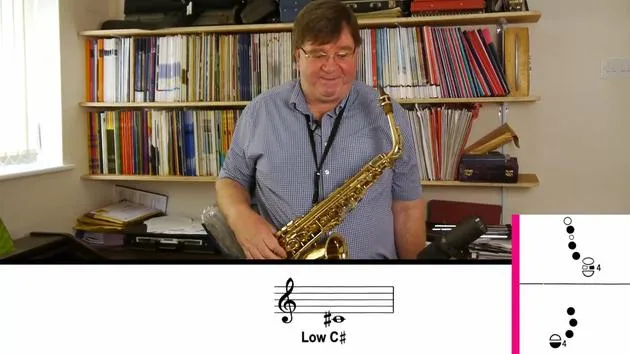
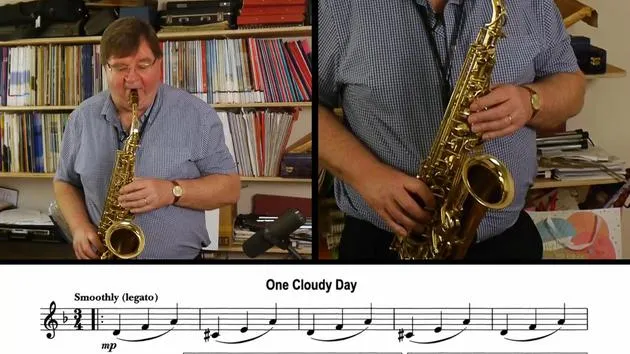
This section deals with one of the most difficult notes to produce on the saxophone: low B.
- Like low B flat, it requires firm fingers and is played like C, which we know.
- This key is right in the middle of the cluster, so you have to press it quite firmly.
To introduce low B, we practice going down by step.
- It's well worth practicing that a few times to get used to the action.
- In fact, you can just take C and B and practice it without even blowing into the saxophone. This way, you can get used to the key's feel and the pressure needed to obtain that pinging sound.
Note Control
- Low B is a tricky note to control.
- It's not the very bottom note of the saxophone; a lot of the sound comes from the last remaining open hole apart from the bell.
- Always strive to get as pure a sound as possible on low B.
Tips to Avoid Common Mistakes
- Try to avoid honking; use lots of air.
- Check that you're not biting too much.
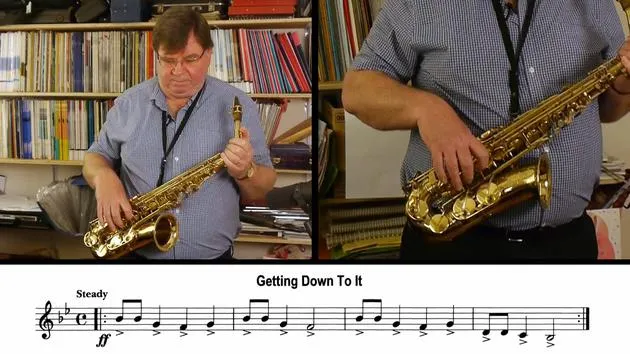
Exercise 1: Low B Workout
Now we come to Exercise 2, a little workout for low B.
Introduction to Semi-Quavers
We've used many quavers in our pieces so far; now we deal with semi-quavers, which are half quavers.
-
If a crotchet pulses that quavers up, semi-quavers will be:
![semi-quaver example]
-
Like quavers, they are beamed together in groups of twos or fours, generally.
-
If written singly, they have a double tail. Generally, you find that semi-quavers hunt in packs, in groups of twos, fours, or threes.
For example, refer to Exercise 3 where they have two beams connecting their stems.
Practice Techniques
Practice it slowly at first.
- As I touched on earlier, I like to use a technique called looping.
- This involves taking a section of a piece and playing it over and over again, starting fairly slowly and gradually increasing the speed until it settles down.
Example
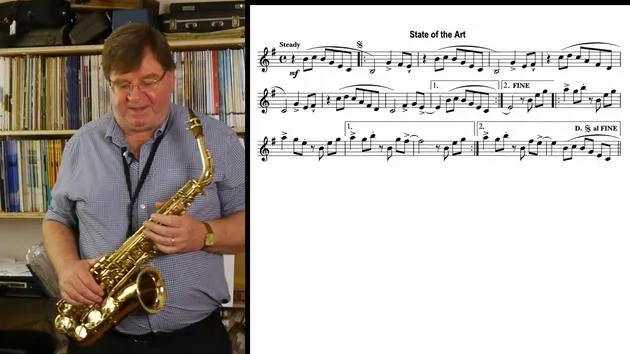
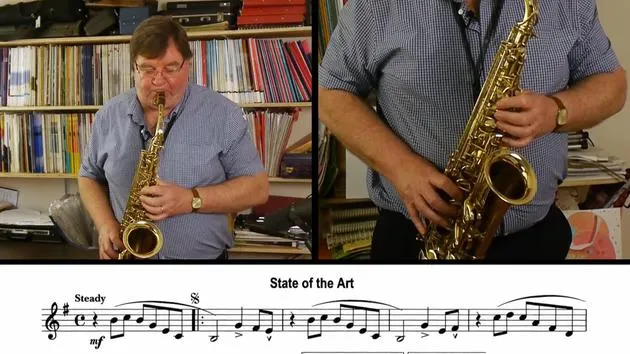
Take the first bar and stop on the first note of the second bar. When we put the two bars together, we have an easy ride:
- Notice that the next two bars are the same shape but one step lower, involving the B.
- We can apply the same to that: take the first bar and stop on the F, then join them together.
When we put the whole of the first line together, it sounds like this:
And guess what? The next two bars are the same as the first two, and the final two are slightly different, concluding on the C.
Understanding Staccato
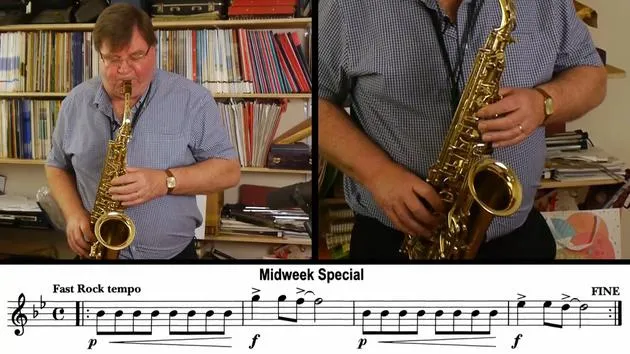
Now, let's discuss the next topic: staccato.
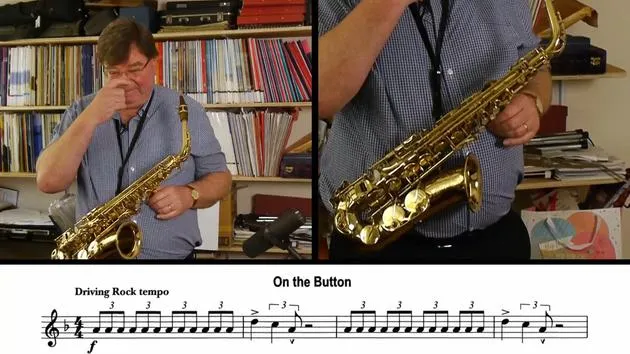
- Staccato means short and light; it does not mean fast.
- People sometimes confuse the marking of the staccato dot with speed. It affects the length of the note, not its speed.
Exercise 4
For example, in Exercise 4, the first bar sounds like:
- T. You can hear the notes aren't going faster, but they are shorter, so it's D.
You will need to work a bit for the next bar with the tongue:
- Ta, ta, ta, ta, ta, ta, ta, ta, da.
It's good to say the syllables before you play it:
- Ta.
Then play, using that magic ingredient: air. This will help produce a nice bouncing staccato.
Additional Exercises
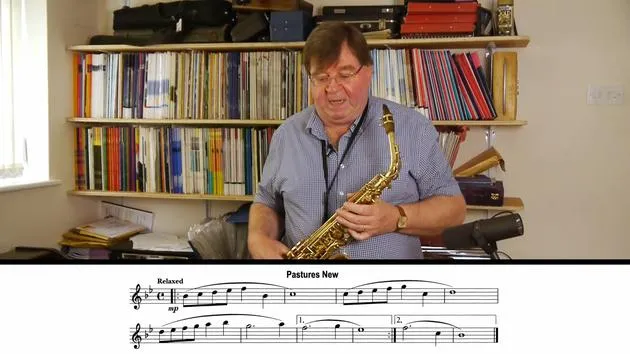
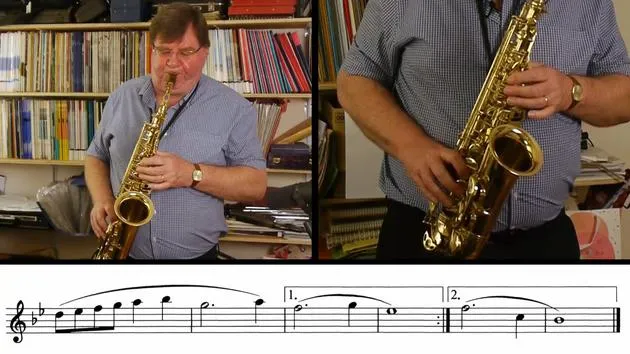
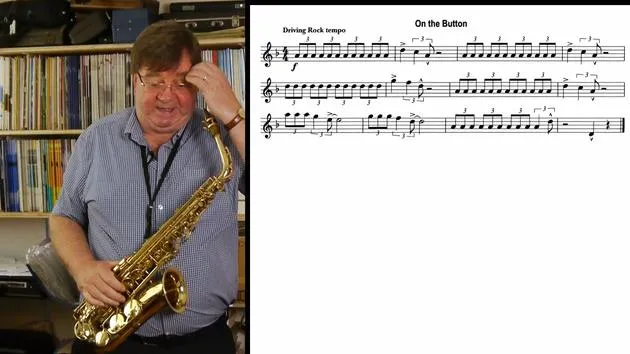
- Exercise 5: Jolly little exercise.
- Exercise 6: The reverse of that rhythm.
- Exercise 7: Slightly different again.
- Exercise 8: Slightly harder, as we have more semi-quavers to deal with.
Remember the same rule applies: lots of air, light tonguing, feeling the tongue bounce.
Important Reminder
Watch when you go up that you don't tighten up on the mouthpiece, as that can cause drag.
Understanding Dots
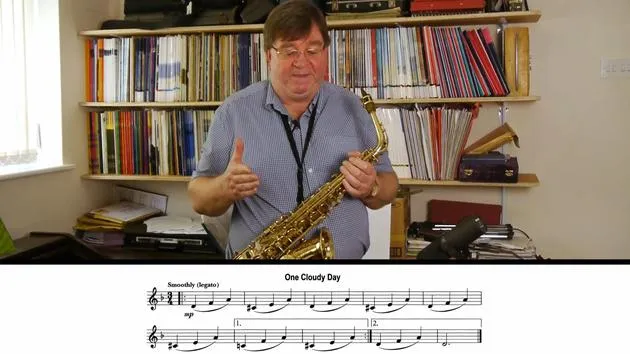
Now, we already know about dots, which extend notes by 50% of their value. Dots also apply to quavers.
- A dotted quaver will be worth three-quarters of a crotchet beat.
- These are normally followed by a semi-quaver just to make up that difference.
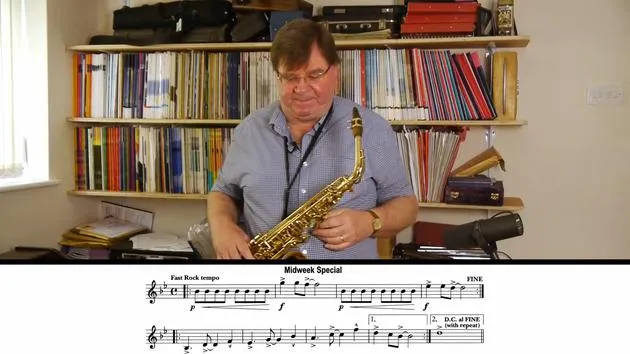
Exercise 10
Exercise 10, for example, uses that concept:
-
It should sound nice and bouncy in this rhythm.
-
Make sure that the semi-quaver is as close to the next dotted quaver as possible:
- Tum ta tum ta tum.
- Not tum tum, tum tum tum tum or even tripletized.
- We want to hear dum da dum da dum, very polite, etc.
You can work up and down the scale, not just this scale but any scale.
You can transpose it into different keys (like D, etc.), developing a good tonguing technique in all tonalities.
22 leçons
0h 58m de leçons vidéo structurées
Fonctions vidéo avancées
Ralentissez, bouclez un passage, suivez la partition
Mobile, tablette et ordinateur
Pratiquez où vous voulez
Satisfaction garantie à 100 %
Garantie remboursement 30 jours
Rencontrez votre guru
Rencontrez votre guru
James Rae est né à Tyneside en 1957. Il a étudié la clarinette, la clarinette basse, le piano et la composition à la Guildhall School of Music and Drama de 1975 à 1979, respectivement auprès des professeurs Yona Ettlinger, Stephen Trier, Meriel Jefferson et Patric Standford. Depuis qu'il a quitté la Guildhall, il mène une carrière très réussie et variée dans trois domaines : l'interprétation, l'écriture et l'enseignement.
James Rae a travaillé sur de nombreuses productions du West End et du Royal National Theatre, dont l'Oresteia primée de Sir Peter Hall sur une musique de Sir Harrison Birtwistle, et il a reçu de nombreux engagements en freelance auprès de certains des plus grands orchestres et ensembles du pays. Il est le leader du Phoenix Saxophone Quartet, qui, au fil des ans, a donné de nombreux récitals et diffusions à la BBC, et a enregistré l'intégrale des œuvres de Carey Blyton sur deux albums, 'The Return of Bulgy Gogo' et 'Sherlock Holmes meets Dr Who'.
En tant que compositeur, James Rae est l'un des auteurs de musique pédagogique pour vents les plus publiés d'Europe, avec plus de 250 publications à son actif, principalement éditées par Universal Edition. Sa musique comprend des cahiers d'étude instrumentale, des sonates, des méthodes, des transcriptions baroques, classiques et jazz, ainsi que de nombreux recueils de duos, dont beaucoup figurent dans tous les grands programmes d'examen pour instruments à vent du monde entier. Il a également écrit quatre comédies musicales pour écoles avec Mike Cornick, et parmi ses commandes les plus importantes figurent The Turn of a Wheel, une œuvre majeure pour orchestre d'harmonie créée en novembre 1999 pour le North Tyneside Concert Band, dont il fut membre fondateur enfant, et l'ouverture Moving On en 2012.
James Rae a travaillé de manière approfondie comme consultant de programmes et compositeur pour l'Associated Board comme pour le Trinity College London, et s'est fortement impliqué dans l'élaboration des épreuves de déchiffrage pour bois des deux jurys d'examen. Comme enseignant, il a occupé de nombreux postes dans les secteurs public et privé, et travaille actuellement à la King's College School Wimbledon, où il dirige le Wind Orchestra et le Concert Band, ainsi qu'à la Shrewsbury House School de Surbiton, où il encadre trois grands ensembles et un groupe de chambre. Cette expérience pédagogique traverse toute sa série de saxophone pour MusicGurus, qui te mène pas à pas de tes toutes premières notes jusqu'à un jeu assuré et plein de style : First Notes, New Keys & Low Notes, Expanding Your Range, Scales & High Notes, Extended Range & Rhythm, et Polish & Style.







