



Chord voicings - Grade 8
Play through the Grade 8 jazz voicings, from the C dominant 13b9 to the rich C diminished major seventh, and hear how these unusual chords sit in modern jazz harmony.

What's in the course
27 lessons (2h 50m) · 2 free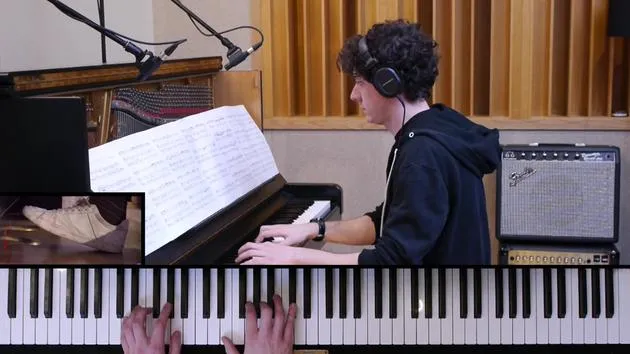
01. These Are The Days, Jamie Cullum (Performance)
3:28
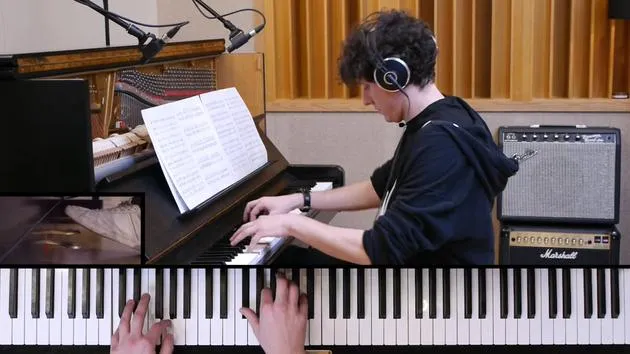
02. Straighten Up And Fly Right, Diana Krall (Performance)
Free lesson4:08
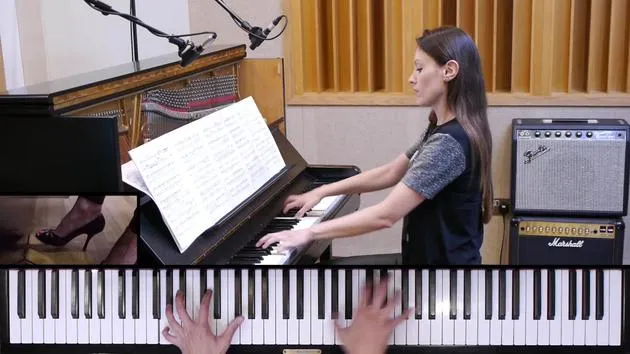
03. Bohemian Rhapsody, Queen (Performance)
5:19
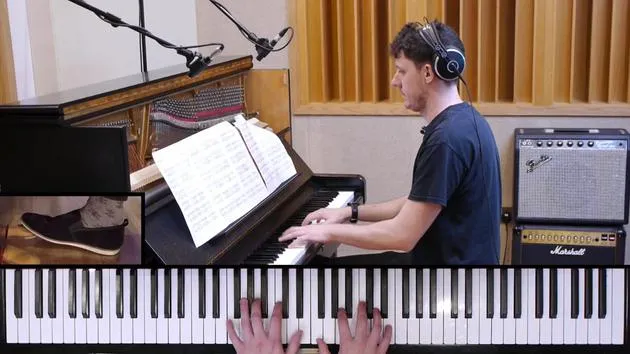
04. Nosso Samba, Noam Lederman (Performance)
3:18
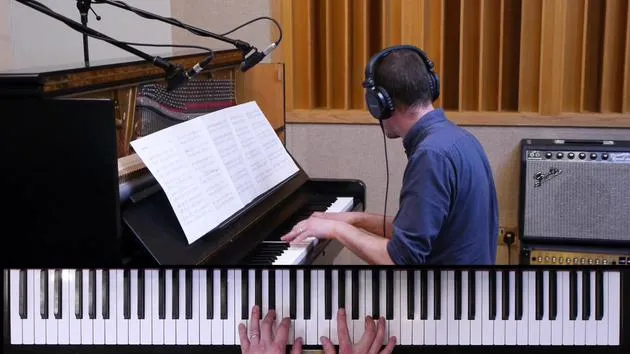
05. Freightshaker, Simon Troup (Performance)
3:20
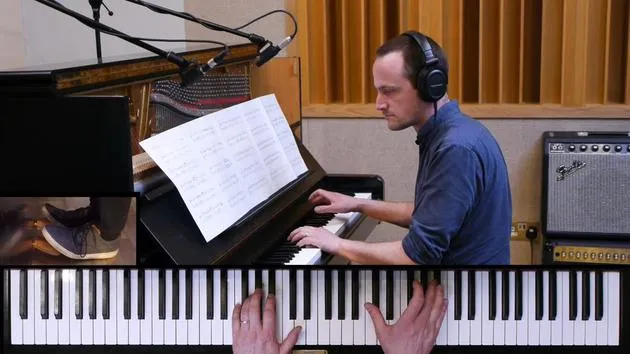
06. Mind The Gaps, Kit Morgan (Performance)
3:41



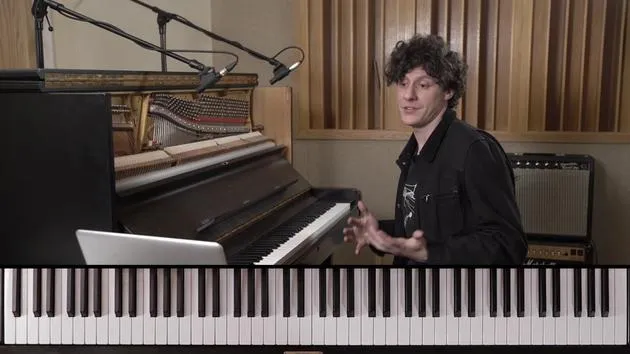
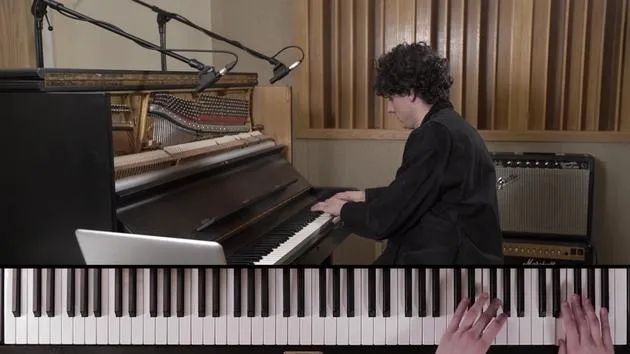
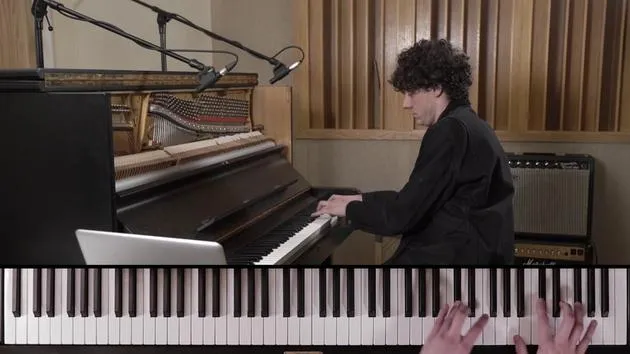
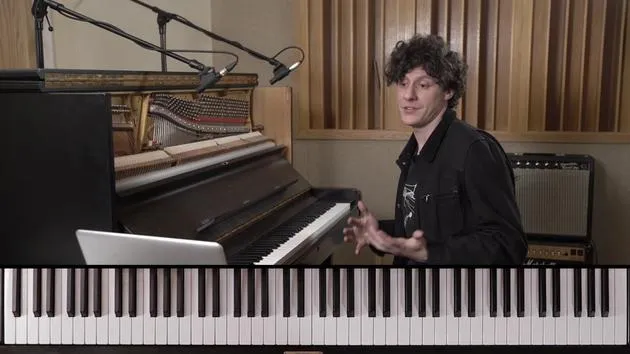
Lesson transcript
Voicings in Jazz Harmony
Finally, we have the voicings.
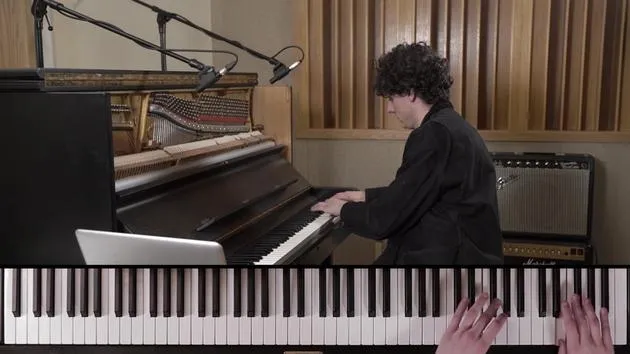
C Dominant 13b9
Now, the voicings here match the arpeggio and scales we've used before.
- We have the C dominant 13b9, which we did an arpeggio of.
- This is how they sound.
- This last one, in particular, is a really lovely sound.
Again, a very, very common jazz voicing, a dominant sound that will lead back to A major or A minor.
- So that slightly clashy diminished sound: you've got two minor third shapes in the middle, which give it that sort of diminished sound.
- But we're not playing diminished scales over here; we're playing a dominant 13b9.
It's good to bear in mind that that shape is always hiding within so many of these upper extended scales.
A Diminished
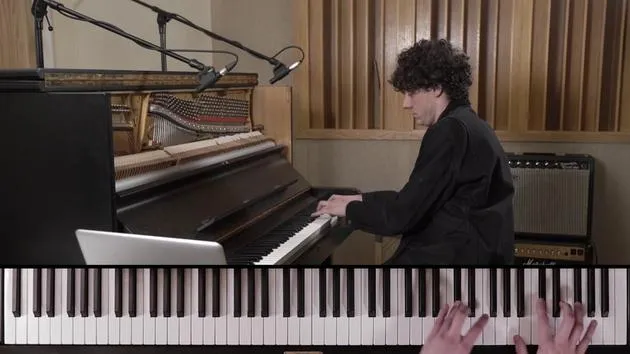
The next one we have is A diminished, and it's called the C diminished major seven.
- A regular diminished has the:
- Root
- Flat third
- Flat fifth
- Double flat seventh (or the sixth)
This one will be using, instead of the sixth, the natural seven.
- That's the first voicing.
- So at root position, that would be...
It's a very kind of nasty sharp sound, but it can work in itself as well. It's not too dissimilar, actually, from the voicings previously, in terms of sonic context.
The voicings are different, but they do sound not too dissimilar.
C Diminished Major Seven
These are the C diminished major seven.
- Now, these are really lovely voicings.
- These are very commonly used in the kind of jazz that British jazz musicians like Kenny Wheeler or Stan Saltzman might use.
These are really, really lovely, quite unusual sounds.
Even though these voicings are not very commonly used within a lot of traditional jazz or a lot of rock or pop music, in fact, they're probably hardly ever used in pop or some rock music, unless it's quite progressive rock.
You'll find that when you have the understanding of these harmonies, you can either choose to use them or not.
- They make all your other understanding of harmony better.
- It's better to learn voicings and not use them than to not be able to use voicings when you need to.
The more you know, basically.
Good luck, and hope you smash it!
27 lessons
2h 50m of structured video lessons
Advanced video features
Slow down, loop a passage, follow along
Mobile, tablet & desktop
Practise wherever you are
100% satisfaction guarantee
30-day money-back guarantee







