



Arpeggios - Grade 8
Work through the dominant-seventh arpeggios for your Rockschool Piano Grade 8 exercises, building the speed to play them cleanly at tempo.

What's in the course
27 lessons (2h 50m) · 2 free
01. These Are The Days, Jamie Cullum (Performance)
3:28
02. Straighten Up And Fly Right, Diana Krall (Performance)
Free lesson4:08
03. Bohemian Rhapsody, Queen (Performance)
5:19
04. Nosso Samba, Noam Lederman (Performance)
3:18
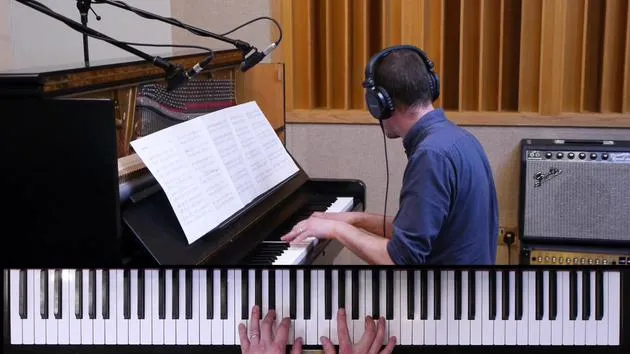
05. Freightshaker, Simon Troup (Performance)
3:20
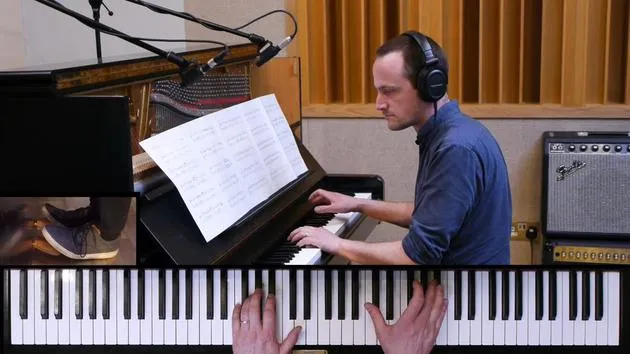
06. Mind The Gaps, Kit Morgan (Performance)
3:41
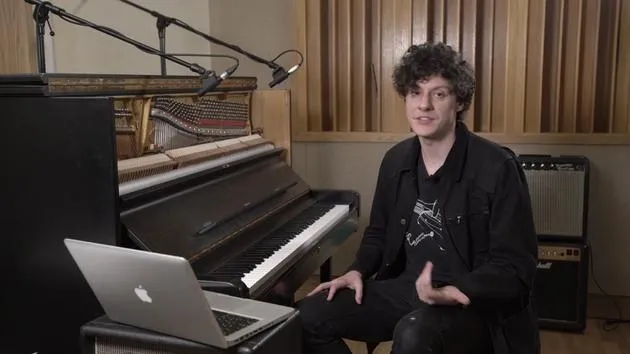
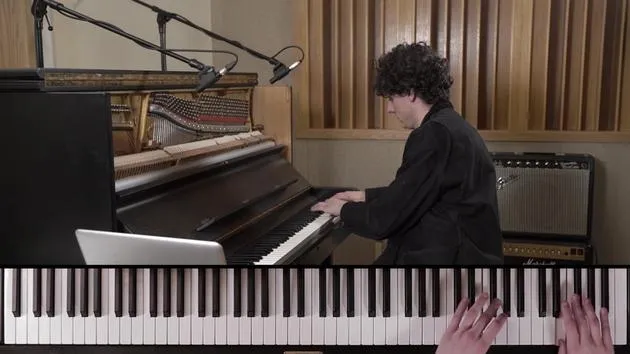
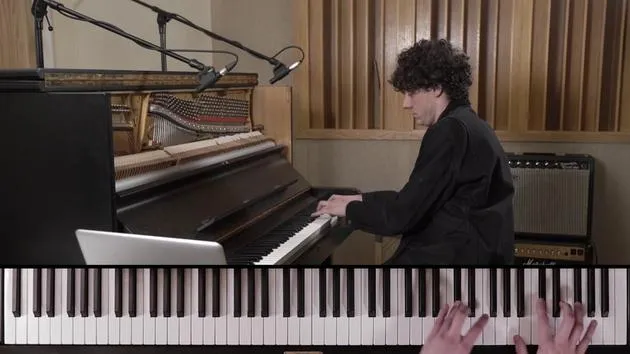
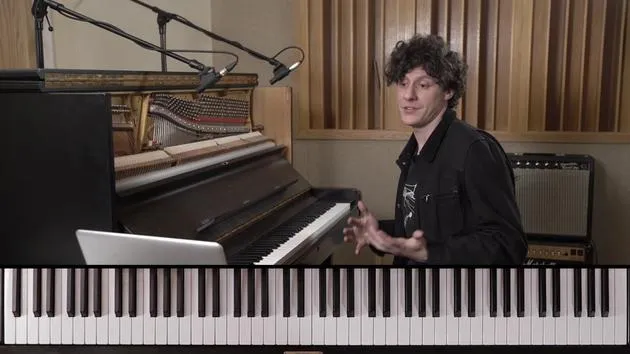
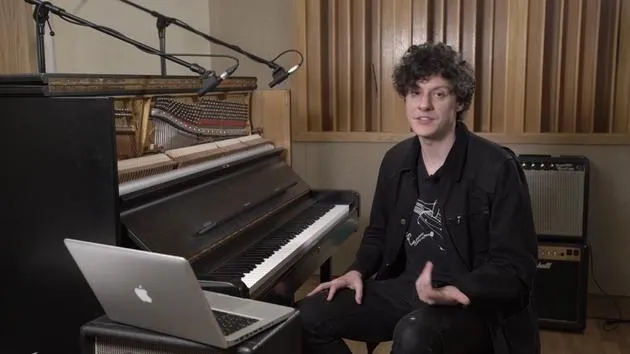
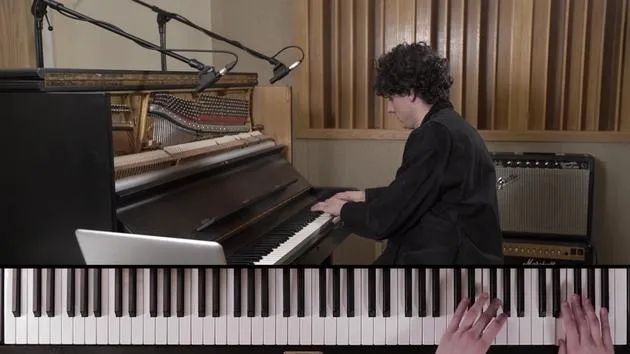
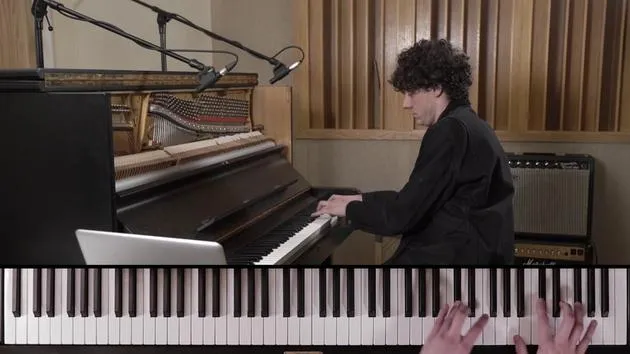
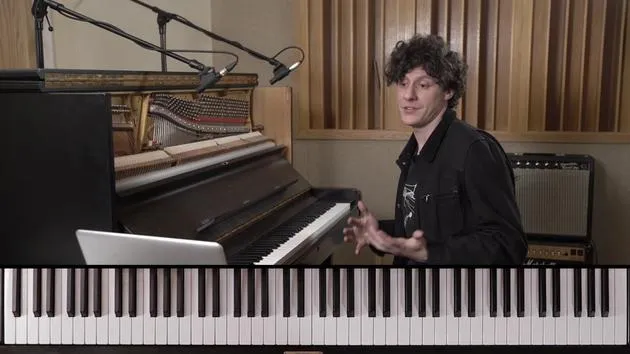
Lesson transcript
Music Lesson: Understanding Arpeggios and Scales
Introduction to Arpeggios
That leads us to arpeggios. We have a lot of dominant 7 arpeggios.
Mixolydian Mode Arpeggios
In the Mixolydian mode, we have:
- A7
- Eb7
- E7
- AB7
- B7
- Db7
- F7
- GB7 arpeggio.
There are many different types of arpeggios. Note: The F#7 and GB7 are the same, so that's technically only one you have to worry about.
Challenges with Arpeggios
We also have some arpeggios which aren't really in any difficult keys. Most of the difficult keys have been eliminated throughout the journey through the Rockstall grades.
The problem we have here is that these arpeggios are very fast, so we are talking 132 BPM. They can be quite quick to play, even for professionals.
Don't worry! If you're finding these quite difficult to play, it's just about getting the practice in, and you'll nail it in no time.
Specific Arpeggio Exercises
The final arpeggio in this exercise is number nine, which is the C13, B9 sharp 11 arpeggio.
Understanding the C13, B9#11 Arpeggio
There's quite a lot going on here. This is not too dissimilar to what we've played before. It's a C7 with a 9 and a 13 on top, but the 9 is flattened and we have a sharp 11 thrown in as well.
This is a very, very dense chord; it's about as dense as chords can get. We have pretty much every single upper extension, which are:
- The 9th
- The 11th
- The 13th
While this may sound daunting, like before, you're only really one step away from things you've played before.
Example for Simplification
For example, if we play a Lydian 13 dominant, all we have to do is flatten the D, and we have the scale we're looking at now.
Practice Techniques
It's quite a short arpeggio, but it's very fiddly. There are lots of different fingerings that can be used. I personally use a slightly different one than the one written in the book.
But like with all fingerings, as long as the exercise works and you provide a nice smooth legato or staccato, it doesn't matter too much.
Grade Eight Scales Overview
These are the new scales we're learning in Grade Eight. However, you will also be asked to play major scales from any previous grade.
Key and Scale Details
We're essentially talking about any key that includes C major, which could be F# major.
Other scales include:
- Natural Minor: If you're playing the natural minor, you can use the major scale a minor third above; it's the same scale and will sound the same.
- Harmonic Minor: Remember, this is the one with the leading notes, the natural seventh at the top.
- Chromatic Scales: While chromatic scales on their own aren't hugely difficult, the tempo of 176 BPM will make them sound very fast.
Example for Chromatic Scales
Here's an example of how fast the chromatic scales need to sound. I'll start on F4 octaves.
Arpeggio Requirements
You'll also be asked to play major arpeggios and minor arpeggios.
Note: You won't have to play any of the other complicated ones, like the Lydian dominant or the B13 or the Sharp 9 or altered chords. None of that will happen in this exam.
However, the ones we've got written here, the C13, B9#11, will be included.
Challenges of Grade Eight
The tricky thing about Grade Eight is that they literally throw everything at you. You've basically got to go through every other bur chord, get all the other scale lists from every other syllabus, and learn them all.
By this point, you've probably got most of it down anyway, if you've worked your way through the grades.
However, if you haven't, then there's quite a task ahead of learning all sorts of different shapes and sounds.
Conclusion and Practice Tips
But like we said before, you're only really one or two steps away from anything you've done before.
- Take it nice and slow.
- Practice hands separately.
- Work up the tempo , we're aiming for 176 BPM at the end.
You could even start at 100 BPM, do it slowly, and then bring it up. Remember, everything can be slowed down, practiced separately, and then brought together at the end.
It's just practice!
27 lessons
2h 50m of structured video lessons
Advanced video features
Slow down, loop a passage, follow along
Mobile, tablet & desktop
Practise wherever you are
100% satisfaction guarantee
30-day money-back guarantee







