



Intro to scales, arpeggios and voicings - why they're useful
James explains why scales, arpeggios and voicings matter, the technique behind playing harder pieces in time and sounding better, across all Rockschool piano grades.
What's in the course
29 lessons (1h 37m) · 1 free
Lesson transcript
Technical Exercises for Rock School
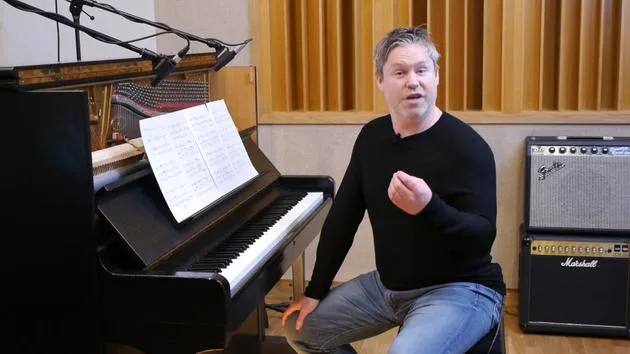
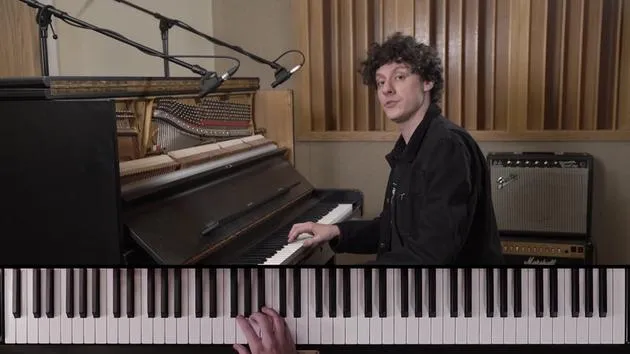
Hey, guys, it's James here. I'm going to take you through the technical exercises for Rock School.
Overview
This is a general video that applies to all grades. We're going to talk about:
- Scales
- Arpeggios
- Voicings
And the way of breaking these down and learning them.
Why Learn Scales, Arpeggios, and Voicings?
So most importantly, why do we even need to learn scales, arpeggios, and voicings in the first place?
The simple answer is for technique. Improving our technique allows us to:
- Play more complicated pieces
- Sound better
- Play in time
- Enjoy the experience of being a musician
Functions
- Scales provide the function of playing smooth lines.
- Arpeggios allow us to break our flow within the hand, stretching wide distances.
- Voicings are about playing chords that either accompany ourselves or others.
A big part of being a jazz player, pop player, funk player, rock player, or part of any of these disciplines is about playing chords and accompanying ourselves and other people.
The Importance of Practice
Scales and arpeggios are a great way of improving technique. I know they can sometimes be a bit dry, going up and down the piano repeatedly trying to get it right. However:
- There can be something quite meditative about it.
- It doesn't all have to be boring.
There are many different ways of applying scales and arpeggios that will make practice fun.
Tips for Practicing
I highly recommend that you:
- Go through the exercises.
- Work on them consistently.
They can be done at the beginning of your practice session. They don't have to be something you dread. Instead, they can be a warm-up.
Five to ten minutes is all it takes. Knock a few out at the start, and then you can move on to the fun stuff, playing, improvising, etc.
Improvisation and Technique
One thing I'll mention is that using scales and arpeggios is a great way to develop improvisation.
When I'm improvising or performing, I often use:
- Chord tones
- Patterns based on scales and arpeggios
While I'm not strictly thinking about scales, arpeggios, or voicings while I play, I'm using the knowledge that I've already learned.
In a real setting, all that knowledge comes to the surface and happens instinctively.
This is true with any aspect of playing music, but particularly with technique, as technique is the fastest way to make a good piece sound great.
You'll have more fun playing as a result.
So, I highly recommend you get stuck into scales. It's not all boring, I promise, and the payoff will be huge!
29 lessons
1h 37m of structured video lessons
Advanced video features
Slow down, loop a passage, follow along
Mobile, tablet & desktop
Practise wherever you are
100% satisfaction guarantee
30-day money-back guarantee







