



Natural harmonics
James Barratt explains how to play natural harmonics on guitar, how they're marked in tab and where to place your finger over the fret, such as the 12th-fret harmonic.

What's in the course
44 lessons (3h 49m) · 1 free
01. Intro to Approaches to improvisation
1:00
02. Embelleshing a melody
5:36

03. Challenge: Submit your melody
0:26
04. 7th chords
6:38

05. Composing your solo
8:53

06. Further extensions and sus chords
4:19
07. Comping on two different music styles
Free lesson8:36
08. Mixing Rhythmic and Melodic comping
4:24
09. Rhythmic improv & comping
9:55



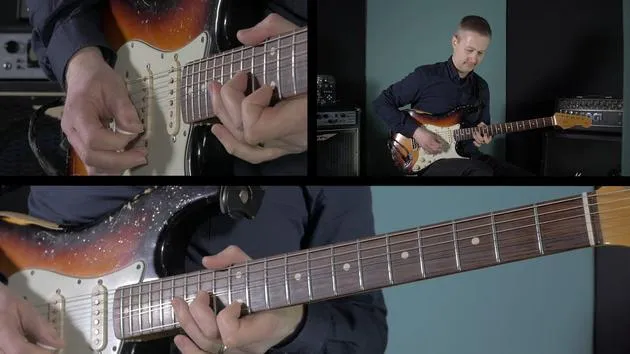














Lesson transcript
Exploring Harmonics in Music
Okay then, guys, let's take a look at another technique. We're going to look at two types of harmonics today: Pinched harmonics and Natural harmonics.
Natural Harmonics
Let's get the natural harmonics out of the way first. It's slightly easier. These are signified by a diamond shape around the note in the tablature.
- For example, if you see a 12 on the tab with a diamond around it, that tells you to play that note as a natural harmonic.
How to Play Natural Harmonics
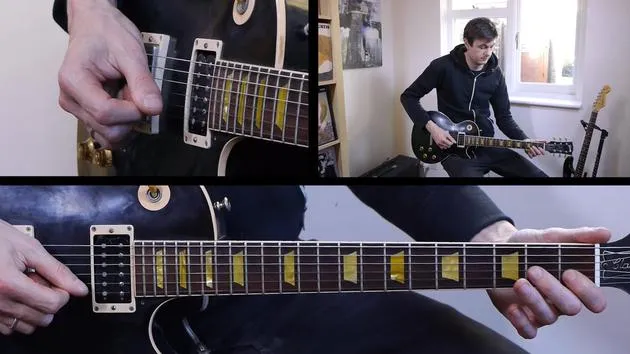
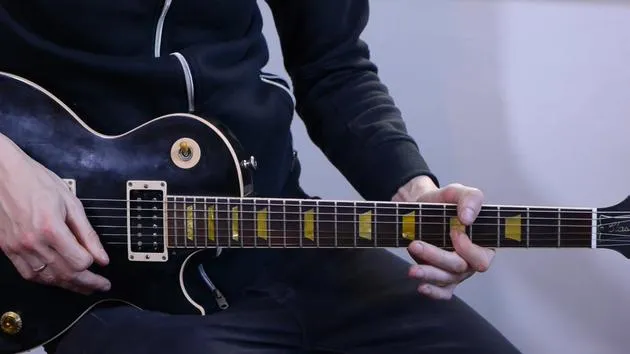
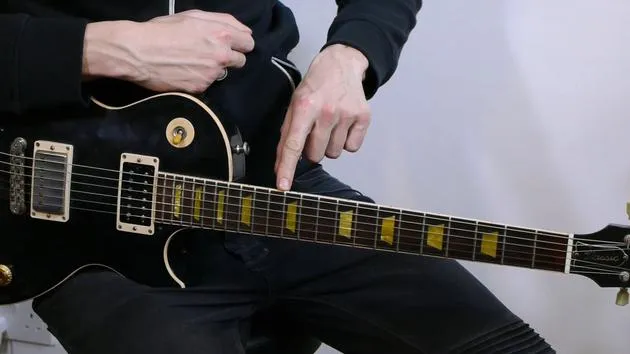
To play a natural harmonic, it's dead simple. I'm going to show you how to play the 12th fret on the E string as a harmonic.
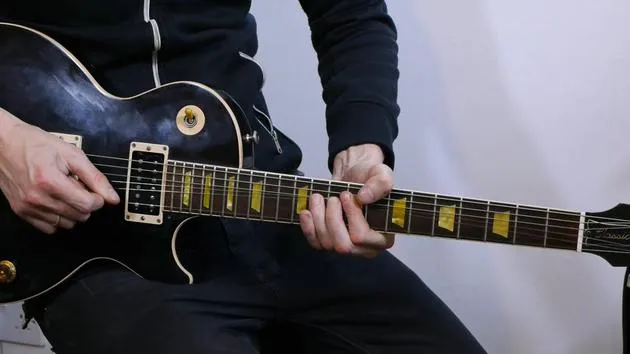
- Normal Fret Harmonic: You hear the difference there?
- Natural Harmonic Technique:
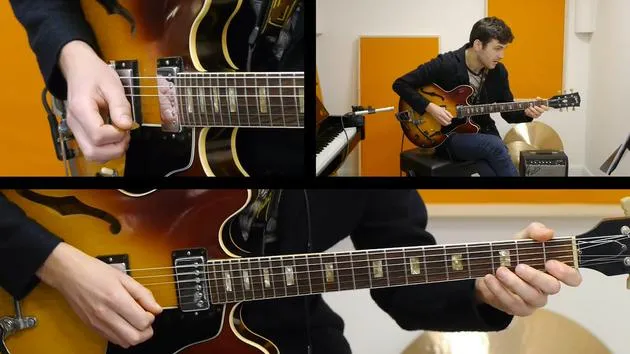
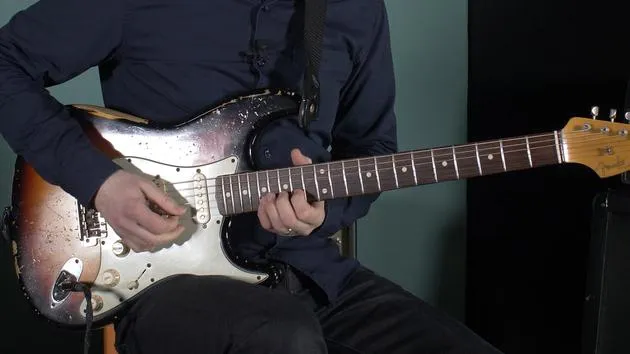
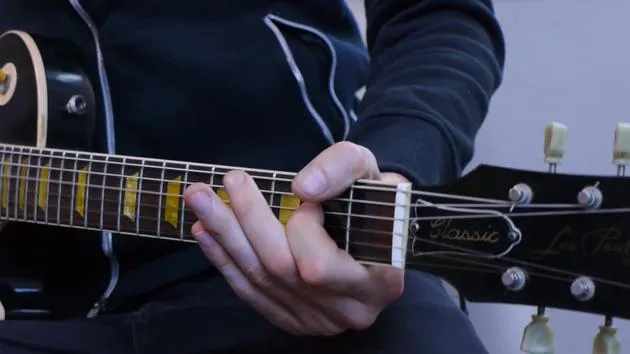
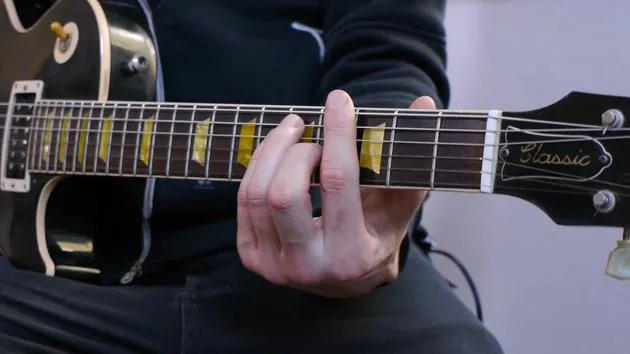
- Place your finger directly above the fret.
- The metal fret wire should be directly below your finger.
- Typically, when you fret a note, you need to position your finger just the other side of the fret. But for a natural harmonic, you want to be directly above the metal fret.
- Only touch the string lightly. Don't apply enough pressure to let the string touch the fret or the fretboard.
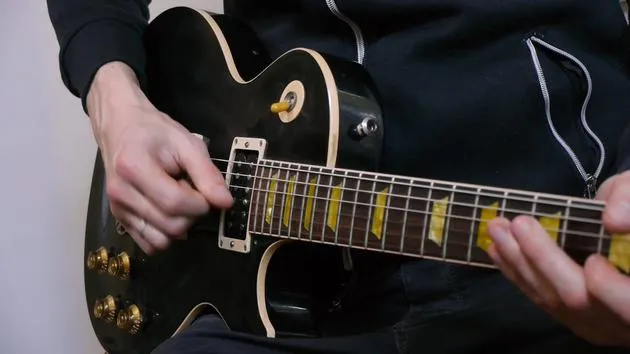
- Then, pluck the note.
As soon as you've caught the harmonic, move your left hand out of the way, and you'll hear that the harmonic will continue to ring.
Demonstration
Here it is:
- The harmonic will continue to ring.
- The difference between that and a fretted note: If I play the fretted note and take my hand away, it doesn't continue to ring. You can hear the difference in tone: pitched vs. harmonic.
Ideal Locations for Natural Harmonics
There are three really predominant places on the guitar where you can easily achieve natural harmonics:
- 12th fret: Probably the easiest place to start.
- 7th fret: Another great spot to play.
- 5th fret: Pitch will get even higher here.
Generally, the closer to the note you get for the harmonics, the sound will be very delicate.
Application and Sound
It's a really cool technique. You'll see this crop up in quite a few rock songs. Always signified by:
- The diamond symbol around either the note head or the tabbed number.
- It might even have NH above it, short for natural harmonic.
You can come up with some really cool melodies with these, or chords can sound really nice with a bit of delay, creating ambient sounds. It's quite an unusual sound for a guitar to make.
So that's the first type of harmonic we're going to talk about!
44 lessons
3h 49m of structured video lessons
Advanced video features
Slow down, loop a passage, follow along
Mobile, tablet & desktop
Practise wherever you are
100% satisfaction guarantee
30-day money-back guarantee







