



What Is Hip? – Tower of Power (Lesson)
Pete Riley unpacks Tower of Power's 'What Is Hip?' and David Garibaldi's layered coordination - the broken 16th-note hi-hat, ghost notes and open-hat accents.

What's in the course
29 lessons (2h 45m) · 1 free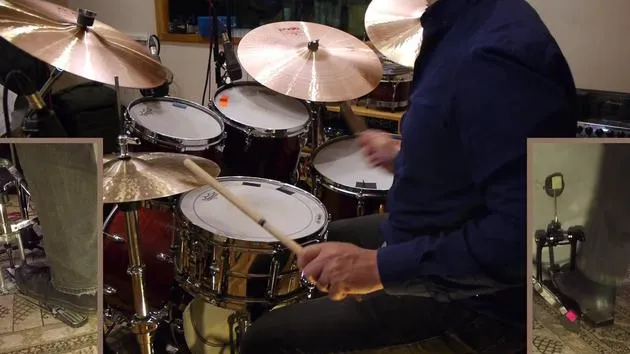
01. Control – Chase & Status
3:12
02. Law – Richard Spaven
3:11
03. Cry Me A River – Justin Timberlake
3:06
04. Family Affair – Mary J Blige
3:27
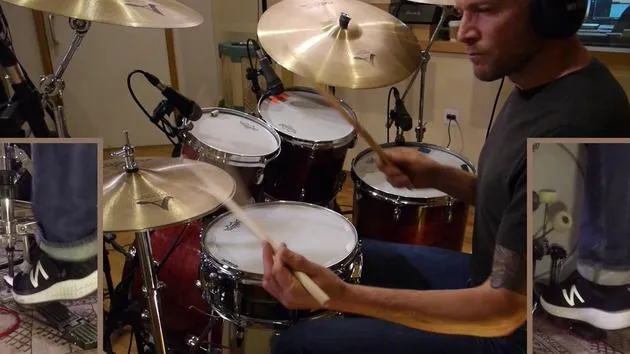
05. What Is Hip? – Tower of Power
3:19
06. Techno – John Scofield
3:13
07. Razorhead
3:17
08. Buena Havana
2:38
09. The Bean
3:19
10. Eastern Adventure
Free lesson2:48
11. Full English Breckerfest
2:35
12. Kita's Five
2:59
01. Control – Chase & Status
13:17
02. Cry Me A River – Justin Timberlake (Lesson)
15:05
03. Family Affair – Mary J Blige (Lesson)
11:59
04. Law – Richard Spaven (Lesson)
6:05
05. Techno – John Scofield (Lesson)
10:43
06. What Is Hip? – Tower of Power (Lesson)
You are here10:54
07. Razorhead
7:23
08. Buena Havana
7:17
09. The Bean
9:50
10. Eastern Adventure
6:01
11. Full English Breckerfest
5:45
12. Kita's Five
7:03

Lesson transcript
Music Lesson: Understanding "What is Hip" by Tower of Power
In this lesson, we dive into the Tower of Power classic, "What is Hip." This track provides valuable insight into the mastery of drummer David Garibaldi.
Intro: Layered Coordination
We begin with some challenging grooves, starting with the two-bar pattern heard during the intro. This serves as a prime example of what Garibaldi calls layered coordination, where almost three different patterns occur simultaneously between the kick, snare, and hi-hat.
- Hi-hat: A broken 16th-note pattern: 1 e & a 2 e & a 3 e & a 4 e & a
- Kick and Snare: Essentially play this groove: 1 & 2 & 3 & 4
Ghost Notes and Open Hi-hat
In addition to the main groove, there are numerous ghost notes and an open hi-hat sound to incorporate. Here's how it sounds without the open hi-hat to start:
Here's a basic pattern sample without the open hi-hat.
Final Ingredient: Stepping the quarter note by opening the hi-hat on the last 16th note of each beat.
Also, there's an anticipation where the hi-hats punctuate the last 16th note of beat four.
Drums Entering
The piece starts this way, with the drums entering on beat four, transitioning into that anticipation.
Playing the Intro Pattern
Now, let's play that pattern as you'll hear it during the two-bar intro.
Verse Patterns
As we transition to the verse, the kick and snare pattern remains essentially the same. However, the broken 16th-note pattern from the intro changes slightly, it's now a bit more syncopated.
Hi-hat and Snare Relation
Let's play it just in relation to the backbeat, using only the hi-hat and snare drum part.
Now, combine that with the kick and snare.
Within this pattern, there's another ingredient: stepping the hi-hat on beats 2 and 4, which again gives us that open hi-hat sound on the last 16th notes of beats one and three.
Bridge Transition
After the eight-bar verse, we head over to the bridge. Here, instead of crashing the downbeat of the bridge, we crash on beat two, giving it an over-the-bar-line quality.
Anticipation on Hi-hat
We lead into this with an anticipation on the hi-hat as well. Here's a slower version, starting from the last bar of the verse into the four-bar bridge.
Motown Influence
During the last two bars of the six-bar bridge, we adopt an almost Motown-esque pattern, crescendoing across two bars where the snare plays the quarter note.
Section C: Bell of the Ride Cymbal
Moving on, we reach letter C, which is four bars long, featuring the bell of the ride cymbal. This section resembles a Latin-esque pattern, but the challenge lies in the bass drum movement differing from that of the bell.
Basic Pattern Overview
I'll play the basic pattern slowly. Then we reach letter D, a two-bar pattern with only one distinguished bass drum note.
- Letter D: Eight bars long, transitioning back to the intro feel with a fill in the final eighth bar.
Coda and Upbeat 16th Notes
Essentially, we run through this form once again, repeating from the verse up to letter C.
For the coda, we introduce another new pattern focusing on hitting the upbeat 16th notes.
Two-bar Pattern Exploration
This pattern is a two-bar structure, and you'll notice that all the upbeat 16th note punctuations are played with the left hand on the hi-hat.
Let's take it from the last two bars of letter C into that feel.
Organ Solo and Ending
This brings us to the organ solo, where the first bar isn't a fill but a part of the eight-bar cycle. Here's how it sounds:
First bar of the organ solo.
After eight bars, we transition to the bell of the ride cymbal, and then the organ solo leads us into the ending.
Final Review
Let's take a look at that transition from the last two bars of the organ solo to the ending, which corresponds to the pattern we've examined in the coda.
Last two bars of the organ solo.
There you have it, some truly challenging patterns to work on! I'm sure you're going to have a lot of fun playing along with the track.
29 lessons
2h 45m of structured video lessons
Advanced video features
Slow down, loop a passage, follow along
Mobile, tablet & desktop
Practise wherever you are
100% satisfaction guarantee
30-day money-back guarantee







