



Paradiddles
With
Paul ElliottPaul Elliott breaks down the paradiddle family - single, double and triple - and how to work on the accents and coordination behind them.
What's in the course
11 lessons (0h 48m) · 1 free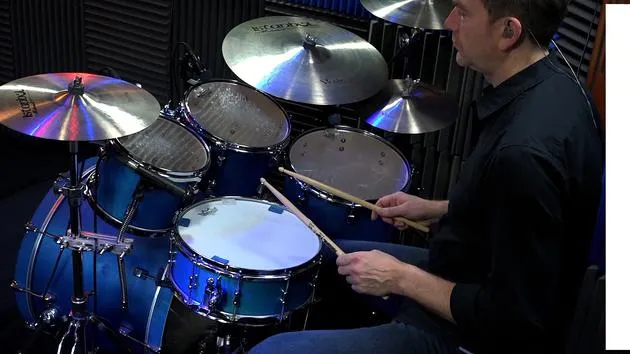
01. Demonstrations of grade technical requirements 0
0:53
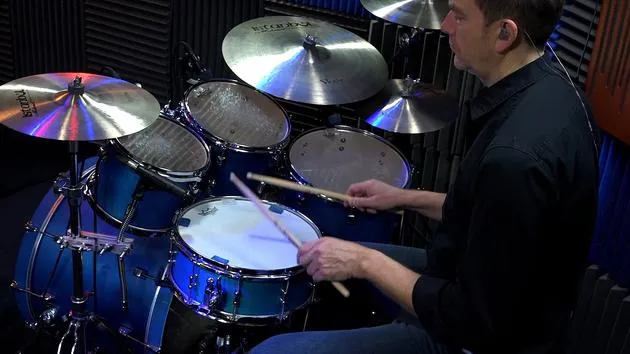
02. Demonstrations of grade technical requirements 1
1:07
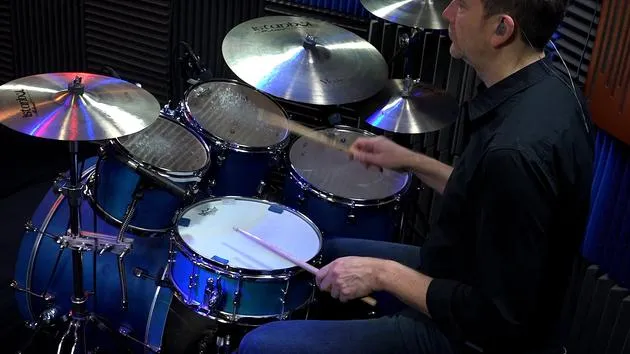
03. Demonstrations of grade technical requirements 2
1:25
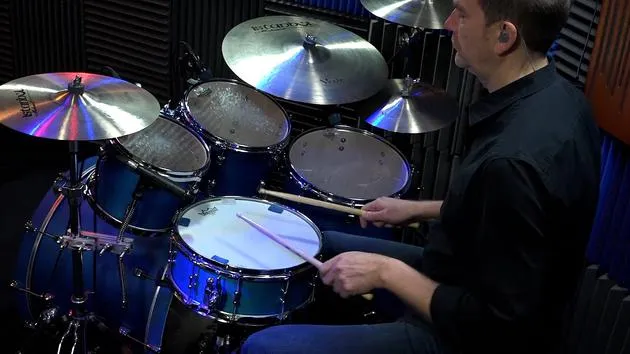
04. Demonstrations of grade technical requirements 3
2:05
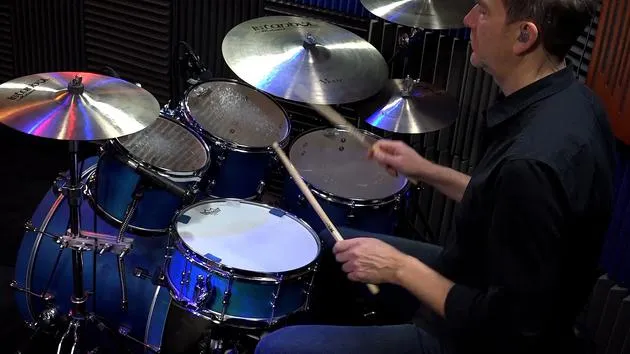
05. Demonstrations of grade technical requirements 4
3:34
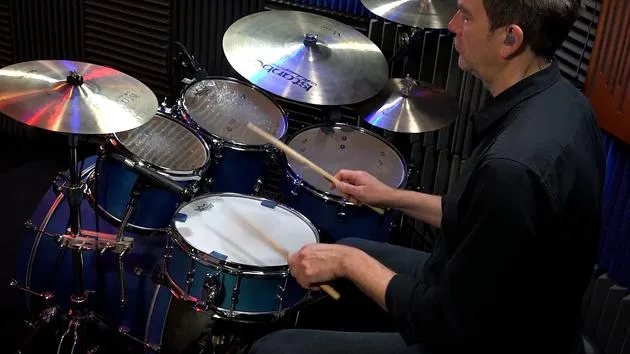
06. Demonstrations of grade technical requirements 5
3:14
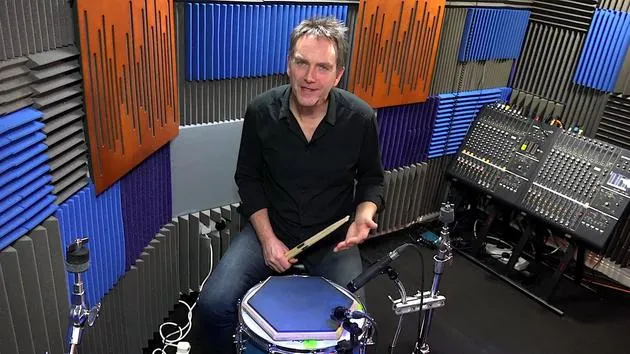
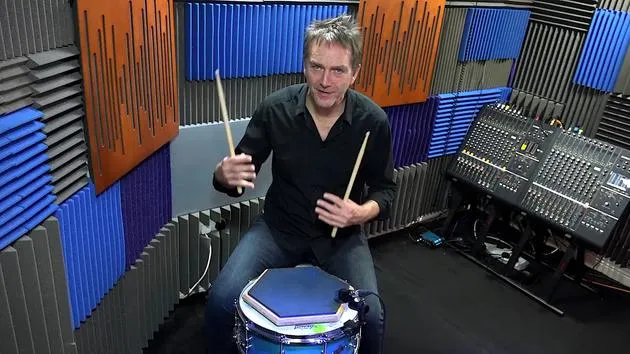
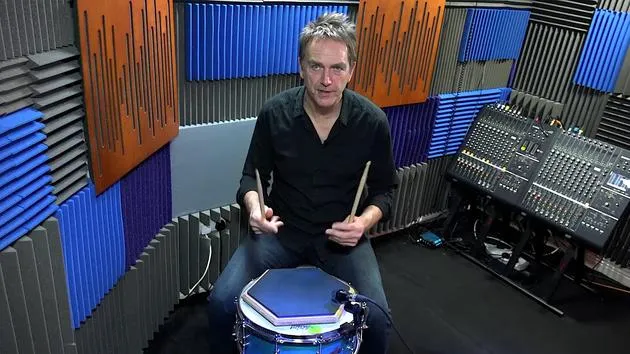
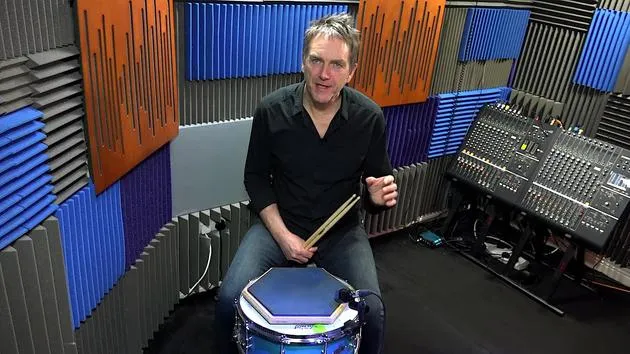
Lesson transcript
Understanding Paradiddles and Their Physical Technique
Paradiddles are essentially combinations of single and double strokes. The diddle family of rudiments typically includes:
- Single Paradiddle
- Double Paradiddle
- Triple Paradiddle
- Paradiddle Diddle
And various combinations and inversions of those sticking patterns. That's a lot of diddles we're dealing with!
Approach to Practicing Paradiddles
In this section, we'll explore how to approach the physical aspect of creating accents and working through the coordination of the patterns. Here's what you should consider when practicing the key paradiddle stickings:
- If you're not familiar with paradiddles, start by practicing without accents.
- Use a bounce technique to improve hand coordination.
Example
For a basic paradiddle, practice this pattern:
- Right Hand: Tap
- Left Hand: Tap
- Right Hand: Tap
- Right Hand: Tap
- Left Hand: Tap
- Right Hand: Tap
- Left Hand: Tap
- Left Hand: Tap
Recap of the Basic Paradiddle:
- Right, Left, Right, Right, Left, Right, Left, Left
Practice with a Click
Once you get familiar with the coordination, integrate a metrical system:
- Try 16th notes at 70-80 beats per minute
- Gradually increase the tempo as you become more comfortable.
Incorporating Accents
In performance settings, we often play paradiddles with accents. Accenting notes helps to create dynamics and adds a musicality that is essential for fills, phrases, or groove embellishments.
Stroke Techniques
To create accents and non-accented notes, focus on a sequence of dedicated strokes. This is a highly efficient way to execute the strokes while maintaining related motions and dynamics.
Key Stroke Sequences
-
Single Paradiddle:
- Sticking: Down, Up, Tap, Tap
- Pattern: Right, Left, Right, Right, Left, Right, Left, Left
-
Double Paradiddle:
- Pattern: Down, Up, Tap, Down, Up, Tap, Down, Tap, Tap, Up, Tap, Tap
- Accent the very first single note.
-
Triple Paradiddle:
- Pattern: Up, Tap, Tap, Up, Tap, Up, Tap, Tap
- Remember, the upstroke always prepares for the next downstroke.
-
Paradiddle Diddle:
- Pattern: Diddle, Down, Tap, Tap, Tap
- Acknowledge the need to prepare the second set of doubles for the downbeat.
Moving Around the Drum Kit
As you begin moving these sticking patterns around the drum kit, remember:
- There's more anticipation when transitioning to accents, especially on toms or cymbals.
- You often want to return to the snare drum after accents or fills.
Practice Tips
- Start on a Pad: Before transitioning to the kit, practice on the pad to understand stroke sequences.
- Break It Down: Don't rush; break down the patterns and related movements methodically.
- Dynamic Awareness: Accents are meant to stand out; they should be louder in relation to the notes surrounding them.
Final Thoughts
When playing general stickings with accents, it's not necessary to play every accent loudly. The goal is for the accent to stand out against the quieter surrounding notes.
Key Points to Remember
- Louder accents: Slightly louder unaccented notes will help balance your dynamics.
- Musical Choice: Determine the loudness of your accents based on your musical context.
That's it! Here are the technical exercises for your grade played at the tempo stated in the book. I wish you good luck!
11 lessons
0h 48m of structured video lessons
Advanced video features
Slow down, loop a passage, follow along
Mobile, tablet & desktop
Practise wherever you are
100% satisfaction guarantee
30-day money-back guarantee
Meet your guru
Meet your guru
Paul Elliott is a respected drum educator and clinician whose students hold top gigs across the industry, including drummers for Kylie Minogue (Tom Meadows), Ricky Martin (Laura Fares) and The Cure (Jason Cooper). He has shared clinic stages with Steve Smith, Manu Katché, Simon Phillips and Gary Husband, and his own playing career included work with Frank Gambale, Guthrie Govan and Shaun Baxter. Drummers such as Phil Selway (Radiohead) and Ash Soan (Adele) come to him for technical advice. In his courses he works through the technical requirements grade by grade, demonstrating each rudiment and explaining not just how to play it but what mastering it lets you do on the kit.







