



Double Strokes
With
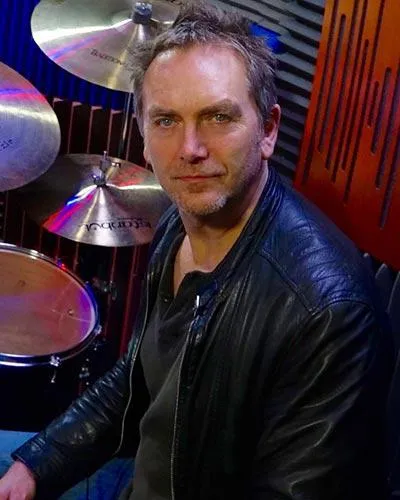
Paul ElliottPaul Elliott breaks down the continuous double stroke roll for your drum technical exercises - from slow, bounced strokes to building speed across subdivisions.
What's in the course
11 lessons (0h 48m) · 1 free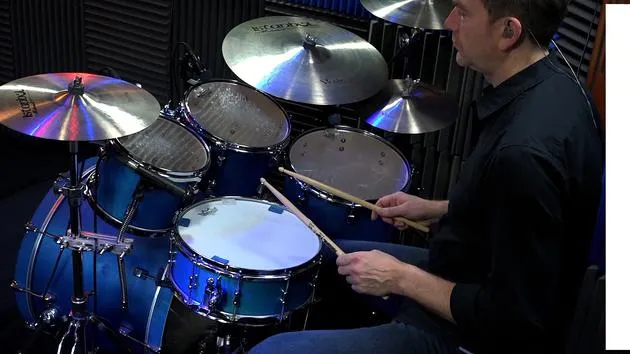
01. Demonstrations of grade technical requirements 0
0:53
02. Demonstrations of grade technical requirements 1
1:07
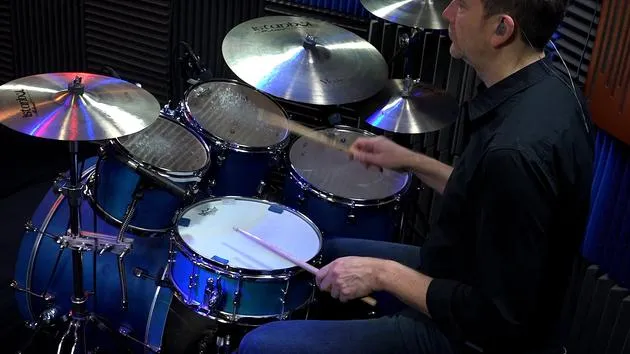
03. Demonstrations of grade technical requirements 2
1:25
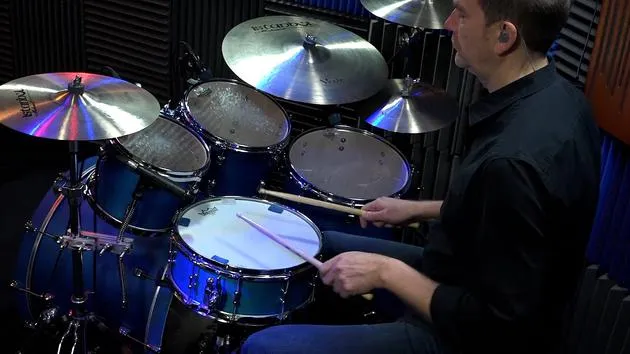
04. Demonstrations of grade technical requirements 3
2:05
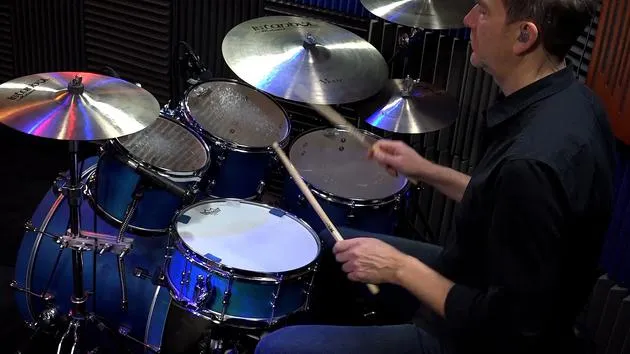
05. Demonstrations of grade technical requirements 4
3:34
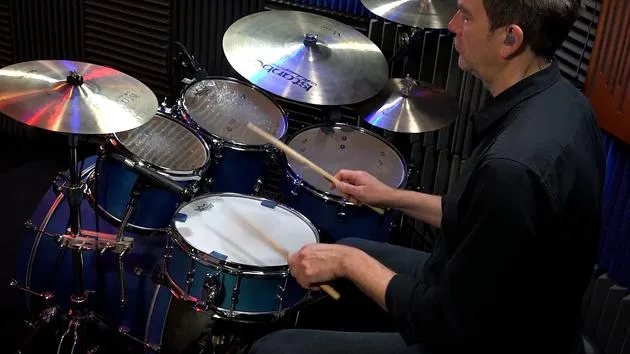
06. Demonstrations of grade technical requirements 5
3:14
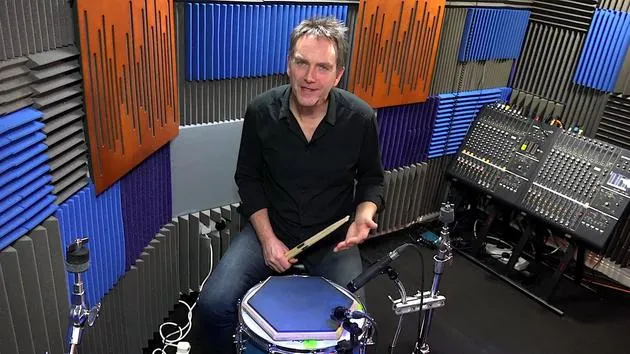
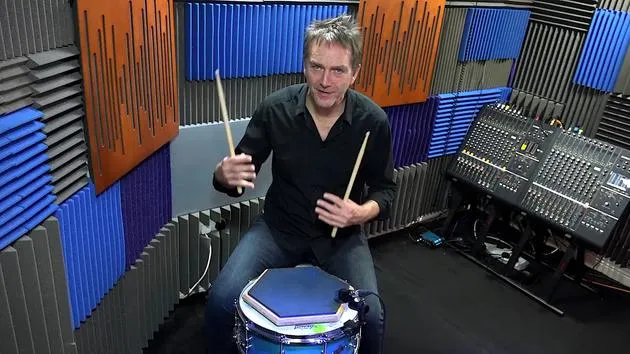
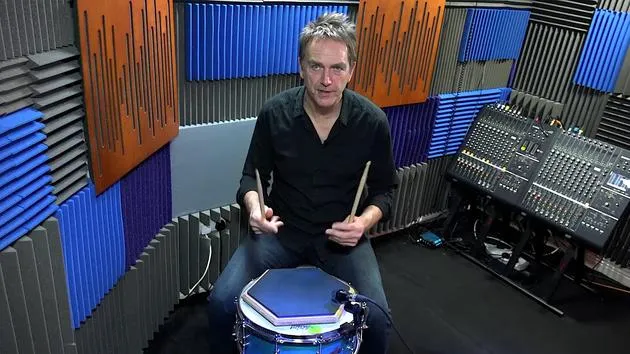
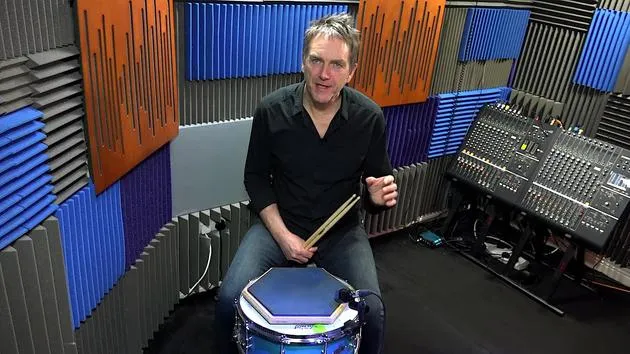
Lesson transcript
Understanding Double Strokes
Double strokes are very important and can be played in lots of different ways, technically, sonically, and creatively, on the drum kit. Doubles are also integral to other family groups such as diddles and stroke rolls.
Continuous Double Stroke Roll
For now, I'm going to concentrate on the continuous double stroke roll, that long run of double strokes that you would need to demonstrate in your technical exercises. This includes:
- Working through subdivisions
- Starting slowly and getting faster
Technique at Slow Rates
At very slow rates of notes, it's not necessary to use any specific technique. For example, if I was playing doubles at a slow rate, I can either:
- Play into the drum
- Bounce two separate strokes, which looks like playing two single strokes almost with the same hand.
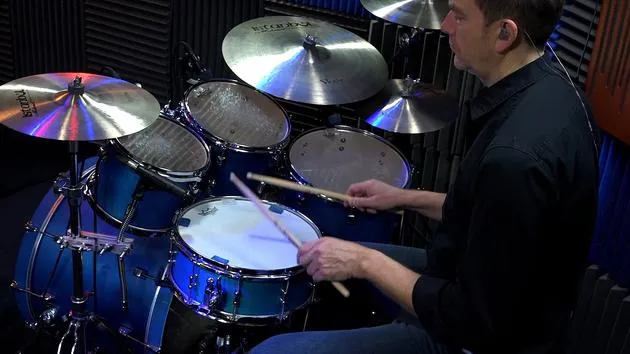
In my demonstrations at the lower grades and subdivisions, I used that separate bounce technique. I believe it's a good warm-up technique and assists when you get faster. It also helps with your single stroke bounces. While it isn't entirely necessary as a demonstration, it's beneficial.
Common Problems with Double Strokes
Problems occur when you start to work through those subdivisions, and the notes are getting closer together. It becomes really difficult to play separate strokes.
I've seen time and time again that drummers have problems playing double strokes because they attempt to play those notes separately, trying to play two individual notes.
Recommended Technique: Two-for-One
The technique I would advise is what I like to call a two-for-one technique. Here's what that means:
- Get the double stroke for one action.
- It's not particularly fast, but it creates a nice smooth double stroke.
- You push the stick down to achieve two notes for one action.
In essence, you're not playing those notes separately; you're allowing the stick to do the work. This is the best advice I can give for those long continuous double stroke rolls.
Practicing with Control
That practice you do to navigate through those subdivisional exercises still requires an element of control. It won't just happen; you need to:
- Feel those doubles.
- Concentrate on the coordination of right to left.
When practicing doubles in any subdivision, it's crucial to feel the single subdivision underneath the double.
- For example, if you practice eighth notes at a specific tempo, you can then double up to triplet or sixteenth notes.
This awareness of the single notes beneath is great for timekeeping and helps with the flow of notes.
Conclusion
That is the technique I would use all the time when practicing doubles, and it will lend itself to the other groupings: the diddles and the stroke rolls that are coming up very soon.
11 lessons
0h 48m of structured video lessons
Advanced video features
Slow down, loop a passage, follow along
Mobile, tablet & desktop
Practise wherever you are
100% satisfaction guarantee
30-day money-back guarantee
Meet your guru
Meet your guru
Paul Elliott is a respected drum educator and clinician whose students hold top gigs across the industry, including drummers for Kylie Minogue (Tom Meadows), Ricky Martin (Laura Fares) and The Cure (Jason Cooper). He has shared clinic stages with Steve Smith, Manu Katché, Simon Phillips and Gary Husband, and his own playing career included work with Frank Gambale, Guthrie Govan and Shaun Baxter. Drummers such as Phil Selway (Radiohead) and Ash Soan (Adele) come to him for technical advice. In his courses he works through the technical requirements grade by grade, demonstrating each rudiment and explaining not just how to play it but what mastering it lets you do on the kit.







