



Maxim Vengerov general feedback and analysis
With
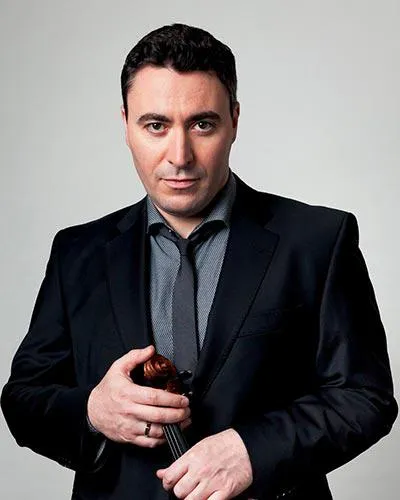
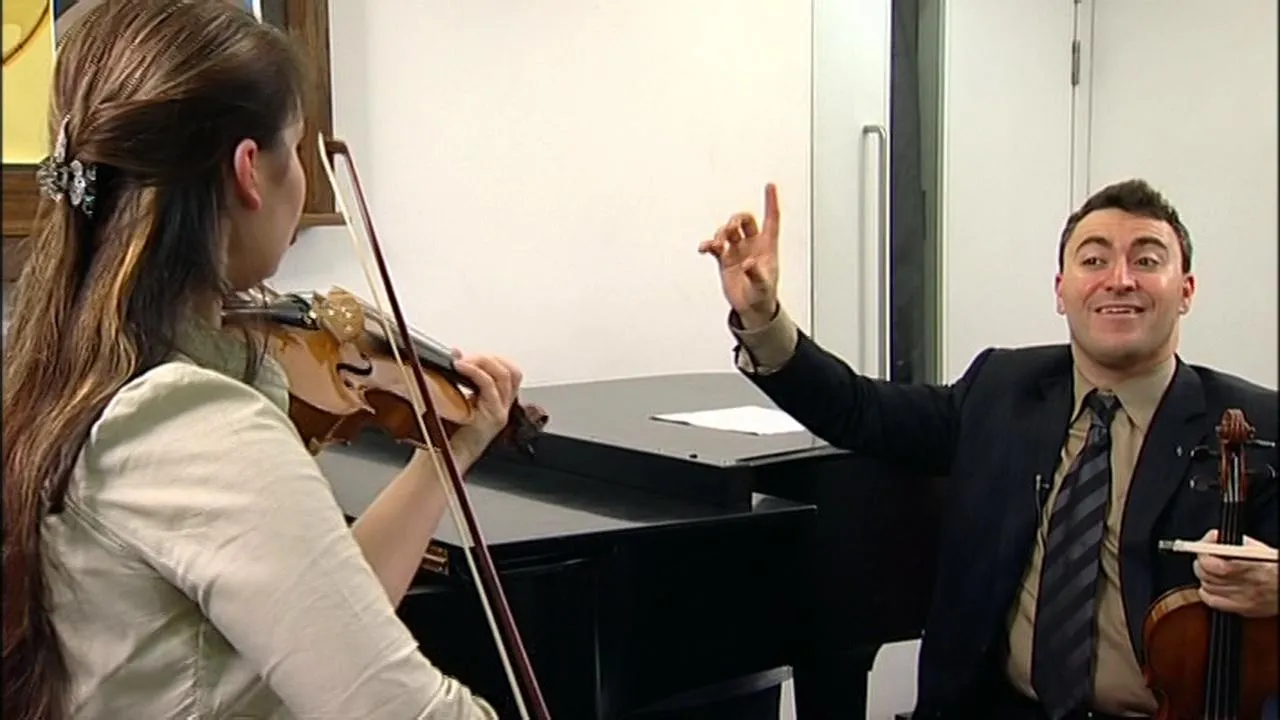
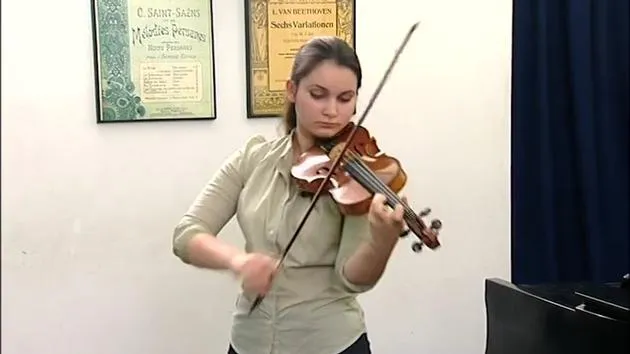
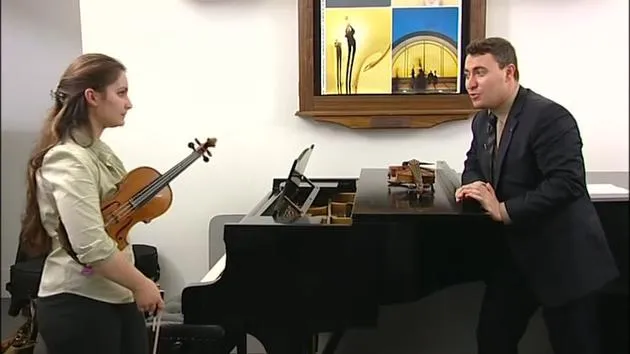
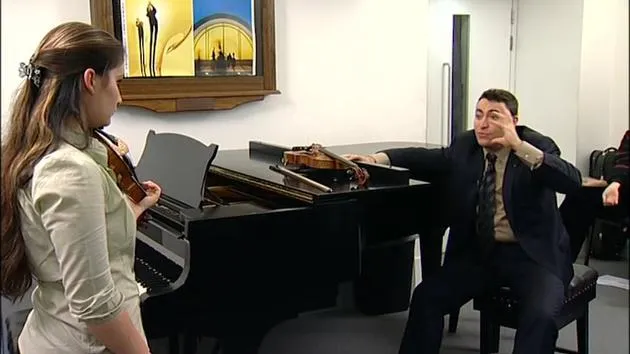
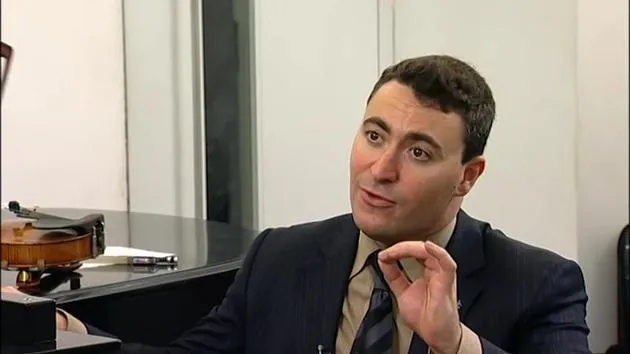
Maxim VengerovMaxim Vengerov gives a student detailed feedback on her Bach fugue, with insight on harmony, phrasing and shaping the long line of the Sonata.
What's in the course
5 lessons (0h 55m) · 1 free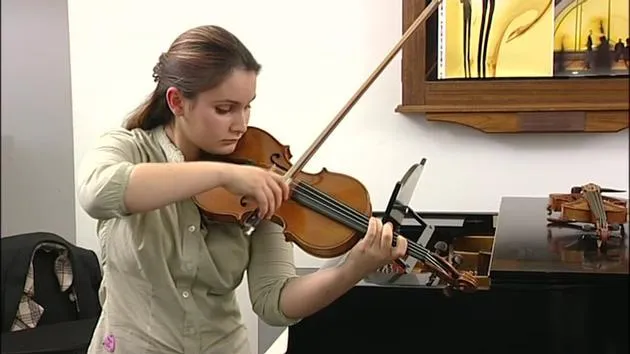
Lesson transcript
Music Lesson
Introduction Bravo, Bravo! I really like how you structure everything and the long-run strategy of the fugue. This is very important, not to be tempted by many little beautiful things, but you know exactly what you're looking forward to in the fugue.
Key Points Discussed Nevertheless, I would like to outline a few points for our discussion about the strongest elements of Bach and his influence on the audience's ear.
1. Harmony
- First of all, I want to talk about harmony.
- Every harmony has a different strength.
- When there is no change in harmony, it can also be powerful.
Hypnotizing Effects You see, this can create a really hypnotizing effect when the composer doesn't change harmony. You have to fill the space with this.
- Stretch the phrase.
- Make the harmony feel like you are stretching it, like a harmonica.
This is the effect we're discussing!
2. Instrumentation
- Imagine having the ability to play each harmony on a different instrument, if possible.
- The only inspiration we can draw is from hearing Bach, for instance, on the organ. It really shows this difference.
Historical Context Now, we can also compare:
- The violin was just one of the instruments available at that time to play the music of Bach and his contemporaries.
- The same fugue could easily be composed and re-edited for harpsichord and successfully performed there.
3. Performing Beyond the Instrument
It's a beautiful illusion to think that we're not playing the violin anymore. We can produce sounds and colors that don't belong to the instrument. This is a high-level performance!
Interpretation Given that you have learned everything you know, your interpretation is wonderful! Yes, one can perform it one way, another can interpret it differently. However, what you did was very impressive.
- Your performance had conviction and was very strict.
- There was a great deal of intelligence in your playing.
- You knew exactly about all the voices, and everything was very smartly scheduled, let's put it this way.
Focus on Harmony
But now, I want you to concentrate on the harmonies. Let's focus on the first phrase, please.
5 lessons
0h 55m of structured video lessons
Advanced video features
Slow down, loop a passage, follow along
Mobile, tablet & desktop
Practise wherever you are
100% satisfaction guarantee
30-day money-back guarantee
Meet your guru
Meet your guru
Maxim Vengerov is recognised as one of the world's most exciting violinists. He gave his first recital at the age of five and, after studying with Galina Tourchaninova and Professor Zakhar Bron, went on to win First Prize in the Junior Wieniawski Competition at the age of ten. In 1990, aged fifteen, he won the Carl Flesch International Violin Competition, confirming his reputation as a musician of the very highest order.
In May 2000, following a ten-year recording contract with Teldec Classics, Maxim Vengerov signed an exclusive contract with EMI Classics. His awards and prizes have included Gramophone Young Artist of the Year and Ritmo (Spain) Artist of the Year in 1994; Gramophone Record of the Year and Grammy Award nominations for Classical Album of the Year and Best Instrumental Soloist with Orchestra in 1996; the Edison Award for Best Concerto Recording in 1997; Gramophone Artist of the Year in 2002; and both an Edison Award and a Grammy Award in 2004 for Best Instrumental Soloist Performance (with Orchestra) for his recording of the Britten Violin Concerto and the Walton Viola Concerto.
In 1997 Vengerov was the first classical musician to be appointed Envoy for Music by UNICEF. In this role he has met and performed for disadvantaged children in Uganda, Harlem, Thailand, and on both sides of the Kosovan ethnic divide - work that has allowed him both to inspire children worldwide and to inspire others to raise funds for UNICEF-assisted programmes. Another passion of Vengerov's life is his involvement with young people through giving masterclasses. One such event was recorded by Channel Four Television as part of a documentary on Vengerov called 'Playing by Heart', shown at the Cannes Television Festival in 1999. Since June 2005 he has been Professor of Violin at the Royal Academy of Music, London.
That same teaching passion runs through his MusicGurus masterclasses, where Vengerov takes you inside the great violin repertoire - from Ravel's Tzigane and Sarasate's Carmen Fantasy to the concertos of Sibelius, Mendelssohn, Britten and Shostakovich - sharing the technique and musicianship behind every phrase.







