



Analysis, explanation, demonstration of the Adagio Movement
With
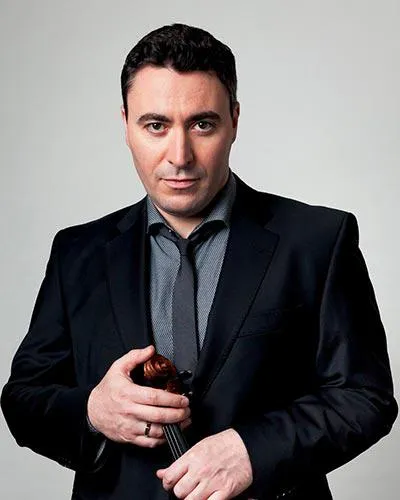
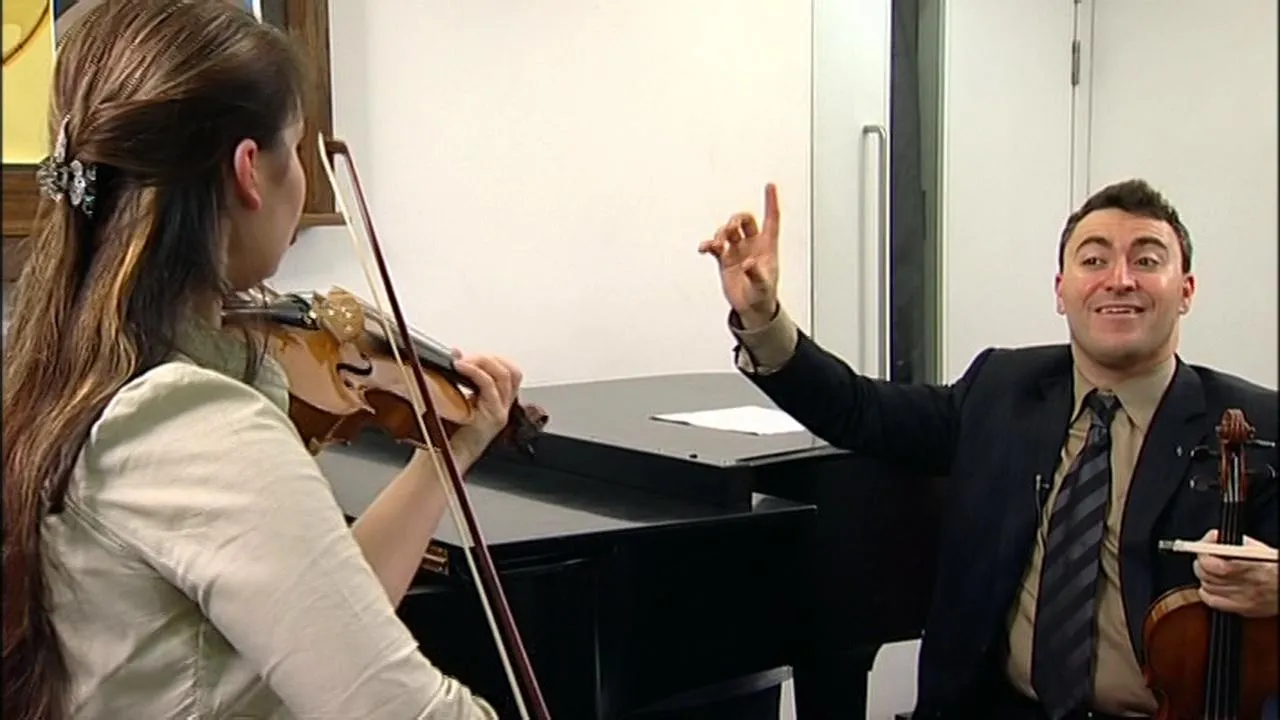
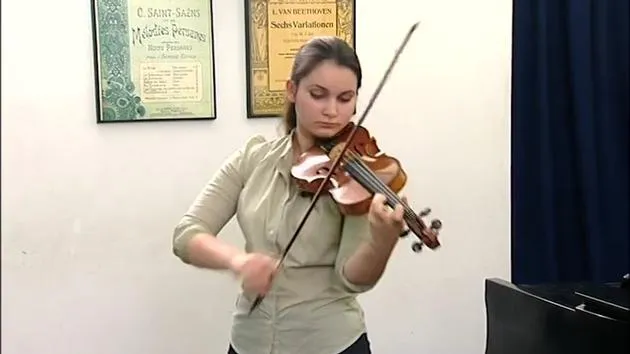
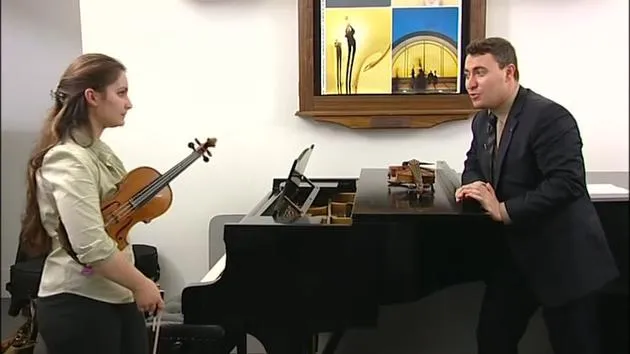
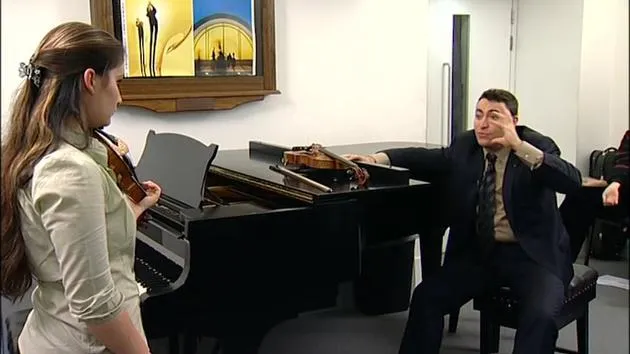
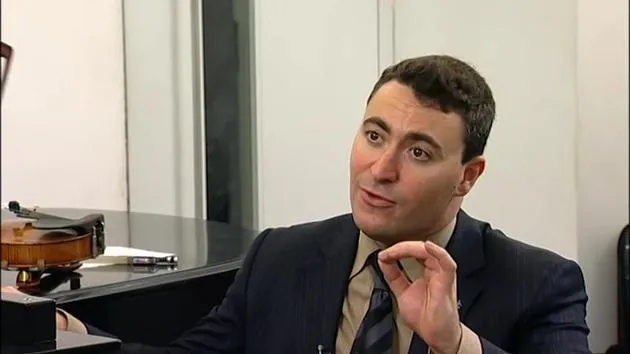
Maxim VengerovMaxim Vengerov works with Nasrin on the Adagio from Bach's Solo Violin Sonata No. 1, exploring its harmony, timing and interpretation through his own insight and anecdotes.
What's in the course
5 lessons (0h 55m) · 1 free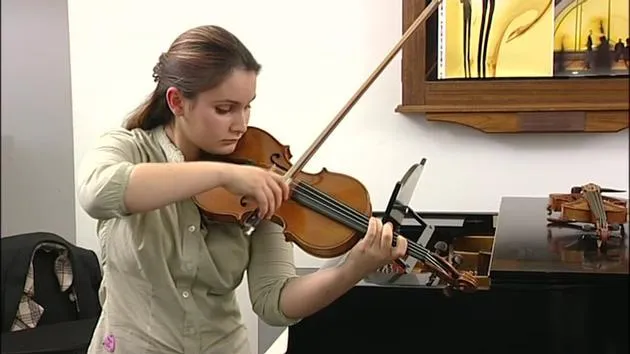
Lesson transcript
Music Lesson
Introduction
"Yeah. It is very, very simple. Yeah."
Harmony and Interpretation
- "If you wouldn't change the harmony, it probably would be wonderful to maybe."
- "If you would write something like this. Yeah. But that would be a different composer."
- "That wouldn't be Bach. Exactly. Yeah."
- That's why I think you have to change something. And that is your interpretation: how you play is your freedom.
Rubato and Rhythm
- "Rubato is already written. If you obey exactly to the rhythm, that will be rubato."
- "Welcome home. Yeah."
- "Dominant: different color. You follow the voice."
- Is this simplicity? That's what we need; but, you know, a little change here, little change there. Different talk.
Understanding Harmonies
- "When he puts the harmonies, it's like a column."
- "First of all, when you see the cathedral, you see an incredible gigantic building, architecture."
- "You don't see details; right? You see just the cathedral. You come close, you see the column."
- Then, you come closer, and you see different columns, which make the whole architecture.
Priorities in Music
- "All these columns, you know, little details. But there are priorities, and the priorities are the fundament."
- Harmony is vertical. In other words: play a G major chord or a G minor chord.
Development and Flow
- "You cannot play as equal as you have played the G minor chord. So I don't start."
- "You can make a little bit of rubato inside the frame."
- "This is just a frame for you, but be the creator."
- "I feel this is actually natural; that is written."
Creating Long Lines
- "Abrupt changes would sound a little bit not convincing."
- "That's why that makes one whole long line. Long line is very important."
- "From G minor to G minor, create this bridge for uninterrupted thought."
Playing Techniques
- "You know, you attract attention or distract attention from very important look."
- Vibrato: "There's a lot of dispute about how to vibrate or not to vibrate."
- "You have to choose a vibrato that corresponds with the room."
Considerations for Performance
- "If you would play in the church or cathedral, you wouldn't need much vibrato."
- "In our room, it's very secco. So I think we should use some vibrato here."
Bow Speed and Legato
- "The speed of the bow gives you vibrato."
- "This vibrato must correspond with vibrato in the left hand."
- "Feel the string; you can do anything with it. Basically, it's your sound."
Emphasizing Phrasing
- "The sound either goes up or goes down."
- "The phrase is round; that's why it must lead somewhere."
Freedom versus Rhythm
- "It's either rhythm or freedom."
- "You must always match these two."
- "Timing is very important."
Conclusion and Next Steps
-
"Let's concentrate on something: vibrato and speed of the bow."
-
Legato in your right hand, and staccato in your left hand.
-
"Combine vertical and horizontal phrases."
-
"Now, let's do a little bit of fugue. Yeah?"
5 lessons
0h 55m of structured video lessons
Advanced video features
Slow down, loop a passage, follow along
Mobile, tablet & desktop
Practise wherever you are
100% satisfaction guarantee
30-day money-back guarantee
Meet your guru
Meet your guru
Maxim Vengerov is recognised as one of the world's most exciting violinists. He gave his first recital at the age of five and, after studying with Galina Tourchaninova and Professor Zakhar Bron, went on to win First Prize in the Junior Wieniawski Competition at the age of ten. In 1990, aged fifteen, he won the Carl Flesch International Violin Competition, confirming his reputation as a musician of the very highest order.
In May 2000, following a ten-year recording contract with Teldec Classics, Maxim Vengerov signed an exclusive contract with EMI Classics. His awards and prizes have included Gramophone Young Artist of the Year and Ritmo (Spain) Artist of the Year in 1994; Gramophone Record of the Year and Grammy Award nominations for Classical Album of the Year and Best Instrumental Soloist with Orchestra in 1996; the Edison Award for Best Concerto Recording in 1997; Gramophone Artist of the Year in 2002; and both an Edison Award and a Grammy Award in 2004 for Best Instrumental Soloist Performance (with Orchestra) for his recording of the Britten Violin Concerto and the Walton Viola Concerto.
In 1997 Vengerov was the first classical musician to be appointed Envoy for Music by UNICEF. In this role he has met and performed for disadvantaged children in Uganda, Harlem, Thailand, and on both sides of the Kosovan ethnic divide - work that has allowed him both to inspire children worldwide and to inspire others to raise funds for UNICEF-assisted programmes. Another passion of Vengerov's life is his involvement with young people through giving masterclasses. One such event was recorded by Channel Four Television as part of a documentary on Vengerov called 'Playing by Heart', shown at the Cannes Television Festival in 1999. Since June 2005 he has been Professor of Violin at the Royal Academy of Music, London.
That same teaching passion runs through his MusicGurus masterclasses, where Vengerov takes you inside the great violin repertoire - from Ravel's Tzigane and Sarasate's Carmen Fantasy to the concertos of Sibelius, Mendelssohn, Britten and Shostakovich - sharing the technique and musicianship behind every phrase.







