



Pulse & Phrase - the essential ingredients
What's in the course
21 lessons (1h 8m) · 1 free
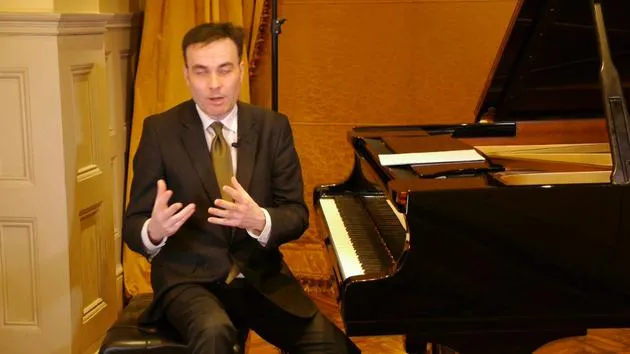
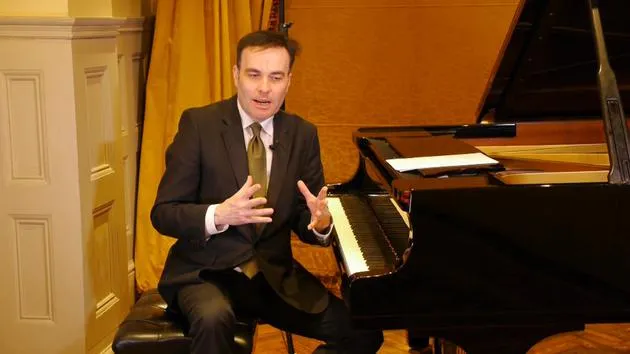
Lesson transcript
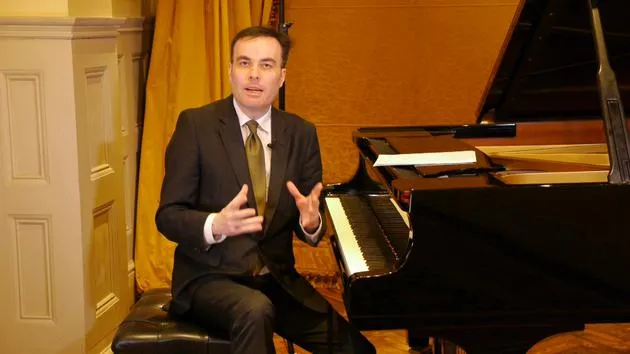
Understanding Pulse and Phrase in Piano Improvisation
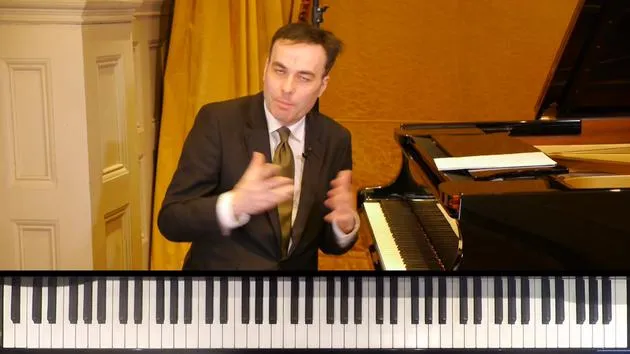
Now, the two key areas that we're going to be covering in this section are the two P words: pulse and phrase.
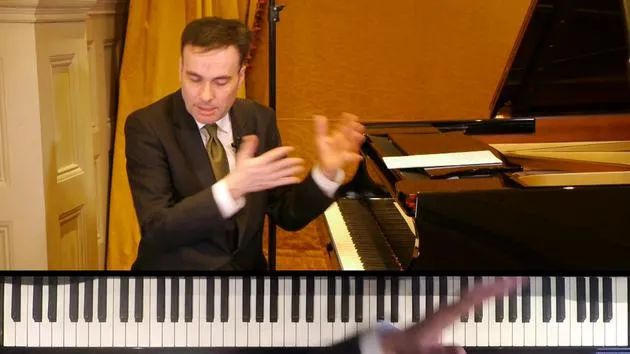
It's really important when you get going with an improvisation at the piano that you think of it as a kind of musical conveyor belt, something that's already in motion that you are then stepping onto. These two elements are the most vital ingredients for musical performance: pulse and phrase.
Getting Started with Pulse
To begin, we will focus on getting that pulse going with one hand. This is the one bit where it might be good to think about the notes.
- Beginners Note: Some people watching this will be complete beginners.
- We've already mentioned that this process completely transcends notation, so it really doesn't matter. However, this is one section where you might want to use a note guide at the piano that shows you where middle C is and everything else.
When I refer to these notes, obviously, if you're already learning, this will be something that's very obvious. If you are a beginner or if you don't yet read music, you can address this easily with a simple keyboard note guide that you can find in any music shop very cheaply.
Establishing the Pulse
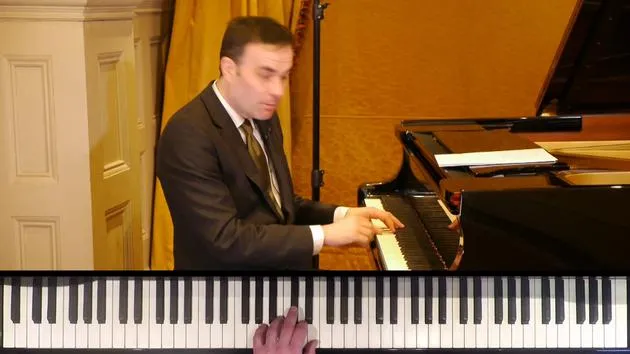
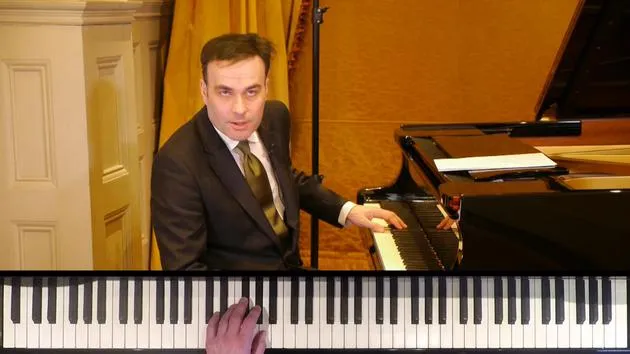
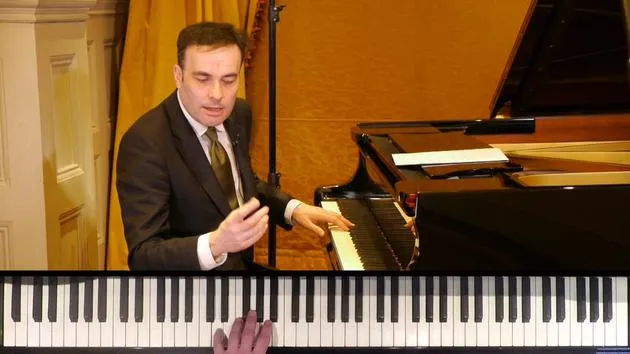
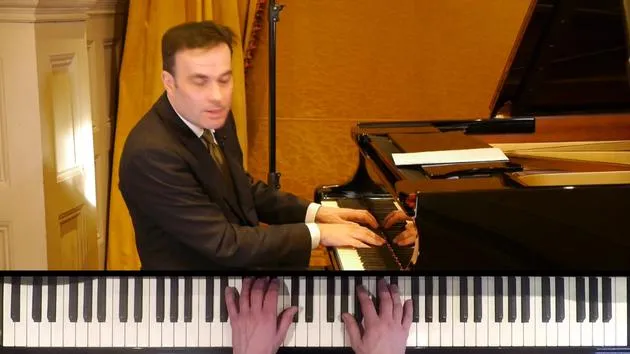
What I'm going to do to start our motion of this musical conveyor belt is to get a pulse going with my left hand.
- For reference, if you are following the notes here, I will be using the D below middle C (nearly an octave lower, not quite).
- Here's the D:
With my third finger in the left hand, I'm just going to get a very steady pulse going.
- This is something that a complete beginner could be doing, but it will soon lead onto something a more advanced pianist would also enjoy.
- The complete beginner will be amazed at what they are achieving!
Right Hand Melody
Now, with the right hand, I'm going to place my thumb on the D above middle C.
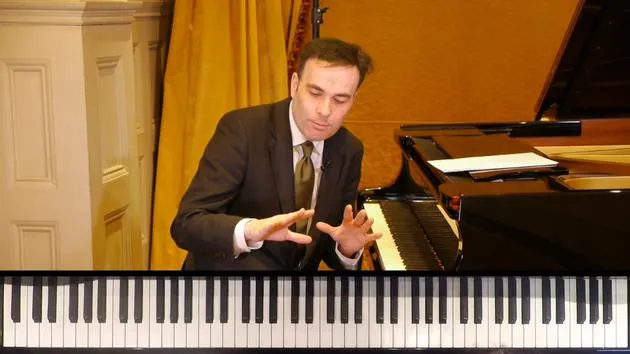
- As we talked about just now, with our hand position, one finger should be above each of those five notes.
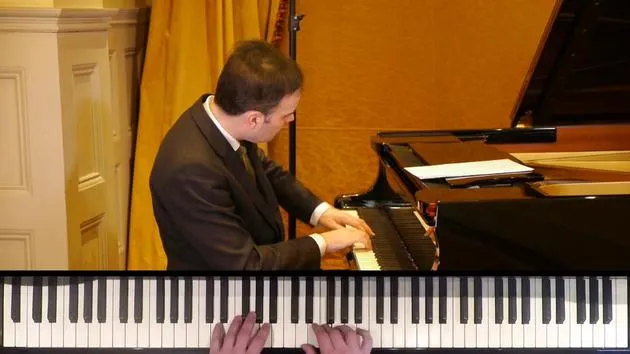
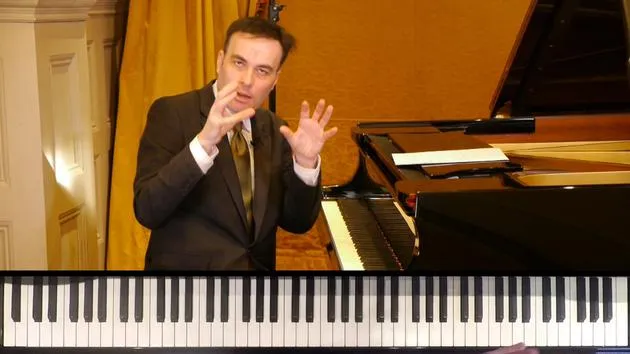
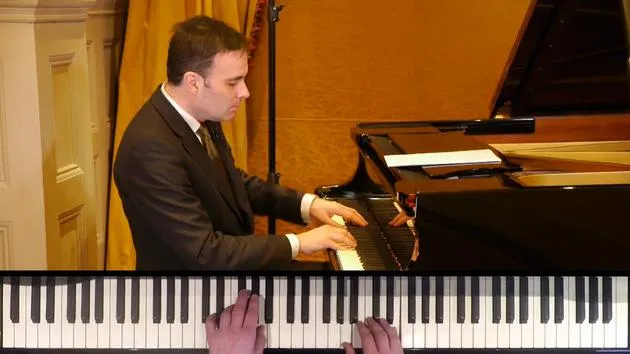
Now that I have the pulse going with my left hand, I'm going to start creating a little note pattern with my right hand by using different fingers.
- I'm trying to think of a little beat, a little rhythm that could fit with the pulse that's already taking shape.
Simple Melody: I'm creating a very, very simple melody.
We will talk in a minute about the harmony that we're using here, but you don't need any prior knowledge to work with the note pattern itself.
I'm really moving from the physicality of it outwards. In other words, I'm not thinking about the actual notes that I'm using.
- I'm not composing here, and I'm never going to write this down necessarily.
- It might not be the most profound tune in the world, but it's already giving us something that has shape.
You're already playing the piano, using both hands, and this approach allows us to skip over all those steps that often take lesson after lesson.
- People usually learn hands separately for 10 weeks before they ever put the hands together.
- Here, we're already using both hands!
With the melody that's taking shape in my right hand, all I'm doing is using my different fingers in a completely random order while thinking of a rhythm that would work.
Tapping the Rhythm
Before you actually start playing, consider this:
- Once you have your hand positioned at the piano, you might want to tap a little rhythm with your foot.
- It can be anything, short, short, short, short, long, and that can immediately become your melody.
As you play, hold some notes and let it take shape!
21 lessons
1h 8m of structured video lessons
Advanced video features
Slow down, loop a passage, follow along
Mobile, tablet & desktop
Practise wherever you are
100% satisfaction guarantee
30-day money-back guarantee







