



Sick Boogie (lesson)

With
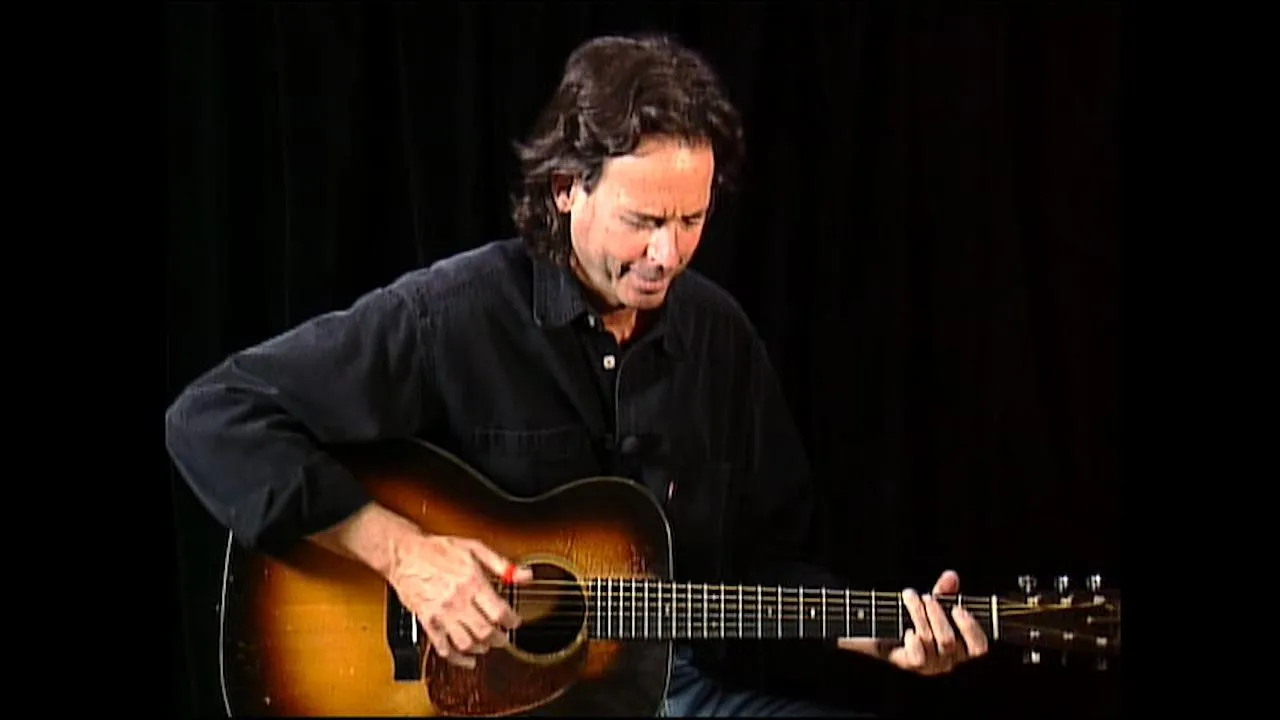
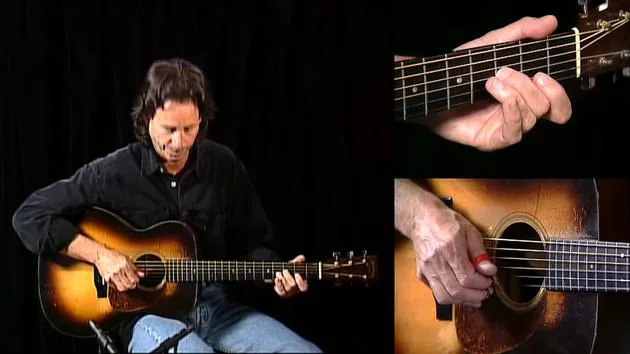
Kenny SultanKenny Sultan teaches his fast fingerstyle blues 'Sick Boogie' in the key of E, sharing right-hand tricks to make near-identical notes sound different.
What's in the course
12 lessons (1h 18m) · 1 free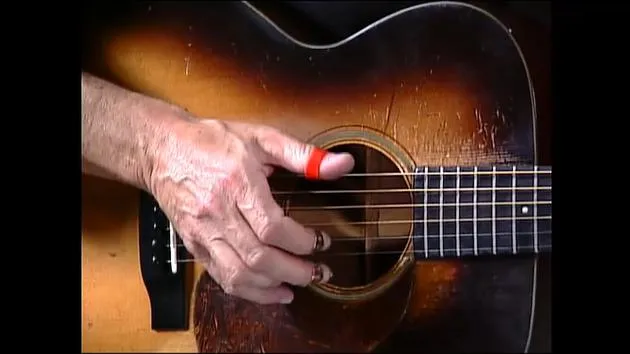
01. Slippin' And Drippin' (performance)
Free lesson4:17
02. Slippin' And Drippin' (lesson)
10:29
03. Lightning Strikes (performance)
2:50
04. Lightning Strikes (lesson)
9:37
05. Sick Boogie (performance)
2:31
06. Sick Boogie (lesson)
You are here8:56
07. If The Shoe Fits (performance)
4:18
08. If The Shoe Fits (lesson)
9:19
09. Honky Tonk (performance)
3:49
10. Honky Tonk (lesson)
10:04
11. Cascade Rag (performance)
3:12
12. Cascade Rag (lesson)
9:14
Lesson transcript
Sick Boogie Music Lesson
Our next song is going to be the Sick Boogie. My engineer named this song because we just made it up on the fly.
Song Characteristics
- Key: E
- Speed: Fast
- Style: Different from other E songs
- First one: slipping and dripping slow
- Second one: Lightland strikes medium pace
- This one: out of control
Techniques Overview
Let me show you some tricks on how we can almost play the same notes but make them sound differently.
- Right Hand Techniques:
- Very little bass.
- No time for monotone sound.
Here's how I start off with the boogie:
"Okay. Now that boogie's pretty quick and if I just played a straight boogie there, not much juice to that."
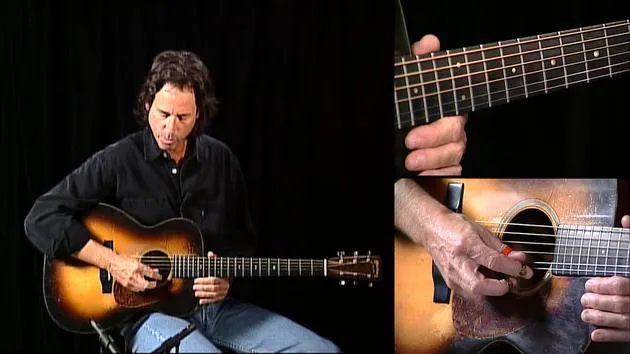
I add an octave right here, that E, with my first finger on the right hand. I am getting this in slow motion, of course.
Then, I'm going down to the A and adding it on the A note.
Speed and Technique
Now up to speed, it's not that clean. I'm not really hitting the note; it's more of A at best, I think.
"Let's check it out again, see how much more that adds than just."
This is the technique I always use on faster boogie-type blues, whether it be an E or an eniki.
- When I go into the B7 chord:
- No time for monotone.
- Our medium-paced shuffle.
Remember our slow one? No leisure here. We're going fast.
To accomplish what we need to do, I alternate the bass on my right hand:
"So just a regular alternating bass like this. It's a great rhythm for backing up somebody's singing."
Chords and Progression
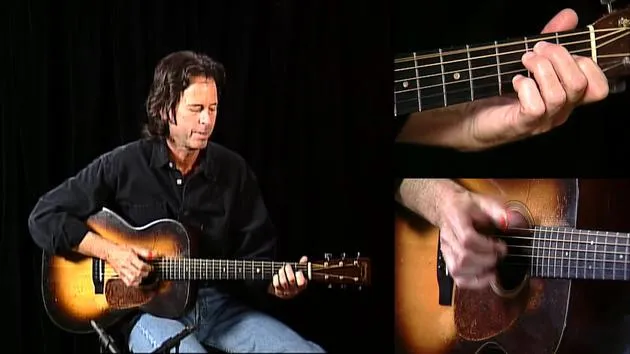
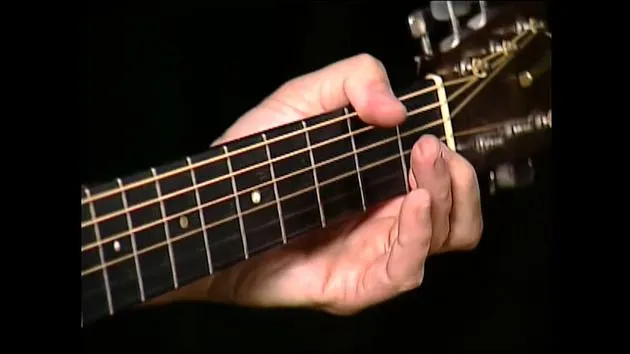
Now, what I'm going to do is move up the neck and make what I call the Freddy King chord.
- Remember Hideaway? We steal from everybody.
- I'm a shameless mugger and stealer, or borrower, of licks.
This is a chord from Hideaway, and it's kind of a weird E9th. I'm going to go from this 9th to this 9th, a 9th back to this 9th, and it's going to sound like this in full speed.
"All it is is a right-hand sort of strum."
Strumming Technique
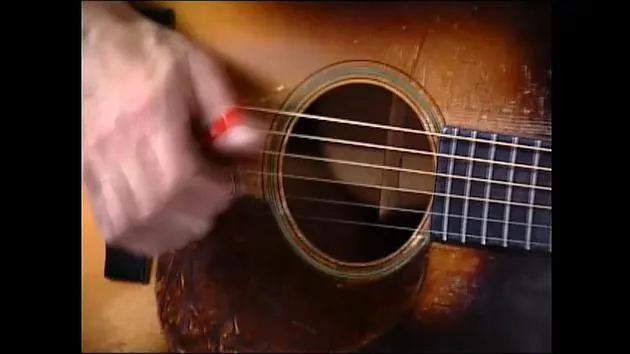
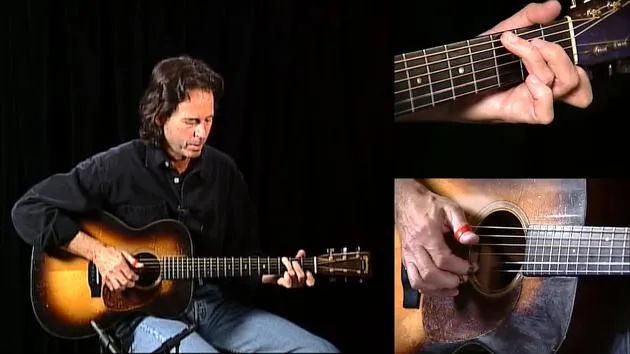
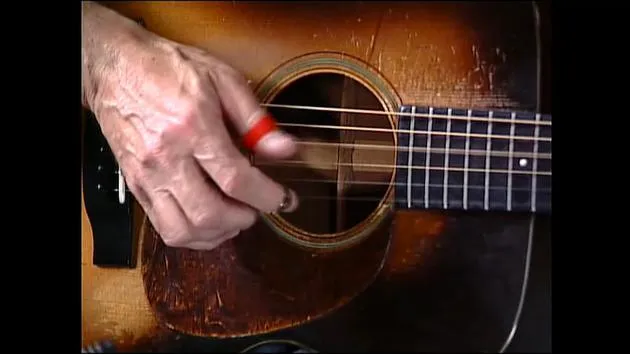
I've learned how to strum with finger picks now because I only play with finger picks. You don't have the luxury of having that flat pick and that up strum.
- If I try to up strum at least myself with this thumb pick, it's going to come off.
- So, I use my fingers for most of my up strums, and then...
And if you're brave enough, you can come up here to the B. But I usually go back down.
Double Stops and Alternative Bass
The same double stops we used before on the slower songs can be used again all the way up the neck.
- We don't have time for any bass here; it's all right hand.
- What I do is go back and forth with my thumb and finger as fast as I can.
One of the tricks to help with this is:
- Finger Placement: Put your finger a little bit behind your thumb to avoid them getting in each other's way.
"This is how I do single string rods, and also how I do strum double strums."
Practice Example
I'll start off like this and I'm going to go again...
"Whoa. Okay, slow that down."
Same thing we did four and then add a D.
Moving the B7 Position
Another thing I do is take this B7 position and move it up to E7:
- Great finger-picking chord!
- Now I can use an alternating bass right here.
I can play real fast when I alternate. So I'll go from this to maybe back to my favorite A chord.
"There are a lot of things you can do with this A and then back up to here and then I'll go to the B7."
That's an A seventh up two frets, and a seven E, and then whatever turnaround comes to mind.
Summary of Techniques
- Techniques to Remember:
- Alternate bass.
- E7 and D7 up two frets for different speeds (slow blues, medium blues, and fast blues).
The hardest part about this song is trying to figure out what to play next because you're moving so fast.
Key Takeaways
- Octave Off Your Boogie.
- New Chords Up the Neck: 9th chords that sound great together.
- Right Hand Strum: Get used to doing that.
And that's a sick boogie!
"And that's, I guess, why he named it that. Good luck!"
12 lessons
1h 18m of structured video lessons
Advanced video features
Slow down, loop a passage, follow along
Mobile, tablet & desktop
Practise wherever you are
100% satisfaction guarantee
30-day money-back guarantee
Meet your guru
Meet your guru
Kenny Sultan is a best-selling author of music books and instructional videos covering blues guitar, and is the guitarist in a blues duo with Tom Ball.
Together and separately they have worked on countless film scores, TV soundtracks, commercials and sessions. They've appeared on television internationally, were featured on the “Levi's 501 Blues” commercials, have played for audiences of 300 million via Voice of America and are frequent guests of National Public Radio. They've shared the stage with the likes of Bob Dylan, Stevie Ray Vaughan, The Allman Brothers, Joe Bonamassa, Ray Charles, Joe Cocker, Elvis Costello, and the list is long...
At home wherever they go, Tom and Kenny fit in at blues, folk, bluegrass and jazz festivals, and their extensive teaching backgrounds make them a natural choice for college campuses or venues that feature workshops. Because their music is a blend of American roots styles, they are regulars overseas, drawing rave reviews.
That same teaching pedigree is what you tap into here. Kenny guides you into traditional blues guitar from the ground up - fingerpicking patterns, alternating bass, turnarounds and the classic licks that define the style - so you build a real repertoire of authentic acoustic blues you can actually play.
“Stupendous playing.” --Blues Revue
“As good as anyone in acoustic blues.” --Sing Out







