



Smokey Mountain Morning (lesson)
With
Al Petteway
What's in the course
14 lessons (1h 25m) · 1 free
01. Spindrift (performance)
Free lesson3:36

02. Spindrift (lesson)
9:05

03. Eureka Hotel (performance)
3:12

04. Eureka Hotel (lesson)
9:47
05. She Moved Through The Fair (performance)
2:34
06. She Moved Through The Fair (lesson)
9:05
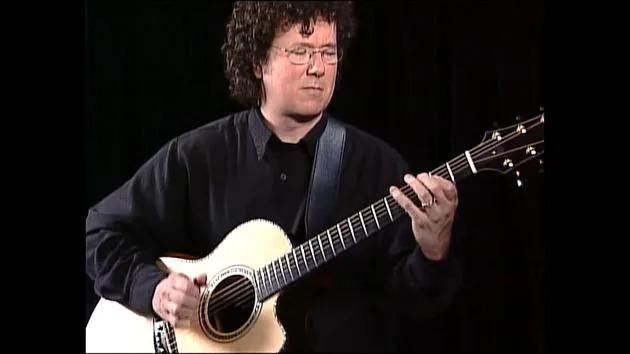
07. Meant To Be (performance)
3:59
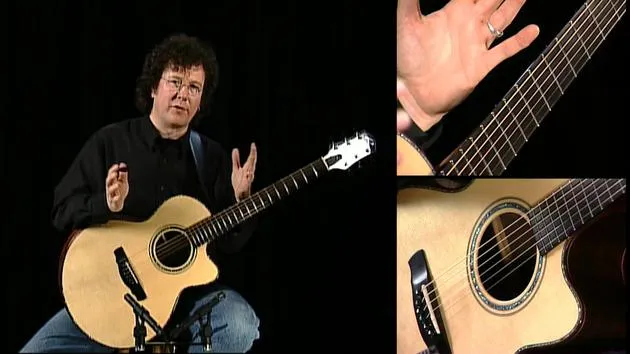
08. Meant To Be (lesson)
10:25

09. Smokey Mountain Morning (performance)
4:53
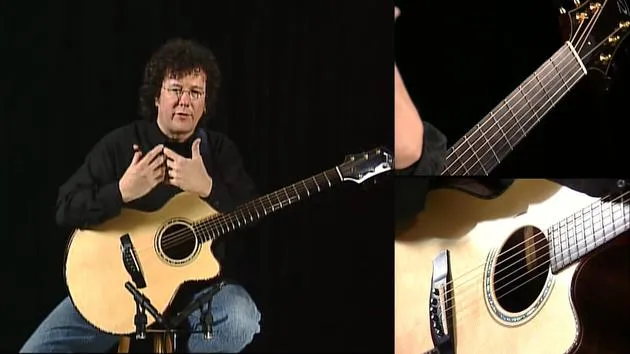
10. Smokey Mountain Morning (lesson)
You are here9:21
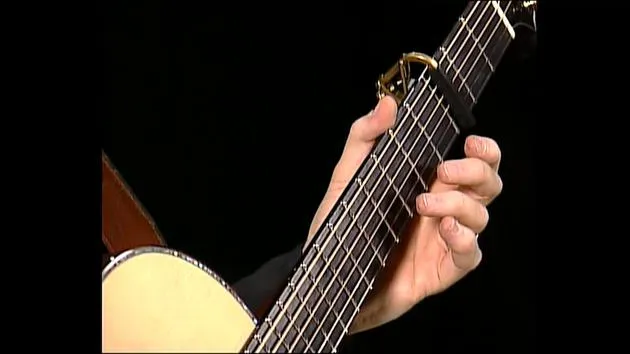
11. The West Wind (performance)
3:34
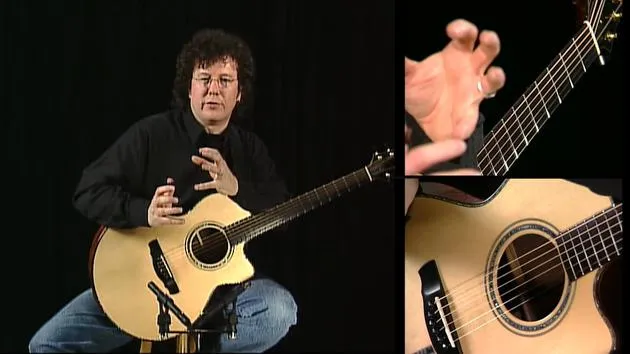
12. The West Wind (lesson)
9:48
13. BONUS: After Dark
3:34
14. BONUS: Requiem (performance)
2:37
Lesson transcript
Exploring Appalachian Music
One of the great things about moving down to the mountains of western North Carolina is discovering the culture that settled those parts. They call it the Appalachian chain down there, and I had to learn that.
"I mean, I kept saying Appalachian, and finally, after being corrected enough times, I now say Appalachian."
The Heritage of the Region
The people that settled the hills in that region were mainly from Scotland and Ireland. Part of this connection is due to the landscapes resembling Scotland's Highlands.
- The music was carried over to that region and continued for many years.
- Even today, people sing tunes in the mountains that are more pure Scottish tunes than the ones performed in Scotland, as they were isolated from other influences.
In addition to Scottish influences, there's a rich tradition of old-time music in the area. This is where the banjo becomes significant.
The Role of the Banjo
They used to have fiddle and voice, but then they added the banjo, creating old-time music. The banjo was brought over from the slaves, along with their rhythms.
"It was a southern area, so of course there were slaves around. The music from Scotland and Ireland was influenced by the slave music."
This fusion resulted in what we now recognize as old-timey music. When I wrote the song "Smoky Mountain Morning," I was inspired by this blend of Celtic music and the frailing banjo style.
The Sound of the Mountains
Frailing is a technique where playing is done using the thumb and fingers. It intrigues me how similar elements can be found in both blues tunes and Celtic tunes. The Appalachian sound encompasses everything:
- It combines blues and Celtic elements into one cohesive style.
- I'm beginning to immerse myself in this unique flavor.
Let me play a little bit of "Smoky Mountain Morning" for you to illustrate this.
Traditional Melodies and Harmonics
The first part of the song is very traditional sounding, although the chord might not be.
- This section is in a straight minor key.
- When I play, I often mirror the melody using open strings and harmonics.
There are many places on the guitar to find these harmonics. You can even play them by mirroring melodies an octave higher.
"It's kind of fun if you can grab that."
Capturing the Essence of the Tune
The first part feels very relaxed and peaceful.
"There was a bird singing when I wrote the tune, so when I recorded it, I opened the window to capture the sounds of the birds."
It's crucial to give the tune space, allowing moments for breath. I encourage my students to listen more than watch:
- "When you're playing guitar, it's easy to get locked into a mechanical mindset."
- Once you have a tune under your fingers, close your eyes and listen.
This shift in focus allows for a richer connection with the music.
Variations in Playing Style
The second half of this tune features a frailing style. If you play any flat-picking, it resembles country flat-picking:
- The thumb strums the back of the nail.
- The melody is played with the thumb while the bass notes play on the upbeat.
"Occasionally, I'll add a jada, so boom da da."
As you elevate the tempo, this gives a distinct frailing feeling. The repeated notes contribute to the texture, reminiscent of banjo playing.
Bringing It All Together
In the final verse, I switch to a finger-picking style:
- By having one finger down and keeping a string open, you achieve two notes that resonate similarly but with different qualities.
- This creates a strong rhythm combined with droning high strings.
As opposed to Scottish music, which often features low strings, Appalachian music thrives on these unique elements.
"So just try this kind of thing. Take any song you know and just experiment with the melody behind it."
Let the rich heritage of Appalachian music inspire your playing!
14 lessons
1h 25m of structured video lessons
Advanced video features
Slow down, loop a passage, follow along
Mobile, tablet & desktop
Practise wherever you are
100% satisfaction guarantee
30-day money-back guarantee
Meet your guru
Meet your guru
A Grammy Award winning recording artist and performer, Al Petteway has played nearly every type of popular, folk and classical music. Though his primary instrument has always been the guitar, he has also studied lute, string bass, percussion and music composition. His compositions for acoustic fingerstyle guitar are strongly influenced by his love of Celtic music and his own roots in folk, rock and blues - exactly the territory he opens up in his MusicGurus course, Celtic, Blues and Beyond.
In Celtic, Blues and Beyond, Al shares the open tunings, fingerstyle techniques and melodic approach behind his sound, showing you how to fuse Celtic phrasing with folk, rock and blues feel so you can find your own voice on the acoustic guitar.
Al was awarded forty-five "Wammies" by the Washington Area Music Association, including the top honors of "Artist of the Year" and "Musician of the Year". He was the recipient of two Maryland State Arts Council Individual Artist Awards for Music Composition and has performed at the Vice President's House and The White House. His playing is featured on more than sixty recordings by some of the world's best known Folk and Celtic musicians. In 2005, he was voted one of the Top Fifty Acoustic Guitarists of all Time by the readers of Acoustic Guitar Magazine, and in 2008 he won Silver and Bronze medals in the magazine's Player's Choice Awards. His CD "Caledon Wood" was voted one of the "Essential Albums of the Past Twenty Years" in Acoustic Guitar Magazine's 20th anniversary issue, and his 2012 release "It's Only the Blues" was included on two of the Acoustic Guitar Magazine's Editor's "Top Ten Essential Albums of 2012" lists. In 2014 and 2015, he released two more solo albums, "Mountain Guitar" and "Dream Guitars, Vol. II."
"An innovative instrumentalist known for his open tunings, Petteway offers a rich, dulcet sound that features a fusion of old and new."
--The Boston Globe







