



Meant To Be (lesson)
With
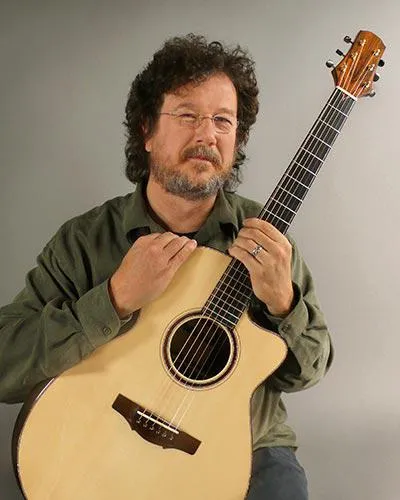
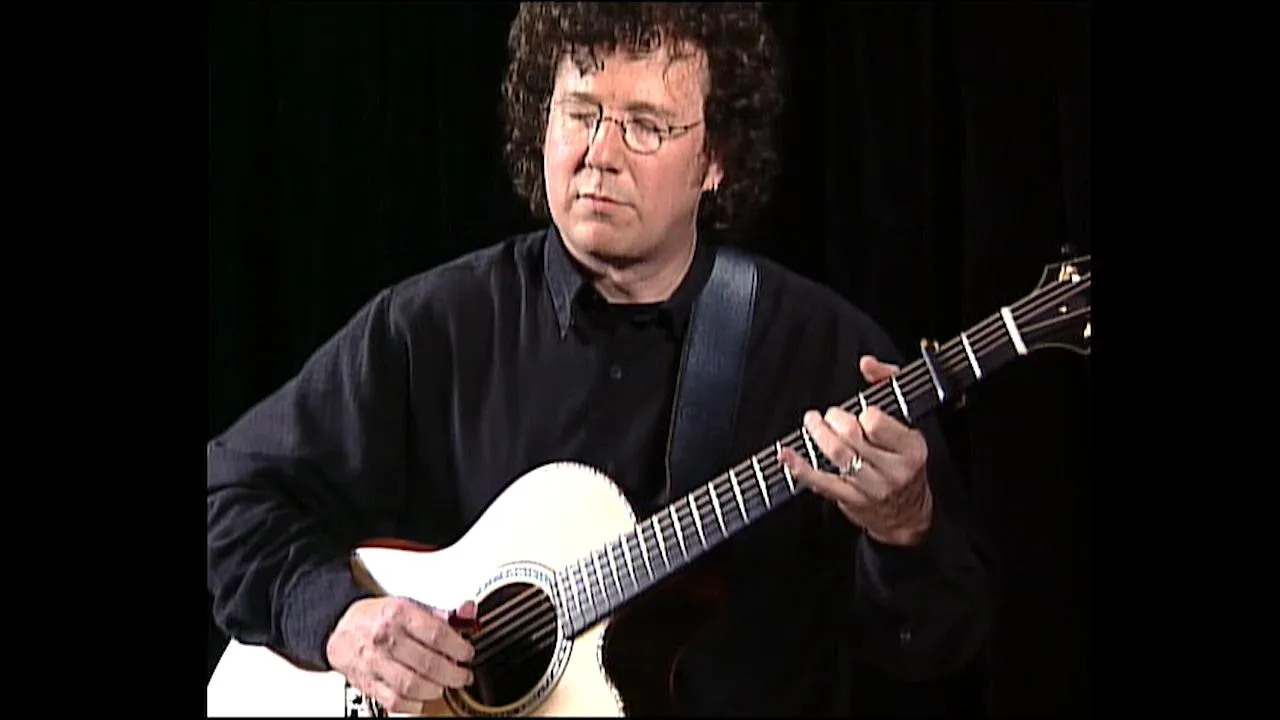
Al PettewayAl Petteway teaches his tune 'Meant To Be' in DADGAD, building a steady drum-like groove on beats 2 and 4 while carrying bass, rhythm and melody at once.
What's in the course
14 lessons (1h 25m) · 1 free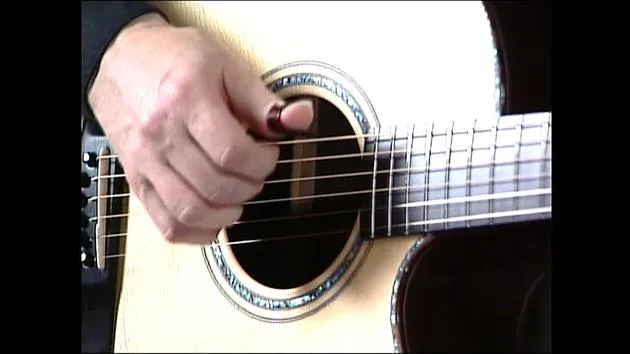
01. Spindrift (performance)
Free lesson3:36
02. Spindrift (lesson)
9:05
03. Eureka Hotel (performance)
3:12
04. Eureka Hotel (lesson)
9:47
05. She Moved Through The Fair (performance)
2:34
06. She Moved Through The Fair (lesson)
9:05
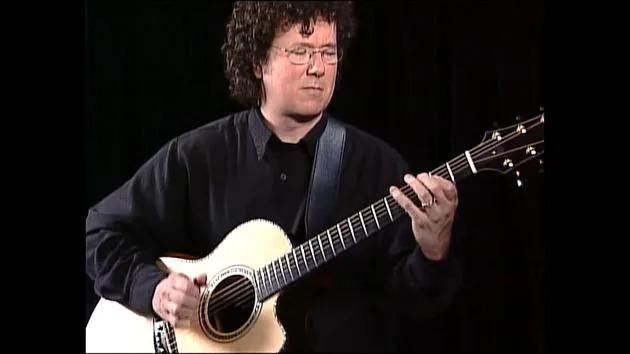
07. Meant To Be (performance)
3:59
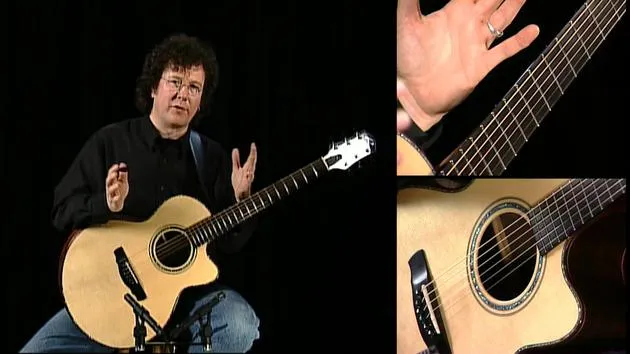
08. Meant To Be (lesson)
You are here10:25
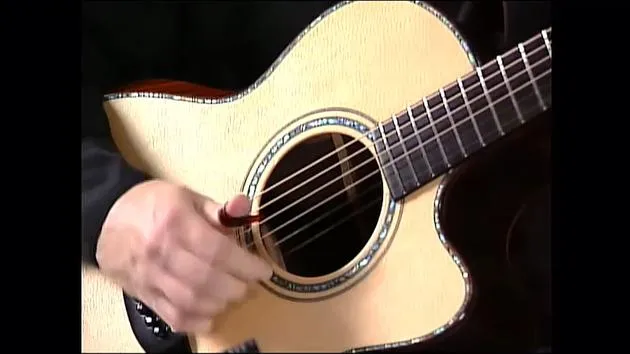
09. Smokey Mountain Morning (performance)
4:53
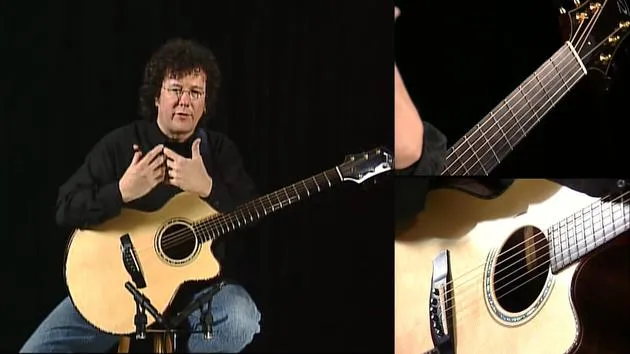
10. Smokey Mountain Morning (lesson)
9:21
11. The West Wind (performance)
3:34
12. The West Wind (lesson)
9:48
13. BONUS: After Dark
3:34
14. BONUS: Requiem (performance)
2:37
Lesson transcript
Exploring DADGAD Tuning and Rhythm Techniques
A lot of people believe that DADGAD tuning is pretty much limited to playing in Celtic styles. For a while, I was doing a lot of what you'd call "sideman work" because I was hired for one concert at a time by various musicians. I found that, especially with Celtic music, sometimes it was more comfortable to play in standard tuning and sometimes in DADGAD.
So, I would try to learn all the tunes in both tunings, depending on where we ended up doing the most tunes. But then I discovered that I can actually do anything in DADGAD that I can do in standard tuning, and pretty much vice versa, if I just pick the right key.
The Shades of Blue Album
When I did the Shades of Blue album for Solidaire Records, I decided to keep the guitar mostly in DADGAD for the album. What happens is really cool: if you're getting a little blues flavor on top of this tuning, it gives you more flexibility in the strings because you're tuned down. You can actually get a stretch, almost like you would on an electric guitar. You can really stretch the string, and that's harder to do in standard tuning. I mean, you can do it in standard, but it hurts after a while.
A lot of the tunes I enjoyed playing, I found I enjoyed even more in the DADGAD tuning.
Introducing "Meant To Be"
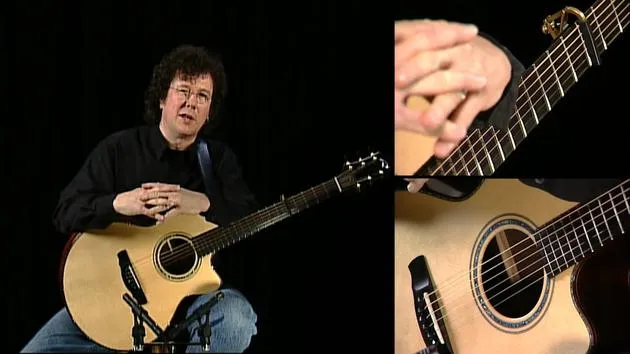
One tune I wrote called "Meant To Be" has a lot to do with groove. I love hearing a guitar player that can accompany themselves. When you hear that, it's fascinating because you catch the bass, drums, rhythm, and melody all happening at once.
I made a challenge for myself on this tune to create a drum beat that would happen all the way through the tune, specifically on 2 and 4. So it would be:
1, 2, 3, 4.
That was fine as long as I was doing something simple like pulling up with the string and then coming down to hit it. However, all the melodies I wanted to play were falling on the guitar in such a way that made it impossible to maintain that.
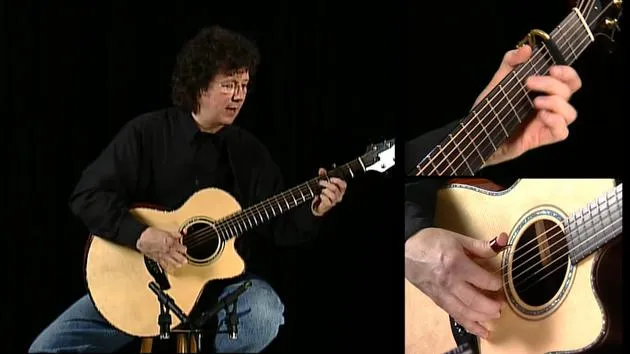
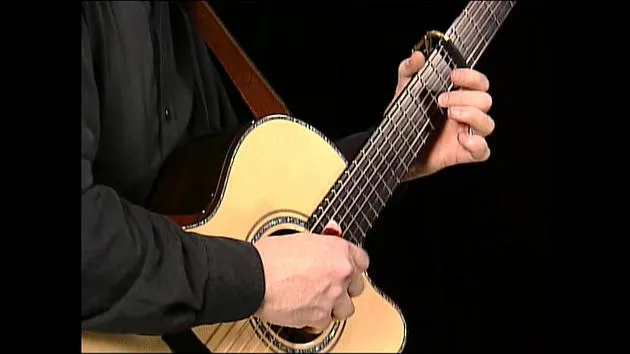
I had to play notes when coming down. I thought, "How am I going to do that?" So, what I decided is that if I hit with the back of my nails as I come down, it gives you that little click just like you get when slapping the strings.
The Technique
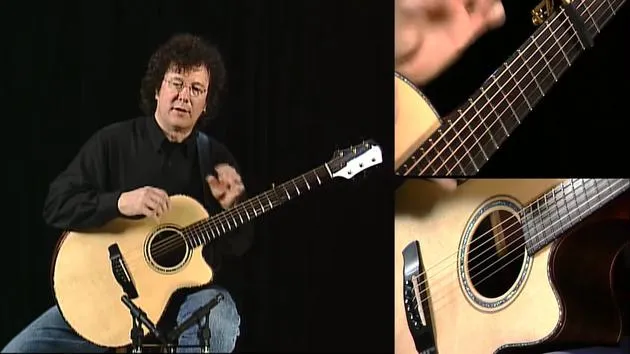
I'll show you how I start "Meant To Be".
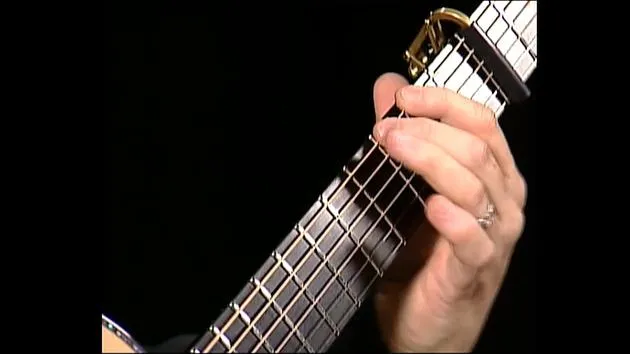
- I hit the strings and then strike with the back of my nail.
- You hear the nail hit the strings, creating that signature sound.
The goal is to play straight through the tune while keeping that pattern. The way I practice this, and teach my students, is to take a tune you're really familiar with, something like "Twinkle, Twinkle, Little Star," or anything that makes sense to you.
Practicing the Rhythm
Here's a simplified approach:
-
Focus on Consistency:
- Ensure every note is played, while keeping a consistent click on 2 and 4.
-
Use Your Fingers:
- Thumb down, back of the nail for slaps; no note for clarity.
-
Experiment with Patterns:
- Explore varying patterns, like hitting all four beats.
Demonstration of "Meant To Be"
Let me play a little of "Meant To Be" to illustrate this concept.
- This involves a pull-off,
- A back of the nail combination.
When you get it right, it feels incredibly cool.
Rhythmic Variations
You can try this technique with any tune. Accompany a song you already know or one you sing. Just play the chords, see how it feels, and then implement that rhythmic slap structure:
- Start with simple strumming.
- Add slaps on the downbeat.
- Mix in notes to see how they fit.
Stretching Techniques
The other thing I incorporate in this tune is stretching one string while holding the other string right next to it. When I go, there's a bit of vibrato. I start with the string already stretched, creating a very cool sound.
- Most people stretch up and down, but if you can stretch up first and then come down, it creates a sort of crying sound that I love.
Conclusion
The middle section of the tune is simple, with patterns in chords.
- Notice how I stick with first, third, and fourth positions all the way down.
- The rhythm should remain solid, always aiming for that click on 2 and 4.
Remember, achieving that sweet sound often comes from starting with the note you want rather than the conventional stretching approach.
Keep practicing the rhythm, if you take time out of your practice to master rhythm, it will enhance everything you do in this kind of music!
14 lessons
1h 25m of structured video lessons
Advanced video features
Slow down, loop a passage, follow along
Mobile, tablet & desktop
Practise wherever you are
100% satisfaction guarantee
30-day money-back guarantee
Meet your guru
Meet your guru
A Grammy Award winning recording artist and performer, Al Petteway has played nearly every type of popular, folk and classical music. Though his primary instrument has always been the guitar, he has also studied lute, string bass, percussion and music composition. His compositions for acoustic fingerstyle guitar are strongly influenced by his love of Celtic music and his own roots in folk, rock and blues - exactly the territory he opens up in his MusicGurus course, Celtic, Blues and Beyond.
In Celtic, Blues and Beyond, Al shares the open tunings, fingerstyle techniques and melodic approach behind his sound, showing you how to fuse Celtic phrasing with folk, rock and blues feel so you can find your own voice on the acoustic guitar.
Al was awarded forty-five "Wammies" by the Washington Area Music Association, including the top honors of "Artist of the Year" and "Musician of the Year". He was the recipient of two Maryland State Arts Council Individual Artist Awards for Music Composition and has performed at the Vice President's House and The White House. His playing is featured on more than sixty recordings by some of the world's best known Folk and Celtic musicians. In 2005, he was voted one of the Top Fifty Acoustic Guitarists of all Time by the readers of Acoustic Guitar Magazine, and in 2008 he won Silver and Bronze medals in the magazine's Player's Choice Awards. His CD "Caledon Wood" was voted one of the "Essential Albums of the Past Twenty Years" in Acoustic Guitar Magazine's 20th anniversary issue, and his 2012 release "It's Only the Blues" was included on two of the Acoustic Guitar Magazine's Editor's "Top Ten Essential Albums of 2012" lists. In 2014 and 2015, he released two more solo albums, "Mountain Guitar" and "Dream Guitars, Vol. II."
"An innovative instrumentalist known for his open tunings, Petteway offers a rich, dulcet sound that features a fusion of old and new."
--The Boston Globe







