



Neil Gow's Lament - Devil In The Kitchen - The Tushgar (lesson)
With
Steve Baughman
What's in the course
13 lessons (1h 9m) · 1 free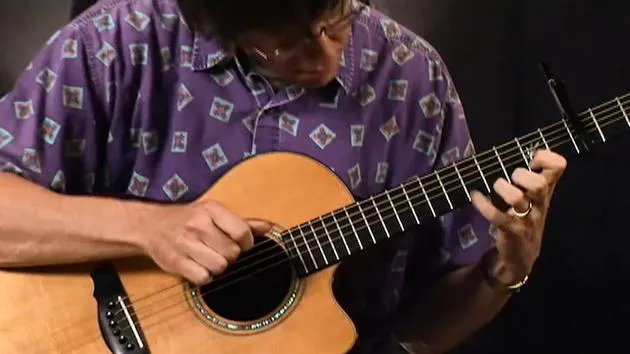
01. Dans A Sailheu - Tavarn - Danse des Deux Pommes Frites (performance)
Free lesson5:10
02. Dans A Sailheu - Tavarn - Danse des Deux Pommes Frites (lesson)
10:24
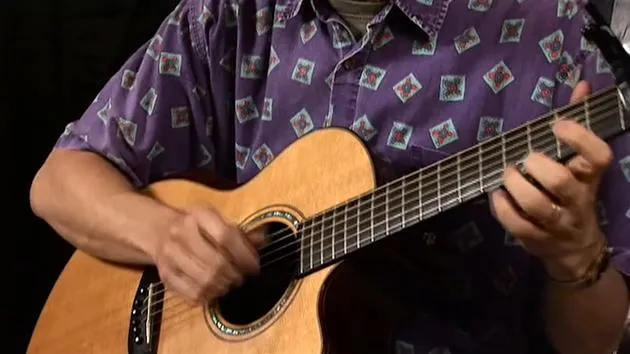
03. Little Beggar Man (performance)
1:54
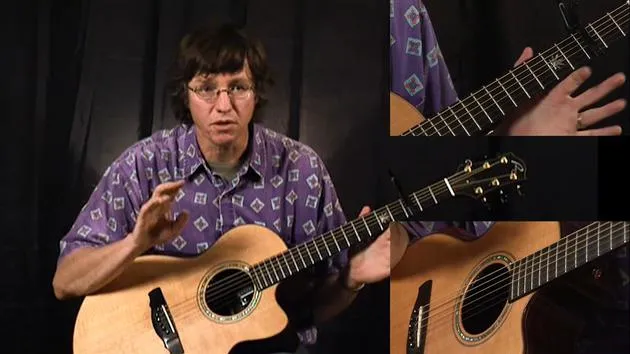
04. Little Beggar Man (lesson)
8:24
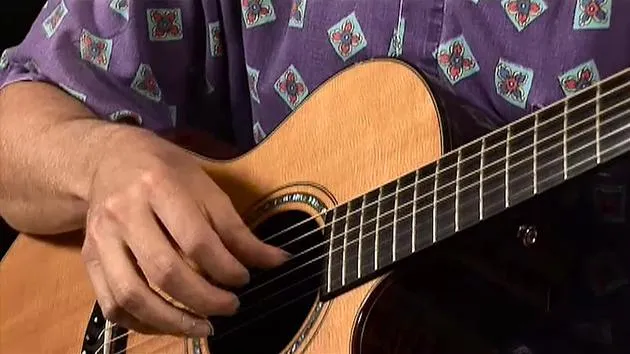
05. Loch Lomond (performance)
3:20
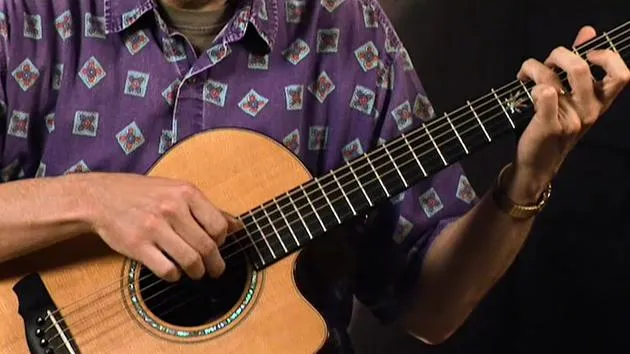
06. Planxty John Irwin (performance)
3:33
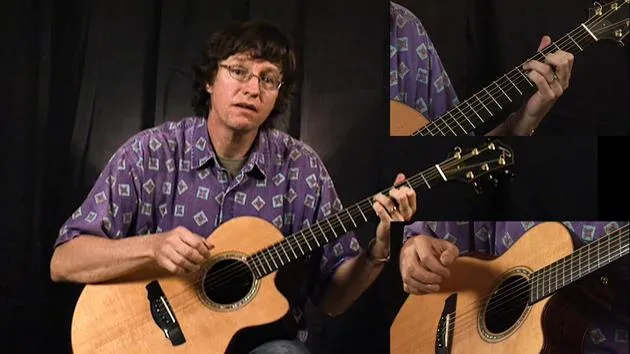
07. Planxty John Irwin (lesson)
1:29
08. Cool A Jig - The Choice Wife (performance)
4:09
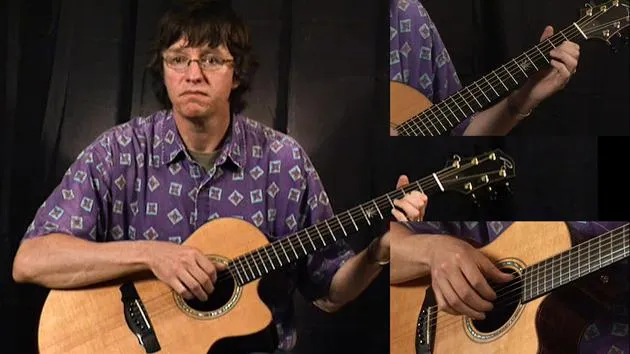
09. Cool A Jig - The Choice Wife (lesson)
6:09
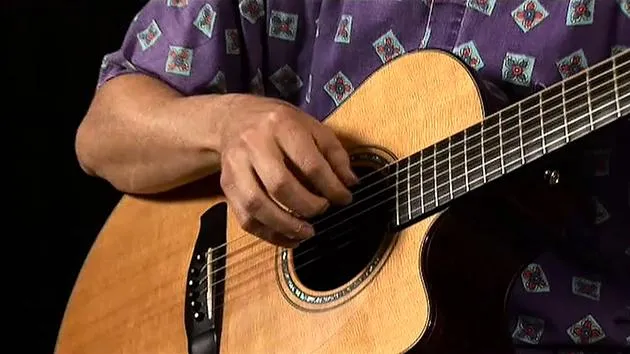
10. Neil Gow's Lament - Devil In The Kitchen - The Tushgar (performance)
6:24
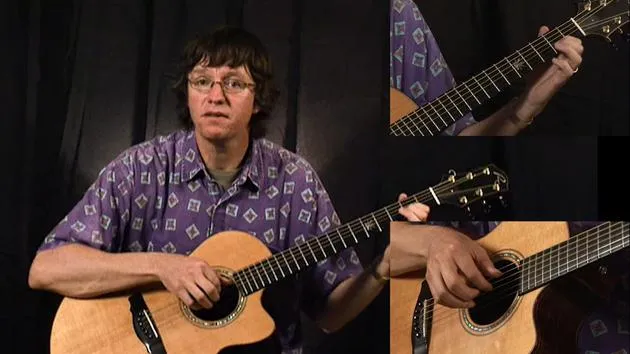
11. Neil Gow's Lament - Devil In The Kitchen - The Tushgar (lesson)
You are here11:08
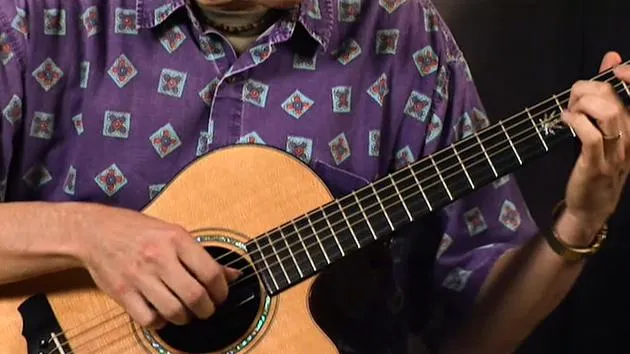
12. Paddy Fahy's Jig (performance)
2:40
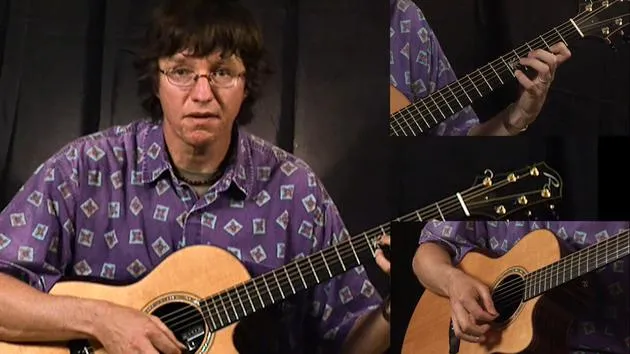
13. Orkney Tuning (lesson)
4:43
Lesson transcript
Guitar Lesson: Right Hand Techniques
Okay. When I said I'd teach you what the right hand stuff in there was, what I meant was, I'll show you both hands. Because, of course, when you're playing guitar, both hands are really, really important.
Right Hand Techniques
Slow Air
- The right hand stuff wasn't hugely technical.
- I use the back of my index fingernail a lot because I like the tone it provides:
- It's brighter and sharper.
So, instead of just going straight with my index finger, I like to incorporate this technique.
"Just be mindful that you do have another side to your index fingernail, and it's really kind of fun to use it sometimes."
Neil Gau's Lament
Same thing as with that Planksti Irwin, that Celtic Hawaiian piece I played for you a while back:
- Ring Out: Everything is hugely important for keeping that ring out happening.
- The melody is 50% of the tune, the ring out and overall feel is the other 50%.
So, it's really important to realize that especially in a slow air, you can't just play the notes. You've got to play the ring out and milk it for everything you can.
Devil in the Kitchen
On the second tune, Devil in the Kitchen, I'm using a lot of the jig patterns that I showed you.
- One comment:
- There's a fun little left-hand riff that may seem fancy at first glance.
When you look at the left hand, you realize that I'm kind of cheating and there's nothing really to it.
- My right hand is just doing:
- (demonstrates right-hand motion)
Watch how it sounds when I do that left-hand thing. Same case on the B part, yet another example of us using left-hand fills that are hard to do just on the right hand.
The Tushkar
Now, let's talk about The Tushkar, a wonderful Scottish fiddle tune that's sort of one of the standards.
Ornaments
-
This piece has important ornaments, which are essential for most Celtic fiddle tunes played on the guitar.
-
You can't just play a fingerstyle guitar arrangement; it won't sound right.
- You need to approximate the fiddler's bowing hand.
"You wouldn't want to play the first part of The Tushkar with lots of slurs, it sounds kind of lame."
Basic Right Hand Pattern
Here's the basic pattern:
- It doesn't matter which fingers you use, but you should still bring your thumb all the way up to the second string because it's needed.
Basic Pattern Demonstration:
- (plays basic pattern slowly)
Now, let's apply that to our little Breton riff that we learned at the beginning of our time together.
Triplets and Ornaments
Triplet Techniques
- I used a lot of ornaments:
- The triplet (also called a roll) is this ornament right here:
Here's how I play it real slowly.
- Use your multi-angle now to isolate my right hand, because that's where the action is.
Basic Triplet:
-
(demonstrates the triplet)
-
I'm pinching strings 1 and 5, and then the ornament is middle, index, thumb.
Alternative Ways to Play
- Most people would probably play it using:
- Ring, middle, index.
"By the way, I have something on my index finger that helps with power, but it's not an endorsement of using picks."
Back to the Triplet:
- Here's how a lot of people would do it:
- (demonstrates ring, middle, index)
What will matter is that you should be willing to commit a lot of time to practice this.
Important Practice Riff:
- (provides tab details for practicing triplets)
Final Techniques
Passage in the B Part
There's a passage in the B part where I go:
- (demonstrates using index finger as flat pick)
Using my index finger like this is just faster and more ergonomic.
Upward Ornament
- For the upward ornament in the B part, I don't usually bring my thumb up:
- I typically use ring, middle, index.
The Teleflake Technique
One last comment:
I have a technique called Finger Locomotion Induced Channel Telekinesis, also known as the Teleflake.
- This technique requires a lot of energy work and is typically used at the end of a piece to impress an audience:
- Assume I'm coming to my final note.
- Your multi-angle focused on my right hand will show that I'm channeling energy from this part of my hand all the way down to a specific string.
"It's really cool. Audiences like it. It's a tantric secret, don't tell anyone I told you this, but use it often."
13 lessons
1h 9m of structured video lessons
Advanced video features
Slow down, loop a passage, follow along
Mobile, tablet & desktop
Practise wherever you are
100% satisfaction guarantee
30-day money-back guarantee
Meet your guru
Meet your guru
Steve Baughman is one of fingerstyle guitar's true originals - a player whose open-tuned, Celtic-rooted acoustic work has earned critical acclaim on both sides of the Atlantic.
'Once in a while an album comes along that can alter your thinking about guitar music - Steve Baughman's Farewell to Orkney is one of those... A must for all lovers of guitar and especially Celtic music.'
--Acoustic Guitar Magazine
'A star of fingerstyle guitar: very deft, thoughtful, quietly adventurous, deeply lyrical and playful.'
--Radio National, Australia
'Steve's artistry and musicality are world-class, with dynamics, timing and interpretation that always bring out the emotional essence of the song.'
--Sing Out Magazine
'...technical innovation, virtuosity, and intensity.'
--Acoustic Guitar Magazine
'Incredible virtuosity ... showcases the quiet beauty of the open-tuned acoustic guitar.'
--Marin Independent Journal (Too bad it's not the Washington Post. But I'll take it.)
His album Farewell to Orkney was listed as one of the 'Best Albums of 2013' by Acoustic Guitar Magazine.
And then there's the accolade Steve can't quite take seriously. He is on the Digital Dream Door list of the 100 best fingerstyle guitar players of all time, which includes dead ones. 'I used to put this in my press materials. But then I figured it was just the lone opinion of some dude/gal somewhere in cyberspace. Anyone can make a list. Besides, how many fingerstyle guitar players can there be anyway? It must be hard not to make the top 100. I suspect the 81-100 slots are all made up names. As long as you did a guitar CD you're top 80. I think I was 77. Maybe I'll be deleted from the list now that I've said all this. But I appreciate the passion of whomever compiled it. Thanks for including me, and it impressed my mother. Maybe it won't now.'
In Celtic Guitar Solos, Tunes & Techniques, Steve shares the open tunings and fingerstyle approaches behind that sound, so you can play it for yourself.







