



Improvisar sobre el acorde de tónica

Con
Tim Richards
Qué incluye el curso
24 lecciones (1h 30m) · 1 gratis
01. Arpegios e inversiones de séptima dominante
2:49
02. DOWN THE LINE Interpretación
1:46
03. Consejos de improvisación
3:59
04. La secuencia de blues de 12 compases, tritonos y shells
5:49
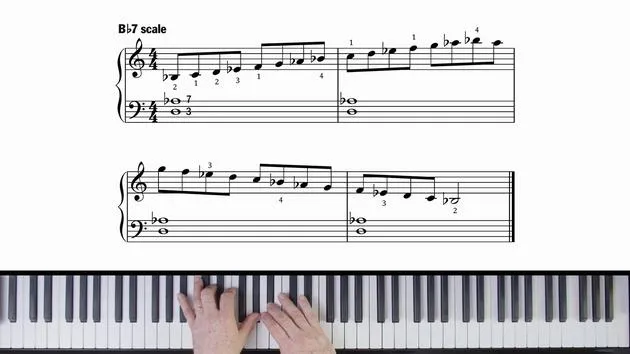
05. Escalas mixolidia, de tonos enteros y cromática
5:51
06. Interpretación de STRAIGHT NO CHASER
1:34
07. La escala pentatónica de tercera bemol
3:25
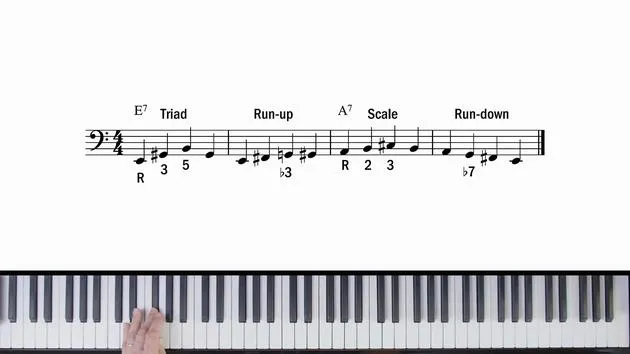
08. Aprender las séptimas de dominante en todas las tonalidades
5:37
09. DOMINANT SEVENTH WORKOUT #1 Interpretación
1:48
10. Patrones de acordes quebrados
5:22
11. Rhythm changes y el ciclo de séptimas dominantes
3:50
12. THE THEME Interpretación
2:22

13. Improvisar sobre el acorde de tónica
Estás aquí5:42

Transcripción de la lección
Music Lesson: Tips for Improvising on B Flat Major
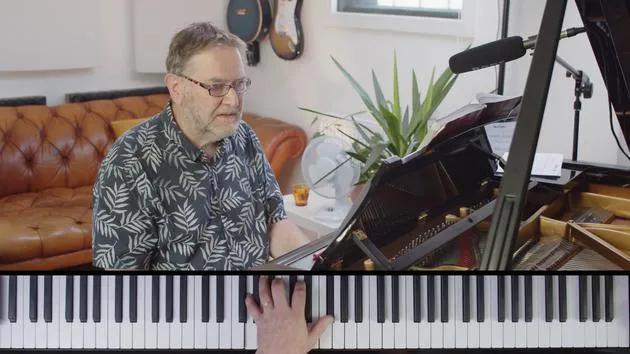
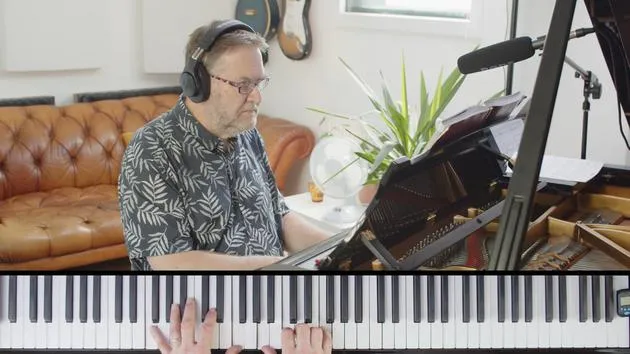
So if you've had a go at improvising in the A sections of the theme, you'll have explored hopefully some B flat major or B flat major pentatonic patterns. I'd just like to give you a few tips.
Simplifying the Bass Line
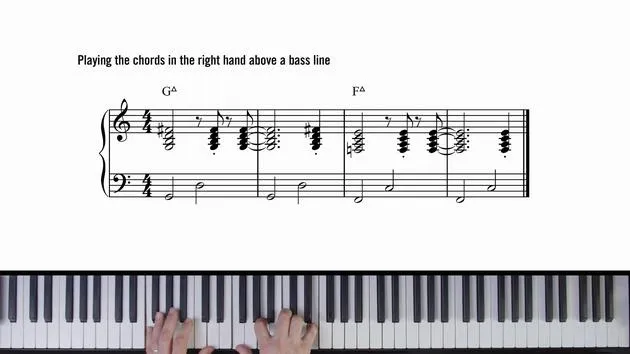
It's a little bit challenging to keep that bass line going underneath. So one of the practice methods I suggest is to:
- Simplify the bass: Focus on developing your fluency in B flat.
Why not try it with a simple two feel? Don't worry about all the 1625; just do this.
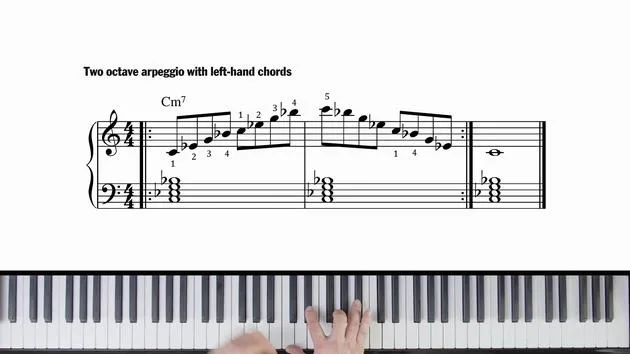
- Reference Point: Here's a scale in triplets, try to ensure it sits well.
Phrase Development
First Phrase
So, for the second phrase, that's kind of almost a crib from Charlie Parker's tune Ornithology.
- Phrases like that, which initially appeared in bebop tunes, are now part of the public domain. You can consider them up for grabs.
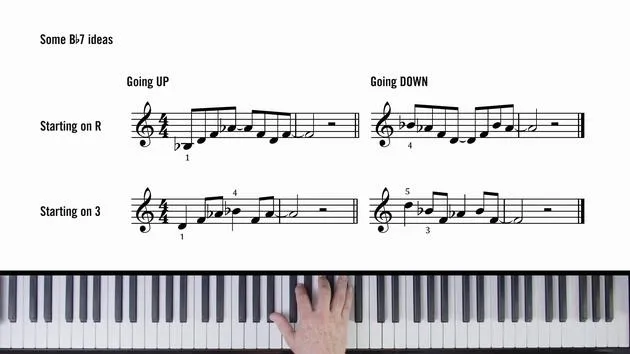
Notice it's just based on a five-finger position. The important thing about that phrase and many of these phrases is not so much where it starts, but where it finishes.
- Resolution: Notice how it resolves onto the D. Aim to put that note on the first beat of the bar.
Adding the Blue Third
Now I'm going to add the blue third to make it a little more bluesy. So play around with that idea.
Winton Kelly Phrase
Another phrase that is almost part of the vocabulary in the public domain is this Winton Kelly type phrase.
- Memorization: I really recommend that you try to memorize phrases like this, but it's important to put them in the right places.
This one has to finish on the target note, which is the third of the chord.
- To make that come out onto the first beat of the bar, you need to start on three: 1, 2, 3, 4, 1, 2.
So just get used to that phrase; you can create different endings.
- Common Usage: You'll start hearing that phrase all over the place now. For any bebop pianist, it's a bit like the famous lick in blues. That blues lick also resolves onto the third of the chord on the first beat of the bar.
Exploring the 1625 Bass Line
Another bass line you could adopt for your B flat major practice is the 1625, which is actually bars three and four in the given bass line.
- Looping that bass line would sound more like we're playing rhythm changes.
Fingering Practice
- Fingering: Notice the fingering, and practice playing that without looking. Start with the second finger.
I would call that phrase an encircling of the root and the encircling of the third. This approach isn't just about scales; it's more about chord tones encircling the root and the third.
- Starting Point: Come in on the second bar.
Incorporating the Blues Scale
You could also play the blues scale, especially in bars five and six.
- Minor Pentatonic: Try that and play around with it for a bit.
All right, so those are some ideas for you to play around with.
- Caution: Don't use the blues scale all the time. Remember, it's a minor scale, and we're not in B flat minor, we're in B flat major.
B flat major pentatonic is a more natural sound, just use the blues scale when you feel like giving it a bit more extra spice.
24 lecciones
1h 30m de lecciones en vídeo estructuradas
Funciones de vídeo avanzadas
Ralentiza, repite un pasaje, sigue la partitura
Móvil, tablet y ordenador
Practica donde quieras
Garantía de satisfacción 100%
30 días de garantía de devolución
Conoce a tu gurú
Conoce a tu gurú
Aclamado por la crítica, el pianista y compositor de jazz Tim Richards es uno de los educadores de jazz más experimentados de Gran Bretaña, y ha enseñado piano de forma privada durante más de 30 años, además de en el Morley College, el Goldsmiths College, la University of Surrey, Premises Studios y otros centros del Reino Unido y del extranjero. Ha producido numerosos títulos para Schott Music, entre ellos los superventas en dos volúmenes Exploring Jazz Piano, Blues, Boogie & Gospel Collection y el aclamado Improvising Blues Piano. También es coautor, junto con John Crawford, de Exploring Latin Piano y Brazilian Piano Collection.
Más recientemente, Schott ha publicado Jazz, Latin & Modern Collection (15 piezas para piano solo), que reúne originales de Tim Richards junto a piezas de Duke Ellington y Thelonious Monk, y el estuche de dos volúmenes Beginning Jazz Piano (ahora un curso de MusicGurus en dos partes).
“La verdadera alegría de la música de Tim… es que resulta a la vez enormemente didáctica y tremendamente divertida de tocar. Cualquiera con el más mínimo interés en aprender a tocar o a enseñar piano de jazz debería hacerse sin falta con una colección de los libros de Tim.” PianoDao
Como intérprete, Tim ha sido una presencia en la escena del jazz británico desde la década de 1980, tocando también el blues con leyendas del Reino Unido y de Estados Unidos como Otis Grand, Earl Green, Dana Gillespie, Larry Garner, Joe Louis Walker y Mojo Buford. Ha publicado más de una docena de álbumes como líder (con muchos de los mejores músicos de jazz de Londres, entre ellos Pete King, Gilad Atzmon, Tony Kofi, Jason Yarde, Seb Rochford, Ed Jones, Dick Pearce y muchos otros) y ha girado por toda Europa con formaciones que van del dúo al noneto. Su última grabación, el álbum ‘Telegraph Hill’ del sexteto Hextet, fue descrita en The Observer como "Una auténtica delicia de principio a fin".
Puedes encontrar más información en su sitio web www.timrichards.ndo.co.uk







