



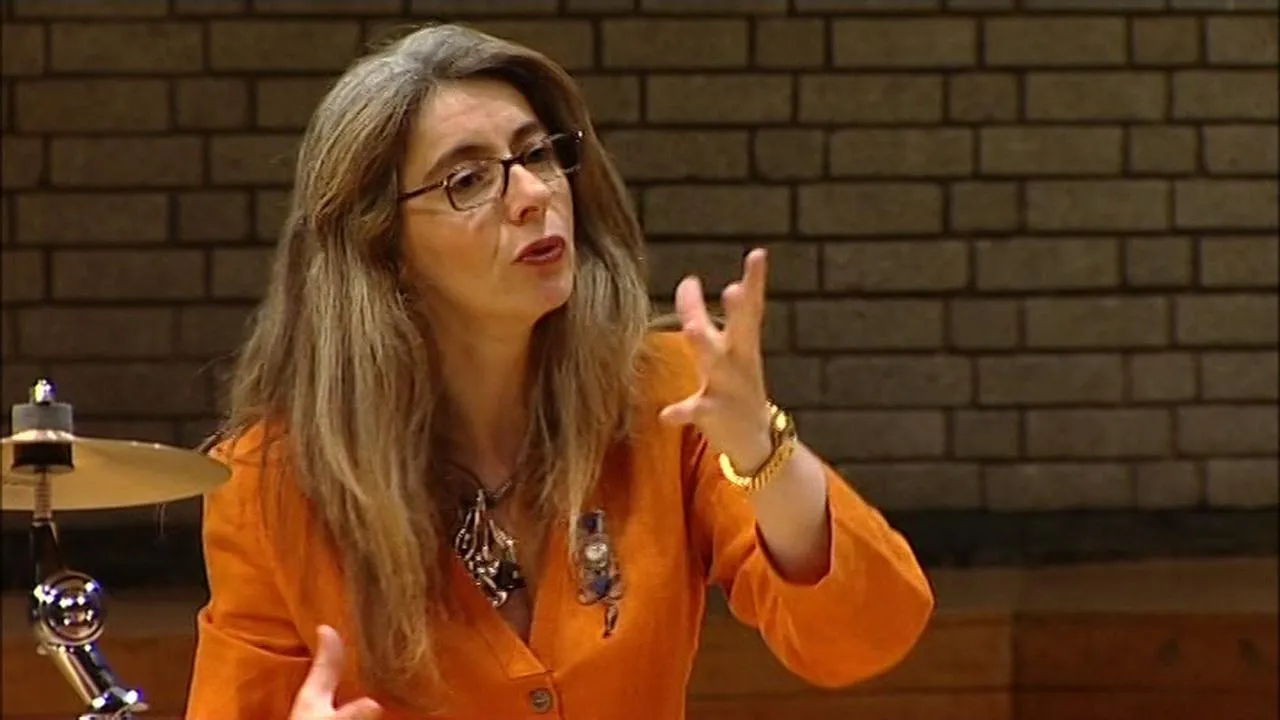
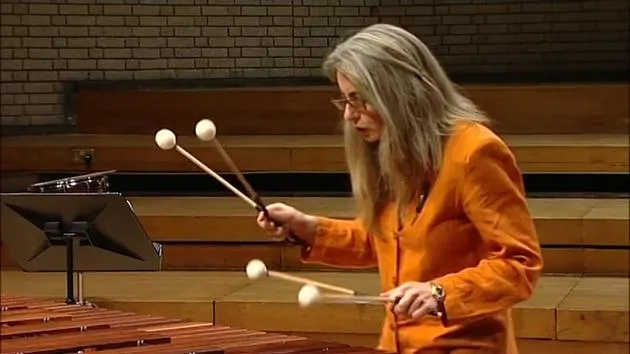
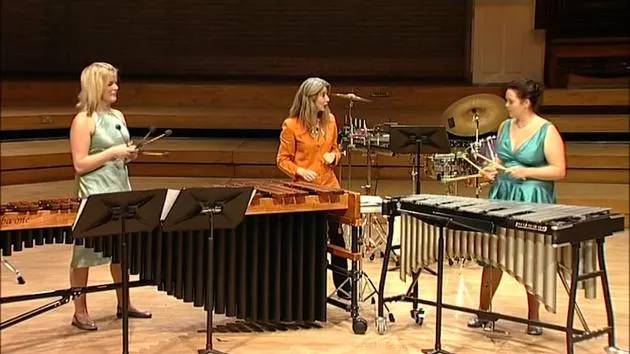
Analysis, explanation, demonstration with Dame Evelyn Glennie
What's in the course
4 lessons (1h 33m) · 1 free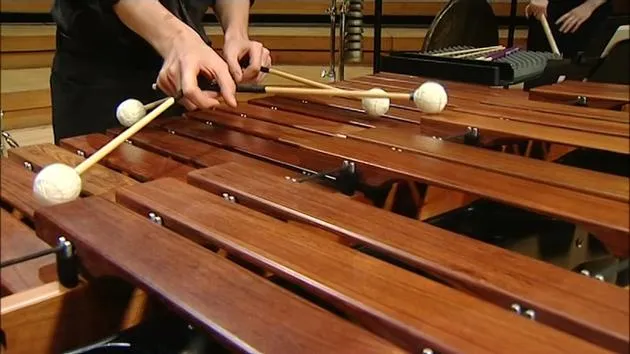
Lesson transcript
Music Lesson
Introduction
Absolutely great! I mean, this is such a good piece. There's so much musicality that we can really work on here. The teamwork was actually pretty good.
The Essence of Expression
The smile that you gave at the end is, in a way, the type of smile we want in the piece itself. Just now and again, that little sort of chiciness comes through. The next moment can be quite jazzy, then quite serious, almost music box-like. And then we have the big fat sounds of the instruments coming through.
The extremes are quite interesting, and I think we can probably work on that a little more. It's a good, substantial piece of music for this type of duo, something that can be with you for the rest of your days. It's truly great for radio. You can probably shorten it, maybe create a two to three-minute version if that's possible. Often for radio or TV, people like that type of thing. You can really pick and choose certain sections.
Revisiting the Beginning
I'm just going to spend a little while on this. At the very beginning, I'd like you to play again, if you've got the energy there, which I'm sure you do, just this beginning. I was a little confused by what was going on, so if we can really get that really, really tight and see what happens.
So, emphasize the semitone so that we think, "Oh, my heavens, what is that?" Let's give that a go.
Triplet Feel
So basically, we've got this triplet. Rather than "bom bom bom," we need to feel as though it's perhaps just straight quavers. We want to give this feeling of a triplet quaver: "Ba ba ba ba."
You're going to be quite a bit louder than this at the top end because you carry on with the phrase: "bom bom bom, dugga dugga dugga dum." We don't want to suddenly get a kind of frame noise because of the nature of the instrument. Since you're powerful in the lower to mid-range and powerful with the type of sticks you have, you really, really have to work hard at the top. Let's get this beginning together.
Now, this is an example where you can start louder than the vibraphone. So try being quite a bit less and see what happens. You give the energy, but you really give the energy because you're having to carry the phrase on. Then you can take over that energy when you go, and we end with the two chords.
Dynamic Independence
Do you see what I mean? This is kind of dynamic independence going on here. Is it possible, just without meaning to isolate one player over the other, could you just possibly play your last group of six, your sex duplets going on to that first chord? Is that possible?
Okay, and again, can we get that last one? Just the last six notes before the chord. Slow, so slow. We need that. Little details like that, you've really got to take note of. Don't just shove them under the carpet. You know you can use those six notes leading up to the chord as a little warm-up exercise.
I'm also trying to get this cleaner and clearer, but at the same time, you can use that tiny little bit as a warm-up as well. You know, to me, that's really important. Otherwise, this whole first little phrase introduction here could quite easily sound a bit of a mess, actually.
Starting the Piece
And partly because we're not coming in on that first sex duplicate, there's a little rest there. So that's how it's written. What you do and how you start this piece is really, really important.
Let's follow that through once more, please. And just an idea, actually, before the last two chords, can we just play those last two chords of that phrase, the first? Yes, just the two chords, please.
Okay, and again. Just that same kind of thing. It's awkward, I know, but there we go. That's life; it doesn't always go our way. However, we can see now a little pattern arising where, when we do get to a block chord like that, that previous note needs to be looked after. That's such an important note, as it leads to this climax. Likewise, with the cheeky kind of triumph there, it just adds character.
Cheekiness and Dynamics
So let's really make that clear. Now, any way of making the "da da da dum" and the second one slightly shorter so that immediately we sense this little cheekiness going on? From this chaotic start, we can go to the cleanliness of being together and just see what happens.
Instead of making these chords the same length, let's try to make them a bit different. It may not work; I don't know. So the first one could be slightly longer, the second one shorter, and then we may try it the other way around.
Okay, and again. I quite like that! Now, try it the other way and see what happens. So short and long. And again.
Working with Acoustics
It's something you can maybe work on. Do you see what I mean? I'm trying to add the salt and pepper here. Another reason for doing this is that we're in quite a live hall and need to be very aware that if you play this piece in a cathedral or a really dry acoustic, you will want to be flexible enough to adjust to the acoustics.
With this type of piece being so busy, when we're in a wet acoustic, it can just sound like a mush of notes. So, be flexible in the type of mallets you use. Even if you always use these mallets, you may have to use another type for another venue, something maybe woolier, harder, lighter, or heavier. You may also need to adjust the tempo slightly.
Remember that in practice sessions to really experiment with these elements. Don't just play it the same way and think that's how we're going to do it. Just out of curiosity, ask yourself: What would happen if I did this? What would happen if I did that? And that's a lot of fun as well.
Clean and Strong
So, two little things: Make sure our leading note up to the chord is clean and strong. Think about the dynamic independence between the instruments, something you can establish yourselves. And let's try to pop a little more salt and pepper on those two chords, really.
What is interesting is isolating these bits, especially the two chords, just to see how the ensemble work is going. So, again, it's taking yourselves out of the comfort zone and saying, "Actually, are we together, or do we have to rely on doing that run-up in order to be together?"
You just want to be together, you really do. So, make it more difficult for yourself and start isolating things.
Moving to the Next Section
Now, if we could possibly move on to the next section, I may poke around the piece, stopping you here and there. So just this next section after the intro, okay?
Now, again, because you have that little grace note, we can have a lot of character there. Can you just play that bit?
Character and Sound
Looking at it from here, I see that we're in the center here and on the edge there. We will get a nice sound. It's an obvious thing, really, but is that intentional? Would you like it to be all relatively fat so that you can really grow with the sound, or do you want it a little thinner, a bit more threatening?
That's up to you to decide. Just know that if you are just going to do what's easier to do, it's not a good reason musically.
So, make sure you know why you're striking where you are. With the grace note, we need to be sure whether it's on the beat or if you want it a bit before. What would you like?
Experimenting with Dynamics
Or maybe you don't know. Perhaps one day you'll like it before. It would really help establish this, you know what I mean? Because you're not on the very first quaver. We need to really get that a little tighter.
Let's see what happens! You have the tune here, but you can be a bit threatening, quite sweet, even innocent. Let that D flat ring. So really poke at that bar.
You pop your nice shoes on there, but get a difference between the lengths and durations once. Overall, the missing aspect has been your pianissimo playing when it gets really soft much later in the piece. It was magical!
Judging Climaxes
The real trick is judging where the climaxes are in this piece of music because there are many sections going on here. I don't know this piece well enough to guide you through that, but I have noticed that with the dynamics we have, when we start and see a crescendo, we tend to reach that crescendo too soon, so there's nowhere to go.
Often, the dynamics feel fairly predictable, which is where we need to add a lot more color. For example, right at the beginning, we get the feeling that it's loud because of the scrunchy semitones, so we get the illusion that it's loud and brash. You can really emphasize that.
Then we have this kind of mysterious, innocent yet down-present. When you start at "six ticket, ticky, ticky," you can almost decide whether to be on stage or off stage, creeping up on us.
Playing with Volume and Texture
Now we have this big crescendo here, almost at the last moment. I know it's marked two bars or so before, maybe three. But listen to the nature of the instruments; there's only so much we can do dynamically here.
So save it until the very last minute because we can come back again, and we have a lot more climaxes later on whereby we do need to be out there, do you see? Together, you need to work through the piece like that as well, just to see where you're going structurally.
Experimenting with Sound
I'm just going to move on because there's a lot to do, but these are a few ideas to get you on your way.
There's one bit I'd like to explore at bar 22, please. Just think about what's been said and have a little experiment.
Okay? Now, this is an example where you can really take your feet off the pedal a bit more, give us almost half-pedaling, creating quite a dry sound. Let's see what happens. It may not work; I don't know.
Strength and Nuance
Now, I think possibly you're just too nice with it, maybe. Actually, you could go boom, boom, boom, boom, boom, boom, boom, boom, boom, boom, and grow like that. I know it's marked MF, which is a dangerous dynamic; in a way, it's marcato. It has a little accent on the "bom, bom, bom, bom" there.
So if we can emphasize that, as the phrase carries on, gradually emphasize the "bom, bom, bom" more than this, do you see what I mean? Start off emphasizing the accented note, keep this down, and then gradually, gradually, this takes over a wee bit more.
You can maybe keep them equal or the right hand higher, something like that, and see what happens. And think about dynamic independence between the octaves. You may want to give us a bit less of the lower note, more of the top "bom, bom, bom," and then, as the phrase goes through, get that sound fatter and fatter by giving us more of the lower note.
Engaging in Practice
That's pretty good. Now, if we could play that phrase once more and carry on to just the next little bit and see where we are.
Now, the thing is here: we have basically two crotchets, two rests, a minimum rest. We have "bom, bom, bom, bom, bom, bom, bom, bom, bom," and it's a completely different feel altogether.
So if we can really perform those rests and not just consider them as, "Oh, that's a bit of a rest," but literally be very aware that that silence is absolutely crucial. It's going to either carry the sound of your instruments where the hall is basically your instrument, or you're going to destroy it.
Practicing Timing
So let's count two and then come in, or just make it a little bit longer so that we're not aware that it's just two bright beats, if that makes sense.
But that's an ensemble thing that you would then practice. You might say, "Let's make this two and a half beats because we're in a wet acoustic." Oh, now we're in a dry acoustic, so let's keep it to two beats.
Just think outside the box there! You have such an opportunity to create this with quite thick texture through the octaves, getting higher and higher. I'm really concerned that we're striking very much in the nodal parts, when we should be getting a fatter sound.
Figuring out the Sound
That's just habit, you know? I'm not saying don't ever strike in the nodal part, by all means do, but you should always think about why you're doing that. When it needs to increase, we really do need that fat sound.
So let's just try this last phrase again leading into the 26th, the rest, and really think about those rests. Just literally the bar before 26, if that's humanly possible.
Rests and Presence
We all do it. Whenever we see a situation where we have that rest, we inevitably clip it. As performers, you just want to move on, fill it up, and when you're doing nothing, that feels a long time often. Sure enough, we clip that rest.
So in your heads, at the moment we have "bom, bom, bom, bom, bom, bom, bom, bom, bom." It's a long time when you're standing here, but that's what we need to just clear away.
So let's give it one more shot and really in your head, think about the time you're waiting before the rest.
Precision and Clarity
This is a classic example where you started really well indeed. Again, we're getting this little crescendo here. I know it's marked up to double F, which is great, and you absolutely did it.
Get right back, and this could be an example where we play in the nodal part, including the vibraphone. Let's see what happens.
Now, I'm not being very kind, actually, but it's a good thing to just put yourself in a slightly awkward position. That's okay! Let's just try that and then come right back with the sound, a really thin sound, because we have room to grow.
Exploring with Dynamics
Try! Now, this is an example where, again, listen to the room. We may just have to wait. We are literally taking this as gospel at the moment. Some of it works and some of it could be a wee bit tidier.
Really, the tidiness comes through. Okay, I see what the composer wants, but what sort of room am I in? What kind of instrument do I have? What kind of mallets do I have?
Translating into Performance
This is an example where we might just have to really think about the difference between translation and interpretation. You're translating it absolutely perfectly, but to interpret it is another matter.
That's when you have to take all the ingredients and think about how this is actually speaking. How am I actually saying this? For example, if I suddenly used a string of great long words, probably all correct, but made no sense, that wouldn't be good.
I just wouldn't connect with you at all. Perhaps with all the "ums" and "ahs" and not a massive vocabulary, maybe a little message gets through.
Final Thoughts on Clarity
So, again, tidy things up and don't just take it as we see it. Once again, just from here, this is good! You know, I think we can have a lot more cheekiness and swagger with this section. It is like complacency.
You're sort of walking down the street here, and rather than it being too straight, try to take it just a bit farther. It's good that you're poking things out of the marimba and really playing with each other, which is working well.
Bear in mind where we're aiming at 49. We almost have the string section coming in, and it might be a good idea to think about orchestrating the piece.
Incorporating Different Instruments
Think about, I feel the strings there, I feel the woodwinds there, I feel the brass coming in there, I feel the tuba moving in while doing your walking bass.
Do you see what I mean? This could help us really connect with a sense of touch more. For example, with this walking bass part, just the marimba: think of this more as a bouncy part rather than just striking the bar.
Experimenting with Sound Choices
Try it and see! Now, if you could just take one mallet. I don't know the notes, but… try that and see how it feels.
You can really play around with the types of color you're giving us rather than it being the same. Try once more and experiment, go completely over the top, and we can always rein it in later.
Working on Tidiness
Okay, now that's fine! You can really experiment with that. Please, please, please, when we meet next, if ever we do meet, which I hope we will, I would really like this to be much, much tidier regarding where we're striking.
This will help us get a fatter sound. Now, with the vibraphone part, can we just try those two notes together?
Linking Notes Smoothly
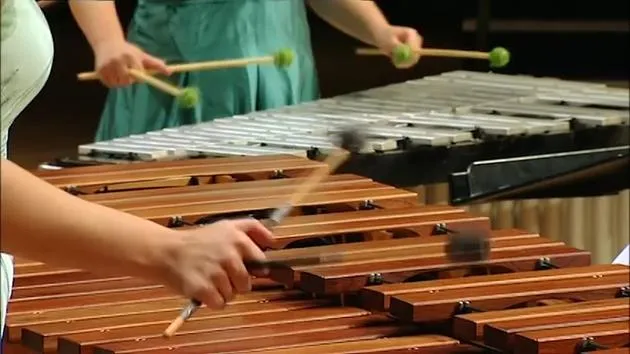
With just these two notes, because you're completely solo there, dampen that literally with the stick. Strike it, dampen it with one stick.
So we link the notes rather than relying on the pedal to create a smoother sound, or keep it completely dry. One or the other, rather than, "Oh, apologies, I'm playing here by myself."
That's important! With all of these chords, really feel the harmony. Feel the chord, is it a fat chord? Is it a warm chord? Is it a loving chord? Is it a scrunchy chord? What kind of chord is it?
Conveying Different Emotions
Feel the weight of that chord rather than letting them all be the same. That's something else you can work from.
Now, I'm going to fly through simply because of time. This was really nice. I really liked this waltz section here.
Enjoying the Performance
So I'm not going to spend too much time on this because it's quite a long section. Can we just start it, please? Let's see what happens.
Very nice! All of this is like a little exchange, almost like a little love scene. "Oh, please you." "Oh, no, no, please you." We can be a lot more light and carefree.
If we can get more of that connection, I think it will come through performance and truly getting to know this piece. It's like a real waltz where you're just as light and carefree as possible while having this exchange of energy.
Final Adjustments
So, "No, it's your turn, I'll step back and give you a little spot."
Once more, please! Much, much lighter and feminine. Just a moment, please. Can I just check?
This is important for the sound. Let's try it just to be sure. Just stop it earlier, so we capture the nature of the instrument and the acoustic. Get that every single note!
Now, really gentle. It's always these simple things that can unexpectedly feel a little rugged. Just think about that little bit more.
Building Towards the End
Now, let's move on to this heavy section at bar 309. Is that possible? We are really moving on with the piece now. This is really, and correct me if I'm wrong, the first time I've actually seen three Fs written in this music. Am I right?
So if we compare what we did right at the beginning with the type of loudness there to the loudness here, now he's been quite specific! Pisante, very heavy.
We don't have nice chords here; it's a very jagged rhythm, very percussive indeed. We can afford to be really not nice, you know? We can create a gritty sound here because we'll immediately have nice chords after.
Contrasting Dynamics
So we need a huge contrast. Try just maybe the vibraphone first and then the marimba, and we'll put them together. Now, any reason why these two are here? Space and convenience?
Let's try again. Am I missing something? Yes, try better! Let's try the other way, as you did before, or the opposite way that you did for me. Anyway, it makes a difference, but it's up to you.
Experiment with Placement
Try it this time with all four mallets on the nodal part. See how it works on the vibraphone. Again, just make sure sometimes we have to wear clothes.
We've got to think about what we are actually wearing. If we've popped in different positions, that's important too.
Creating Fullness
Nevertheless, think about creating a good, fat sound there. Marimba, please, just your part.
Okay, now, if we did this, let's give you two mallets and try it. I can tell you don't have porridge in the morning, give it a bit more body weight.
That's good because when you give your body weight and grip the sticks tightly, you can almost choke the sound.
Finding Richness in Performance
You can think about body weight, body weight, body weight. But you can also combine that with gripping the sticks a bit more tightly to get us to that "choked" sound.
Do you see? We may want to get closer to the nodal part, with your right hand there to give us a breadth of sound. I don't know; that's again up to you to experiment with.
Just this passage again to the sforzando, please.
Working on Sforzandos
This is good! This is much, much better. Now, this sforzando is where you want to give us the effect because you're essentially adding another E there.
So, color-wise, there's not that much you can do because of the nature of the instrument. We'll need you to give that kind of shrill with the sforzando.
You can really go to town there! Let's really try, however, to get the duration of the notes in this passage.
Highlighting Dynamics
We really want to feel this peg leg kind of rhythm. See if we can exaggerate that even more.
That's something else you can work on there. You're the one who helps with the pedal, but you can also show this visually as well.
Now, when we get to this sforzando, we will probably miss the very first note or two of your passage because it's much, much softer than the nature of the instrument beside this.
We'll miss it. It's an example where you can wait until you actually play that, adding another beat, or make that last chord really staccato.
Teamwork and Experimentation
Again, this involves teamwork and experimenting a bit. I don't think there's a right or wrong way; it's just being aware that what happens here may be different out there.
Also, with this section, please step right back, dynamically, you have a long way to play the mf, but think about where you've come from. You're coming from a loud, heavy, brash passage, and you can afford to be really soft here when asking us to listen.
Capturing Contrast
Rather than giving the sound to us on a plate, you're inviting us to listen; gradually, gradually, you can give us the sound on the plate.
Think about where we are going; we have a long journey ahead. Last point: just from that passage to the end! Think about the three Fs there.
Creating Impactful Moments
Now, I wanted to say that in this wonderful bar, there's a rest there. If you could give us a real shock there, a sudden cutoff, this was really, really good!
We need to work much harder at the top end of the marimba. There's no question that it's going to be sharp up there and it's a pity if we have to drop you.
Building Strength and Precision
I think you have to come up! You can do it; it's just literally knowing that you can. Build up that strength! For example, if you practice your scales or arpeggios, play them in the style of this passage. Just a little section for me.
Again! You can try that passage or play a scale, perhaps in D major, but in this style.
Final Thoughts
Really, really! Give yourself a couple of octaves even down here, or try that out. You're using this as an exercise, but also building up your stamina and strength, which we need an awful lot of in this piece, one way or another.
Thank you very much!
4 lessons
1h 33m of structured video lessons
Advanced video features
Slow down, loop a passage, follow along
Mobile, tablet & desktop
Practise wherever you are
100% satisfaction guarantee
30-day money-back guarantee
Meet your guru

Meet your guru
Evelyn Glennie is the first person in musical history to successfully create and sustain a full-time career as a solo percussionist. She gives more than 100 performances a year worldwide, performing with the greatest conductors, orchestras, and artists. Her diverse collaborations have included performances with artists such as Nana Vasconcelos, Kodo, Bela Fleck, Bjork, Bobby McFerrin, Sting, Emmanuel Ax, the King's Singers, the Mormon Tabernacle Choir and Fred Frith.
Evelyn Glennie has commissioned one hundred and forty three new works for solo percussion from many of the world's most eminent composers, and also composes and records music for film and television. Her first high-quality drama produced a score so original she was nominated for a British Academy of Film and Television Arts award (BAFTA), the UK equivalent of the Oscars. Out of the 25 recordings made so far, Evelyn's first CD, Bartok's Sonata for Two Pianos and Percussion, won her a Grammy in 1988.
After 20 years in the music business she began teaching privately, which allows her to explore the art of teaching and the world of sound therapy as a means of communication.
In 1993 Evelyn Glennie was awarded the OBE (Officer of the British Empire). This was extended in 2006 to 'Dame Commander' for her services to music. To date she has received approximately 80 international awards.







