



Andante - Bernard Haitnik gives his anaklysis and feedback to Timothy Henty
With
Bernard Haitink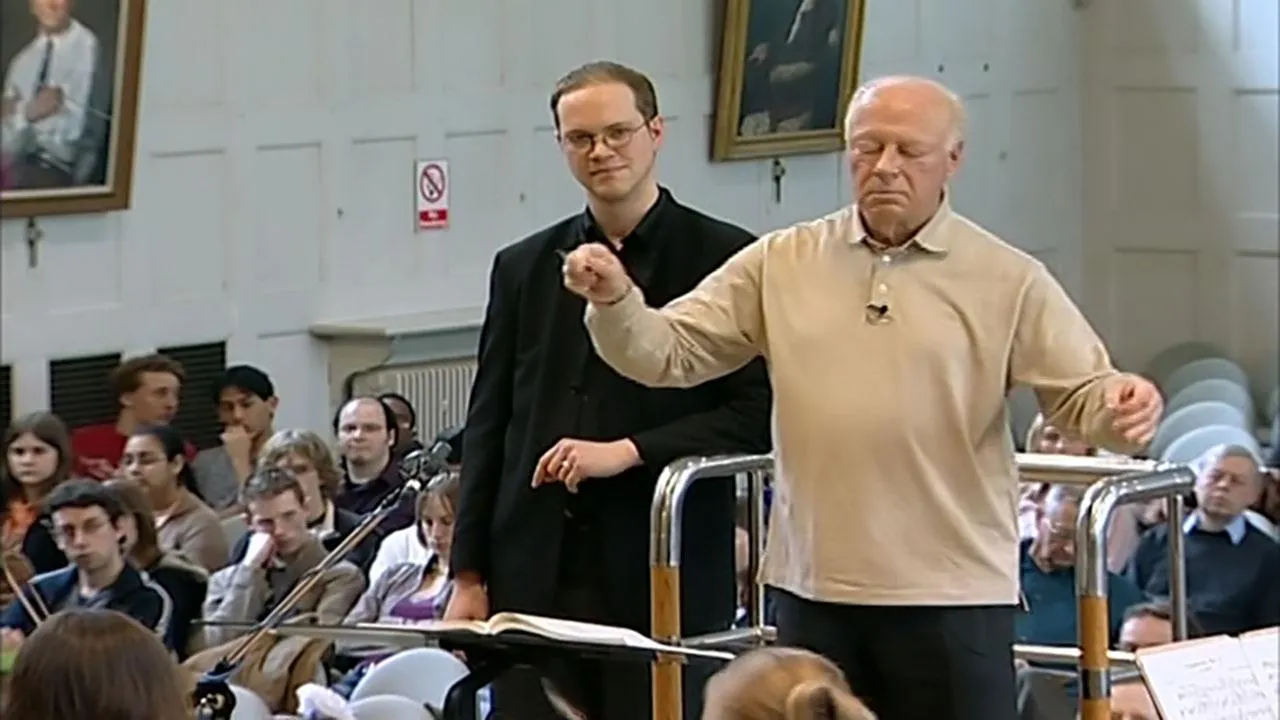
What's in the course
14 lessons (3h 22m) · 1 free
01. Bernard Haitnik introduction
Free lesson1:28
02. Allegro Con Brio - Bernard Haitnik gives his anaklysis and feedback to Thomas Blunt
5:54
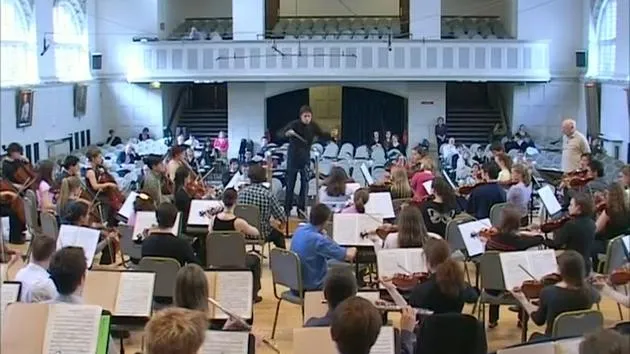
03. Allegro Con Brio - Bernard Haitnik gives his anaklysis and feedback to Leo McFall
9:35
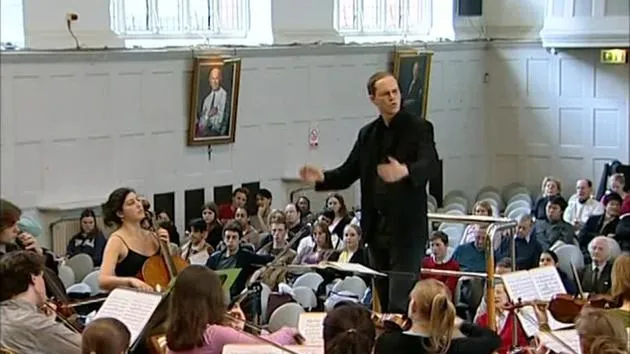
04. Allegro Con Brio - Bernard Haitnik gives his anaklysis and feedback to Timothy Henty
19:49
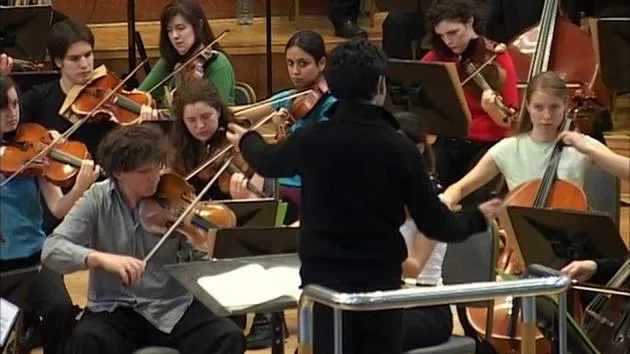
05. Allegro Con Brio - Bernard Haitnik gives his anaklysis and feedback to Karim Said
10:54
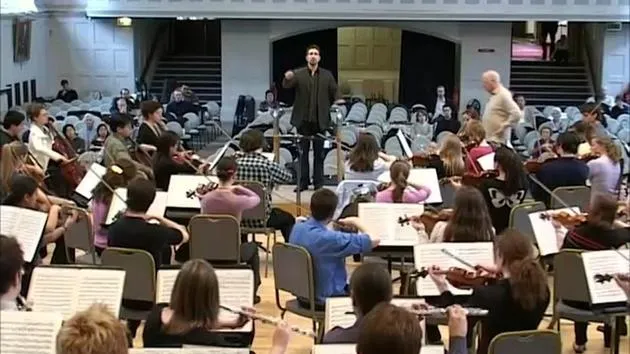
06. Allegro Con Brio - Bernard Haitnik gives his anaklysis and feedback to Michael Young
15:03
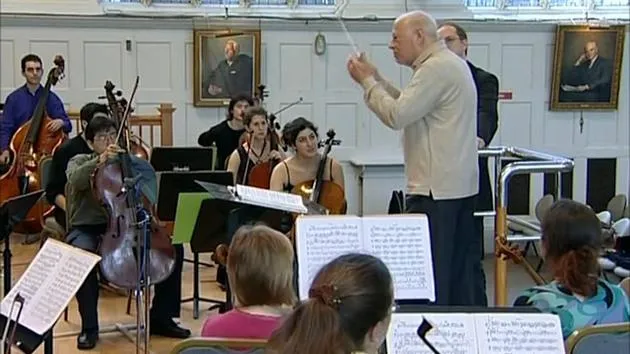
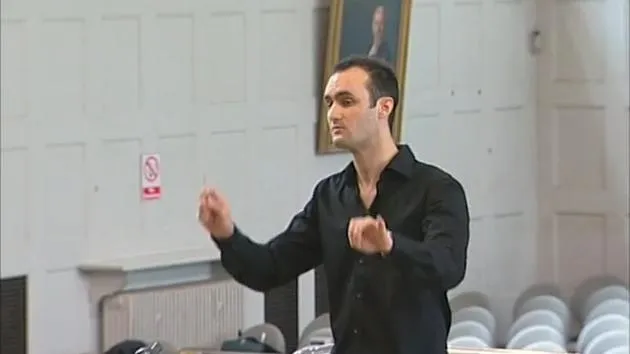
07. Andante - Bernard Haitnik gives his anaklysis and feedback to Timothy Henty
You are here18:49
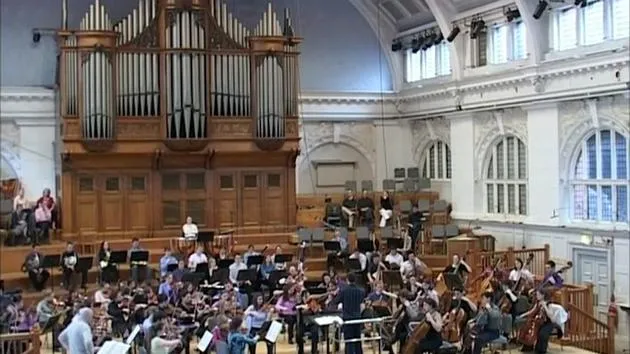
08. Andante - Bernard Haitnik gives his anaklysis and feedback to Michael Young
20:20
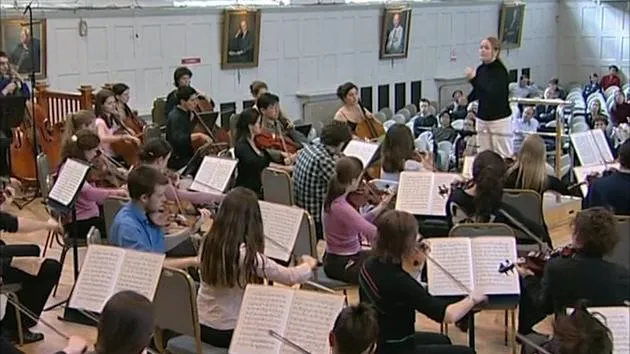
09. Poco Allegretto - Bernard Haitnik gives his anaklysis and feedback to Anne-Marie Granau
21:37
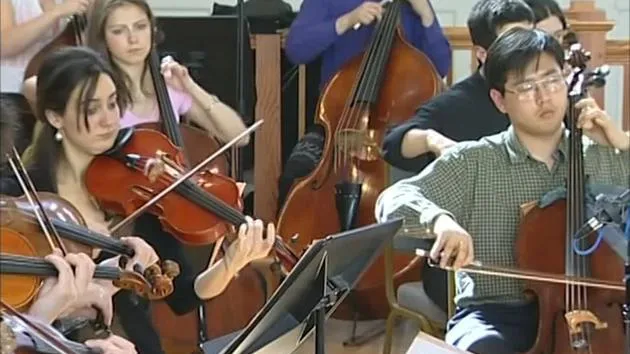
10. Poco Allegretto - Bernard Haitnik gives his anaklysis and feedback to Leo McFall
7:02
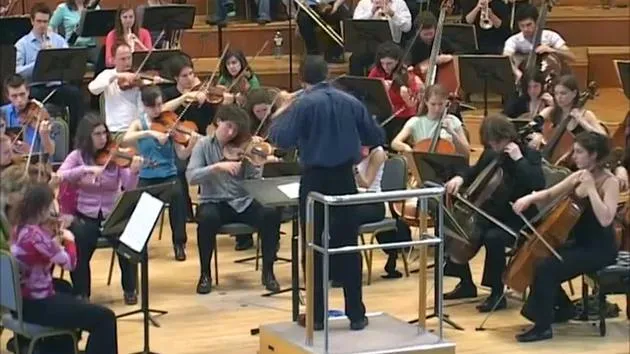
11. Allegro - Bernard Haitnik gives his anaklysis and feedback to Leo McFall
10:10
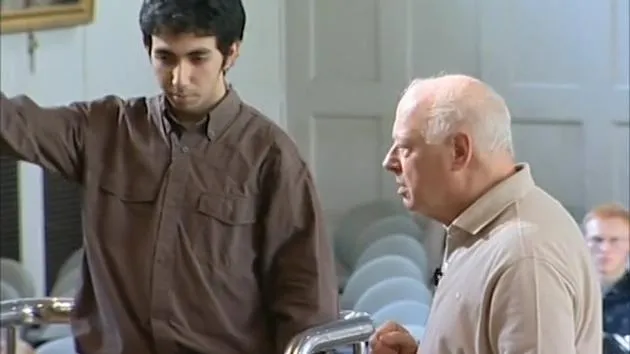
12. Allegro - Bernard Haitnik gives his anaklysis and feedback to Karim Said
7:52
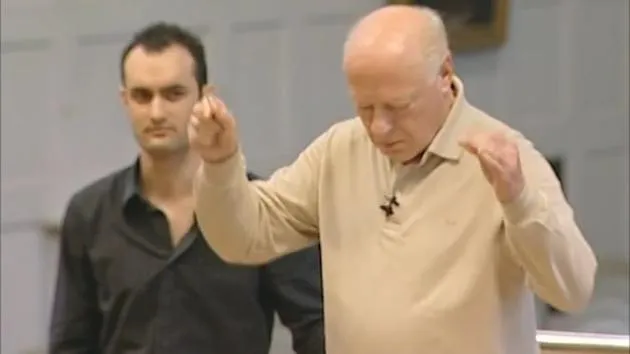
13. Allegro - Bernard Haitnik gives his anaklysis and feedback to Thomas Blunt
24:02
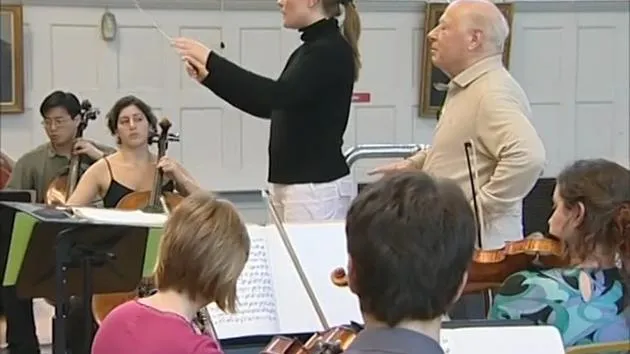
14. Allegro - Bernard Haitnik gives his anaklysis and feedback to Anne-Marie hGranau
29:48
Lesson transcript
Music Lesson: The Second Movement
The second movement is purely chamber music. Totally different. Wonderful, tender, nearly Slavonic theme. Very close to Dvoř?k in a way. And they respected each other very much.
On Commitment and Atmosphere
It's hard to find the right words because it's okay. The tempo is good; it sounds okay. But I have a feeling that you don't have the commitment you had this morning.
- The first movement: is of course totally different. These slow movements or slower movements are always difficult to get the right atmosphere after an orchestra has played the first movement. And that really demands every inch of energy.
Expressing Emotion
Then... I don't know. May I try to show you what I should say, but can't?
- "Yes. Give me the beginning."
- You know, whatever you do, if you conduct with your right hand, with your left hand, or with your big toe, it's not that interesting.
Give a certain commitment, and I miss that a little bit. I know that in your head you have that commitment, and it has nothing to do with your glasses.
- "Now don't use the trick."
- Once more, but just make music. Chamber musicians love that tune. And you love it too. You want to give it the best you can.
You don't have to make faces or all sorts of contorted movements, but enjoy the music.
- "Yes."
- And I found it a bit jolly.
Engaging the Ensemble
Sorry. What's up?
- "Okay, Tim."
- You are neglecting a possibility which you have with your left hand. Here. Thanks.
Play once more.
-
Letter B.
- Yeah. Three, four. They love to be invited; they want you to be part of it, you know, and not just standing there.
-
"No, no, no. Let's do the upbeat into B then."
- It's a mixture of enjoying it and giving them hell. Yes, and a friendly face helps too.
-
"Yes."
- You were smiling, and all of a sudden the sun can show, you know.
The Art of Transitions
Once more, where are we? It talks about the art of transitions. Especially with Brahms, it has to be really unified.
- "When you start before C."
- Caesar. 1, 2, 3, 4, 5, 6, 7, 8.
Mr. Upbeat of the basses and the celli, don't lose here the line. It should be more diminuendo, and there should be more tension in a positive way.
Then the clarinet and the bassoon once more.
- "Could you play that?"
- Yes. That was the upbeat 3.
And piano, not pianissimo. Still piano and sound. Now the duomando starts.
- "And here, and now,"
- so that they don't come too late, that it really has... and yum... vam. Is that...
I mean, it's the same place, please.
-
"Well, very good, Tim."
- It sounds very beautiful.
-
"Okay."
- Yeah.
14 lessons
3h 22m of structured video lessons
Advanced video features
Slow down, loop a passage, follow along
Mobile, tablet & desktop
Practise wherever you are
100% satisfaction guarantee
30-day money-back guarantee
Meet your guru
Meet your guru
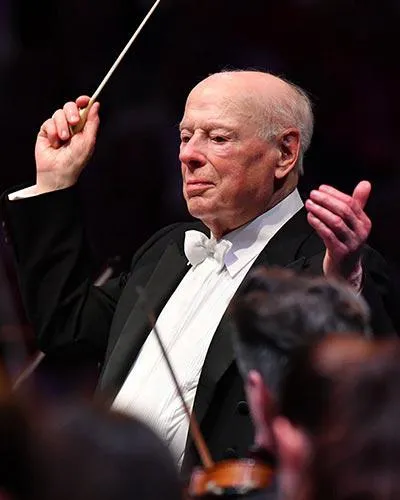
With an international conducting career that has spanned more than five decades, Amsterdam-born Bernard Haitink is one of today's most celebrated conductors.
Appointed Principal Conductor of the Chicago Symphony Orchestra from the beginning of the 2006-7 season, he has led many of the world's major orchestras, including more than 25 years at the helm of the Royal Concertgebouw as its music director. In addition, Mr Haitink has previously held posts as music director of the Dresden Staatskapelle, the Royal Opera, Covent Garden, Glyndebourne Festival Opera, and the London Philharmonic. He is Conductor Laureate of the Royal Concertgebouw Orchestra, Conductor Emeritus of the Boston Symphony Orchestra, and an honorary member of the Berlin Philharmonic. He has made frequent guest appearances with the Berlin Philharmonic, Vienna Philharmonic, Bavarian Radio, London Symphony and other leading orchestras.
Mr Haitink has recorded widely for the Phillips, Decca and EMI labels, including complete cycles of Mahler, Bruckner, and Schumann symphonies with the Concertgebouw and extensive repertoire with the Berlin and Vienna Philharmonic orchestras and the Boston Symphony Orchestra. His most recent recordings are the complete Brahms and Beethoven symphonies with the London Symphony Orchestra on the LSO Live label. His discography also includes many opera recordings with the Royal Opera and Glyndebourne, as well as with the Bavarian Radio Orchestra and Dresden Staatskapelle. Mr Haitink's recording of Janacek's Jenufa with the orchestra, soloists, and chorus of the Royal Opera House, Covent Garden received a Grammy Award for best opera recording in 2004.
Mr Haitink has received many international awards in recognition of his services to music, including both an honorary Knighthood and the Companion of Honour in the United Kingdom, and the House Order of Orange-Nassau in the Netherlands. He was named Musical America's "Musician of the Year" for 2007.
In his MusicGurus course on Brahms' Symphony No. 3, Haitink draws on that lifetime at the podium to take you deep inside the score - how he shapes its phrasing, balance, tempo and structure - offering rare insight into how one of the great conductors reads and brings a Brahms symphony to life, whether you are a conductor, an orchestral player or a passionate listener.







