



Vertikale Improvisation

Mit
Tim RichardsTim Richards zeigt, wie man vertikal improvisiert: mit Arpeggien, um jeden Akkord durch eine 2-5-1 hindurch zu treffen – die Bebop-Alternative zum horizontalen Durchlaufen von Bluestonleitern.
Das steckt im Kurs
25 Lektionen (1h 20m) · 1 gratis
Transkript der Lektion
Vertical Improvisation Lesson
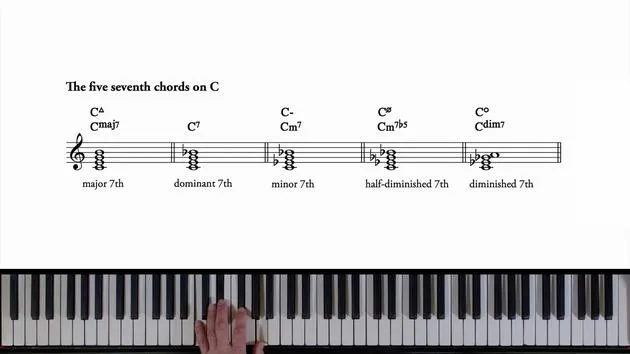
In this lesson, I'm going to talk a little bit more about vertical improvisation.
Horizontal vs. Vertical Playing
Most of the stuff we did just now in "Love, That Man" was playing blues scales across several chords. In other words, that was horizontal playing.
Now, let's look at how you might play if you really wanted to nail every chord. This is more of a bebop style, where the obvious approach would be to play arpeggios.
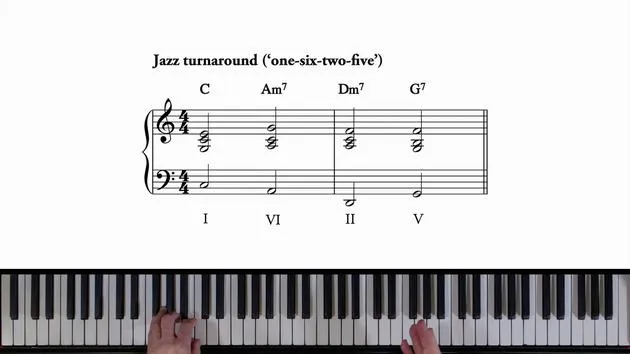
Basic Exercise: C 2-5-1
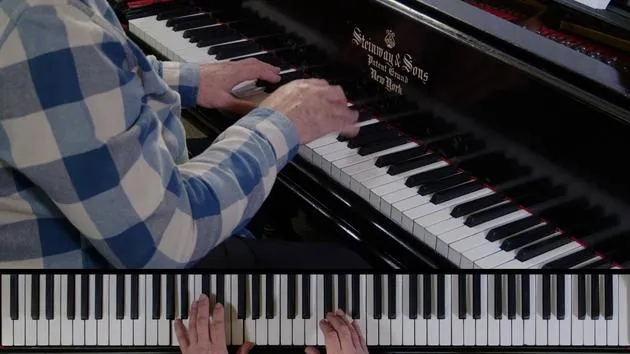
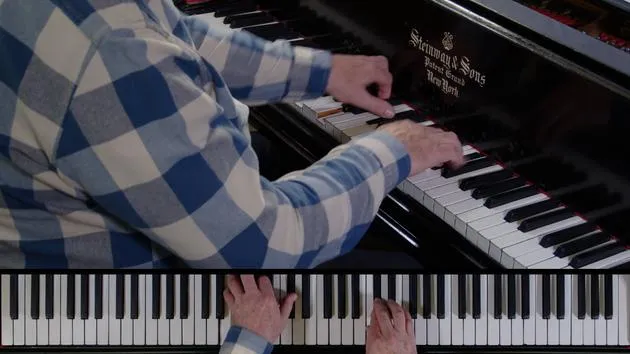
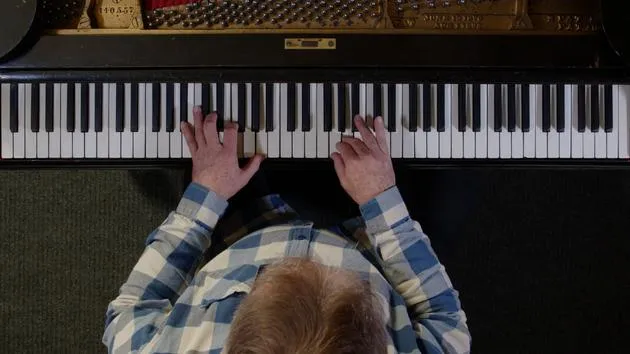
If we do this in root position over 2, 5, 1 in C, the simplest level would be this, with shells in the left hand:
- Practice that over and over.
Embellishment
Just a little embellishment:
- Notice how there's quite a jump involved there.
- A fourth between the D minor root position shape and the G7 root position shape.
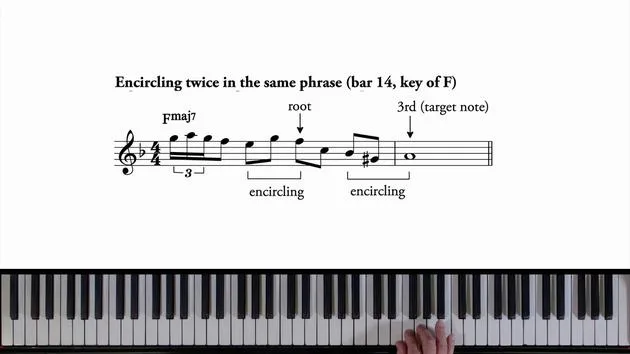
That's not ideal. However, I've managed to go to C by step with a smooth connection. In fact, I've encircled the E.
"It's always nice when you can approach a target note in this place, the third of the chord, from below and above."
Improving Connections
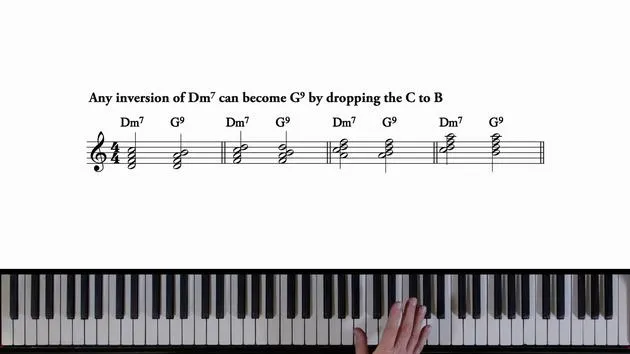
Now, let's try and improve the connection between the D minor and the G7.
- It's very easy to do that if you start your G7 arpeggio on the third.
Now I've got a semitone connection with the shells. This has taken me higher into the C chord because my target note is now the fifth, and I've encircled the fifth.
These are two very simple approaches, but you can take this idea and run with it.
Adding Rhythmic Variation
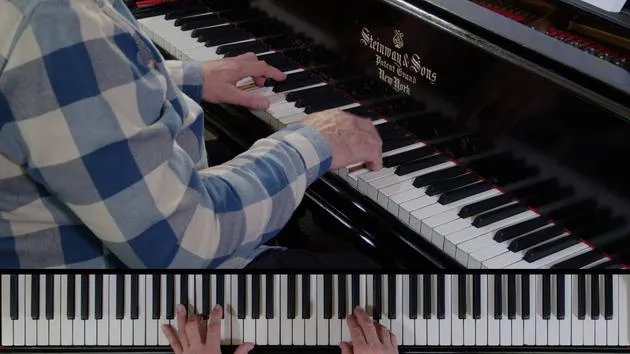
For instance, if you wanted to introduce some rhythmic variations, you could introduce a triplet and do a little bit more on the C chord.
- Before, we just basically hit the target note and wrapped up the phrase.
- Now, we're going to carry on past the target note.
You can combine a fixed pattern with an improvised bar on the end.
Phrase Variations
So those three phrases are all basically the same lick; I've just tweaked them a little bit. But there are other ways of playing vertically, of course.
- We could start on the third of the D minor and go down the G7, playing to the ninth as well.
- If you start on the third of A chord and play four notes, you usually end up on the ninth.
This time I've gone down G7 in third inversion, and that falls onto the third of the C chord.
Targeting Thirds
"Thirds are always really cool target notes to land on, especially if you go from the seventh of the previous chord."
The next example involves going down the scale of the G7 chord. Instead of going down the arpeggio, try ending differently.
- The second bar was improvised; I think I did four or five variations.
- See if you can do the same by taking this idea of going down the chord and starting the D minor like that.
If we start on the fifth, that will fall automatically, if you play it right, onto the third of the dominant chord, which is a lovely effect. It's really common in melodies and even in chord voicings.
Tweaking Notes
Now, a little tweak here. When I went up the G chord, instead of playing the ninth on top, I played the flat ninth.
So now I'm encircling the fifth from a semitone above. The B9 is a really common effect, especially in bebop.
If you know your diminished chords, you'll recognize this G7, B9 arpeggio as a B diminished seventh chord.
Applying Techniques to Longer Chord Progressions
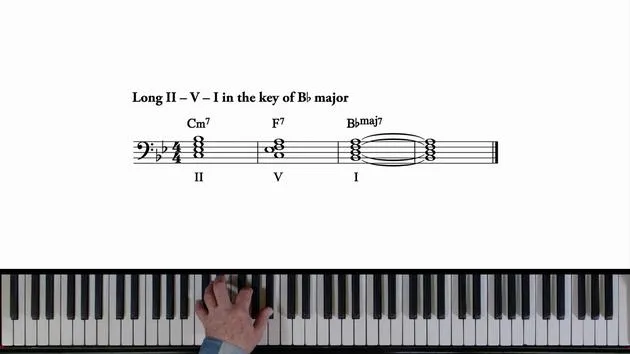
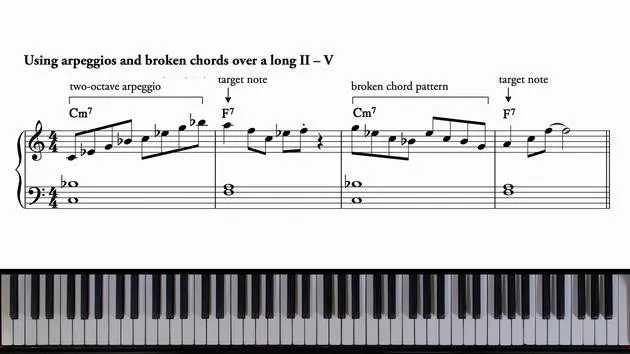
Before we finish, we should just apply all this to long two fives as well. All those were short two beats on each chord.
Example in C Minor
Let's change key. Let's do it in the key from Perdido. Here we are, one bar on each chord:
- C minor 7: Ascending arpeggio targeting the third of the F chord.
- Now, another phrase going down from the C minor from the fifth.
Vary the ending. Try making up your own phrases that do this over any chord pair.
You may remember in part one, we did something like this on a perfect cadence in the final tune Improvert just before we finish.
Exploring Different Time Signatures
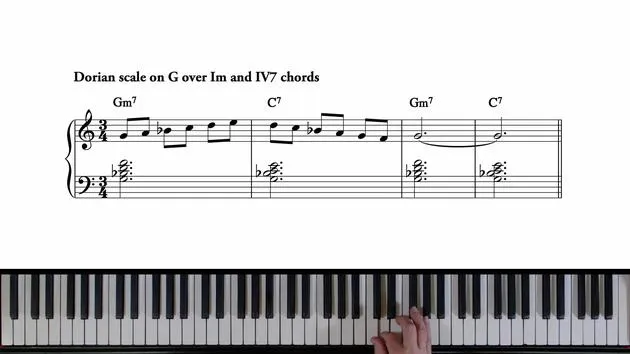
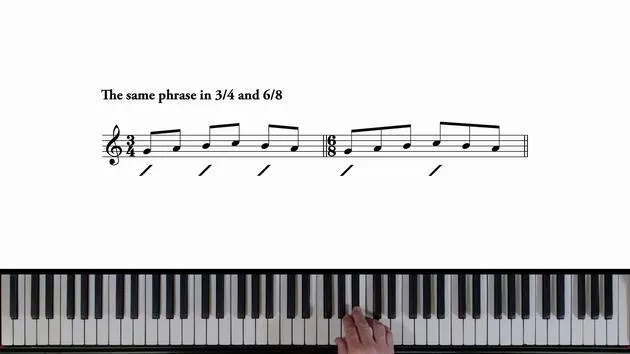
Then, let's do it in three-four, for instance, like what you might have done in G minor Waltz.
- I'm using nothing but chord tones, apart from this chromatic linking note, which enables me to use the E as a target note.
- Three notes from the C7 chord.
- Now down the G minor arpeggio, falling on the same target note, E natural.
Conclusion
So, review Perdido, G minor, Wolfs Love That Man, etc. and try out some of these ideas in your solos.
25 Lektionen
1 Std. 20 Min. strukturierte Videolektionen
Erweiterte Videofunktionen
Verlangsamen, Passagen loopen, mitlesen
Handy, Tablet & Desktop
Üben, wo du willst
100 % Zufriedenheitsgarantie
30 Tage Geld-zurück-Garantie
Lern deinen Guru kennen
Lern deinen Guru kennen
Der von der Kritik gefeierte Jazzpianist und Komponist Tim Richards ist einer der erfahrensten Jazzpädagogen Großbritanniens und unterrichtet seit über 30 Jahren privat Klavier sowie am Morley College, am Goldsmiths College, an der University of Surrey, in den Premises Studios und an weiteren Orten im Vereinigten Königreich und im Ausland. Er hat zahlreiche Titel für Schott Music produziert, darunter die zweibändigen Bestseller Exploring Jazz Piano, Blues, Boogie & Gospel Collection und das gefeierte Improvising Blues Piano. Gemeinsam mit John Crawford ist er zudem Koautor von Exploring Latin Piano und Brazilian Piano Collection.
In jüngerer Zeit hat Schott Jazz, Latin & Modern Collection (15 Stücke für Klavier solo) veröffentlicht, das Originale von Tim Richards neben Stücken von Duke Ellington und Thelonious Monk vereint, sowie das zweibändige Set Beginning Jazz Piano (jetzt ein zweiteiliger MusicGurus-Kurs).
„Die wahre Freude an Tims Musik… liegt darin, dass sie zugleich enorm lehrreich und ein großes Vergnügen zu spielen ist. Jeder, der auch nur das geringste Interesse daran hat, Jazzpiano zu lernen oder zu unterrichten, sollte sich unbedingt eine Sammlung von Tims Büchern zulegen.“ PianoDao
Als Interpret ist Tim seit den 1980er-Jahren eine feste Größe der britischen Jazzszene und spielte auch den Blues mit britischen und amerikanischen Legenden wie Otis Grand, Earl Green, Dana Gillespie, Larry Garner, Joe Louis Walker und Mojo Buford. Er hat über ein Dutzend Alben als Bandleader veröffentlicht (mit vielen der besten Londoner Jazzmusiker, darunter Pete King, Gilad Atzmon, Tony Kofi, Jason Yarde, Seb Rochford, Ed Jones, Dick Pearce und viele andere) und ist mit Besetzungen vom Duo bis zum Nonett durch ganz Europa getourt. Seine jüngste Aufnahme, das Album ‚Telegraph Hill‘ des sechsköpfigen Hextet, wurde im The Observer als "Eine wahre Freude von Anfang bis Ende" beschrieben.
Weitere Informationen finden sich auf seiner Website www.timrichards.ndo.co.uk







