



András Schiff Analysis of No. 3 Allegro Moderato
With
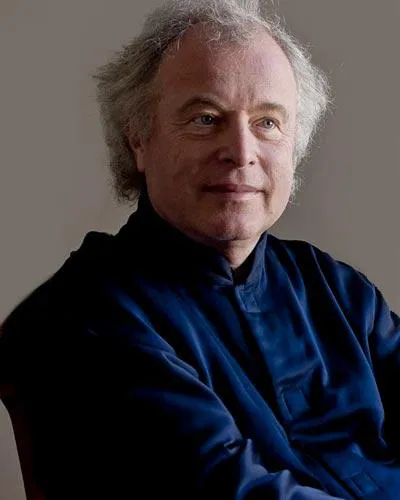
András Schiff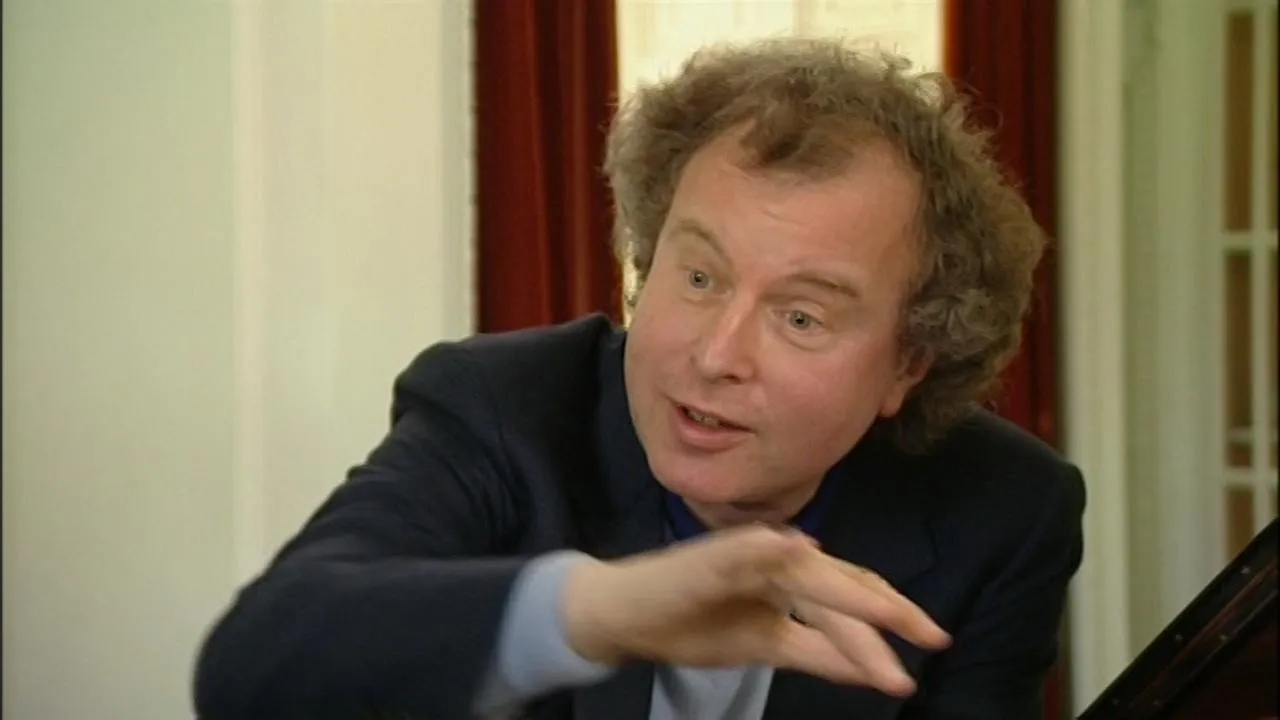
What's in the course
4 lessons (0h 57m) · 1 free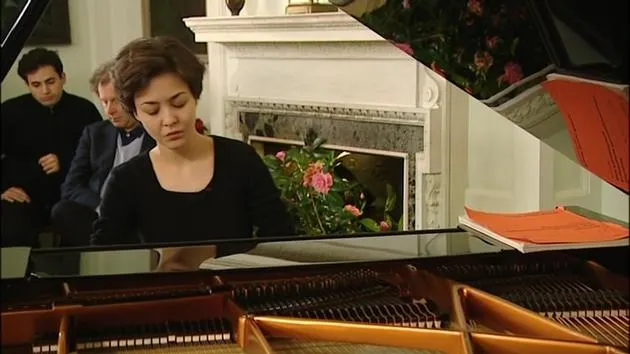
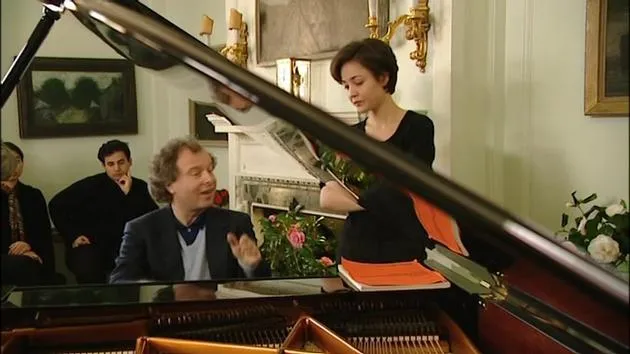
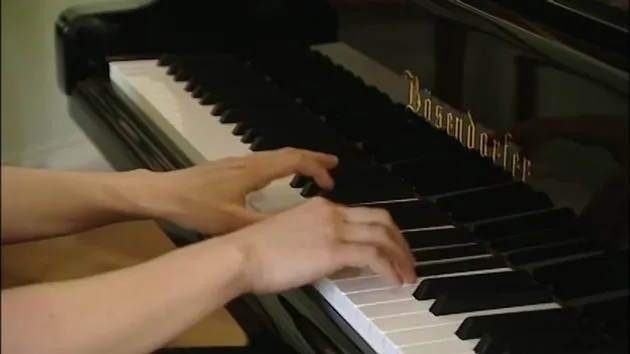
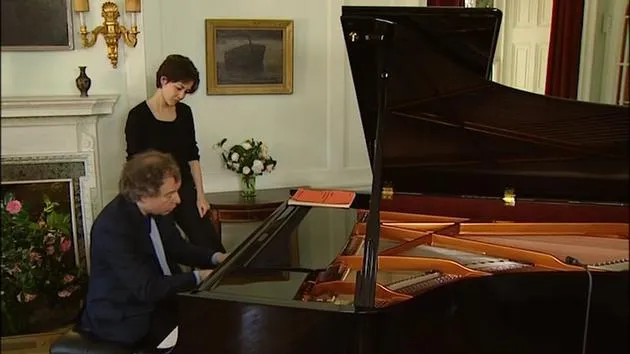
Lesson transcript
Music Lesson
Introduction: "So please begin the third piece again."
Context: "Okay. Thank you. Now, you live in Vienna, so you have seen a coach with horses in Vienna. Now it's a touristy attraction. But in Schubert's time, this was the normal form of transportation. He must have seen this all the time in front of his house. And I really heard the horses here."
Local Atmosphere: "Also, if you go to Grinzing or one of those little towns around Vienna, where you have taverns and where they have wine and food, this is where Schubert liked to sit with his friends. There you have little music bands, and if somebody plays the viola there, or if you hear a gypsy band, then there's this viola player always playing."
Musical Interpretation: "So, whatever you play on the Abo a little later, it can sound, of course, a little more sinister. But just let this... Let's get this movement. It's much too loud, you know. I am not hard of hearing; I have good ears. Please, there is no movement, you know?"
Getting into the Tune: "Okay, now. Now let's get the tune. There's just a little more inflection. Again, you have to separate the melody from the accompaniment. I mean, this is not a Bachian piece where every voice is equal. Here, there is definitely a melody, an accompaniment, and harmony."
About the Accompaniment: "And the accompaniment is short. It has all the different moods, but it's a wonderful little composition, you know, very round. There's a wonderful recording with Cazals playing this on the cello, and he brings a new element. He says, 'Yum,' I love that very much. But let's get back to the original."
Revisiting Technique: "Yeah. So play from the beginning. No robot! Why do you start with a hesitation? If you would sing this, it's too pianistic. It's not singing. Yes. And these are short notes. I have a problem with your repeated notes. You say 'tam, tam, tam' three times. 'Tam.' It's too percussive, you know?"
Composing Words: "It's a song. You have to compose words for it."
Technical Notes:
- Key: A flat major
- Technique: Long bow
- Phrase: "Yadadadadin."
- "Maybe change the fingers, please. Not everything, wisdom. Yes."
Practicing Together: "Alright. Now I play the left hand and you play the right hand. Okay, now we go. Let's go on. Okay, now you do it alone. But it's the right pulse, you see? Just a question of some warms in that."
Final Thoughts: "Piano, piano, piano. Here we have the major accent, a small accent, long thumb."
4 lessons
0h 57m of structured video lessons
Advanced video features
Slow down, loop a passage, follow along
Mobile, tablet & desktop
Practise wherever you are
100% satisfaction guarantee
30-day money-back guarantee
Meet your guru
Meet your guru
András Schiff is one of the most prominent members of a generation of Hungarian pianists born in the years following the Second World War, along with such artists as Zoltán Kocsis, Dezso Ránki, and Jenő Jandó. Of this remarkable group, Schiff has achieved the greatest international reputation, due not only to his decision to pursue his career outside of Hungary, but also thanks to his finely shaded sense of touch and an impressive memory that allows him to present, in concerts and recordings, large portions of a composer's oeuvre.
Schiff was born in Budapest on December 21, 1953, and studied with Hungarian composer Pal Kadosa and Ferenc Rados (both of whom also taught Kocsis and Ránki), and English harpsichordist George Malcolm. He made his debut in Budapest at the age of 19, following it with concert appearances throughout Europe and the United States. His reputation grew with prizewinning performances at the 1974 Moscow competition and the 1975 Leeds Festival.
András Schiff works with most of the major international orchestras and conductors, but most of his performances of piano concertos by Bach, Beethoven and Mozart are directed by himself. In 1999 he created his own chamber orchestra, the Cappella Andrea Barca, with which he works annually as conductor and soloist, as he also does with the Philharmonia Orchestra and the Chamber Orchestra of Europe.
Schiff's style, in which an unusually sensitive touch is combined with an alertness to contrapuntal clarity, has made him one of the foremost Bach interpreters of the day. He has recorded the complete keyboard music of Bach, as well as the complete sonatas and sonata fragments of Franz Schubert, whose introspective keyboard music is well suited to Schiff's temperament. He completed a Beethoven sonata cycle on ECM in 2009, and he was awarded the 2011 Schumann Prize by the city of Zwickau for his interpretation and promotion of Schumann's music. In 2001, Schiff began revisiting and re-recording the works of Bach. In addition to the expected middle-European Romantic works, the music of Béla Bartók and Leos Janácek figures prominently in Schiff's repertoire.
In his MusicGurus courses on Schubert's Moments Musicaux Nos 1, 3 and 4, Bach's Partita No. 2 and Beethoven's Late Piano Sonatas, Schiff takes you inside that interpretive world - sharing how he thinks about voicing, touch, contrapuntal clarity and structure so you can bring real depth and understanding to these works at the keyboard.







