



Getting started
With
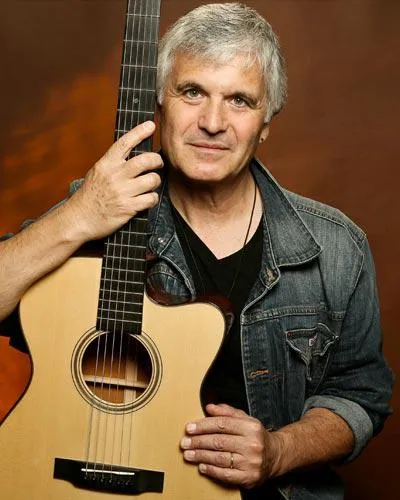
Laurence JuberIn this lesson, Laurence covers the basics to get you started on the course - including position, muting, tuning

What's in the course
11 lessons (1h 58m) · 1 free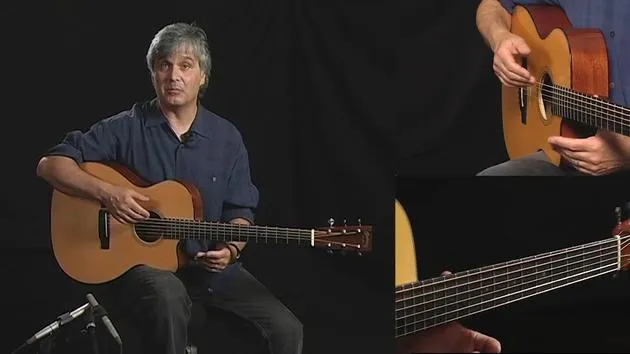
Lesson transcript
Welcome to Guitar World with Lawrence Juber
Hello, I'm Lawrence Juber, and welcome to my guitar world. I've been playing for over 40 years, and I've learned a few tips and tricks along the way. One thing I've found is that people often appreciate a reminder of the fundamentals , the rudiments of guitar playing.
Getting Started
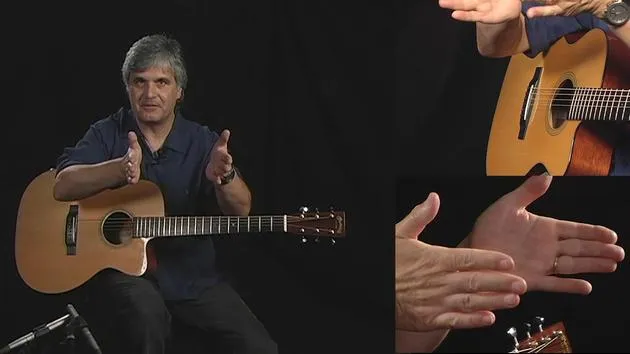
I'm going to give you some pointers in that direction. Please feel free to take advantage of the benefits of being in a DVD format: stop, rewind, and take another look. There's information here that I like to be reminded of, so I'm sure that you will enjoy repeated watchings, too.
Holding the Guitar
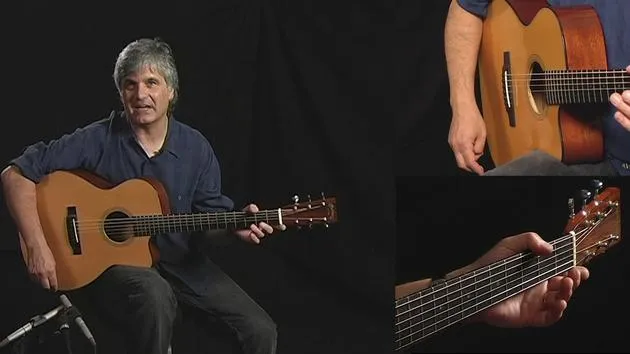
Let's get started with something really fundamental: holding the guitar.
We often take this for granted, but there are important aspects to the way a guitar works that can encourage the vibration of the instrument, allowing us to take full advantage of its tone.
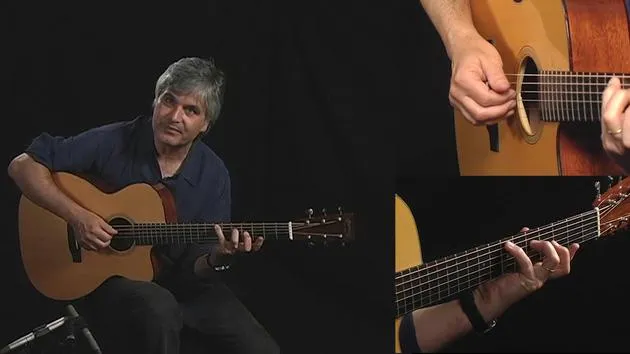
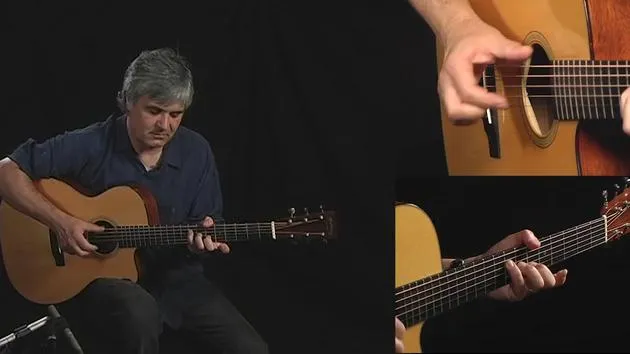
- Keep the guitar parallel with your body: This is very important, and I'll revisit this point multiple times.
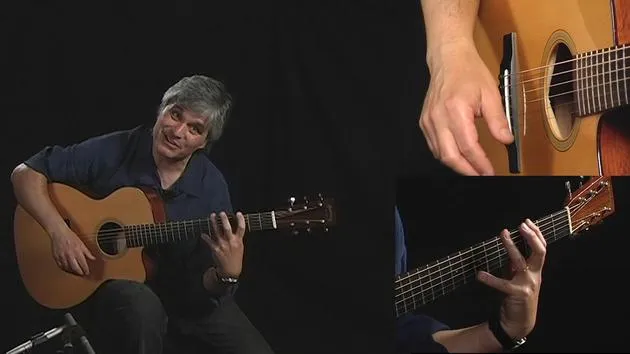
- Avoid tilting the guitar towards you: I know it's tempting , we all do it! But looking at the fingerboard can actually limit your mobility with your left hand.
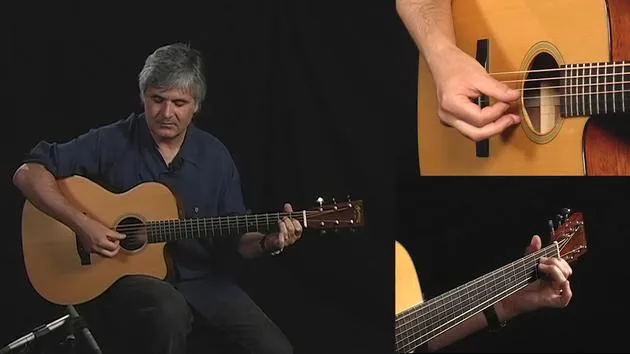
Proper Position
To hold the guitar correctly:
- Sit upright: Keep the guitar parallel with your body.
- Angle the guitar: I actually hold the guitar at about a 45-degree angle.
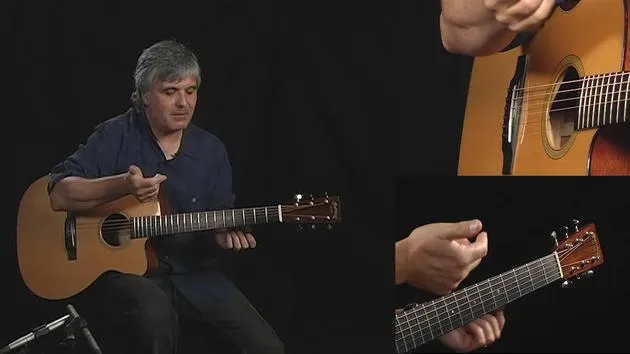
- Support the guitar properly:
- The back of the instrument needs to vibrate freely.
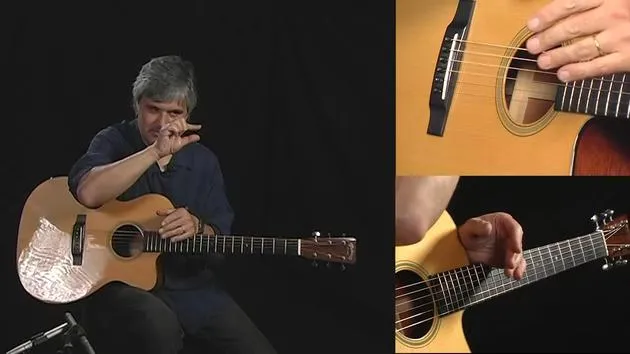
- If I play my bottom E and mute the back of the guitar by pressing it against my body, you can hear a difference in the sound.
- The same happens with the top: if I press my forearm against the top of the guitar, I mute its vibration.
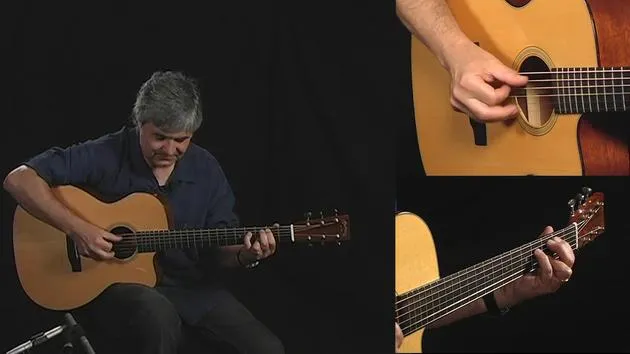
By holding the guitar in a way that the back and the top are free, and allowing the crook of my right elbow to support it, I create a comfortable position where I have full mobility. This setup allows me to articulate both very stretchy things and simple notes effectively.
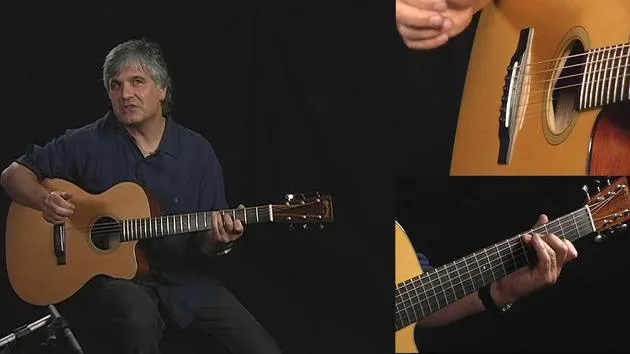
Tuning the Guitar
Now, let's tune our guitars , or as I like to say, "Let's tune our guitars!"
We are in standard tuning:
- Bottom string (6th): E
- 5th string: A
- 4th string: D
- 3rd string: G
- 2nd string: B
- Top string (1st): E
Note for trained musicians: If you're coming into guitar from another instrument, you should be aware that middle C on the guitar sounds at the first fret of the second string, even though it is written an octave higher than it actually sounds. This is a common characteristic of guitar notation.
Let's make sure our guitars are in tune and ready to go!
11 lessons
1h 58m of structured video lessons
Advanced video features
Slow down, loop a passage, follow along
Mobile, tablet & desktop
Practise wherever you are
100% satisfaction guarantee
30-day money-back guarantee
Meet your guru
Meet your guru
Laurence Juber first became known as lead guitarist in Paul McCartney's band Wings. Since then he has built a career as a fingerstyle guitarist, composer and arranger, working largely in the DADGAD tuning that earned him the nickname 'the Duke of DADGAD'.
He has been voted Guitarist of the Year by readers of Fingerstyle Guitar Magazine and named among the top guitarists by Acoustic Guitar magazine, alongside a long list of solo albums and worldwide touring.
In his courses he teaches his fingerstyle technique and the DADGAD tuning he's known for, how to arrange melody, harmony and bass together for solo guitar, and the pieces - like his signature 'Wooden Horses' - that bring it all together.







