



Analyse du premier mouvement avec Yuri Bashmet
Avec
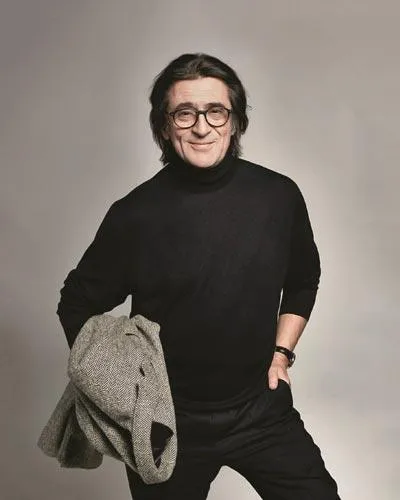
Yuri Bashmet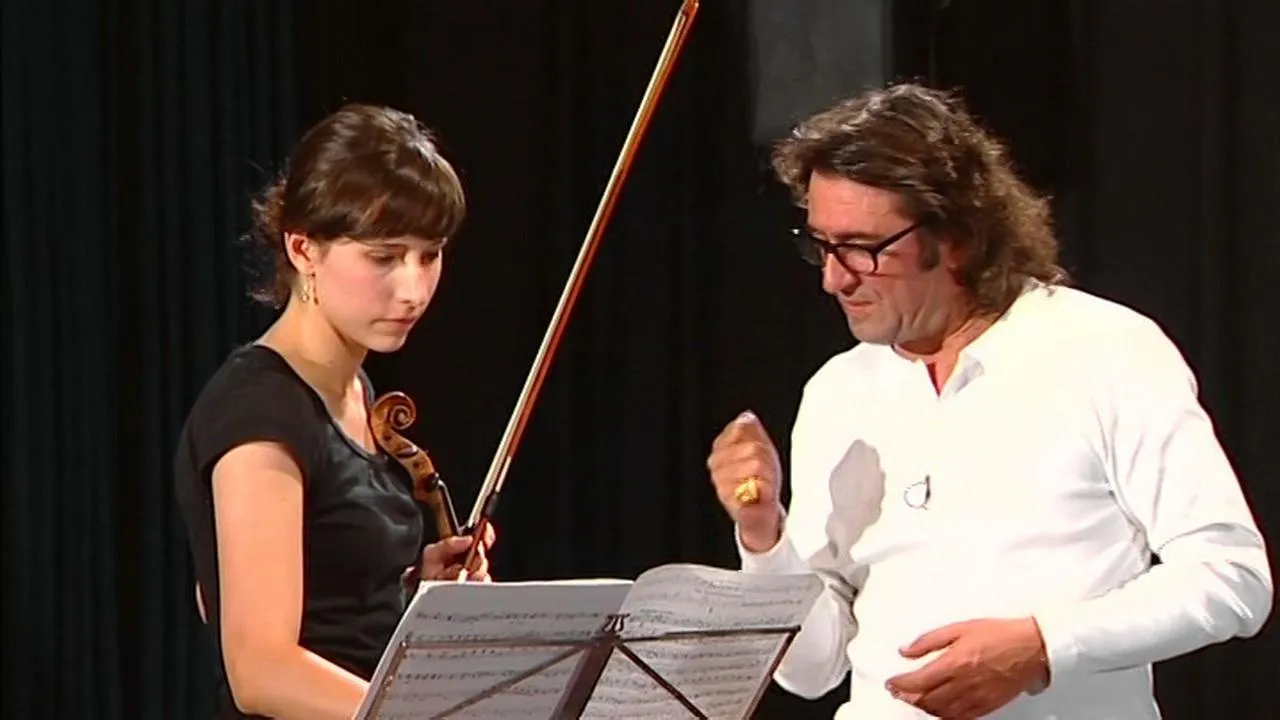
Le contenu du cours
6 leçons (2h 3min) · 1 gratuites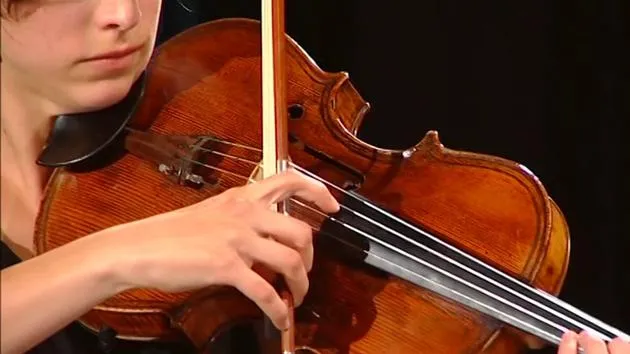
01. Interprétation du premier mouvement par Barbara Buntrock
Leçon gratuite10:15
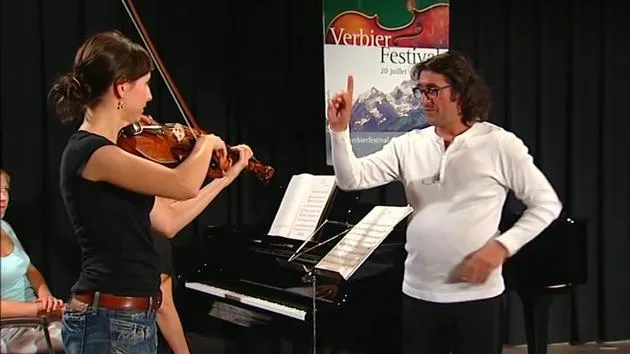
02. Analyse du premier mouvement avec Yuri Bashmet
Tu es ici49:28
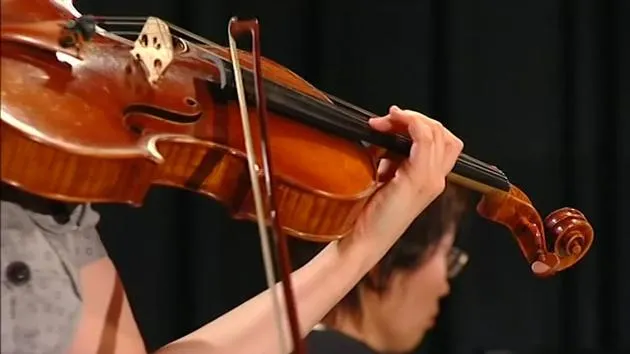
03. Interprétation du deuxième mouvement par Lilli Maijala
7:43
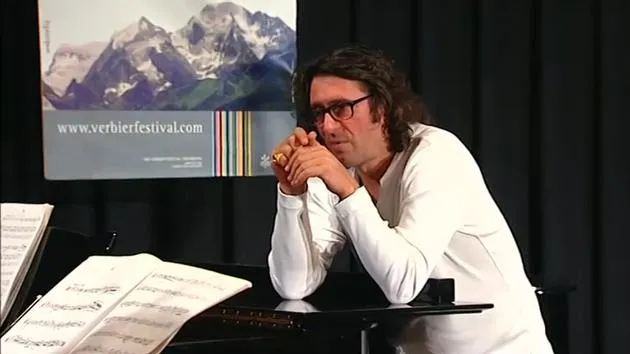
04. Analyse du deuxième mouvement avec Yuri Bashmet
21:18
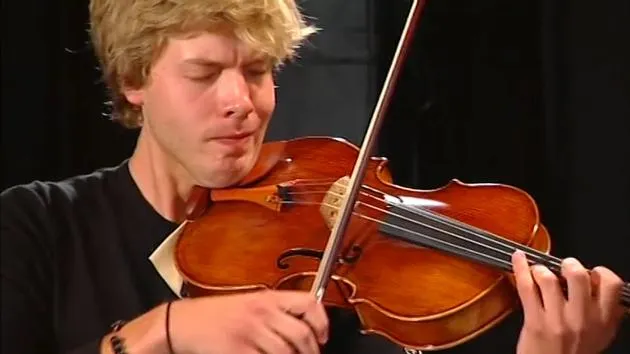
05. Interprétation du premier mouvement par Jan Grüning
14:24
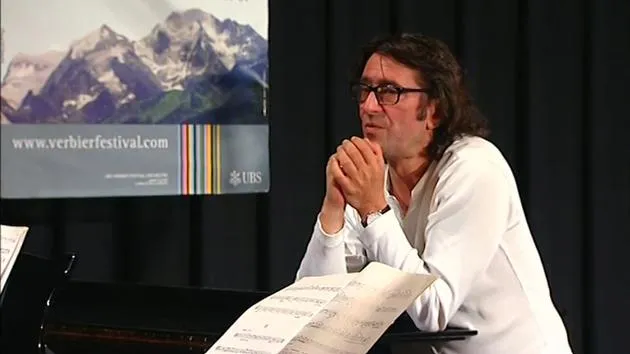
06. Analyse du troisième mouvement avec Yuri Bashmet
20:41
Transcription de la leçon
is what happens:
- When you stay rigid, your weight stops in the wrong place.
- If you lean slightly, then you feel all your weight shift to where it needs to be.
Now, do like that and you'll understand the difference. If you do it without leaning, nothing will happen, it'll sound flat.
Example: If you stay like that and move your hand, what happens? Nothing! It becomes unnatural.
Remember, we're all different; some have more weight in their hands, but that weight still has to be felt across your entire body for effective sound.
Fortissimo and Dynamics
Now we see. Yes, exactly.
That weight creates fortissimo, but it should not push. Instead of forcing sound, use good technique to deliver your sound naturally.
- If you exert too much pressure, it will sound stifled.
- You should hear a different quality.
That's why I stop you now, it was a good line but unnecessary.
Main Beats and Articulation
Remember the main beats?
We don't need portato now.
Now, let's do fortissimo. Play alone, without piano.
Look:
That is an image of accomplishment. It's like a cigarette (for an example).
Where is the strongest tension? It's before the result. So, if you think of it that way, each next note should build more and more tension like a magnetic pull.
Try it alone.
- It was better, but it was shorter.
- It has to be longer and stronger.
Musicianship and Interpretation
Now think about your phrasing.
Your phrase depends on how you bow.
When you change the bow, you can cut the phrase, if it happens once or twice, that's okay, but if it happens repeatedly, it doesn't feel right.
You shouldn't feel nervous, but you need to maintain focus.
When you play, remember: play what is written.
- Don't think of just the notes; think about the musicality.
- It has to be more than just mechanics, engage with the music.
Committing to Growth
You're very good!
You can have a solid career with a family, but if you want to be better, your ideas should be stronger and more complex than your current abilities.
- You must understand why you practice.
- Know what you want to achieve, even if it seems difficult.
This will help your technological abilities grow, and musically you'll become stronger because you'll always consider what you're doing.
Can I borrow the piano for a moment?
You need to respect the tension in orchestras and how they create texture, as if they are completely different beasts.
Finding Your Voice
Now, let's continue with the exercise.
- Be patient and push through.
- The idea is to find your specific sound.
Work on these gradual adjustments, and you'll find your musical expression becoming richer.
Ending with Friction
As you play, maintain careful attention to articulation.
Don't rush; if you play too quickly, the results will not yield your best expression.
Listen closely, music is not just noise.
Conclusion
Yes, it is difficult, but remember, it's all about patience and progression.
Practice developing beautiful sound. Aim for clarity and intent. Good luck, and remember to keep striving to excel!
6 leçons
2h 3m de leçons vidéo structurées
Fonctions vidéo avancées
Ralentissez, bouclez un passage, suivez la partition
Mobile, tablette et ordinateur
Pratiquez où vous voulez
Satisfaction garantie à 100 %
Garantie remboursement 30 jours
Rencontrez votre guru
Rencontrez votre guru
Grâce à sa virtuosité, à la force de sa personnalité et à sa grande intelligence, Yuri Bashmet a donné à l'alto une nouvelle importance dans la vie musicale. Altiste par excellence de l'époque moderne, il a incité les plus grands compositeurs de notre temps à enrichir le répertoire de nouvelles œuvres majeures. Il est directeur artistique du festival December Evenings de Moscou, chef principal de la Symphony Orchestra of New Russia, et fondateur et directeur des Moscow Soloists. Il se produit également dans le monde entier dans le double rôle de chef d'orchestre et de soliste.
Né en 1953 à Rostov-sur-le-Don, en Russie, il a passé son enfance à Lvov, en Ukraine, avant d'étudier au Conservatoire de Moscou avec Vadim Borisovsky (du Quatuor Beethoven) et Feodor Druzhinin. Sa carrière internationale a été lancée en 1976, lorsqu'il a remporté l'International Viola Competition de Munich. Depuis, il s'est produit avec tous les grands orchestres du monde, dont les Philharmonies de Berlin et de Vienne, le Royal Concertgebouw Orchestra, les Orchestres symphoniques de Boston, Chicago et Montréal, le New York Philharmonic, le London Philharmonic et le London Symphony Orchestra, qui a présenté son propre Yuri Bashmet Festival.
Il a inspiré de nombreux compositeurs à écrire pour lui, entretenant des relations personnelles et professionnelles étroites en particulier avec Alfred Schnittke et Sofia Gubaidulina. Loin de la salle de concert, il apporte un esprit curieux et perspicace à la vie au-delà de la musique classique : il est passionné des Beatles et de Jimi Hendrix et a animé sa propre émission de débat politique à la télévision russe. Il joue un alto Testore de 1758 (un modèle similaire à celui dont jouait Mozart) qu'il a acheté en 1971.
Étudier la Sonate pour alto et piano de Chostakovitch avec Bashmet, c'est apprendre cette œuvre monumentale auprès de l'interprète qui a fait plus que quiconque pour placer l'alto au centre de la scène. Ses éclairages sur le phrasé, la sonorité et l'intention profonde de la musique sont quelque chose qu'aucune partition seule ne peut enseigner.







