



Utiliser les cordes pour façonner ton son
Lesson time: (6min 4sec)
Andrew Levy explique comment tes cordes façonnent le son de ta basse funk - filées plates (flatwound) contre filées rondes (roundwound), et comment des cordes neuves ou usées changent le son.
Course preview
This lesson is part of the course Libère tout ton potentiel à la basse funk avec The Brand New Heavies
Watch a preview of the full course below.
Lesson transcript:
Understanding Bass Strings and Sound
The biggest part of your sound on the bass is actually the strings. I know there are thousands of different types of strings and brands, from nickel-plated options to even colored strings, which you might have seen in some of my performances.
String Longevity
On the bass, I don't tend to change my strings until they start sounding a bit dull. Once, I had a set of strings that lasted a couple of years, and they sounded really good, especially on the kind of dubbier sounds.
For example, there's a song called Brother Sister, where everything's rolled off, the highs are rolled off, and it features very short notes. Even if you have a round wound string, you can still make it sound quite dubby.
Types of Strings
-
Flat Wound Strings:
- Tend to have that really dead sound, very dubby and deep.
- Nice for slower songs, but most of our songs aren't like that.
-
Round Wound Strings:
- These are the scrapey ones.
- Essential for the classic jazz Fender jazz sound.
I can play anything, just get used to playing anything. You might get called up for a session where they have a bass that fits the track's sound. It's crucial to learn to adapt and pick up any bass and make it sound good.
The sound of the strings can dictate what type of bass line you're playing, making strings incredibly important. However, it's essential not to get too hung up on the technical aspects. Just play funkily.
Focus on Playing
As I've mentioned before, don't get too caught up in the technical side of your bass, whether it's the controls or the strings. It's really about your hands, your soul, and your spirit.
During touring, sometimes you don't get a long sound check. The singer might have a problem with a microphone, or the brass section needs more in their monitors.
- Preparation Tips:
- Flat Settings: I usually keep everything flat on the amp. I've trained myself to have all my controls on full.
- Focus on Playing: This way, there's less to fiddle around with, allowing you to focus on playing, especially during sound checks.
If your guitar isn't bright enough or bassy enough, you can still make it sound bassy without having time to adjust your amp or get the right EQ.
Techniques for Adjusting Sound
I have a little technique I use to increase the sound of the bass on the low strings by playing away from the pickup. Here's how:
- I play with this part of my finger to soften the sound by taking away the transient.
- I started using this technique out of desperation during a song, I think it was B and H, when I realized that my treble was too high.
- I moved my hand away from the pickup while playing on the scratch plate, effectively deadening the sound with my fingers.
As you adjust your position:
- Playing higher up the neck will give a brighter sound.
- Playing lower down results in a softer tone.
Exploring Different Sounds
You have the ability to change your sound without adjusting the EQ or volume.
- Playing Techniques:
- If a part requires a plucky and syncopated sound, playing down here will yield a short, dry sound.
- Conversely, if you're playing a lead or chorus part, you can achieve a different tonal quality by positioning your fingers better and using more skin on the strings.
In summary, the way you approach your bass and string choice is crucial, but the fundamentals of your sound come from your technique, so harness that power for a wide variety of tones!
About the instructor
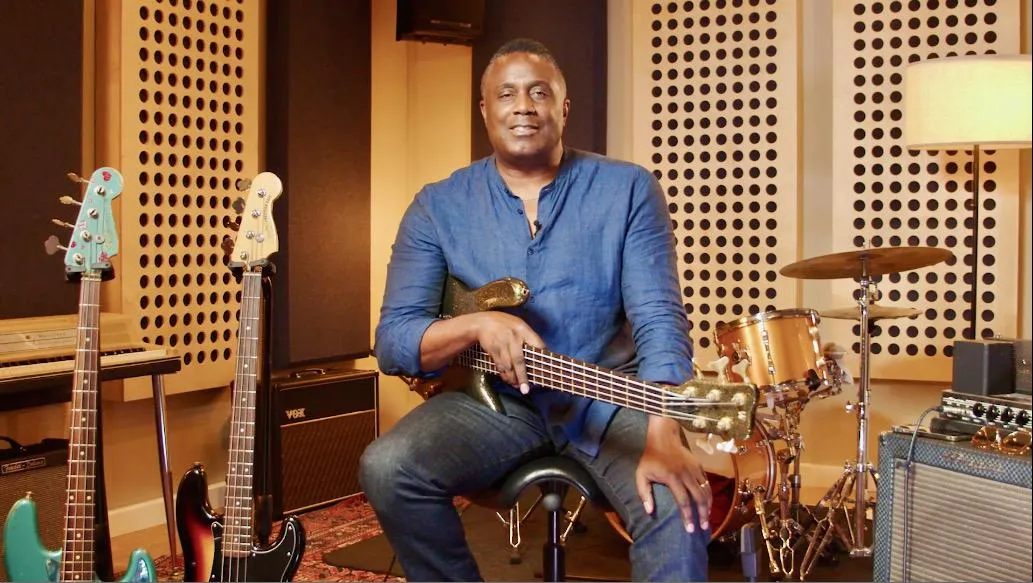
Andrew Levy est membre fondateur et bassiste du groupe d'acid jazz The Brand New Heavies. Il coécrit également la musique originale du groupe avec Simon Bartholomew. Musicien autodidacte, Andrew a grandi en écoutant du reggae, la radio pop britannique, de la musique classique, du jazz funk, du 'Lovers' Rock', du jazz fusion, de la house, du folk américain, du hip hop et de l'acid house : un mélange éclectique né d'une enfance londonienne auprès de parents jamaïcains ! Ses plus grandes influences musicales sont James Brown, Vicki Anderson, Earth Wind and Fire, Level 42, Shalamar, Chic, Herbie Hancock, George Duke, George Benson, Marvin Gaye, Thin Lizzy, Miles Davis et Phyllis Hyman. Dans son cours, Andrew partage ce qui fait vraiment bouger la basse funk : comment se caler avec la batterie, s'installer profondément dans le pocket et tenir le groove au sein d'une section rythmique soudée — le feel, la discipline et les choix derrière le son qui a rendu The Brand New Heavies célèbre. Andrew vit dans le sud-ouest de Londres avec sa femme Melissa et leurs deux fils. À propos de The Brand New Heavies The Brand New Heavies, fondé par Andrew Levy et Simon Bartholomew, a été le pionnier de la scène acid jazz des années 1990. Le duo s'est rencontré à l'école à Ealing en 1985 avant de sortir des albums classés dans le top 10 au Royaume-Uni, aux États-Unis et au Japon et, en 2020, de signer un contrat à sept chiffres avec le label international Edel Records pour produire cinq nouveaux albums, le premier paru au printemps 2022. Le groupe est fier de jouer de vrais instruments — pas de musique synthétisée par ordinateur ni programmée. Résultat : il compte de nombreux admirateurs au sein de l'industrie musicale, dont le super-producteur Mark Ronson, qui cite leur album éponyme parmi ses 10 meilleurs disques de tous les temps et attribue au groupe le mérite de l'avoir fait passer du rock au funk au début des années 1990. Ronson a produit la reprise par le groupe en 2019 de "These Walls" de Kendrick Lamar, qui a acquis un statut culte sur Radio 2. read more