



Analyse, explication et démonstration avec Steven Isserlis
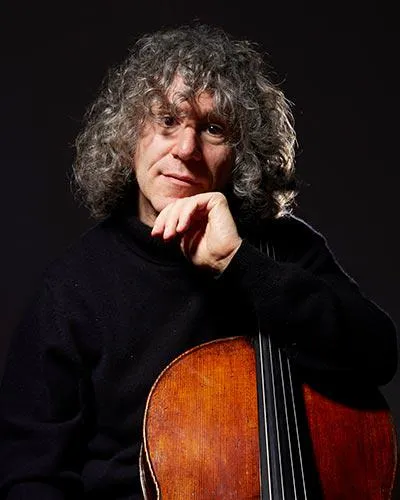
Avec
Steven Isserlis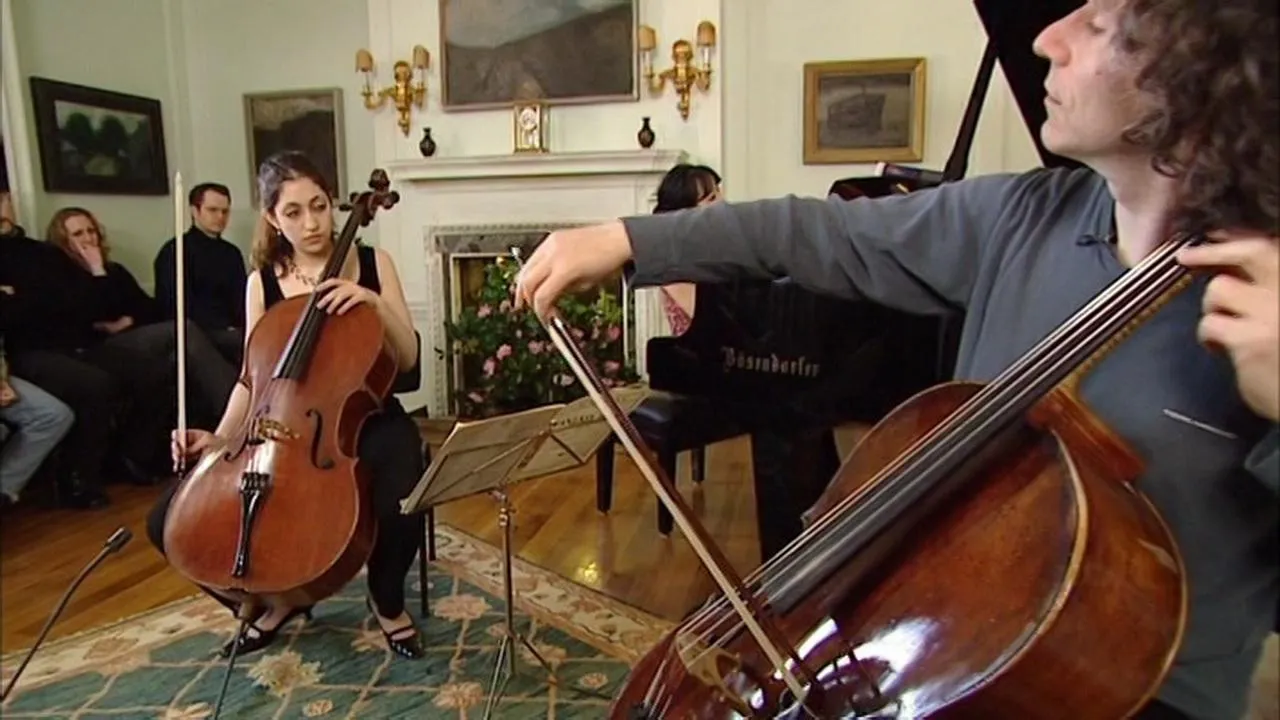
Le contenu du cours
2 leçons (1h 13min) · 1 gratuites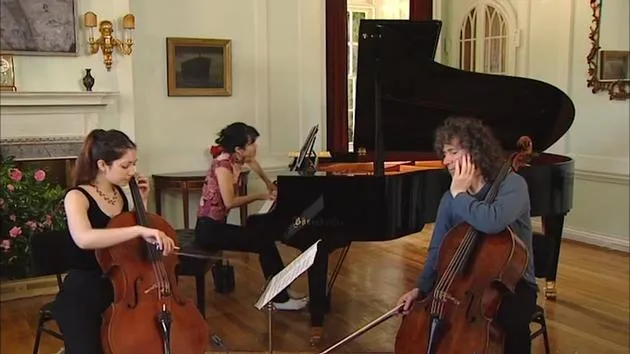
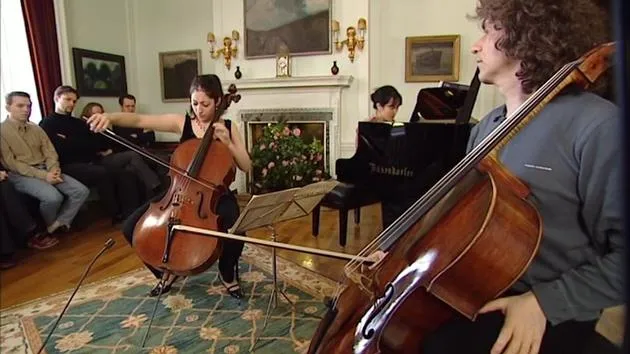
Transcription de la leçon
Music Lesson
Discussion on Interpretation:
Okay. You want to talk about that? Okay. Yeah, it's very nice. The thing is, what's the marking at the top?
Metronome Mark:
- 80 - Yes, that. Which is actually. That's the metronome mark. Yes, which is slow. It's slower than what you're doing.
Mood Indication:
- Tender and Expressive - Okay. I mean, what you're doing is very appassionata. I would say it was passionate. It doesn't strike me as tender.
Analysis of Phrasing:
- The fact that he writes a slow metronome mark and then he writes these gentle triplets and these conversations between the two of you, I'm not really hearing them. I'm hearing a kind of outburst of passion, but I'm not sure that's what he's asked for.
Revisiting Phrasing:
- Let's begin again and think.
- Do the phrases tend to be rising or falling?
- Rising.
- Is that rising? No, I think not. I think it's basically these falling phrases.
- You're kind of pushing through them, so we miss some of the beauty of that.
Beginning Again:
- Okay, let's begin again.
Piano Introduction:
- Now, how does the piano start? What's the tune before you come in?
- Yes, the triplets. Yes, accompanying.
- But what's the... what do you really respond to without looking?
- That's cheating.
- Cheers. Exactly. And you respond. She asks the question, and you answer.
Dialogue in Music:
- Okay, I didn't hear the dialogue. I mean, I think you could bring out the question, the forte piano, a little more. But then you have to respond to it in kind.
- Yeah, okay. But she goes, and I want to hear from you.
Phrasing and Importance:
- What you're doing is... I don't hear the same phrase, which then, of course, goes on. But I have to hear that conversation.
Identifying Central Notes:
- What is more? What are your central notes to this phrase?
- What's the most important? Which ones?
- The F and then A. Yeah.
Curve of the Phrase:
- Okay. So there's, in a very gentle way, what you're doing is you're making each note equal. And that somehow doesn't make this lovely curve to the phrase.
Expressiveness of Notes:
- Why is the G there? I mean, the first time you went. Now you go, why?
- It's more emphatic. It's expressive.
- Okay. But you ran through it.
Slowing Down for Expressiveness:
- I mean, that's why I think you're a bit hurried for this, because you got to have time to enjoy this kind of... this beauty here and all these conversations.
- Listen to that. The piano goes. And you answer, and more. So nothing's in a hurry. Nothing's breathless.
Imagery of a Love Duet:
- It's kind of a... sorry, I know it's very inappropriate, but it's kind of a love duet, isn't it? A love conversation.
- So you can imagine whoever playing the piano having this.
Natural Flow of Music:
- No, sorry, it's not. If you have equal notes like that, it's like we are talking like that. It doesn't sound natural, so you have to go. So it just falls again.
Visualizing the Music:
- You can see, when you look at the music, these curves. He's written lovely soft lines. So go with them outside.
Final Encouragement:
- Yeah, okay. That was very nice. It was very nice. But you phrase beautifully here.
- See you later, darling. It was kind of... I think you need that.
Going Back to Beginning:
- Go with the curve. That's much more poetic. Otherwise, it becomes solid. You can't really go from anywhere in there.
- So one last time from the beginning.
Maintaining the Flow:
- Yeah, not a... Sorry, one more time from the beginning. But you still sound in a hurry. I mean, somehow it's a poem, this.
Key Observations:
- If any, if you use kind of some boring prosaic word, it's no longer poetic.
- And that's what you're doing. If you go, you've had these strange words.
- In the midst of all this beauty, you just let it float.
- It's not never solid, this music.
- Listen, answer good. Loud curve.
Transitioning to the Next Phrase:
- Okay, good.
Exploring the Questioning Phase:
- Despite that. What's the difference here now?
- What's happened after that?
- Yeah, after that it's questioning.
- What's happened after that?
Listening and Responding:
- Okay, so in your color question, the piano goes. And you join in.
- So not a kind of... okay, not solid, but not definite.
Understanding the Phrase's Intent:
- The color. Just from there.
Continuing the Phrase:
- Yeah, okay. Do you want the phrase to stop or to go on?
- Go on.
Maintaining Rhythm:
- Okay, so what you're doing is keep landing on the beat. Always take it away from the beat. And then it'll want to go on the phrase.
Gestalt of the Music:
- It's not the bit I was doing.
Conclusion:
Your performance and interpretation can be transformed into a more poetic and flowing representation of the music. It's essential to remain responsive to the dialogue within the piece and connect emotionally to each section while maintaining the natural rhythm and color of the music. Remember, this is a journey of expression, let the music guide you!
2 leçons
1h 13m de leçons vidéo structurées
Fonctions vidéo avancées
Ralentissez, bouclez un passage, suivez la partition
Mobile, tablette et ordinateur
Pratiquez où vous voulez
Satisfaction garantie à 100 %
Garantie remboursement 30 jours
Rencontrez votre guru
Rencontrez votre guru
Steven Isserlis est un violoncelliste dont la passion pour la musique transcende les clivages conventionnels, salué dans le monde entier tant pour sa musicalité que pour sa technique. Il est aussi l'un des professeurs les plus généreux de l'univers du violoncelle : il donne régulièrement des masterclasses partout dans le monde et est depuis longtemps directeur artistique du séminaire de masterclasses et de musique de chambre IMS Prussia Cove. Apprendre auprès de lui, c'est pénétrer ce rare mélange d'érudition, d'imagination et de pure joie de la musique.
Il est aussi à l'aise pour entraîner le public dans son cercle d'amis pour la musique de chambre ou en récital ; pour plonger dans les archives historiques et en ressortir une pépite oubliée ; ou sur la scène de concert avec quelques-uns des orchestres et chefs les plus prestigieux du monde. Né en Grande-Bretagne, Isserlis porte un vif intérêt à l'interprétation historiquement informée et joue avec nombre des plus grands orchestres sur instruments d'époque. Ces dernières saisons l'ont vu interpréter l'intégrale des œuvres de Beethoven pour violoncelle avec le pianofortiste Robert Levin, à Boston comme au Wigmore Hall de Londres, et jouer le Concerto pour violoncelle de Dvořák avec l'Orchestra of the Age of Enlightenment sous la direction de Sir Simon Rattle.
Schumann est une passion particulière : il a interprété le Concerto pour violoncelle de Schumann lors d'une grande tournée en Allemagne, mené un projet Schumann au Japon et participé à une soirée de mots et de musique consacrée à l'histoire de Schumann et Brahms — sur un texte écrit par Isserlis lui-même — à Londres et à New York.
Écrire et jouer pour les enfants est un autre de ses grands centres d'intérêt. Son premier livre, une histoire pour enfants racontant la vie de six grands compositeurs, Why Beethoven Threw the Stew, a été publié par Faber and Faber en octobre 2001, et une suite, Why Handel Waggled his Wig, a paru en 2006.
Fort d'une discographie primée, les enregistrements d'Isserlis reflètent la diversité de ses intérêts en matière de répertoire ; sa parution des Suites intégrales pour violoncelle seul de Bach chez le label Hyperion a été accueillie avec les plus grands éloges de la critique et a remporté de nombreux prix. Nommé CBE en 1998 en reconnaissance de ses services rendus à la musique, il a reçu bien d'autres distinctions, dont, en 2000, le Prix Schumann de la ville de Zwickau (ville natale de Schumann).







