



Structure de la chanson
Le contenu du cours
24 leçons (1h 31min) · 1 gratuites



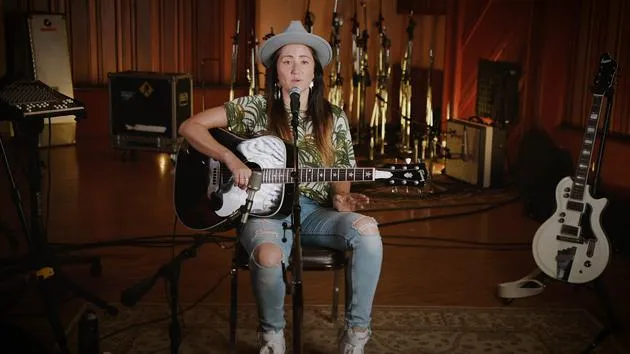


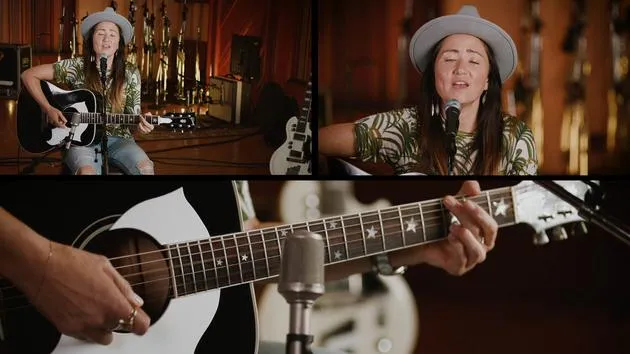
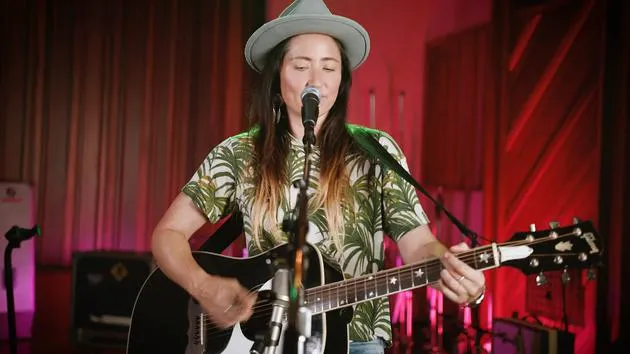

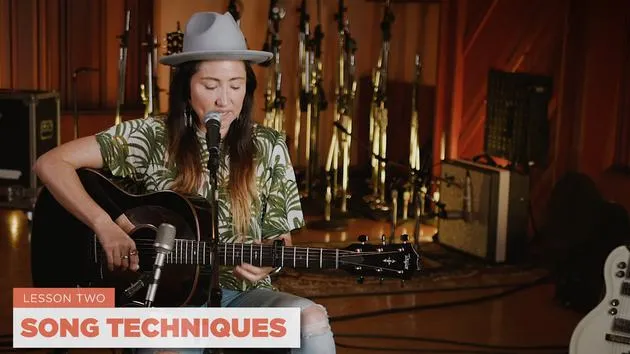




Transcription de la leçon
Exploring Traditional Songwriting: A Journey Through Structure and Emotion
Most of my songs follow an extremely traditional formula:
- Intro
- Verse
- Pre-Chorus
- Chorus
- Re-intro
- Verse
- Pre-Chorus
- Chorus
- Middle Eight or Bridge
- Ramp Up
- Double Chorus Outro
And I'm amazed that, 15 years later, I feel like I'm really delving into different areas of writing. When I'm writing, I still very seldom stray away from that songwriting formula. I just love it. I love that roadmap, and I love the journey that it takes you on.
The Key of D: My Happy Place
It's in the key of D, the happiest chord on earth. It's got a very traditional chord structure; I found that when I was writing it, particularly the pre-chorus (which I love), that chord which is F# major, seventh major, seventh minor, seventh, F#7.
I've noticed people in contemporary songwriting are quite scared of those chords because they're cheesy. But I don't care. I love kind of more old-fashioned songwriting. If you were going to play in a less potentially old-fashioned way, you would play F# minor. Everything around her is A, so, you know...
And I mean, I just went for it! I decided I didn't care, and I was just going for it. It's fun, right? It sounds more fun.
Chorus Connection
The other chord is in the chorus:
"Suddenly I see, this is what I want to be. Suddenly I see."
Here it comes. Yes, classic G minor W. It means so much to me. It's like it's pulling more from really old-fashioned writing than from contemporary stuff that uses chords like that.
Embracing Complexity
There's quite a lot of chords in this song, and usually, that can be off-putting in terms of a song reaching a larger population if it's moving chords all the time. But if you hit it right and the melody, melody, melody, melody, doesn't distract from the melody and helps the melody along, then use what you want.
The Middle Eight: A Creative Pivot
Let's talk about the middle eight or the bridge, maybe my favorite aspect of songwriting. It's a minute for you to completely change course if you want to, or you can just stop. You can pause somewhere and not move from there, giving a breather. You can go somewhere lyrically very different.
I think Chris Martin is an amazing writer of these sections in songs. In the first couple of Coldplay records, I was always completely delighted with where the song would go. Sometimes it would happen at the end of the song, completely changing and going somewhere else.
It's a beautiful opportunity to bring in a completely new melody, maybe even a completely new idea, still all sitting within that magical three-and-a-half to four-minute song structure. You just take a left turn and go somewhere else.
With this song, it was a pause; it was a stop point where I decided to just vamp.
"Suddenly I see, why the hell it means so much to me, you know?"
This gives everyone a chance to go wild in the audience.
Creating Space and Emotion
The feeling that I want to evoke with this section is important. Because the song is upbeat, full-on, rhythmic, and really in-your-face up until this point, this is really taking a breath, stopping the feeling of driving forward.
"I can see her eyes looking from the page of a magazine."
You're painting a picture. You're just taking a minute to stop and describe something a bit more specific rather than the usual, "Yeah, I'm gonna be amazing."
It's like, okay, let's get a bit more emotional and give us a chance to take a breath for a minute.
I think Bruce Springsteen is amazing at this, just kind of rolling lyrics over a vamp. A lot of lyrical input over simple chord stuff, you know:
"Oh, she's taller than most and she's looking at me."
That was describing her staring at me from the cover of Horses.
Rhythm and Lyrical Play
"I can see her eyes looking from the page of a magazine, interviews.
And she makes me feel like I could be a tower, big, strong tower."
Yeah. Power to be powder.
That part is really also about coming back to the rhythm.
"Par beat, parque, parce. Yeah, yeah. Par beat, parque, par beat, parque, parc."
So that's another interesting thing. It's really helpful to come up with the rhythm of what you want to write and just use gobbledygook.
Paul McCartney talks about this: you'll just be using rhythmic sounds.
So I might be writing and go,
"Okay, I know I want it to go: Baba dee da da, burger and fries, burger and fries, pizza and fries, yeah, yeah."
You can come up with any lyrics, and often it's good just to use the consonants you want:
"Bub da da da da da ba ba duba da da."
Then, take those consonants and just write lyrics around the rhythm and the beats you want. It's actually a really nice exercise to come up with lyrics that you might not have written otherwise.
The Key Change That Almost Was
I think the only thing "Suddenly I See" is missing to be like a fully traditional, cheesy old song is a key change. If it had a key change on that last chorus... but, you know, it was an extraordinary experience with this song; it just completely blew up.
Lasting Impact of a Song
The most surprising thing about this song is that, 15 years later, it's still getting played on the radio, still being used in films and television, and it's still communicating and exciting younger people who've grown up with the album with their parents playing it.
That's wild! It's a really crazy experience, seeing a song have staying power like that.
When I think about when I wrote this song, it was all about freedom, to just do what felt good and not worrying at all about whether it was cool, mysterious, or poetic enough.
I didn't worry about any of that stuff and just literally said it how it was and followed some fun within the song.
And it was, it really worked.
In the studio, making that song as well, it was really respecting the rawness of the influence of that old blues music and not getting too fancy, just trusting that you don't need too much.
I've done that on other records where there's too much production going on, but we were just having too much fun.
24 leçons
1h 31m de leçons vidéo structurées
Fonctions vidéo avancées
Ralentissez, bouclez un passage, suivez la partition
Mobile, tablette et ordinateur
Pratiquez où vous voulez
Satisfaction garantie à 100 %
Garantie remboursement 30 jours
Rencontrez votre guru

Rencontrez votre guru
Crédit photo : Tom Oxley
Depuis le succès planétaire de son premier album 'Eye To The Telescope' en 2004, qui s'est vendu à plus de 5 millions d'exemplaires, KT Tunstall est restée au premier rang des auteures-compositrices-interprètes du Royaume-Uni.
KT a fait suivre ce premier succès des albums 'Drastic Fantastic', 'Tiger Suit' et 'Invisible Empire // Crescent Moon' en 2007, 2010 et 2013 respectivement, enchaînant les ventes de disques de platine et confirmant la réputation de l'auteure-compositrice-interprète écossaise comme un talent majeur du disque, mais aussi comme une artiste de scène envoutante.
2012 et les années suivantes ont vu un bouleversement radical de perspective : la perte de son père, un divorce et un déménagement à Venice Beach, en Californie.
Après une période de guérison, d'introspection et de changement de cadre, 2016 a marqué l'arrivée du premier volet d'une trilogie d'albums de KT Tunstall, l'acclamé 'KIN', entré dans le top 10 britannique. La trilogie évoque, séparément et dans l'ordre, l'esprit, le corps et l'esprit intérieur. 'KIN' étant son album de l'« esprit », renaissant tel un phénix de ses cendres, 2018 a marqué le deuxième volet de cette trilogie, l'album du « corps », 'WAX'.
KT Tunstall a tourné à travers le monde à de nombreuses reprises. Elle a vendu plus de disques que toute autre artiste féminine au Royaume-Uni en 2005, a remporté le Brit Award 2006 de la meilleure artiste féminine britannique solo, le prix Ivor Novello de la meilleure chanson pour son immense tube composé par ses soins 'Suddenly I See', et un Q Award de la chanson de l'année.
Elle a également décroché une nomination aux Grammy dans la catégorie meilleure performance vocale pop féminine avec 'Black Horse and the Cherry Tree' et a prêté ses chansons à une multitude de films et de séries télévisées ('Suddenly I See' ayant été utilisée dans l'emblématique scène d'ouverture du classique moderne avec Meryl Streep 'Le diable s'habille en Prada').
Le premier single de sa dernière sortie, 'The River', a été désigné comme l'une des 'Songs You Need To Know' de Rolling Stone.
Ces dernières années ont représenté une sorte de renaissance créative pour KT Tunstall. Après s'être installée sur la côte ouest des États-Unis, elle a été retenue comme l'une des six lauréates annuelles du Composers Lab du Sundance Film Institute (accueilli au Skywalker Ranch de George Lucas, dans le nord de la Californie) et a depuis composé de la musique pour des courts et longs métrages.
Elle a également reçu le prix d'artiste inspirante aux Women In Music Awards et a été choisie comme la toute première femme Grand Marshal (à la suite de figures comme Sir Sean Connery) pour mener le défilé annuel de la Tartan Week de New York en avril 2018. En mai 2018, elle et Mike McCready, du légendaire groupe aux millions de disques vendus Pearl Jam, ont sorti une reprise du grand tube de Tom Petty 'I Won't Back Down', dont les recettes ont été reversées à la Vitalogy Foundation de Pearl Jam.
En 2018, KT a donné des concerts intimes à guichets fermés en tête d'affiche à travers le Royaume-Uni et les États-Unis, et a tourné dans le monde entier en première partie d'artistes acclamés dont Simple Minds, The Pretenders et Barenaked Ladies.
2019 a vu KT effectuer une grande tournée en tête d'affiche à travers le Royaume-Uni et l'Europe avec son groupe entièrement féminin, jouant dans des festivals partout au Royaume-Uni (y compris en tête d'affiche au Festival de Glastonbury). Elle a tourné aux États-Unis et au Canada, au Japon, en Chine, aux Pays-Bas, au Mexique et au Brésil, tout en assurant la première partie de Hall & Oates lors de leur tournée britannique dans les arénas.
Les tournées se sont poursuivies pour KT début 2020 avec des concerts en tête d'affiche aux États-Unis, des prestations avec Jools Holland à travers l'Europe et un concert au légendaire Madison Square Garden de New York, en première partie de Hall & Oates.
Dans son cours Song Studies, KT lève le voile sur les parties de guitare et l'art de l'écriture qui se cachent derrière ses plus grands succès : une occasion rare d'apprendre comment une auteure-compositrice récompensée d'un Brit Award et nommée aux Grammy construit réellement une chanson.







