



Analyse, explication, démonstration du mouvement de la Fugue
Lesson time: (16min 7sec)
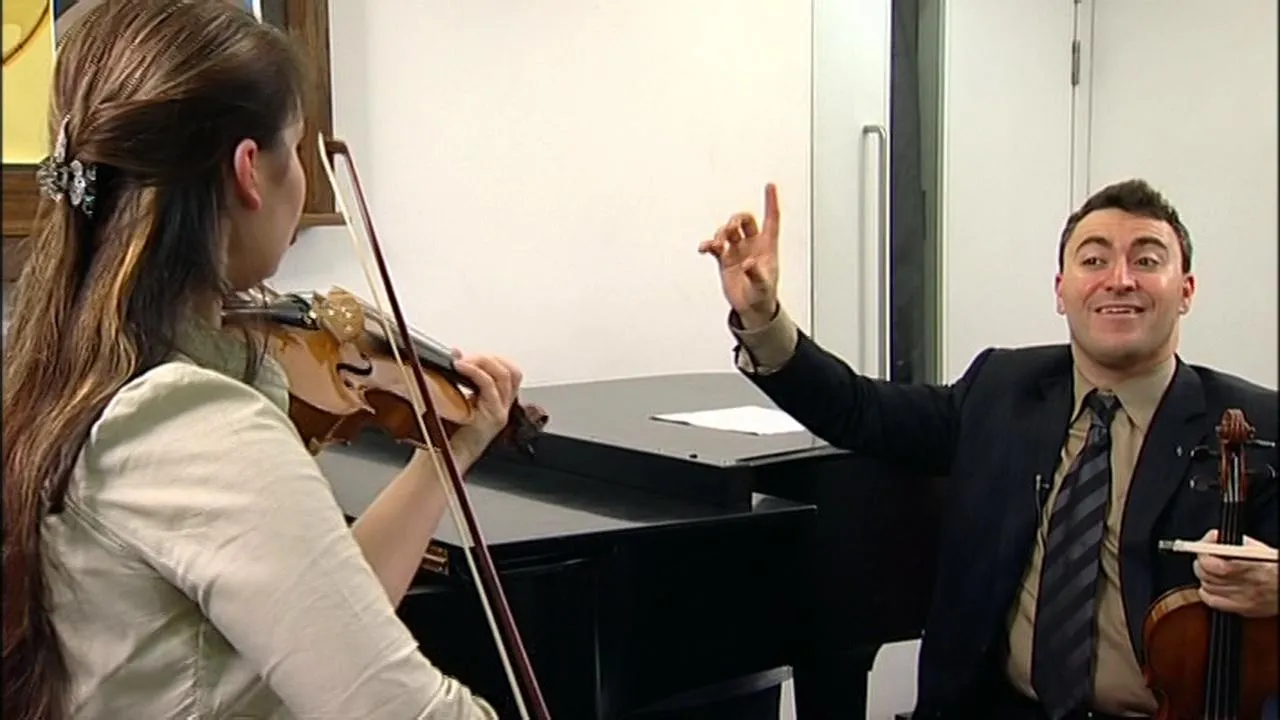
Maxim Vengerov travaille avec Nasrin la Fugue de la Sonate n° 1 de Bach, en se concentrant sur la séparation des voix pour que le thème principal chante au-dessus, ainsi que sur le tempo et l'interprétation.
Course preview
This lesson is part of the course Bach - Adagio et Fugue de la Sonate n° 1 pour violon seul
Watch a preview of the full course below.
Lesson transcript:
Music Lesson on Fugue and Intermediate Techniques
Key Points to Remember
-
Separation of Voices
- The fugue is strict and mathematical.
- The main theme has to be heard clearly while the supporting voices should be softer.
- Practice separating movements; apply less pressure on supporting sounds.
-
Listening and Experimenting
- Aim to hear two or three voices simultaneously.
- If supporting voices are too loud, the main theme may become lost.
Understanding Fugue
- Boss of the Fugue: In fugue, you are in control.
- The structure of the fugue needs to be maintained; excessive crescendos from all notes can detract from the music's dance-like quality.
- Focus on accentuating every second or third note with crescendos, ensuring it doesn't disrupt the tempo.
Performance Strategy
- Maintain one tempo throughout the fugue; avoid creating a sense of nervousness about when it will end.
- Utilize calmness and serenity, culminating in an explosive cadenza at the end.
- Ensure the music feels like it's coming from within. The audience should wonder about the sound's origin, believing it's a recording when it's actually you.
Practical Exercise
-
Articulation and Volume Control:
- Take the first note with a certain volume, the second note with a different one, and the third note distinctly.
- Imagine it as if one person is controlling the volume on a TV; adjust the articulation carefully.
-
Focus on Variations:
- Choose exact articulation and separation; avoid exaggeration.
- Maintain precise length and calculated dynamics.
Intermediate Techniques
-
Harmonic Awareness:
- Don't play all the notes without thinking; focus on the harmonic structure.
- Identify if certain harmonies seem foreign and understand their significance.
-
Interpretation and Importance:
- Decide what should be emphasized within the intermediate piece.
- Your interpretation may shift based on how you approach the fugue.
Conclusion
-
Balancing Importance:
- Avoid making all notes sound equally important; this can dilute the essence of the fugue.
- Communicate effectively with the audience by signaling what is less important.
-
Rhythmic Consistency:
- Be aware of when to take time and when to move forward.
- Have a strategy for your performance, emphasizing relative importance.
Thank you very much!
About the instructor
Maxim Vengerov est reconnu comme l'un des violonistes les plus passionnants au monde. Il donne son premier récital à l'âge de cinq ans et, après avoir étudié avec Galina Tourchaninova et le professeur Zakhar Bron, remporte le Premier Prix du Junior Wieniawski Competition à l'âge de dix ans. En 1990, à quinze ans, il remporte le Carl Flesch International Violin Competition, confirmant sa réputation de musicien du plus haut niveau. En mai 2000, après un contrat d'enregistrement de dix ans avec Teldec Classics, Maxim Vengerov signe un contrat exclusif avec EMI Classics. Parmi ses distinctions et prix figurent le Gramophone Young Artist of the Year et le Ritmo (Espagne) Artist of the Year en 1994 ; le Gramophone Record of the Year et des nominations aux Grammy Award dans les catégories Classical Album of the Year et Best Instrumental Soloist with Orchestra en 1996 ; l'Edison Award du Best Concerto Recording en 1997 ; le Gramophone Artist of the Year en 2002 ; ainsi qu'un Edison Award et un Grammy Award en 2004 dans la catégorie Best Instrumental Soloist Performance (with Orchestra) pour son enregistrement du Concerto pour violon de Britten et du Concerto pour alto de Walton. En 1997, Vengerov est le premier musicien classique nommé Envoy for Music par l'UNICEF. À ce titre, il a rencontré et joué pour des enfants défavorisés en Ouganda, à Harlem, en Thaïlande et de part et d'autre de la fracture ethnique kosovare — un travail qui lui a permis à la fois d'inspirer des enfants du monde entier et d'inciter d'autres personnes à collecter des fonds pour des programmes soutenus par l'UNICEF. Une autre passion de la vie de Vengerov est son engagement auprès des jeunes à travers ses masterclasses. L'un de ces événements a été filmé par Channel Four Television dans le cadre d'un documentaire sur Vengerov intitulé 'Playing by Heart', présenté au Cannes Television Festival en 1999. Depuis juin 2005, il est Professor of Violin à la Royal Academy of Music de Londres. Cette même passion pour l'enseignement traverse ses masterclasses sur MusicGurus, où Vengerov te fait entrer au cœur du grand répertoire pour violon — de la Tzigane de Ravel et de la Carmen Fantasy de Sarasate aux concertos de Sibelius, Mendelssohn, Britten et Chostakovitch — en partageant la technique et la musicalité qui se cachent derrière chaque phrase. read more