



Contexte d'Odd Times In Jazz

Avec
Darius Brubeck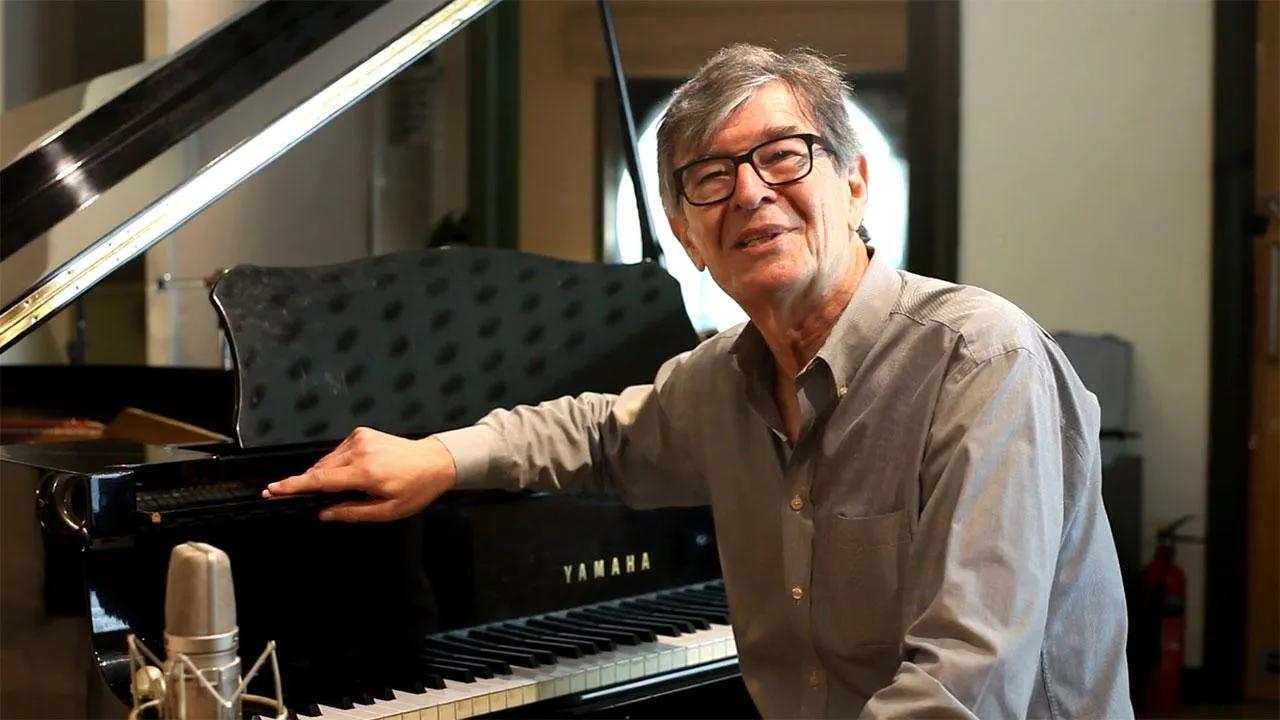
Le contenu du cours
12 leçons (2h 10min) · 1 gratuites
01. Contexte d'Odd Times In Jazz
Tu es ici9:32
01. Ressentir le rythme en mesure à 5/4 - avec Take Five, études en 5/4
Leçon gratuite13:06

02. Placer la mélodie en mesure à 5/4 - avec Take Five, études en 5/4
11:57
03. Idées d'improvisation en 5/4 - avec Take Five
12:28
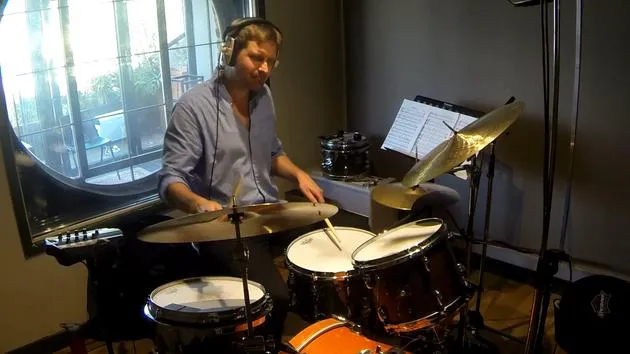
04. Idées avancées pour improviser en mesure à 5/4 - feat. Take Five, District Five
16:36
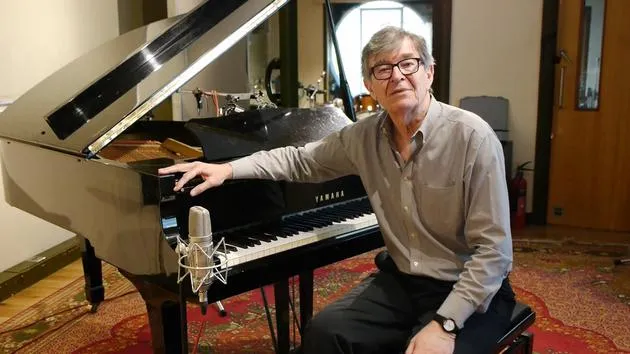
01. Performance en groupe complet de morceaux en 5/4 - Take Five de Paul Desmond
6:34
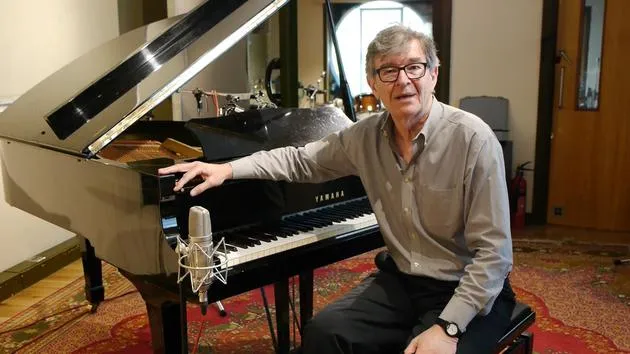
02. Interprétation en groupe complet de morceaux en 5/4 - District Five de Darius Brubeck
4:08
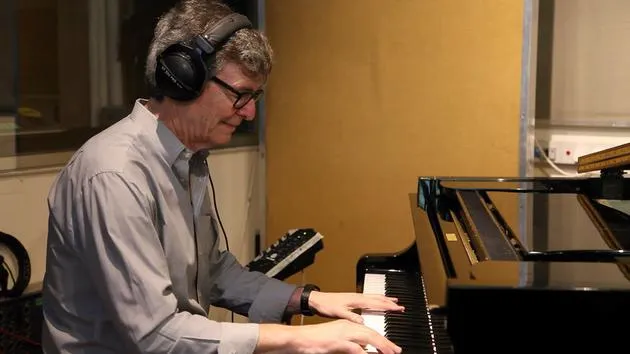
03. Performance en groupe complet de morceaux en 7/4 - Unsquare Dance de Dave Brubeck
3:53
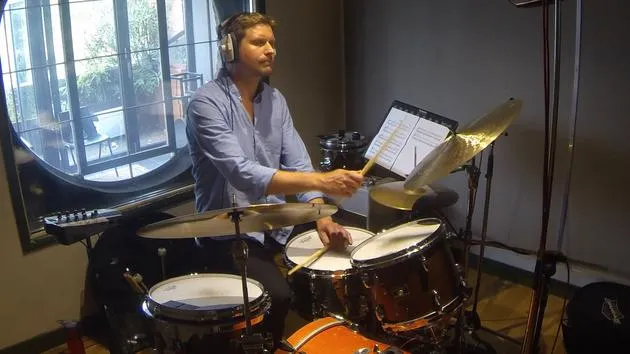
04. Interprétation en groupe complet de morceaux en 7/4 - Earth Rise de Darius Brubeck
6:13
Transcription de la leçon
Welcome to Odd Times at Music Gurus
I'm Darius Brubeck and we're going to explore 5/4 and 7/4 time signatures. These are odd times that are commonly used in jazz and by the end of this series, you'll be able to play in them.
You may not consider it easy, but you'll improve continuously, which is the essence of learning something new.
Resources to Help You
We have a number of resources to assist you:
-
Odd Times Uncommon Etudes for Uncommon Time Signatures: A book that Mike Rossi and I co-authored, which we'll be referring to throughout this course. PDFs of pages from this book will be available for you to download and print as practice material.
-
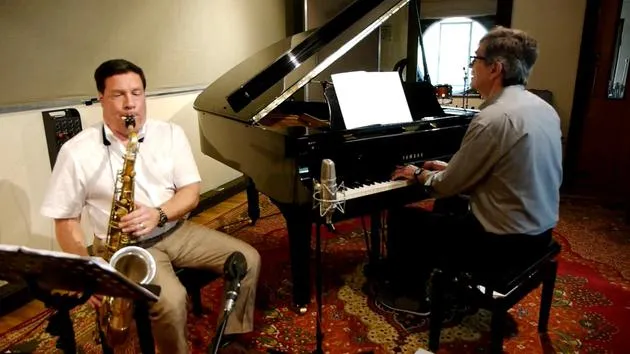
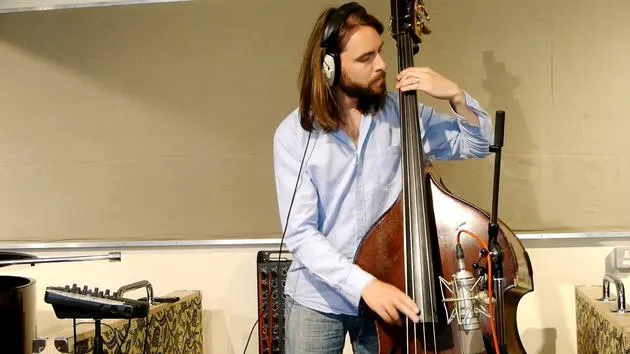
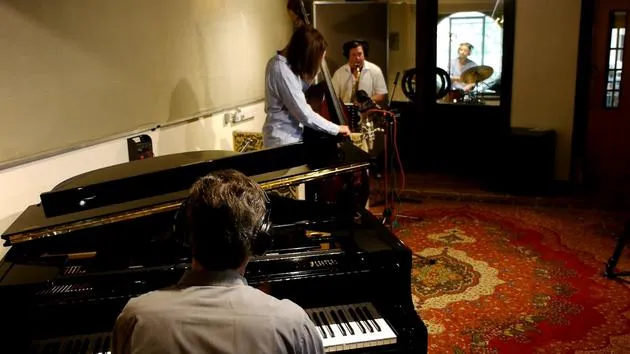
Live Recordings: We have recordings made in this very room featuring the Darius Brubeck Quartet, with Matt Ridley on bass and Wesley Givens on drums.
-
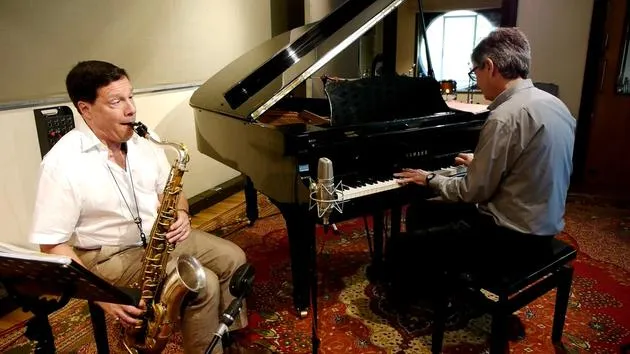
Dr. Michael J. Rossi: My colleague and co-author, professor of Woodwinds and Jazz Studies at the University of Cape Town, will be here with us, guiding the coursework and making music together.
By the end of this course, you'll feel comfortable playing in 5/4 and 7/4, and you'll have an approach to learning tunes in even further time signatures.
The Significance of "Take Five"
"Take Five" is probably one of the most familiar tunes in the whole jazz canon. It originated from an album recorded in 1959, the famous Timeout album.
Before we dive into practical applications, let's discuss some background information. This history is quite interesting!
The Dave Brubeck Quartet Tour
The creation of Take Five coincided with a famous international tour by the Dave Brubeck Quartet.
- Dave was my father, and I joined this tour as an 11-year-old boy. It was my first trip overseas, and the impact of the tour on music was quite remarkable.
The itinerary was formidable:
- Behind the Iron Curtain (Poland)
- Istanbul (Turkey)
- Iraq
- Iran
- Pakistan
- Afghanistan
- India
- What was then Ceylon
As creative musicians, they were fascinated by the diverse music they encountered.
The Birth of Blue Rondo a la Turk
The first track on the Timeout album and arguably the first jazz tune written in an odd time signature was "Blue Rondo a la Turk."
- Dave heard this music literally on the street and transcribed it, captivated by the famous 9/8 rhythm, characteristic of Turkish and Eastern Mediterranean music, which is also found in Greek and Bulgarian music.
Dave recognized that this rhythm hadn't yet appeared in jazz, realizing there was no reason it shouldn't.
He had a profound insight, understanding that odd time signatures often comprise combinations of threes and twos. This rhythm is a common folk element in that part of the world.
However, instead of transcribing additional folk rhythms like Bela Bartok, he focused on creating Odd Times that would suit his group's style and the jazz format.
This approach led to the genesis of pieces that remain popular today, recognized even by those who may not identify as jazz fans.
A Toolkit for Contemporary Jazz Musicians
The stream of hits from the era included:
- "Square Dance"
- "Blue Rondo"
- "Take Five"
Playing in odd times is now a key component of the toolkit for contemporary jazz musicians. Most professional musicians embrace this, yet, oddly enough, there is little instruction available in this area.
While you can learn much about jazz harmony, arranging, and general style from various books, guidance on odd time signatures has been scarce.
Join Us on This Journey
From here on, consider yourself part of the group. We are all here in the studio together! You can play along with us using the downloaded backing tracks.
This course isn't about producing a CD; it's about demonstrating and illustrating practical concepts that you can apply.
So please join us, and I hope you continue with Odd Times!
12 leçons
2h 10m de leçons vidéo structurées
Fonctions vidéo avancées
Ralentissez, bouclez un passage, suivez la partition
Mobile, tablette et ordinateur
Pratiquez où vous voulez
Satisfaction garantie à 100 %
Garantie remboursement 30 jours
Rencontrez votre guru
Rencontrez votre guru
Darius Brubeck est un pianiste de jazz et pédagogue reconnu. Il a publié de nombreux albums en tant que leader, tourné à l'international avec ses propres formations et collaboré avec ses frères sur Brubecks Play Brubeck.
Darius a été professeur invité Fulbright en Roumanie et en Turquie. Il a créé le premier cursus diplômant en jazz proposé par une université africaine, à la University of KwaZulu-Natal en Afrique du Sud, où il a enseigné jusqu'en 2005.
Darius collabore souvent avec Mike Rossi, saxophoniste et professeur de musique à la University of Cape Town. Parmi les réalisations de Mike figurent de nombreux enregistrements et apparitions sur les scènes internationales en tant que leader, soliste et sideman aux côtés de Tony Bennett, Dave Liebman, Winston Mankunku Ngozi, George Russell, Clark Terry et Alessio Menconi, entre autres.
Avec Darius pour guide, tu iras droit à l'essentiel. Dans Harmony 101, il démystifie l'harmonie du jazz pour que tu puisses te l'approprier rapidement, et dans Mastering Odd Times, il explique comment jouer et improviser avec assurance dans des mesures inhabituelles.







