



La pulsation : travailler le tempo et l'articulation
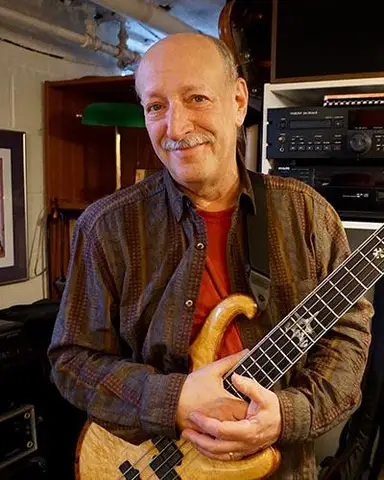
Lesson time: (6min 19sec)
Bruce Gertz explique comment relier le tempo et le groove à ta pulsation naturelle, avec un exercice de métronome simple pour travailler ton feeling.
Course preview
This lesson is part of the course Grooves contemporains à la basse électrique
Watch a preview of the full course below.
Lesson transcript:
Music Lesson on Rhythm and Articulation
Hi, I'm Bruce Gertz.
Understanding Our Natural Rhythm
First off, we all have a pulse, which I believe is our own natural rhythm. Anytime we play rhythms or grooves, we should try to relate those to our pulse. This makes it more comfortable to play.
- If it's too fast, cut it in half.
- If it's too slow, double it up.
I'll explain this in a minute.
The Comfort Zone of Pulse
As I was saying about the natural time in our pulse, I think when we're relaxed, our pulse tends to be in the area of 72 beats a minute. When we're excited or exercising, however, our pulse can escalate to the high one hundreds or even the low two hundreds.
Generally, when we play music, we want to be fairly relaxed, but we can be excited too. I would say the most comfortable zone to feel the time would be somewhere between 72 and 120 beats per minute.
- If you play anything really fast, like 240, simply feel it in two at 120.
Tuning into External Time Sources
Here, I have a simple metronome. This is a good device for hearing a pulse outside of ourselves. Although we have this pulse inside, we don't always feel the time outside our bodies.
It's good to tune into an external time source such as:
- A metronome
- A drum machine
- Play-along CDs with drum tracks
I'll be using some of these to demonstrate swing time and straight time, as well as different interpretations in between.
First Exercise: Getting Accurate Time
Here's 120 beats per minute.
See? It feels pretty natural.
Establishing the Rhythm
Now, the first exercise I want to show you is how to get your time accurate.
-
Listen to the time and start to feel the rhythm:
1, 2, 3, 4. 1, 2, 3, 4. -
Now that I'm feeling that rhythm, I'm going to just play a note and try to lock it in with that rhythm:
One, two, three, four. -
Now, instead of just one note, how about if I play the note E and the note G, two beats each, two E's, two G's:
1, 2, 3, 4.
Changing Note Lengths
Notice I can change the length of these notes:
- Play them longer
- Play them full length
It has a certain sound timewise.
Now, listen to what happens when I put in some space and then less space.
- If I play the note short, it has a certain sound.
- If I play the note long, it has another sound.
Articulation
The way you play notes, long, short, hard attack, soft attack, these are known as articulation.
Other forms of articulation can include:
- Playing a note with the left hand and not with the right.
For instance, I might play the D on the A string and then play the E with my left hand and not with my right. It will sound like this:
1, 2, 3, 4.
I can go the other way too.
These are different forms of articulation. Some players even use pull-offs.
The important thing is that whatever you do, it has to be in the time to feel good.
About the instructor
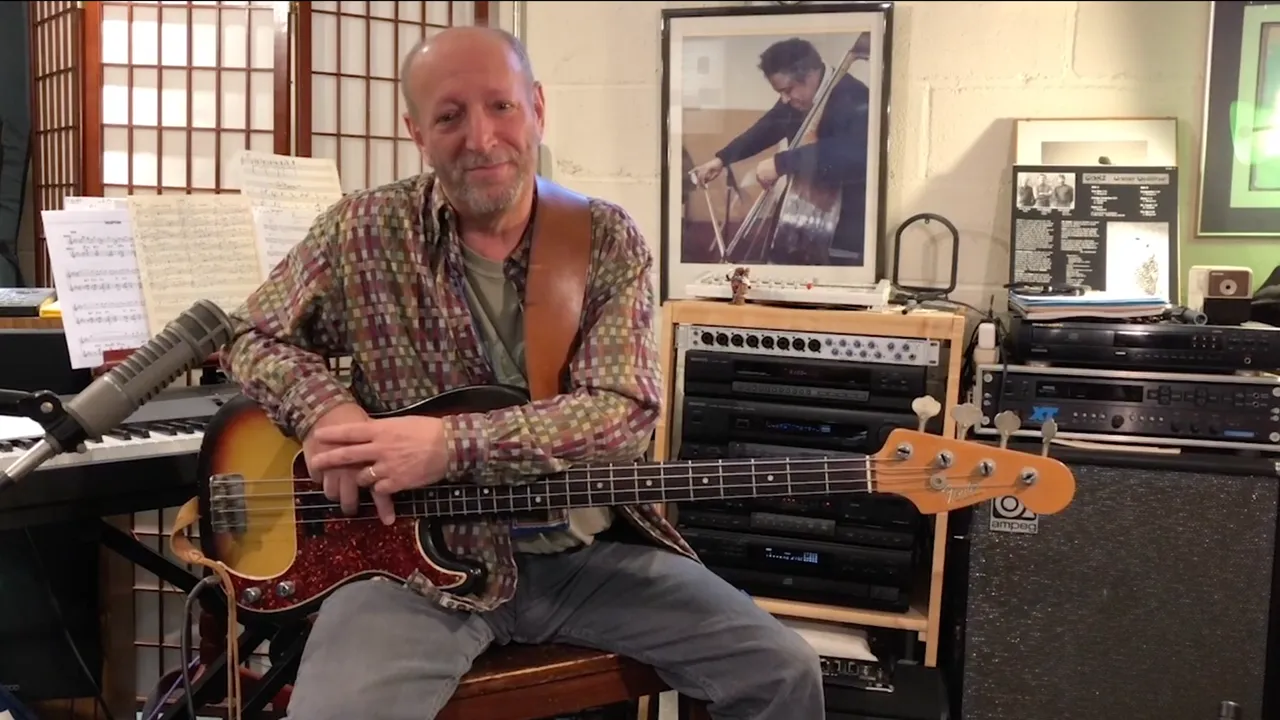
Bruce Gertz est un bassiste (contrebasse et basse électrique), compositeur, pédagogue et auteur primé. Il est professeur de basse au Berklee College of Music, où il enseigne depuis 1976. Bruce est lauréat de la bourse du National Endowment for the Arts Jazz Performance Award, du Massachusetts Cultural Council Musical Composition Award et de nombreux prix du meilleur bassiste décernés par les Boston Music Awards, les A.S.C.A.P. Plus Popular Awards, ainsi que de multiples distinctions de l'International Association of Jazz Educators et du Jazz Education Network. Bruce siège également au conseil d'administration de l'International Society of Bassists. Il s'est produit et a enregistré avec des artistes tels que Gary Burton, Jerry Bergonzi, John Abercrombie, Joey Calderazzo, Kenny Werner, Mick Goodrick, Kurt Rosenwinkel, Billy Hart, George Garzone, Mike Stern, Larry Coryell, Joe Lovano, Cab Calloway et Count Basie, parmi bien d'autres. Dans Contemporary Bass Guitar Grooves, Bruce met toute cette expérience à ton service. Tu apprendras à construire des lignes de basse solides et swinguantes et à t'ancrer dans des grooves authentiques à travers le funk, le jazz et la fusion, afin de tenir la section rythmique et d'aborder n'importe quelle situation de groupe avec assurance. Sa vaste discographie et des informations complémentaires sont disponibles sur www.brucegertz.com. read more