



Visite guidée des musiques du monde
Lesson time: (30min 50sec)
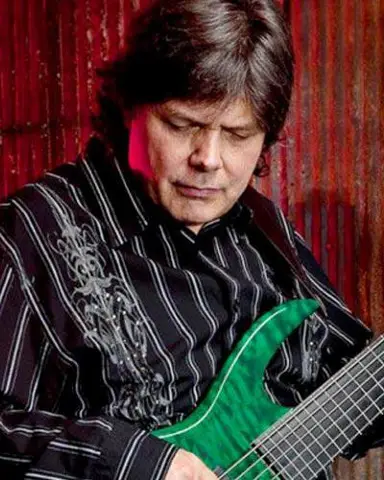
Roy Vogt parcourt les grooves de basse des musiques du monde, de la bossa nova, de la samba et de la salsa au reggae, au ska et à divers styles africains.
Course preview
This lesson is part of the course Teach Me Bass Guitar vol.5: Pro-Player Toolkit
Watch a preview of the full course below.
Lesson transcript:
Exploring World Music Styles
All right, so here we are! We're going to discuss and study three different styles of world music that you will likely have an opportunity to play at some point or another:
- Caribbean Music
- Afro Cuban Music
- South American Music (Samba)
Samba
The samba is from Brazil and is played in the Brazilian equivalent of Mardi Gras, which is called Carnival.
Cultural Context
- Carnival is a cultural event in predominantly Catholic Brazil.
- After Ash Wednesday, everyone gives up something for Lent.
- Samba schools made up of street bands perform during Carnival.
Key Elements
- Surto: A large bass drum resembling a kettle drum, provides the typical rhythm.
- Basic Surto Rhythm:
- "1, 3, 1, 3" with a slide accent on three.
- Samba Bass Line:
- Translates to "Boom ba boom. 1 and 3. 1 and 3. 1 and three."
Important Notes
- See if you're emphasizing the eighth note, it may sound like a rock line, rather than a samba.
- Minimize the accent on the eighth note; this gives the samba its characteristic feel.
- Practice at 60 beats per minute.
Example:
- "Hiccup for the pickup."
Playing the Changes
- We'll perform a tune called "Samba These Days" at 60 beats per minute.
- Felt good going to quarter notes.
- You can let the rest of the band handle upbeat accents.
Now, let's try it a little brighter at 80 beats per minute!
Afro Cuban (Salsa)
Now let's move to Cuba and Puerto Rico to study a style called Afro Cuban or Salsa.
Rhythmic Foundations
- Clave: This rhythm is crucial in Afro Cuban music and comes from Ghana.
- 3, 2 Clave: "1, 2, 3, 1, 2, 1, 2, 3, 1, 2."
- 2, 3 Clave: "1, 2, 1, 2, 3, 1, 2."
Orchestral Dynamics
- Traditional Afro Cuban ensembles do not typically have drummers.
- Congueros (conga players), timbalero (timbale players), and a person keeping time on the clave keep the rhythm.
The Bass Line
- Play a line called Tumbal.
- Accented notes on and of 2 and 4.
Using palm mute: This helps create a dead sound resembling the Ampeg baby bass used in many Afro Cuban orchestras.
Playing Hola Bajo
"Hola Bajo" (Hello Bass) is a salsa groove.
Cut time at 80 BPM:
- 1, 2, 3, 4: "1, 2, 1, 2, 3, 4."
Let's head over to the club and jam with the band! Remember to listen to Brian's foot and phrase with it.
Reggae
Now, let's shift focus to Jamaica and explore Reggae.
Key Groove Components
- The guitar plays an upbeat called the bubble.
- Reggae guitarists typically play the off beats:
- "And 2 and 3 and 4 and 1 and 2 and 3 and 4."
Bass Characteristics
- Reggae bassists often use older basses with very old strings.
- Prominent bassists include Aston "Family Man" Barrett and Robbie Shakespeare, known for their unique tonal qualities.
Creating the Reggae Sound
- Palm mute to simulate dead strings.
- Use primary notes (roots and fifths, roots and thirds).
- Explore the one drop: No playing on the downbeat.
Performance Name
We'll play a tune called "Riddim Riddle" at 78 BPM.
- Count-in: "1, 2, 1, 2, 3, 4."
- Play root five followed by root three repetitively.
Now, let's go over to the club and jam with the band!
Conclusion
I hope you enjoyed this brief tour through some corners of the world of music. There's a whole big planet out there, go and explore styles beyond these three examples!
Stretch it Out
- Stretch and lift your arms over your head.
- Elongate your spine while reaching toward the ceiling.
- Bring the arms down and shake them out.
Next Session
The next session will explore what I do in the Nashville studios and recording sessions.
See you soon!
About the instructor
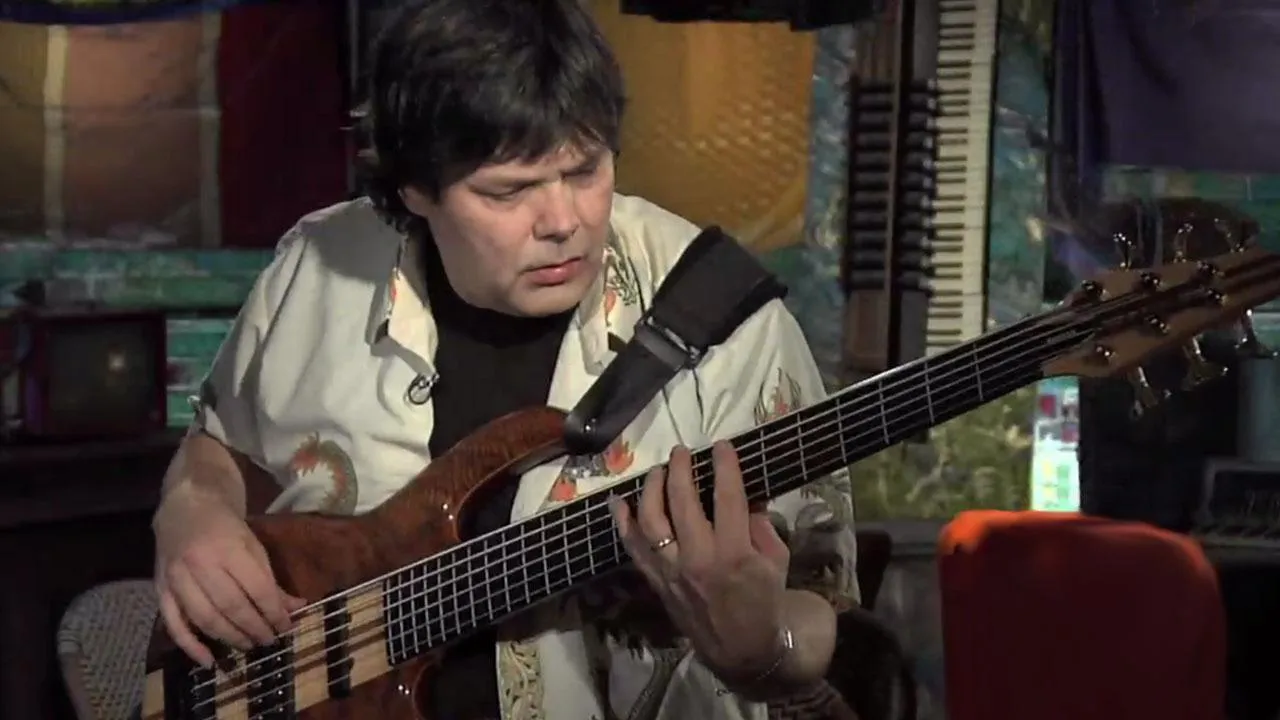
La carrière de Roy Vogt couvre un éventail extraordinaire de scènes, du Headbanger's Ball de MTV, du Montreux Jazz Festival et du Montreal Jazz Festival jusqu'au London Palladium, au Grand Ole Opry et au Kremlin. Du punk au funk, de la simplicité du country et du blues à la complexité du HyperJazz et du World Beat, il a tout joué. Roy a été la première personne à obtenir un master en interprétation de basse électrique, à la prestigieuse école de musique de l'University of Miami, et il poursuit l'art de la basse depuis plus de quarante ans. Il a été le mentor de dizaines de professionnels reconnus, dont le légendaire Willie Weeks. Électrique, fretless, contrebasse - tu l'imagines : si ça joue des notes graves et que ça a des cordes, Roy en est un maître, et il excelle à l'enseigner aux autres. Au cours de sa carrière de quatre décennies, Roy a enregistré ou joué avec une liste stupéfiante de grandes stars, dont Larry Coryell, Victor Wooten, Dave Weckl, Tom Scott et le LA Express, Chester Thompson, Miroslav Vitous, Glen Campbell, BJ Thomas, Chet Atkins, Engelbert Humperdinck, Dickey Betts, Tony Joe White, Charlie Daniels, Jerry Reed, et des dizaines d'autres. Roy enseigne au niveau universitaire depuis trente ans. Depuis 1983, il occupe la chaire de professeur de basse à la prestigieuse Belmont University (Nashville, TN), l'une des très rares écoles à proposer un cursus diplômant en musique commerciale conçu pour transformer les étudiants en musiciens professionnels travaillant au sommet de l'industrie. Les élèves de Roy ont tourné et enregistré avec des stars de renom telles que Trisha Yearwood, Faith Hill, Little Texas, Michael W. Smith, Lady Antebellum, Chick Corea, Sir Tom Jones, Blood Sweat and Tears, Yanni et d'innombrables autres icônes de la musique. Sa série Teach Me Bass Guitar t'apporte cette même approche de niveau universitaire, te menant d'un démarrage rapide pour débutant complet (vol. 1), en passant par les fondamentaux du rythme (vol. 2), la recherche de ton propre style (vol. 3) et une musicalité sérieuse (vol. 4), jusqu'à une boîte à outils de joueur pro (vol. 5), afin que tu développes de vraies compétences étape par étape. read more