



N° 11 : analyse, explication et démonstration avec Joanna McGregor

Avec
Joanna MacGregor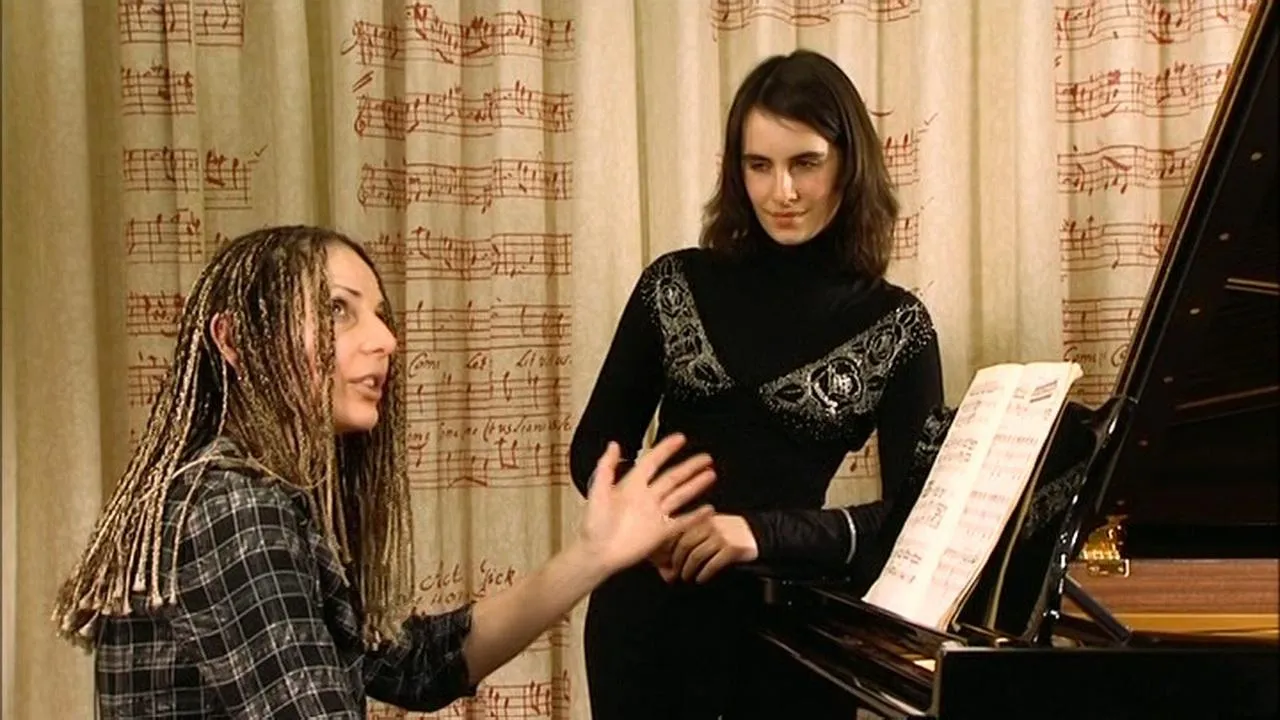
Le contenu du cours
8 leçons (2h 24min) · 1 gratuites
01. Interprétation des n° 1, 2, 3
Leçon gratuite2:42
02. Analyse, explication et démonstration des n° 1, 2 et 3 avec Joanna McGregor
33:10
03. Interprétation des nos 4 et 13
7:29
04. Analyse, explication et démonstration des nos 4 et 13 avec Joanna McGregor
32:43
05. Interprétation du n° 10
8:43
06. N° 10 analyse, explication et démonstration avec Joanna McGregor
27:52
07. Interprétation du n° 11
7:34
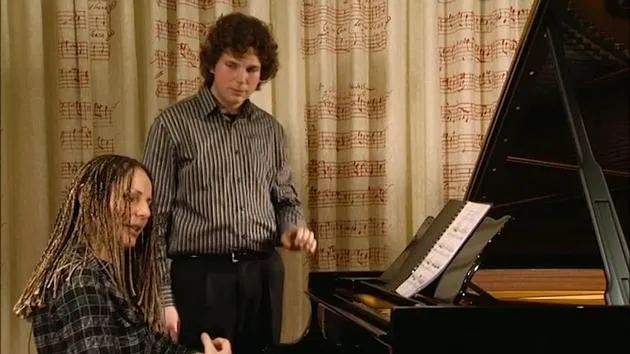
08. N° 11 : analyse, explication et démonstration avec Joanna McGregor
Tu es ici23:53
Transcription de la leçon
Music Lesson
Introduction:
Now, the thing about this movement is finding a very personal sound. And obviously, in the context of the cycle, it comes after this one that Jesus played - this gargantuan number 10. And then suddenly, you're sort of virtually doing nothing. There are these great acres of silence at the beginning.
Starting Point:
I don't want to start, though, at the beginning. Let's start with a bit that becomes rhythmical. Now, it's all about the rhythm. I keep on saying to people about it being:
- If you could just...
- It has a bit more of a swing to it.
Rhythmic Feel:
And then all these could... Ah.
So it has a sort of nice... You know, it's right like this.
It's the same thing as that. You know, it's got this fantastic, sort of swinging, asymmetric feel. But sound relaxed while you're doing it.
Count:
Three, four, five.
Three, four.
Cadenza Moments:
When you have these cadenza moments here, rather than just...
"I need to know. Sorry. I'd like you to do something with them."
See that? This is a... Yeah. It's kind of got a real, sort of inherent rhythm in the way I... So sorry, I can't put it into words. You see what I'm doing there?
Maintaining Rhythm:
Don't have this big... You're breaking the rhythm.
Yeah, just four, five.
Good. That's more like it. Good. Unless...
Yeah, I'd like these to sound very romantic down here.
Cadenza Feedback:
So you use much more... That cadenza was very good, by the way. I loved the way you shaped it. It was like that.
So it's kind of fierce and dramatic... Take your time.
Yeah. Enormous left hand and everything.
Perspective as a Contemporary Piece:
The thing is always to forget that this is meant to be a contemporary piece of music. To forget all that. Just relate it to everything else that you play. Same kind of round sound.
Suggestions:
Yeah. Just try from the...
Yeah, but try. Try and grow from somewhere.
Dynamic Control:
Start less. Yep. So you...
Less. And then extend around to... As you get bigger.
And physically, try to feel open.
Yeah. So you're not just snatching at these chords, but rather, just open up and, you know, give yourself time. If you need longer, just take longer. Because the sound is important.
Improvement in Execution:
Try...
Yeah, good, good, good, good. But more of a... This is an arrival.
"Bada, bada."
One more time from here.
That was better.
- Not... Don't start loud.
- Good.
I can't hear this at the top of this chord.
You need to hear a bit more. That's what I need.
Because you're playing it all together. It needs to be...
There are real clocks, incredible clocks going off.
Refining the Sound:
So you might just need to rework that so you can hear.
"Ta da. That's it, that's it. Round RINGING sound now."
Problem Section:
Okay, now we've got a problem here in this section because I know it's not loud, but this is meant to be the baby Jesus's heart.
Yeah, that's right. Sounds quite big for that, doesn't it?
Sort of like a gigantic baby sort of coming, you take over.
Sound Refinement:
Yeah, it's a bit sort of... And I know it's not, but I think you need to refine your sound after you've done all this.
No. And then... Because you've got lots of... You've got lots of time and space to do all this.
Yeah, we've got plenty of time.
And I can't even... I have to spread this.
So I have to take a long time on that chord anyway.
Handling the Sound:
So just here. This can be big.
Got to sound like a little heart going at the bottom.
Not...
So try...
So it's just a question of handling the sound that you make.
This is very relaxed. Good, that's better.
I get less in your right hand all the time.
And then we'll hear this. Then it just emerges. It's better. Good, that's nice.
Creating a Special Sound:
A really special sound for this one. Can you make that quiet?
Less. Try putting your sustain pedal down before you actually play the chords.
There's a bit more cloud around the sound.
Yes. You have to really practice sinking into... Because you only get one shot at that chord.
Important Moments:
It's a very important moment in the piece.
And depending on the piano you're playing at, you know, it just depends.
You need to sort of...
It's got a sort of cloudy nature to it.
Opening of the Piece:
So at the beginning of the piece, again, you need more.
You need more sort of wet around the sound.
The Very Opening:
Let's just look at the very opening.
Very difficult, this. It's great.
You know, you have to really get to know the piano to be able to sort of just get the sound that you want, and then sing your top.
Tricky Chord:
Yeah. So you sing your top, but the first B flat major chord, it's really tricky.
So you have to just do it, sink into it slowly.
Pedal Feedback:
Good. That's much better pedaling, but it's still a bit loud.
Can you play it? See if you can get it even less.
Creating Intimacy:
Good. Very personal.
Now sing the top.
"SINGS and let. Yes, let it ring like that. With a pedal. That's good."
1, 2, 3, 4.
Good. It's much, much better. Much better.
Engaging the Audience:
But what you're trying to do is create an intimacy between yourself and the music, but also with... If there's an audience there, you know, you have to bring them into your...
Physical Presence:
And physically, you're a little like this.
You know, you're doing very nice things, but you're quite sort of...
You're not close into the music.
And how you sit at the piano very much defines not only the sound that you make and how you play it, but also how people perceive the sound.
Being Involved:
So if you want them to perceive you as being very involved with this chord, you just have to be involved effectively.
You have to sort of really care about how you're going to make that sound.
Early Effort:
Oh, look at it. And then here.
Yeah, it's kind of...
Using the Right Hand:
Oh, a lot of hard work just in those first two bars.
But think about how you sit at the piano when you're just... the approach.
Movement in Playing:
Try. Good. Just feel close to it when you play.
Sing, sing, try.
And legato. Change the pedal a little bit. Half pedal.
Now hold. Good, good. Very good.
Clinging to Sound:
Now cling.
Cling to these. Good. Lovely.
"Oh, I love that bit. It's so amazing. It's so fantastic."
Try and make it sound like...
Improvisation:
You just sort of decided to do it suddenly, and then the next bit as well.
It's really amazing, isn't it?
It's just amazing. Sort of... Wow.
That's incredible.
He just... I know it's meant to be a bird and everything, but I think it's just great if you just sort of improvised your way down the keyboard.
Maintain Relaxation:
So you have to keep this very relaxed.
And the next bit as well. Sort of out of time suddenly. Good.
Singing in Music:
Now careful. Again.
Now sing the right hand.
Movement Forward:
Sing. Lean. Lean into it and let the music move forward.
Now. Good. Move, move.
Beautiful Execution:
Good. Now move. Now. Careful. Beautiful.
Yeah, do that.
Controlled Speed:
Don't try and do it too fast, that.
Because it will always be too loud. Otherwise, it's tam, tam sound.
Chord Feedback:
That was fantastic. Chord.
Just give me the B flat chord. Now slow.
Chord Balance:
Do it again.
It's... It's hard, this bit.
It's kind of... Don't do that when you perform it.
Good, that's it.
Moving the Music Forward:
Now, I want to say something about letting the music move forward, because in slow music it's difficult.
You're being very musical, but let it just sigh.
Maintaining Shape:
It's too loud. Now move.
Yeah, so it's got this shape all the time that you're...
And then this.
Yeah. So this is like rain.
Lightness in Playing:
I think that it sounds like.
So not, you know, these chords that you once carefully learned.
Initial Approach:
Obviously, you sort of figure them out first, and then...
But then you've got to sort of throw them away.
Airy and Beautiful Sound:
Yeah. So it's got this very airy, beautiful sound.
So light and sort of let it be free as well.
Continuing Echo:
Just go from here. Less beautiful.
That's lovely. Even less.
Creating a Halo:
Can you believe? Even less.
Yeah, yeah, yeah, yeah. That's it, that's it, that's it, that's it. Lovely. It's lovely.
So with all these first couple of pages, you need a sort of halo around your sound.
So it's not just quiet, but it's got a sort of halo around the sound.
Sound Lightness:
Something that's very iridescent and slightly glowing.
And all this kind of thing is kept light with a very loose way of playing to allow lots of air into your sound.
Final Thoughts on Structure:
Let's just do the very end.
Because you've done the middle bit then, because this is absolutely great, what you did.
Ending Evaluation:
So let's just do the last page.
Yes, good. Now, slowly, slowly.
That's it. Now clean.
Don't make the pedal do all the work.
Final Adjustments:
Watch out. Half pedal.
That's all right. It's good.
Now, be very careful, the weighting of these chords.
Good. Yes. That's it.
Final Bars:
These last two bars are terribly hard, aren't they?
Because you've got... You've sort of done.
And then you just have to be careful about...
And then sometimes I decide to do my right hand on this one.
Using Two Feet:
And then you've got to use two feet, you know, because it's very difficult.
You've got left hand... Ah, now my right hand...
Oh, you know. But actually, why not just sort of help, you know? Yeah.
Just Make It Equal:
I mean, just make it more equal.
And then you've got this.
You can think about the balance of how you're going to, you know, cope with it.
I think that's better because I've seen so many pianists go,
"Oh, my God, that didn't work. Oh, no, that's terrible. I don't know what I'm doing."
But can you hear?
It's the same sort of counterpoint.
Voice of the Music:
And I think somewhere in the music he says, "two flutes."
It's as if two flutes are playing.
But I still think what you need is a real legato sound on your top note all the time.
But you're clinging, clinging, cleaning, cleaning.
Reiteration:
Try that one more. Just once more.
Good, good, good, good, good.
Now. Less, less, less.
W. Good. Go.
Now try and do your hands.
Yeah, that's easier, isn't it?
Beautiful Sound:
Yeah. It's a beautiful sound that you can make with.
You can really, you know.
Conclusion:
Well, you see, you've got it all.
You can do it, and it's just a question of remembering.
And also, it's very important when it's slow and beautiful.
Don't sit down on the music. Allow it to just follow the shape here.
Gratitude:
Wow. All this here that you allow yourself some freedom to move.
Thank you very much. Beautiful play. Thank you.
8 leçons
2h 24m de leçons vidéo structurées
Fonctions vidéo avancées
Ralentissez, bouclez un passage, suivez la partition
Mobile, tablette et ordinateur
Pratiquez où vous voulez
Satisfaction garantie à 100 %
Garantie remboursement 30 jours
Rencontrez votre guru
Rencontrez votre guru
Joanna MacGregor est l'une des musiciennes les plus polyvalentes et novatrices du moment, avec une carrière consacrée à relier les genres et à défier toute classification facile. Elle s'est produite dans plus de soixante pays, avec bon nombre des grands orchestres du monde (dont le New York Philharmonic, les London et Sydney Symphony Orchestras, la Radio néerlandaise, l'Oslo Philharmonic et le Chicago Symphony Orchestra) et sous la direction de chefs éminents tels que Boulez, Davis et Rattle. En chemin, elle a créé plusieurs compositions marquantes, collaboré avec de grands artistes de jazz et de pop, du jazz sud-africain à l'électronique la plus avant-gardiste, et conçu des projets multimédias qui ont tourné à l'international.
Joanna a fait ses débuts de cheffe d'orchestre en 2002 et dirige régulièrement ses propres projets orchestraux. Elle a noué un partenariat artistique étroit comme cheffe et interprète avec la Britten Sinfonia, avec laquelle elle a tourné en Amérique du Sud et créé le projet acclamé Moondog/Art of Fugue — une relecture radicale du dernier chef-d'œuvre de Bach aux côtés de la musique du célèbre musicien de rue new-yorkais des années 1950, publiée sous le titre 'Sidewalk Dances'.
Son album 'Play', sur son propre label SoundCircus, a reçu une nomination au Mercury Prize, et ses ouvrages pédagogiques 'Piano World' ont été salués comme 'dignes du nouveau millénaire'. Elle est aussi directrice artistique du Bath International Music Festival.
Dans ce cours, elle te guide à travers la monumentale 'Vingt Regards sur L'Enfant-Jesus' de Messiaen, partageant la compréhension, la technique et l'imagination interprétative dont tu as besoin pour donner vie à l'une des grandes œuvres du répertoire pianistique.







