



N° 10 analyse, explication et démonstration avec Joanna McGregor
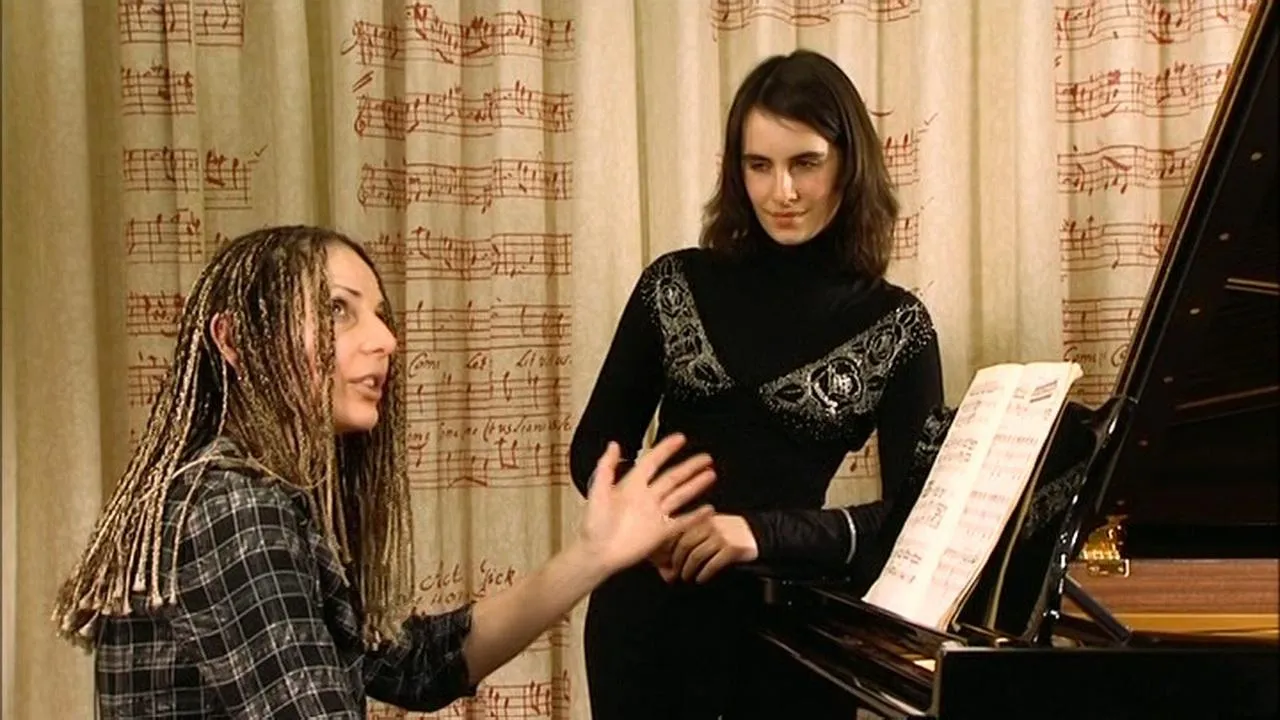
Lesson time: (27min 52sec)
Course preview
This lesson is part of the course Messiaen - Vingt Regards sur L'Enfant-Jesus
Watch a preview of the full course below.
Lesson transcript:
Music Lesson
Instructor: How do you feel? I was thinking halfway through, you must be very tired, because, I mean, just doing it, you know, once is enough. It's very good. You play it very, very well. Very, very well. So I think you play it extremely well.
Feedback on Sound and Technique:
- I don't have any sort of major criticism or anything, but I am going to make some suggestions about your whole sound at the piano.
- Now, this isn't a very easy piano to make a big sound.
- I felt your sound was a little tight and constricted, and I was watching how you play.
Suggestions for Improvement:
- One of the things you might do now, you've got a piece and you've got great command of the notes and the technique and everything.
- You might think about the largeness of the sound that you're making.
- I notice your opening was like that, but it is marked forte. You need to have a slightly bigger sound at times.
- What I feel is that you're very accurate; you're playing highly accurately. However, one of the things you sacrificed is volume in order to achieve that accuracy.
Playing Technique:
- I can see that you're physically making the shapes, but try to:
- Concentrate on the sound.
- If necessary, drop the speed a bit and focus on the sound I'm talking about.
- When you play this opening, try and feel as though you're swinging.
Encouragement:
- All of this should be quite loose and free in order to get the sound to flow out.
- Shake the sound out rather than having to force it.
- Just keep it relaxed, this here. That's it. That's a good sound.
Working with Dynamics:
- Now, with these, the way Messian's divided them, don't play them individually.
- I need to hear more of the fours and the twos and the threes.
- Drop the staccato slightly and focus on picking it up naturally.
Returning to Original Speed:
- I wonder if we can go back to your original speed while keeping some of that depth of sound.
- Try not to overemphasize every single note.
- It should project a ferocious sound and writing style.
Personal Preference:
- I'd actually prefer something that sounds more vibrant.
- I like that sound because it conveys seriousness in the playing.
- It's more work for you, but if you concentrate on keeping relaxed, it shouldn't feel so hard.
Playing with Phrasing:
- When you have big phrases, think of a huge phrase mark above each thing.
- Try to maintain long lines rather than playing each note individually.
Messian's Masterclass:
- I do remember seeing Messian and his wife give a masterclass on this.
- They emphasized these chords should shine and have a romantic sound.
Using Pedal:
- Don't play so fast that it's merely digital, think of it as written by Rachmaninoff.
- Use pedal underneath to make it sound more luminous.
Practicing Difficult Sections:
- For the difficult middle section, think a little bit jazzier.
- Focus on rhythm; don't worry about speed.
Tips for Practicing:
- Show me how you practice this passage. What would you do?
- Practice slowly and softly.
- You need to make more of the grace notes; they are important.
Rhythm and Phrasing:
- It's essential to allow the detail to come out rather than just hammering through the notes.
- Explore the contrasts in the music to keep it lively and interesting.
Final Thoughts:
- When programming this movement for recitals, think about how it will be received by the audience.
- If it's too dense and complex, consider pairing it with quieter pieces to help the audience digest it.
- Recommendation: Don't play this as an encore; it needs to be presented thoughtfully.
Conclusion:
- Well done, thank you!
About the instructor
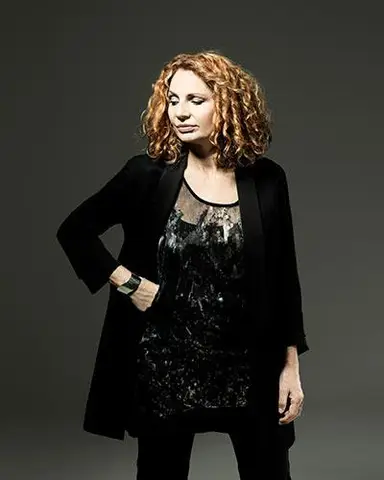
Joanna MacGregor est l'une des musiciennes les plus polyvalentes et novatrices du moment, avec une carrière consacrée à relier les genres et à défier toute classification facile. Elle s'est produite dans plus de soixante pays, avec bon nombre des grands orchestres du monde (dont le New York Philharmonic, les London et Sydney Symphony Orchestras, la Radio néerlandaise, l'Oslo Philharmonic et le Chicago Symphony Orchestra) et sous la direction de chefs éminents tels que Boulez, Davis et Rattle. En chemin, elle a créé plusieurs compositions marquantes, collaboré avec de grands artistes de jazz et de pop, du jazz sud-africain à l'électronique la plus avant-gardiste, et conçu des projets multimédias qui ont tourné à l'international. Joanna a fait ses débuts de cheffe d'orchestre en 2002 et dirige régulièrement ses propres projets orchestraux. Elle a noué un partenariat artistique étroit comme cheffe et interprète avec la Britten Sinfonia, avec laquelle elle a tourné en Amérique du Sud et créé le projet acclamé Moondog/Art of Fugue — une relecture radicale du dernier chef-d'œuvre de Bach aux côtés de la musique du célèbre musicien de rue new-yorkais des années 1950, publiée sous le titre 'Sidewalk Dances'. Son album 'Play', sur son propre label SoundCircus, a reçu une nomination au Mercury Prize, et ses ouvrages pédagogiques 'Piano World' ont été salués comme 'dignes du nouveau millénaire'. Elle est aussi directrice artistique du Bath International Music Festival. Dans ce cours, elle te guide à travers la monumentale 'Vingt Regards sur L'Enfant-Jesus' de Messiaen, partageant la compréhension, la technique et l'imagination interprétative dont tu as besoin pour donner vie à l'une des grandes œuvres du répertoire pianistique. read more