



Sick Boogie (leçon)

Lesson time: (8min 56sec)
Kenny Sultan enseigne son blues fingerstyle rapide 'Sick Boogie' dans la tonalité de mi, en partageant des astuces de main droite pour faire sonner différemment des notes presque identiques.
Course preview
This lesson is part of the course Cours de guitare blues traditionnelle
Watch a preview of the full course below.
Lesson transcript:
Sick Boogie Music Lesson
Our next song is going to be the Sick Boogie. My engineer named this song because we just made it up on the fly.
Song Characteristics
- Key: E
- Speed: Fast
- Style: Different from other E songs
- First one: slipping and dripping slow
- Second one: Lightland strikes medium pace
- This one: out of control
Techniques Overview
Let me show you some tricks on how we can almost play the same notes but make them sound differently.
- Right Hand Techniques:
- Very little bass.
- No time for monotone sound.
Here's how I start off with the boogie:
"Okay. Now that boogie's pretty quick and if I just played a straight boogie there, not much juice to that."
I add an octave right here, that E, with my first finger on the right hand. I am getting this in slow motion, of course.
Then, I'm going down to the A and adding it on the A note.
Speed and Technique
Now up to speed, it's not that clean. I'm not really hitting the note; it's more of A at best, I think.
"Let's check it out again, see how much more that adds than just."
This is the technique I always use on faster boogie-type blues, whether it be an E or an eniki.
- When I go into the B7 chord:
- No time for monotone.
- Our medium-paced shuffle.
Remember our slow one? No leisure here. We're going fast.
To accomplish what we need to do, I alternate the bass on my right hand:
"So just a regular alternating bass like this. It's a great rhythm for backing up somebody's singing."
Chords and Progression
Now, what I'm going to do is move up the neck and make what I call the Freddy King chord.
- Remember Hideaway? We steal from everybody.
- I'm a shameless mugger and stealer, or borrower, of licks.
This is a chord from Hideaway, and it's kind of a weird E9th. I'm going to go from this 9th to this 9th, a 9th back to this 9th, and it's going to sound like this in full speed.
"All it is is a right-hand sort of strum."
Strumming Technique
I've learned how to strum with finger picks now because I only play with finger picks. You don't have the luxury of having that flat pick and that up strum.
- If I try to up strum at least myself with this thumb pick, it's going to come off.
- So, I use my fingers for most of my up strums, and then...
And if you're brave enough, you can come up here to the B. But I usually go back down.
Double Stops and Alternative Bass
The same double stops we used before on the slower songs can be used again all the way up the neck.
- We don't have time for any bass here; it's all right hand.
- What I do is go back and forth with my thumb and finger as fast as I can.
One of the tricks to help with this is:
- Finger Placement: Put your finger a little bit behind your thumb to avoid them getting in each other's way.
"This is how I do single string rods, and also how I do strum double strums."
Practice Example
I'll start off like this and I'm going to go again...
"Whoa. Okay, slow that down."
Same thing we did four and then add a D.
Moving the B7 Position
Another thing I do is take this B7 position and move it up to E7:
- Great finger-picking chord!
- Now I can use an alternating bass right here.
I can play real fast when I alternate. So I'll go from this to maybe back to my favorite A chord.
"There are a lot of things you can do with this A and then back up to here and then I'll go to the B7."
That's an A seventh up two frets, and a seven E, and then whatever turnaround comes to mind.
Summary of Techniques
- Techniques to Remember:
- Alternate bass.
- E7 and D7 up two frets for different speeds (slow blues, medium blues, and fast blues).
The hardest part about this song is trying to figure out what to play next because you're moving so fast.
Key Takeaways
- Octave Off Your Boogie.
- New Chords Up the Neck: 9th chords that sound great together.
- Right Hand Strum: Get used to doing that.
And that's a sick boogie!
"And that's, I guess, why he named it that. Good luck!"
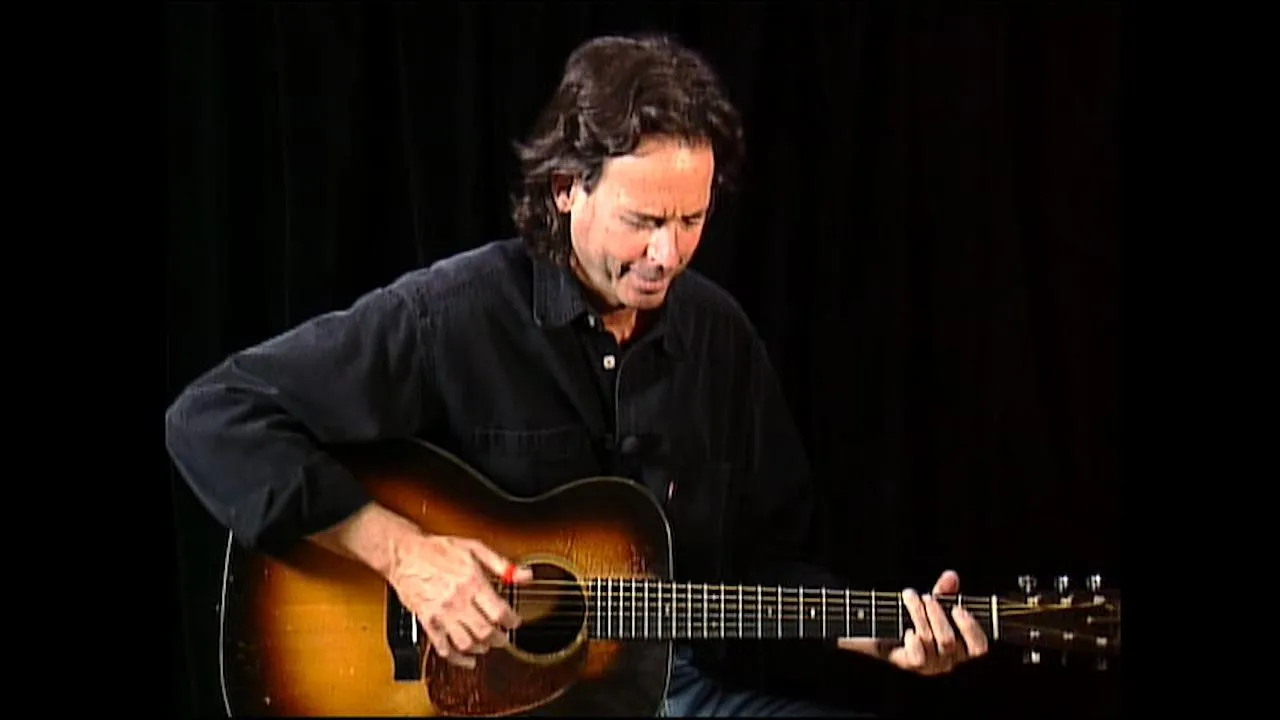
About the instructor
Kenny Sultan est l'auteur à succès de livres de musique et de vidéos pédagogiques consacrés à la guitare blues, et le guitariste d'un duo de blues aux côtés de Tom Ball. Ensemble et séparément, ils ont travaillé sur d'innombrables musiques de films, bandes originales de télévision, publicités et sessions. Ils sont passés à la télévision dans le monde entier, ont figuré dans les publicités “Levi's 501 Blues”, ont joué devant des audiences de 300 millions de personnes via Voice of America et sont des invités réguliers de la National Public Radio. Ils ont partagé la scène avec des figures comme Bob Dylan, Stevie Ray Vaughan, The Allman Brothers, Joe Bonamassa, Ray Charles, Joe Cocker, Elvis Costello, et la liste est longue... À l'aise partout où ils vont, Tom et Kenny trouvent leur place dans les festivals de blues, de folk, de bluegrass et de jazz, et leur solide expérience de l'enseignement en fait un choix tout naturel pour les campus universitaires ou les lieux proposant des ateliers. Comme leur musique mêle les styles des racines américaines, ils sont des habitués à l'étranger, où ils récoltent des critiques dithyrambiques. C'est précisément ce bagage pédagogique que vous mettez à profit ici. Kenny vous initie à la guitare blues traditionnelle à partir de zéro - motifs de fingerpicking, basse alternée, turnarounds et licks classiques qui définissent le style - pour que vous constituiez un véritable répertoire de blues acoustique que vous pourrez réellement jouer. “Un jeu prodigieux.” --Blues Revue “Aussi bon que n'importe qui dans le blues acoustique.” --Sing Out read more