



Midari (leçon)

Avec
David Cullen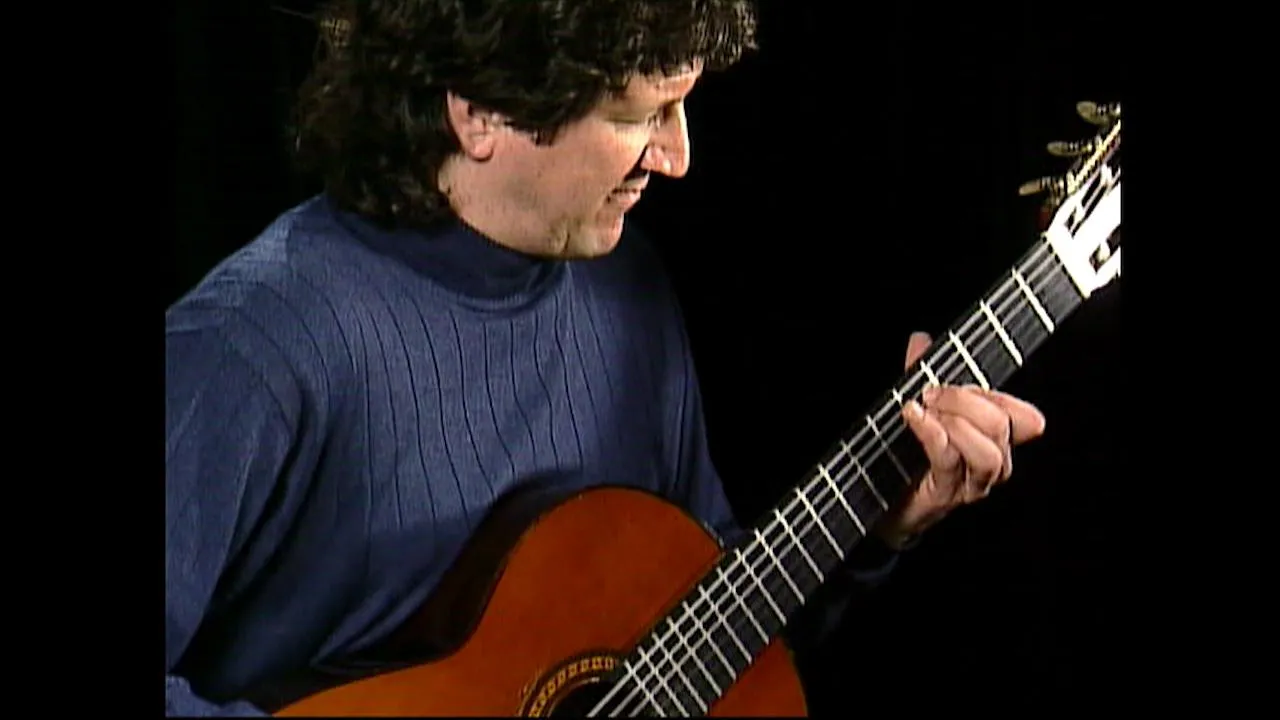
Le contenu du cours
14 leçons (1h 37min) · 1 gratuites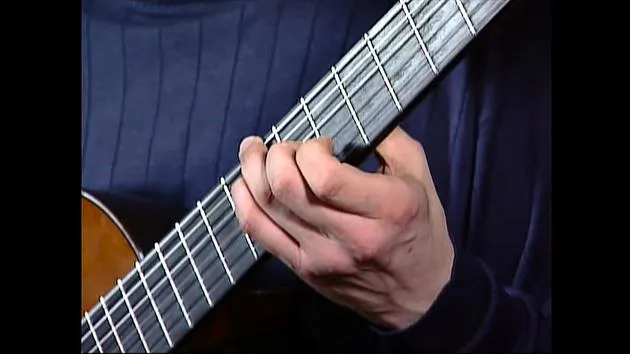
01. Blue Counterpoint (interprétation)
Leçon gratuite4:09
02. Blue Counterpoint (leçon)
9:44
03. Indigo Blue (interprétation)
4:32
04. Indigo Blue (leçon)
10:56
05. Groove Etude (interprétation)
4:09
06. Groove Etude (leçon)
9:20
07. Midari (performance)
4:50
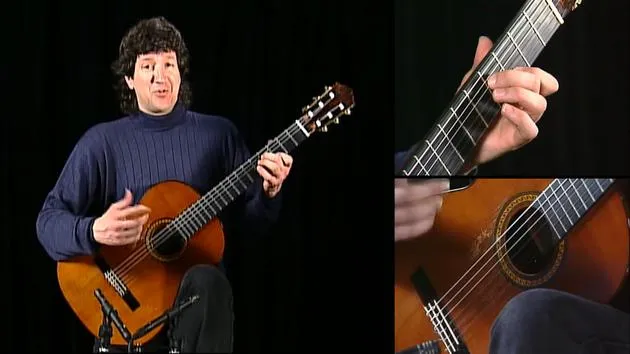
08. Midari (leçon)
Tu es ici10:09
09. Bahama Beach (interprétation)
5:14
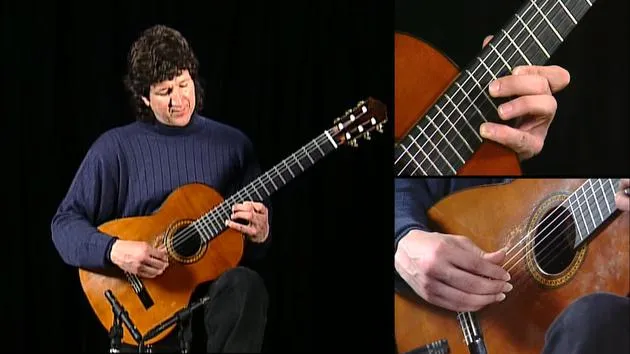
10. Bahama Beach (cours)
9:47
11. Go Ahead And Play (interprétation)
4:22
12. Go Ahead And Play (leçon)
10:10
13. BONUS : Coming Home (interprétation)
4:14
14. BONUS : Ebb And Flow (interprétation)
5:44
Transcription de la leçon
Music Lesson: Midari
Introduction
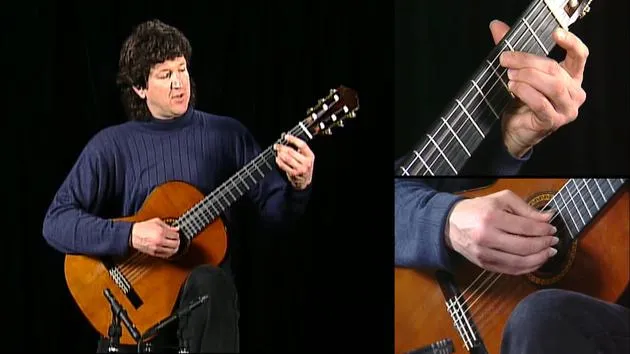
Alright, this next tune up is an old favorite of mine. It's called Midari and it was inspired by the Pennsylvania hills and some Japanese pentatonic scales.
- The introduction starts with some nice fifths:
- The fingered E
- An open B
- A fingered B
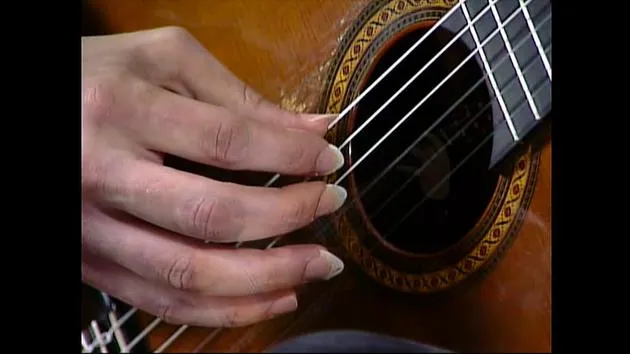
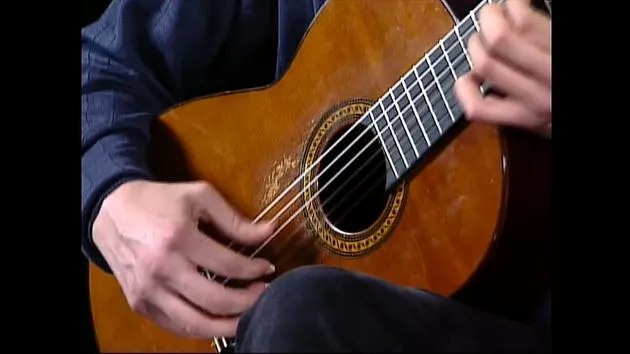
I also do some slurs there with the pinky. I'll play it really slow. You can see that I'm slurring down onto the beat.
Then, the second figure of slurs I go through is a series of triads coming down. So, it's a combination of slurring and picking.
Let's hear the introduction with a click.
- Slow version: So you can really hear the time frame.
- Fast version: One time fast so we can hear more in speed.
Verse
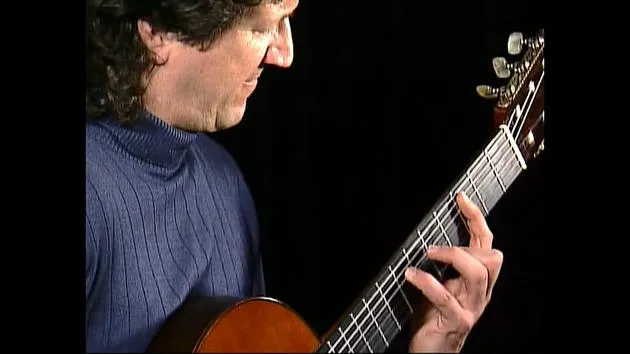
That leads us to our verse. The verse starts with a nice E9 chord and then we're going to go all the way up the fretboard to this shape.
I don't even know what we should call that chord, but I guess we can call it a B chord with D sharp in the bass with an add nine, if you'd like to call it that.
Next, we're going to take that same shape and move it down two frets back down to the E chord, then to that shape:
- A G sharp minor seventh chord
- An F sharp minor seventh chord, using that same shape again
- Finally, going up to a C sharp minor seventh chord
Then, for an easy change, we just move our second finger down and that creates a C major seventh chord.
Let's hear that whole section slowly in time.
- C Major 7: Alright, now just a bit faster.
Pre-Chorus
That leads us to a little pre-chorus. The B11 chord sounds so good on the guitar.
We're going to play a melody on top of that there:
- Chords:
- B11
- E major seventh chord with B in the bass
- Back to the B11
- G11 chord
Followed by a slur figure, then back up to the E major 7.
Let's hear that in time.
- Faster version: Now a bit faster from there.
Chorus
That leads us to our chorus. Basically, we're playing a B11 chord and a melody on top of that with some slurs.
So those chords after the B11 are:
- G11
- E minor 9
Hey, I think I used those a couple of times before. But hey, they sound good, don't they?
Let's hear that a little bit faster.
Outro
As we take out the tune, we have a chord progression that goes from:
- B11
- E major 7
- C sharp minor 7
- C major 7
All the while keeping a nice melody on top of that.
Let's hear that slowly.
We're going to take it out off the B11 to an E chord and a big stretch here. I just like the sound of that chord, hearing that G sharp against the A.
14 leçons
1h 37m de leçons vidéo structurées
Fonctions vidéo avancées
Ralentissez, bouclez un passage, suivez la partition
Mobile, tablette et ordinateur
Pratiquez où vous voulez
Satisfaction garantie à 100 %
Garantie remboursement 30 jours
Rencontrez votre guru
Rencontrez votre guru
David Cullen est lauréat d'un Grammy Award de la Meilleure prestation instrumentale pop. Il s'est produit avec Will Ackerman, Samite, Michael Manring, Victor Wooten et le Philly Pops Orchestra, et a obtenu sa licence de musique en interprétation de guitare classique à la Hartt School of Music.
Maître de la guitare acoustique fingerstyle en solo, David passe avec aisance de la technique classique à l'harmonie et à l'improvisation jazz, sans oublier ses propres compositions originales. Il s'est produit à travers l'Amérique du Nord pour des sociétés de guitare classique, des festivals de jazz et des saisons de spectacle vivant, a publié 10 CD chez le label de guitare acoustique Solid Air Records, et ses enregistrements ont été diffusés sur les stations NPR de tout le pays.
Parmi ses travaux en studio figurent le Windham Hill Guitar Sampler et d'autres compilations Windham Hill. David a également publié deux ouvrages chez Warner Brothers Publications : "Jazz, Classical, and Beyond" et "Grateful Guitar".







