



Accordage Orkney (leçon)
Avec
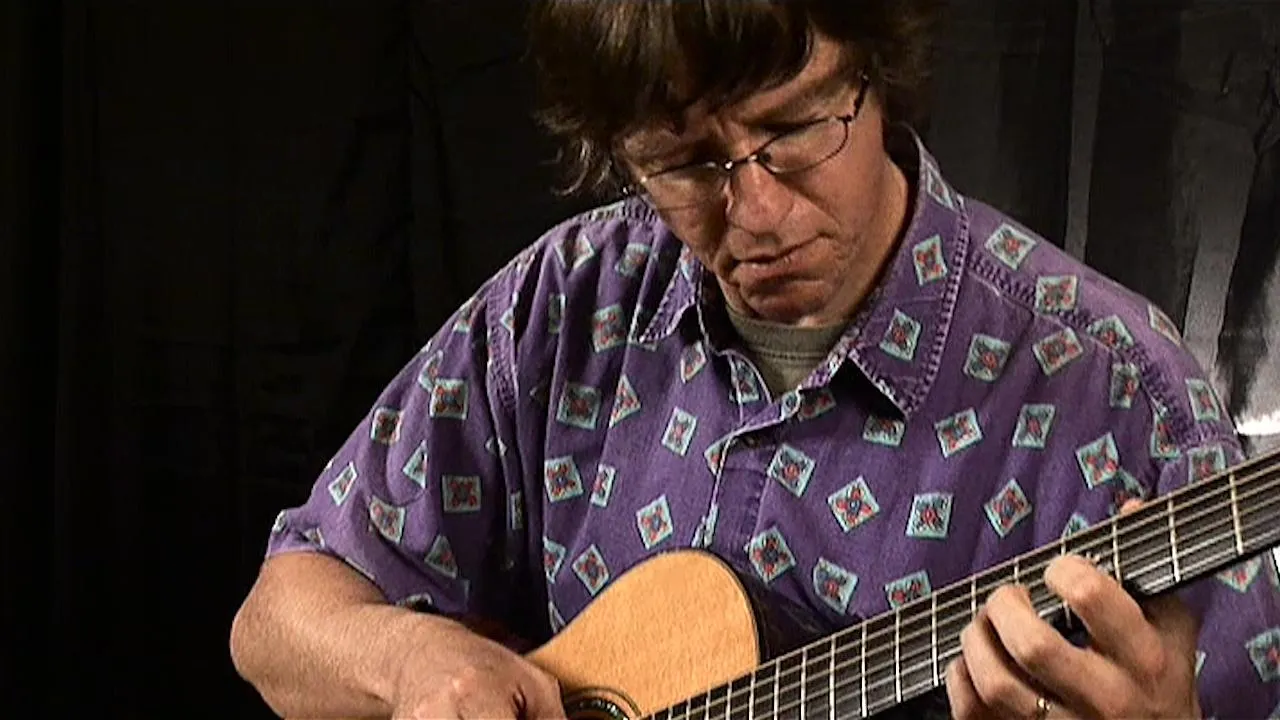
Steve BaughmanSteve Baughman présente son accordage ouvert préféré, Orkney (C G D G C D), et montre comment une simple forme de C sonne dedans.
Le contenu du cours
13 leçons (1h 9min) · 1 gratuites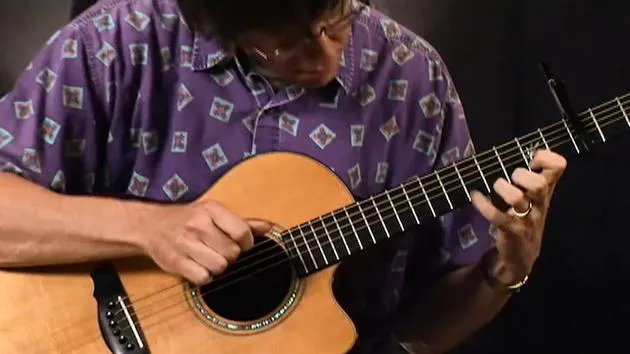
01. Dans A Sailheu - Tavarn - Danse des Deux Pommes Frites (interprétation)
Leçon gratuite5:10
02. Dans A Sailheu - Tavarn - Danse des Deux Pommes Frites (leçon)
10:24
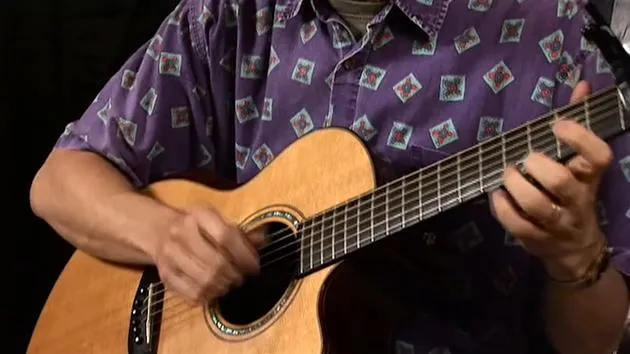
03. Little Beggar Man (performance)
1:54
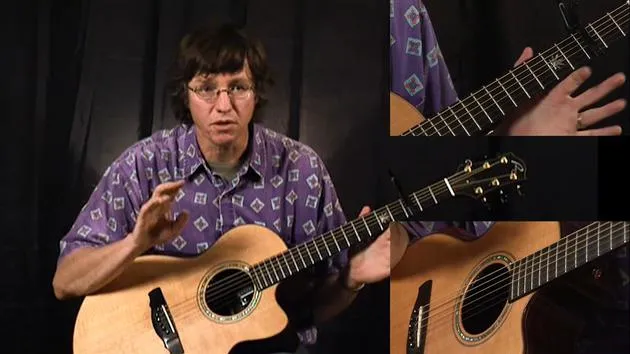
04. Little Beggar Man (leçon)
8:24
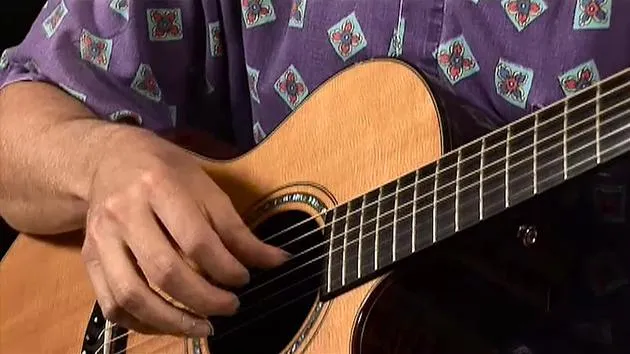
05. Loch Lomond (interprétation)
3:20
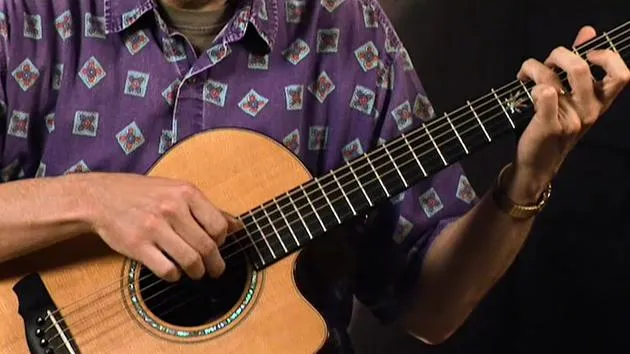
06. Planxty John Irwin (interprétation)
3:33
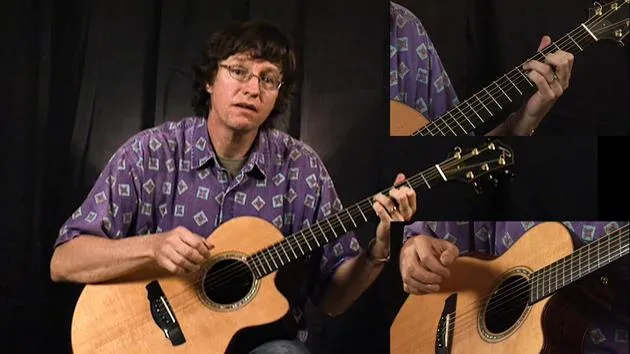
07. Planxty John Irwin (leçon)
1:29
08. Cool A Jig - The Choice Wife (interprétation)
4:09
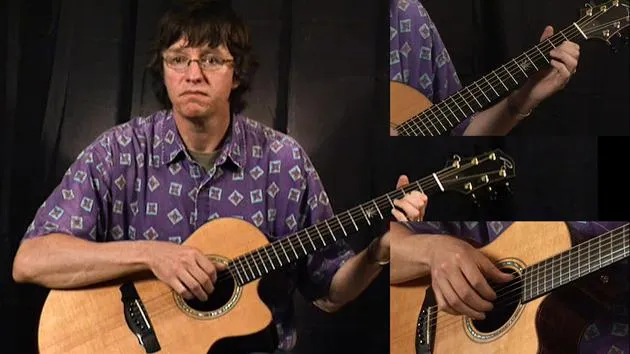
09. Cool A Jig - The Choice Wife (leçon)
6:09
10. Neil Gow's Lament - Devil In The Kitchen - The Tushgar (interprétation)
6:24
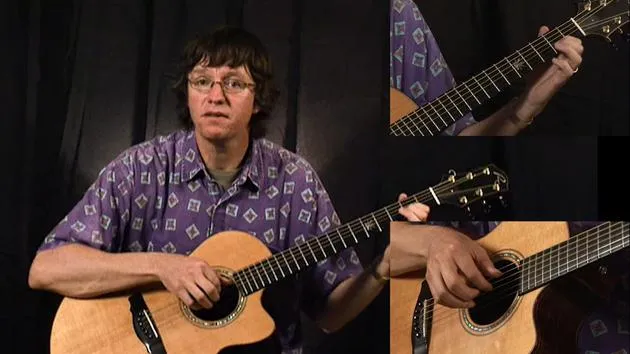
11. Neil Gow's Lament - Devil In The Kitchen - The Tushgar (leçon)
11:08
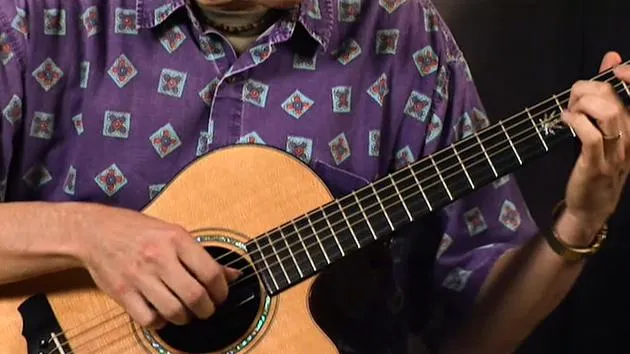
12. Paddy Fahy's Jig (interprétation)
2:40
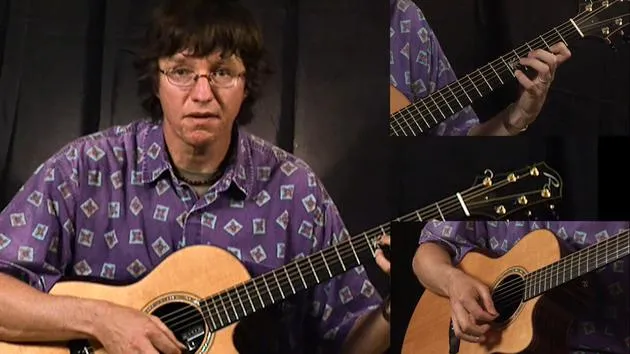
13. Accordage Orkney (leçon)
Tu es ici4:43
Transcription de la leçon
Exploring Orkney Tuning
Before I really leave you, I would like to take the opportunity to show you one little thing about my favorite guitar tuning, the Orkney tuning. I'm going to show you how simple and accessible it is, and how beautiful it can be. After you've spent 45 seconds with it, I'm going to show you.
Basic C Chord
- Look at my left hand.
- Now, the basic C chord:
- Middle finger on the fifth string, fifth fret.
- Ring finger on the fourth string, fifth fret.
- Pinky on the first string, fifth fret.
This is basic C.
You'll notice your index finger hanging out, waiting for something to do. This is a C neutral. It doesn't have any thirds in it; it's just Cs and Gs.
Creating Chords from C Neutral
- Simply plop your index finger down in the most natural spot available, which is:
- Second string, fourth fret.
Listen to what happens to this C neutral:
- Suddenly, it's a C major.
- Slide your index finger down 1 fret for C minor.
- Take your index finger over to the third string, third fret for C7.
- Slide it up to the fourth fret of the third string and you've got a very California, New Agey sounding C: C suspended, C major, seventh.
Chords Summary
Here's what you have out of the basic C position:
- C neutral
- C major
- C minor
- C7
- C major (new age 7)
- Back to C neutral
Transitioning to Other Chords
Now, you're obviously going to need more than C's when you play. So, without picking up your pinky or your ring, pick up everything else.
- Take your pinky and ring, slide them up two frets, and bar at the fifth to get an F chord.
- Back to basic C: P and R (Pinky and Ring) up two frets for F chord.
- Slide them up two more for a G chord.
- Slide P and R up one more fret for a nice rich sounding high C chord.
Playing in the Key of G
If you want to play in the key of G, it's just as easy. Here's your G chord:
- I call this wimpy G.
- To put your pinky down on the first string, fifth fret, you get basic G.
- Pivot over to basic C.
This simple pivoting motion gets you from G to C.
Adding the D Chord
You need one more chord to play in the key of G, pretty much any folk song, and that's a D chord:
- Position your fingers on the second string and third string at the second fret.
- For a cool variation, bring your thumb over.
Conclusion
So welcome to the world of Orkney! If you have any questions about Orkney Tuning or anything else related to this project we've discussed today, feel free to send me an email.
- My website is CelticGuitar.com.
- You can also contact acousticmusicresource.com to learn about my CDs and find lots of great fingerstyle music from many different genres.
Stay in touch, and I hope you found this to be a worthwhile time. Thank you!
13 leçons
1h 9m de leçons vidéo structurées
Fonctions vidéo avancées
Ralentissez, bouclez un passage, suivez la partition
Mobile, tablette et ordinateur
Pratiquez où vous voulez
Satisfaction garantie à 100 %
Garantie remboursement 30 jours
Rencontrez votre guru
Rencontrez votre guru
Steve Baughman est l'un des vrais originaux de la guitare fingerstyle, un musicien dont le jeu acoustique aux accordages ouverts et aux racines celtiques a été salué par la critique des deux côtés de l'Atlantique.
« De temps à autre paraît un album capable de bouleverser votre façon de concevoir la musique de guitare ; Farewell to Orkney de Steve Baughman en fait partie... Un incontournable pour tous les amoureux de la guitare et surtout de la musique celtique. »
--Acoustic Guitar Magazine
« Une star de la guitare fingerstyle : très habile, réfléchi, discrètement audacieux, profondément lyrique et espiègle. »
--Radio National, Australie
« L'art et la musicalité de Steve sont de niveau mondial, avec une dynamique, un timing et une interprétation qui font toujours ressortir l'essence émotionnelle de la chanson. »
--Sing Out Magazine
« ...innovation technique, virtuosité et intensité. »
--Acoustic Guitar Magazine
« Une virtuosité incroyable... met en valeur la beauté paisible de la guitare acoustique aux accordages ouverts. »
--Marin Independent Journal (Dommage que ce ne soit pas le Washington Post. Mais je m'en contenterai.)
Son album Farewell to Orkney a figuré parmi les « Meilleurs albums de 2013 » d'Acoustic Guitar Magazine.
Et puis il y a cette distinction que Steve n'arrive pas vraiment à prendre au sérieux. Il figure sur la liste Digital Dream Door des 100 meilleurs guitaristes fingerstyle de tous les temps, qui inclut des musiciens décédés. « Avant, je mettais ça dans mon dossier de presse. Puis je me suis dit que ce n'était que l'avis isolé d'un type ou d'une nana quelque part dans le cyberespace. N'importe qui peut faire une liste. D'ailleurs, combien peut-il y avoir de guitaristes fingerstyle, au fond ? Ça doit être difficile de ne pas entrer dans le top 100. Je soupçonne que les places 81 à 100 sont toutes des noms inventés. Du moment que tu as sorti un CD de guitare, tu es dans le top 80. Je crois que j'étais 77e. Peut-être qu'on va me retirer de la liste maintenant que j'ai dit tout ça. Mais j'apprécie la passion de la personne qui l'a établie. Merci de m'avoir inclus, ça a impressionné ma mère. Ça ne l'impressionnera peut-être plus. »
Dans Celtic Guitar Solos, Tunes & Techniques, Steve partage les accordages ouverts et les approches fingerstyle qui se cachent derrière ce son, pour que tu puisses le jouer toi-même.







