



Double stroke rolls et paradiddles

Avec
Max Sedgley
Le contenu du cours
7 leçons (1h 6min) · 1 gratuites
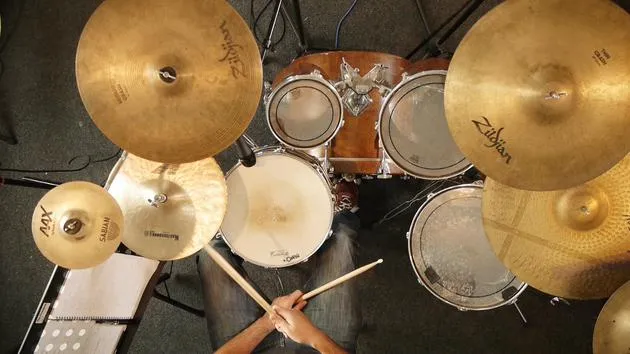
Transcription de la leçon
Lesson Seven: Back to Basics Drumming
Hi, it's Max Sedgley here.
Welcome to lesson number seven of the musicgurus.com Back to Basics drumming package. Today marks the last lesson in the beginner section, and we're going to cover a couple more rudiments:
- Double Stroke Roll
- Paradiddle
Overview of Rudiments
Previously, we worked on the single stroke roll. The double stroke roll is the next step, and the paradiddle is another variation. While there are about 40 or 50 different rudiments, these three, single stroke roll, double stroke roll, and paradiddle, are among the most important, serving as the foundational patterns from which many others are derived.
These rudiments are found in various musical styles, including rock, jazz, and funk, making them essential for any drummer to learn.
Double Stroke Roll
The double stroke roll, as the name suggests, involves hitting two strokes for each hit.
How to Play:
- Single Stroke Roll:
- Right, left, right, left (R, L, R, L)
- Double Stroke Roll:
- Left, left, right, right (L, L, R, R)
Practice Tips:
- Start Slowly: Focus on even sound and dynamics.
- Sound Quality: Aim for a consistency that makes it feel like a single stroke roll, just with two hits.
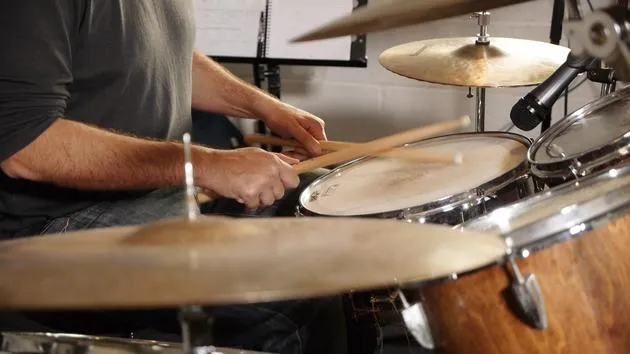
- As you increase speed, your sticks should bounce while maintaining control, essentially hitting twice per downbeat.
You can practice the double stroke roll on any bouncy surface, such as:
- A tabletop
- A hardback book
Practical Applications
You'll hear the double stroke roll used as ghost notes on the snare drum. Here are some examples:
- Basic Beat with Doubles:
- Play a normal beat while integrating doubles with the left hand.
- Speed Variation:
- Practice different speeds of rolls, moving it around the kit as a fill.
Paradiddle
The paradiddle combines elements of single and double strokes, consisting of eight hits.
Pattern Structure:
-
First Four Hits:
- Right, left, right, right (R, L, R, R)
-
Next Four Hits (Mirror Image):
- Left, right, left, left (L, R, L, L)
Full Paradiddle Pattern:
- Complete Phrase:
- R, L, R, R, L, R, L, L
Importance of the Paradiddle
The paradiddle is one of the fundamental rudiments in drumming and forms the basis for various other rudiments, such as:
- Paradiddle diddle
- Single paradiddle
- Double paradiddle
- Triple paradiddle
Practice Tips:
-
Ensure that all hits are even in dynamics and strength, making your rolls sound similar to single stroke rolls.
-
A good exercise is to keep a basic beat going while practicing rudiments, such as:
- Double stroke roll
- Paradiddle
Final Thoughts
After a few weeks of practice on these rudiments, you should be at a comfortable level to play various patterns commonly found in modern music.
Remember to have fun and enjoy your practice! Don't forget to check out the other courses at musicgurus.com.
In the next stage, we'll learn how to play along to famous breaks and incorporate them into your playing.
See you next time!
7 leçons
1h 6m de leçons vidéo structurées
Fonctions vidéo avancées
Ralentissez, bouclez un passage, suivez la partition
Mobile, tablette et ordinateur
Pratiquez où vous voulez
Satisfaction garantie à 100 %
Garantie remboursement 30 jours
Rencontrez votre guru
Rencontrez votre guru
Max Sedgley est un producteur, batteur et DJ britannique diplômé en musique classique. Ses compositions ont figuré dans de nombreuses émissions de télévision et publicités, dont la série Six Feet Under, et il a été le batteur du producteur de drum & bass Roni Size. Il enregistre également sous le nom de Cadien.
Dans ses cours, il enseigne la batterie à partir de zéro - la tenue des baguettes, les grooves fondamentaux et le motif rock en huit croches - ainsi que les breaks de batterie emblématiques des années 60 et 70, samplés dans d'innombrables morceaux modernes.







