



Analyse de la Sonate pour piano n° 32 en ut mineur, op. 111
Avec
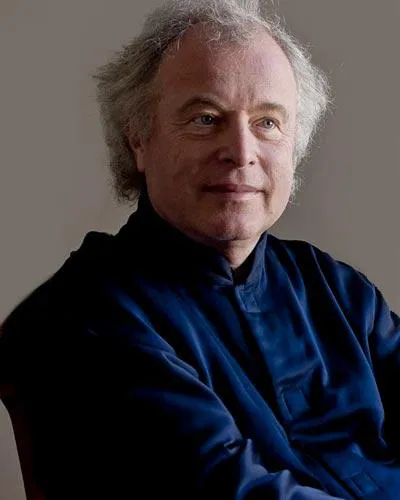
András Schiff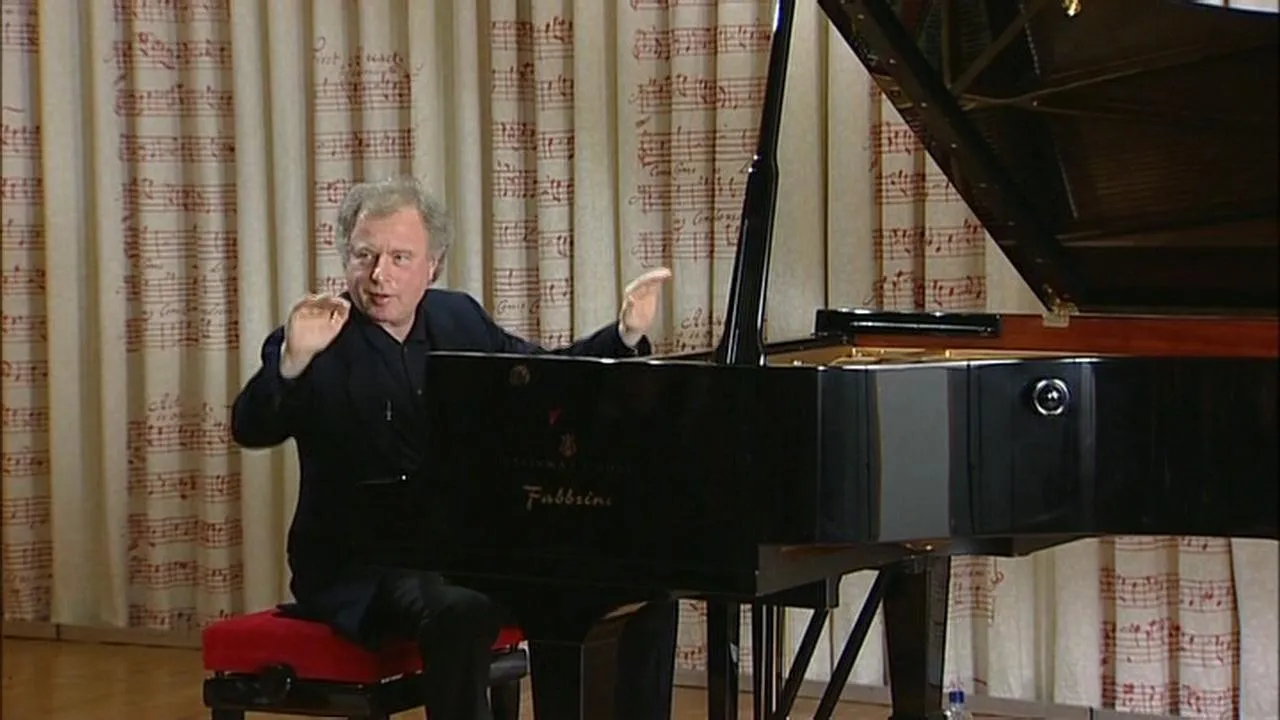
Le contenu du cours
4 leçons (2h 40min) · 1 gratuites
Transcription de la leçon
Music Lesson: Opus 111 in C Minor
And now we come to the very last of the sonatas, the rightly famous Opus 111 in C minor.
Overview of the Movements
Two movements, very much contrasting:
- First Movement: Starts with a Maestoso, a majestic introduction, like three colossal pillars of a cathedral, representing the three different possibilities of a diminished seventh chord:
- The first one
- The second one
- The third one
Together, they give us all the 12 tones that are possible in Western music, if we don't count the quarter notes. So, in a way, we have a forerunner of 12 Tone Music here.
Rhythm and Influence
The rhythm, this double dotting, is reminiscent of French overtures. For example, consider Bach's B Minor Suite.
"This is the French overture that we know from Lully and Rameau, and later from Bach."
Of course, maestoso is the instruction. There is not one word by Beethoven that would suggest slowness here. It's not adagio, it's not largo, and it's not grave.
Tempo Debate
So, why are so many people playing this so slowly?
- It's a good question.
- I cannot answer that, only that it should not be played too slowly.
Because we will come to that point slowly after many excursions. The intervals are getting nearer and nearer to each other, creating a sense of danger with no space left.
At last, we have reached the dominant of C minor, where we encounter these lamenting dissonances.
Following Beethoven's Intentions
Now, an octave lower, when this written-out tremolo starts with demisemiquavers, it's very important to follow exactly what Beethoven writes. He doesn't write an accelerando here; he could have written one had he wanted one.
At this point, we are at the threshold of total collapse, heading towards the beginning of the main part of this movement, which is allegro, comprillo et appassionato:
- So, an allegro with a lot of ?lan and passion.
- The main note values are semiquavers in the allegro.
Repetition and Structure
Those diminished seventh chords will appear again and again in this movement. However, as a section, this introduction maestoso will never return in that way.
It is very different from Opus 13, the Pathetic Sonata.
"You see, again we have the dimness and those exclamations."
Beethoven looks back to an earlier work, but formally he's abandoning it. The introduction is structurally different; it returns many times during the movement.
Let me do this again, going into the allegro.
This is not a small X position. It fits much more into the generally accepted picture of Beethoven: the titanic fighter who battles with the materials, fighting with the elements.
Exploring Musical Juxtaposition
Strictly musically speaking, it's fascinating to observe the juxtaposition of long passages in unison against long passages in counterpoint; it's really the absolute opposite of counterpoint when he writes unisons. Yet it's very dramatic, spiced with fantastically lively accents at the most unexpected places.
Because they are almost unmusical accents, I think he uses this to create the utmost tension.
Thematic Development
Then we have the theme orchestrated, like woodwind chords with little expressive retards. From there, we hear variations:
- Inverted counterpoint and the theme appearing in the bass.
- The second subject feels like an island, a flat major island.
Remember the Pathetic Sonata? We had the island as a second movement.
Variation Dynamics
However, the second theme doesn't last very long; he takes a little time and gives us a variation. The music slows down to adagio, but it comes back with the next outburst, returning to this inferno.
The music becomes incredibly orchestral. We hear the whole symphony orchestra, like the woodwinds in the opening movement of the Ninth Symphony.
Unique Exposition Repeat
We have an exposition repeat here, the only exposition repeat in all the last three sonatas.
It's interesting to observe Beethoven's approach to repeats:
- In earlier sonatas, he repeats expositions, development, and recapitulation according to convention.
- In later sonatas, he is more rhapsodic.
We performers must adhere to his intentions, word by word. If you don't like a certain repeat, then don't play the piece.
Now, let's revisit the development section. What's the opposite of unison? Strict counterpoint. Here he gives us another short fugato.
Fugato Connections
We had a fugato in Opus 109 in the A-flat Sonata. Here, we just have elements of a fugue. The first four notes turned around create a mysterious unison.
"To me, they represent the four letters of Bach's name, B-A-C-H."
The Final Movement
As we reach the threshold of the recapitulation, we hear the main rhythm again with those diminished seventh chords.
"He screams it out to the world in quadruple octaves."
After the recapitulation, it feels as though a huge storm has passed, leaving the elements tired.
Beethoven's Achievements and Gratitude
And again I ask: when does Beethoven introduce the subdominant? Here, at the very end, we see how touching it is to have this different color of the F minor subdominant.
Then, without a break, we come to the final movement in all Beethoven sonatas. Nothing could be more moving, more touching, more wonderful than this Arietta.
Reflective Closing
Indeed, to me, words fail, and you have to be somebody like Thomas Mann to express this music with words.
In that novel, in a little German town, a music teacher named Kretschmark gives wonderful classes, explaining why Beethoven didn't write a further movement.
None of these were his last words in piano music, as he still wrote the Bagatelles Opus 126 and the glorious Diabelli Variations.
"Why do I play this? Because, let's listen to the theme of the Arietta."
This theme sounds like a trivial joke. Beethoven managed to create a masterpiece from Diabelli's very trivial, almost silly theme.
Final Thoughts on Simplicity
In German, we would say Habe Dank, thank you. The instruction of Beethoven is adagio molto simplice e cantabile, so slowly, very simply, and in a singing way.
However, the crucial point is that it must evolve simply, what's the opposite of simplicity? Complexity.
Now, as I play the second part...
Again, there's a symmetrical structure:
- Eight bars of the first half, repeated twice.
- Eight bars of the second half, also repeated twice.
The time signature is 9/16. Listen carefully as it starts with an upbeat.
"So, that's how you have to listen to it."
The strategy differs from Opus 109; the first three variations constitute a certain unity beneath a single arch. Beethoven keeps the pulse of this 9/16.
The Dance of Variations
As the variations progress, he uses smaller and smaller note values. The first one is like a lullaby, a rocking iambic figure. The second variation employs half of these note values, reminiscent of all Menschen werden Br?der in the Ninth Symphony.
The next variation features even smaller note values, transitioning from the Apollonian to the Dionysian.
"And still, I resist the analogy of thinking of jazz and the pre-echo of boogie woogie."
After the ecstasy of Variation Three, a huge change of mood occurs, darkness arrives, featuring little triplets in the bass, evoking the murmuring of the ocean.
Embracing Light and Shadow
Above that, we hear fragments of the theme, like sighs. Expecting mechanical repetition, Beethoven shifts from darkness into light.
This dualism of darkness and light, earth and heavens with stars emanating, creates an unreal landscape, transcendent music.
Again we remember the melody and relate it to this musical exploration, reaching for the stars.
As we get to the second part of the variation, we revert to darkness, filled with suspensions.
The Evaporating Arietta
At the end of this Arietta, Beethoven, much like in Opus 110, throws away the chains of the variation and enters a free fantasy.
Then, this thrill, Beethoven's remarkable invention, comes to the forefront.
"This is Beethoven's invention, for he was such a magnificent pianist."
He ingeniously combines trills and melodies, utilizing double and triple trills, not merely decorative but deeply expressive.
Closing Reflections
Let's go back to the end of Opus 111.
This moment, where the trill turns to minor, is quintessential.
As we vacillate from E-flat major back to C major, the series of modulations leads to a low point.
Here, we feel very close to home, bringing back our Arietta theme, infused with a sense of gratitude and forgiveness.
Forgive me for sounding sentimental, but it's a poignant example of a human spirit overcoming adversity and creating extraordinary music.
At its conclusion, it conveys a message of hope, a believer's music that reaches the end of this Arietta, evaporating into the air:
Sa, sa, sa.
4 leçons
2h 40m de leçons vidéo structurées
Fonctions vidéo avancées
Ralentissez, bouclez un passage, suivez la partition
Mobile, tablette et ordinateur
Pratiquez où vous voulez
Satisfaction garantie à 100 %
Garantie remboursement 30 jours
Rencontrez votre guru
Rencontrez votre guru
András Schiff est l'un des membres les plus éminents d'une génération de pianistes hongrois nés dans les années qui ont suivi la Seconde Guerre mondiale, aux côtés d'artistes tels que Zoltán Kocsis, Dezso Ránki et Jenő Jandó. De ce groupe remarquable, Schiff est celui qui a acquis la plus grande réputation internationale, non seulement en raison de sa décision de mener sa carrière hors de Hongrie, mais aussi grâce à son sens du toucher finement nuancé et à une mémoire impressionnante qui lui permet de présenter, en concert et sur disque, de larges pans de l'œuvre d'un compositeur.
Schiff est né à Budapest le 21 décembre 1953 et a étudié avec le compositeur hongrois Pal Kadosa et Ferenc Rados (qui ont également enseigné à Kocsis et Ránki), ainsi qu'avec le claveciniste anglais George Malcolm. Il fait ses débuts à Budapest à l'âge de 19 ans, suivis d'apparitions en concert dans toute l'Europe et aux États-Unis. Sa réputation s'est accrue avec des prestations primées au concours de Moscou en 1974 et au Leeds Festival en 1975.
András Schiff travaille avec la plupart des grands orchestres et chefs internationaux, mais il dirige lui-même la plupart de ses interprétations des concertos pour piano de Bach, Beethoven et Mozart. En 1999, il a créé son propre orchestre de chambre, la Cappella Andrea Barca, avec lequel il travaille chaque année comme chef et soliste, tout comme avec la Philharmonia Orchestra et le Chamber Orchestra of Europe.
Le style de Schiff, où un toucher d'une sensibilité peu commune s'allie à une attention à la clarté contrapuntique, a fait de lui l'un des plus grands interprètes de Bach de notre époque. Il a enregistré l'intégrale de la musique pour clavier de Bach, ainsi que l'intégrale des sonates et des fragments de sonate de Franz Schubert, dont la musique pour clavier introspective convient bien au tempérament de Schiff. Il a achevé un cycle des sonates de Beethoven chez ECM en 2009, et il a reçu en 2011 le Prix Schumann de la ville de Zwickau pour son interprétation et sa promotion de la musique de Schumann. En 2001, Schiff a entrepris de revisiter et de réenregistrer les œuvres de Bach. Outre les œuvres romantiques d'Europe centrale attendues, la musique de Béla Bartók et de Leos Janácek occupe une place de choix dans le répertoire de Schiff.
Dans ses cours MusicGurus sur les Moments Musicaux nos 1, 3 et 4 de Schubert, la Partita no 2 de Bach et les dernières sonates pour piano de Beethoven, Schiff te fait entrer dans cet univers interprétatif — en partageant sa façon de penser la conduite des voix, le toucher, la clarté contrapuntique et la structure, pour que tu puisses apporter une réelle profondeur et une véritable compréhension à ces œuvres au clavier.







