



Octaves et nuances

Avec
Doug MacLeod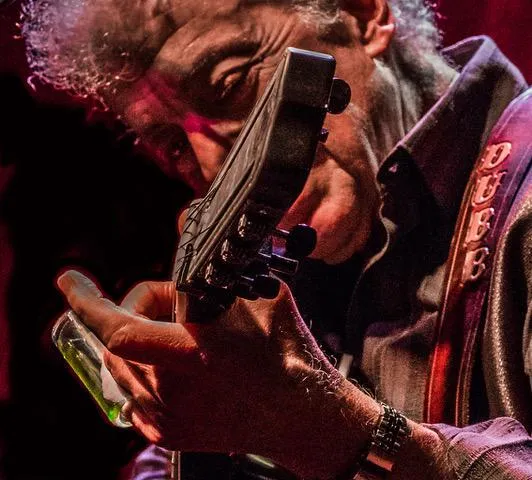
Le contenu du cours
16 leçons (1h 51min) · 1 gratuites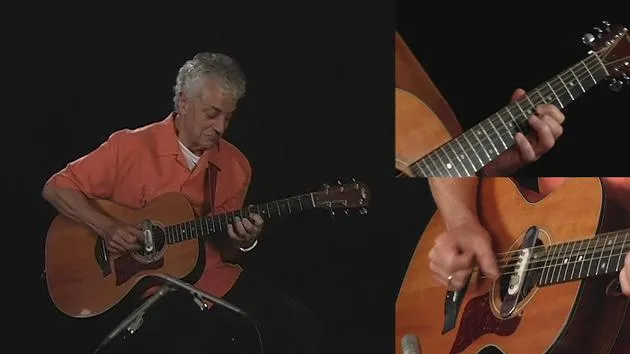
01. Introduction au cours
Leçon gratuite2:23
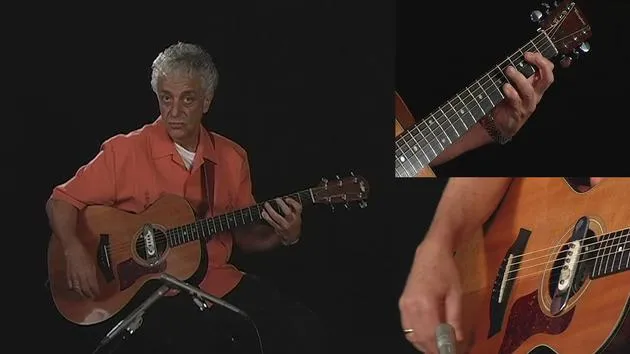
02. Accordage
1:30
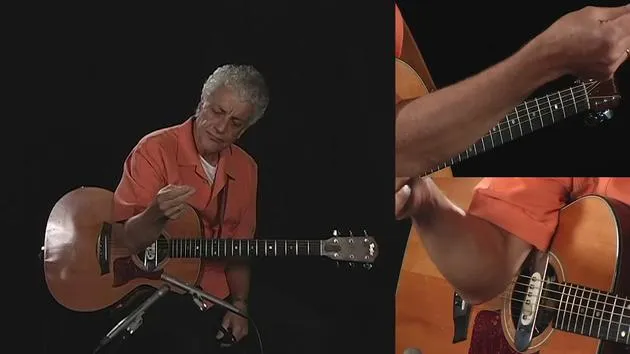
03. Techniques essentielles pour les mains gauche & droite
10:19
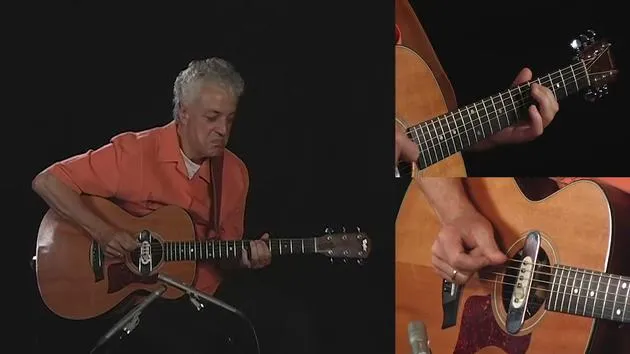
04. Groove à un accord
8:30
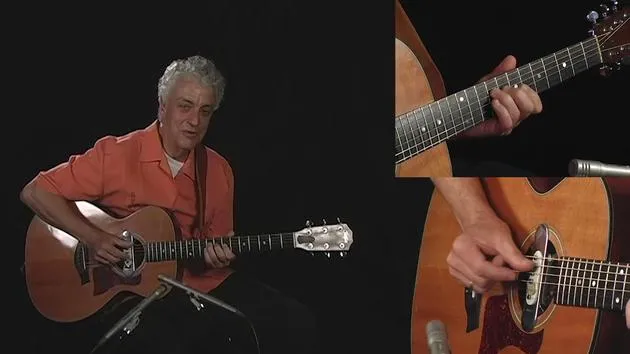
05. Octaves et nuances
Tu es ici6:45
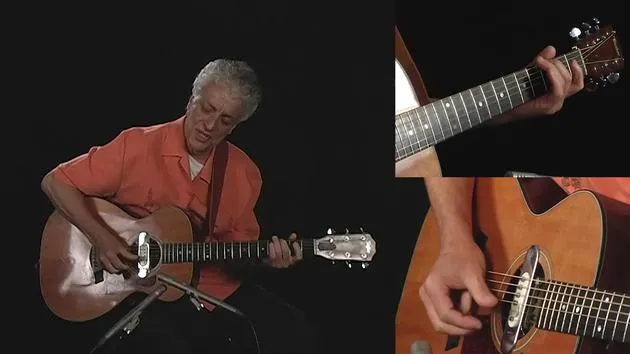
06. You Can't Take My Blues
3:53
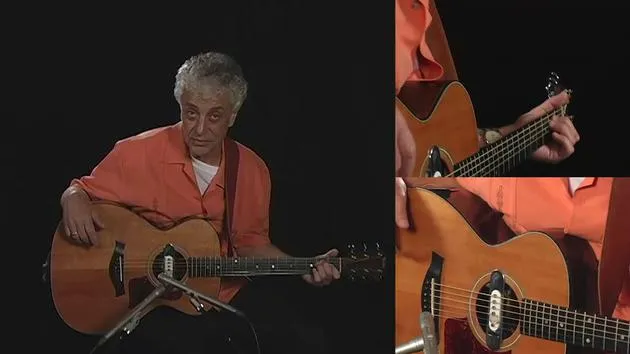
07. 12 Bar Blues
3:35
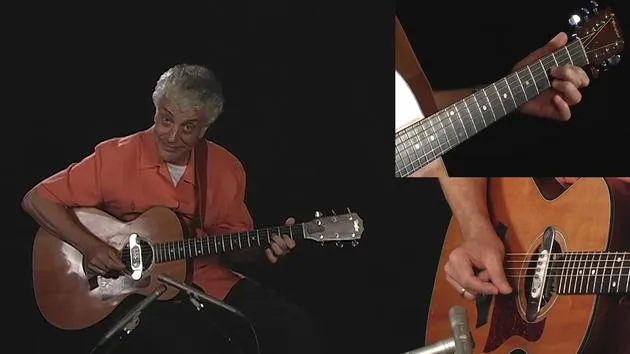
08. Turnarounds
3:34
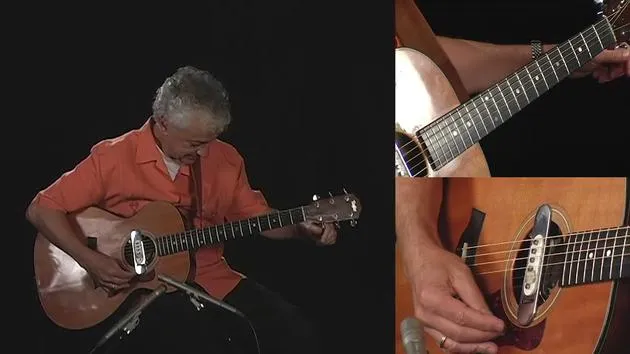
09. Explorer le manche pour élargir la tessiture
10:27
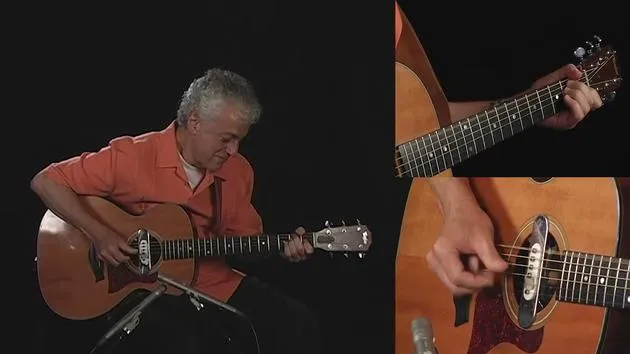
10. Home Cooking
4:08
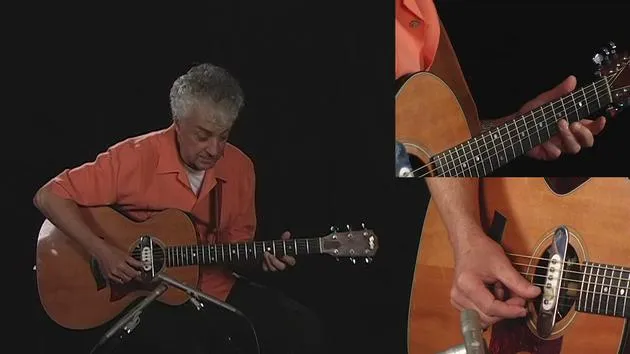
11. Blues à 8 mesures
16:56
12. Ain't The Blues Evil
3:07
13. L'accordage spécial en "Sol" de Doug
16:07
14. Big City Woman (She Talks So Much She Makes Me Tired)
4:30
15. Open G Tuning
11:34
16. A Sweet Ride
4:04
Transcription de la leçon
Music Lesson: E7 Chord and Octaves
Now we're grooving up here on the very top of the guitar. And we got a chord that sounds a little bit different, doesn't it?
Understanding the E7 Chord
It doesn't sound like this one, and it doesn't sound like down here, does it? That's why we're using the third up here. Now, this is an E7. We got the G sharp in it, and that's what defines the chord.
- Two Notes Define a Chord:
- The third
- The seventh
A little bit later on, I'll explain to you how the bass can change. But the two notes that define a chord are the third and the seventh. So, there it is. There's your E7.
Exploring Octaves
Now we can do octaves off of this too, which is a kind of cool sound. Let me explain them to you.
What Are Octaves?
Yes. What am I doing on an octave? I'll show you. We gotta change this around; the lights and so on sometimes can run a little havoc on the guitar.
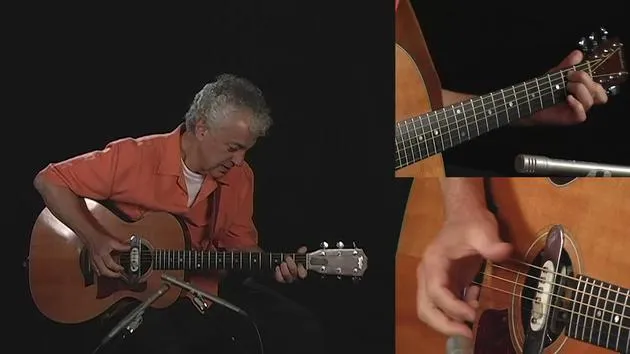
What you got here is your octave. I put my first finger on the G string at the:
- 12th fret
- 11th fret
- 10th fret
- 9th fret
And then my pinky will go up here on the 12th fret.
The secret is: I'm bending this finger over so it deadens the B string. So you get it like that. Now you can pinch and get your octave like that, like Wes Montgomery used to do.
He used to take that thumb and just whack it down to get that groove, see? You can feel free about attacking hard because you're not going to hit the string if you do it right. So, just kind of get the fat part of this finger over, and you're there. And that works on this set of strings too.
Basic Finger Position
Again, oops! Well, we got a little trouble here.
That works down here. Same principle: the first finger drops over the G string and deadens that one. Then we work our way down.
When we get down here to the A string and the G string, we're going to wrap this finger around the D string to deaden it. When it's down like that, you notice I've changed. My pattern isn't like this now. No, my pattern is like that.
- Do not do this: That's going to sound wrong.
- But this will sound right: And then we move this, and that pattern stays the same on here and down to here and all the way down.
Building a Solo
So if you're going to be building something, if you're going to be building a solo, if you are improvising in blues or any kind of music, you want to:
- Build on a motive
- Use dynamics
- Make your music sound like you're talking
We talked about vocal stuff, and that's exactly what I'm talking about with you.
Now, if I were to talk to you in the same voice pattern, the same way, pretty soon you'd be sleeping over there.
But if I change my voice and I approach you, reaching out with my voice, you'll be interested. It's the same when you're playing music. It's called emotive; it's also called dynamics.
Setting Up the Groove
So let's set something up here with our one-note groove again. We're going to use octaves, and you're going to say, "Man, how am I going to do that?" Because I got my thumb working my bass; how am I going to play octaves?
Finger Mechanics
I saw you do this; I'm not going to leave you stranded. I got the answer for that, it's going to be your picking finger.
Remember that lead belly strum I told you, where one goes up and the other goes down? You just bring your picking finger up, and it'll make the octave. Check this out:
- I pinched there, and I'm still strumming up, and I got the octave.
Dynamics in Blues
Now, what is this? Oh, I'll show you this one too. They say this is 101 blues tips, but I think you're going to find there's more than 101, but who's counting? Check this out!
What I did on this octave here is I put this finger down on the B string, giving this a kind of sound like a George Benson sound.
Someone said, "Well, how can you use George Benson in the blues?" I said, "Why not?" If Robert Johnson heard Wes Montgomery, I gotta believe that Robert Johnson would be playing octaves.
And I mean, Lemon Jefferson played octaves. He just played them like this. So, you can use octaves too.
Putting It All Together
Let's go ahead and put the groove in and add the Benson fifth in there. It sounds like this:
Boy, that sounds good! We hit our double stop down here. We got the groove now.
Now, let's put the whole thing together. Listen, now I'm just taking this chord here. Check this out.
This is what I call a partialization of the E chord. All I'm doing is taking my first finger off to get that sound.
- Hear that motor?: Make you hear it. It's like you're writing a song.
You're not just playing scale notes; you're making melodies. And we're doing this on one chord.
Dynamics Again
We're going to play loud. Now listen.
Now we bring it down. That's dynamics.
We're making music. We're making music.
16 leçons
1h 51m de leçons vidéo structurées
Fonctions vidéo avancées
Ralentissez, bouclez un passage, suivez la partition
Mobile, tablette et ordinateur
Pratiquez où vous voulez
Satisfaction garantie à 100 %
Garantie remboursement 30 jours
Rencontrez votre guru
Rencontrez votre guru
Doug MacLeod est connu pour ses superbes compositions, sa maestria à la guitare, sa voix chaleureuse et pleine d'âme, son esprit et ses inoubliables concerts. Au cœur d'un concert de Doug MacLeod, il y a son don de conteur, qui donne vie de manière saisissante à des personnages allant des anonymes aux légendaires. Doug a remporté plusieurs Blues Music Awards, dont le Blues Music Award 2020 de l'artiste acoustique de l'année et le Blues Music Award 2018 de l'album acoustique de l'année pour 'Break The Chain', et a été nommé au Blues Music Award 2021 de l'artiste acoustique de l'année.
Son album avec le producteur Jim Gaines est sorti en 2021.
Dans 101 Blues Guitar Essentials, Doug transmet les fondements de son art - les grooves, les techniques et le feeling qui sous-tendent l'authentique guitare blues acoustique - pour que tu puisses te constituer un véritable vocabulaire sur l'instrument et commencer à raconter tes propres histoires à travers lui.
« Comme tous les grands bluesmen, MacLeod vit sa musique, et les chansons ne sont pas seulement au bout de ses doigts et de sa langue, elles ne font qu'un avec son être. » - Blues Music Magazine
« L'un des grands artistes de blues... point final ! » - Jorma Kaukonen







