



Técnicas de improvisación avanzadas
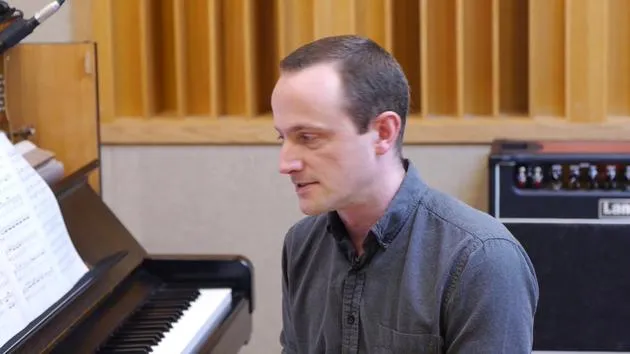
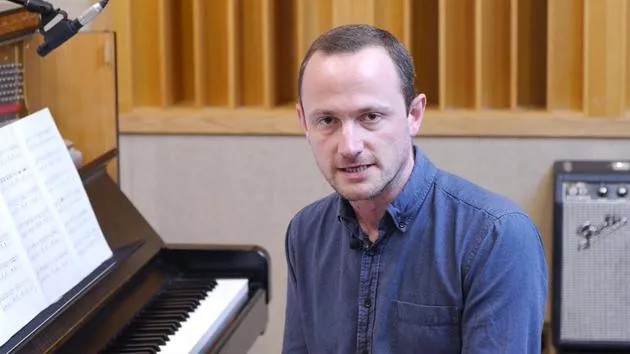
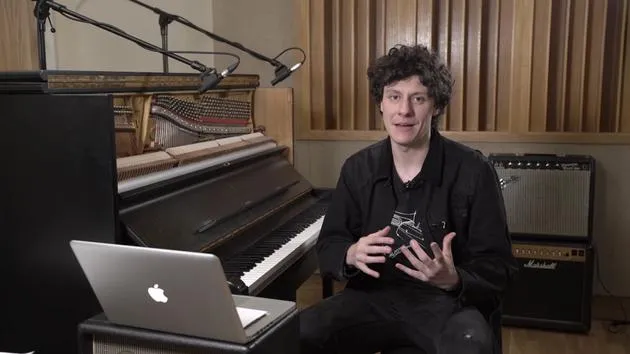
James improvisa choruses de blues usando notas del acorde e ideas cromáticas, y luego deja una pista de acompañamiento para que pruebes el mismo enfoque.

Qué incluye el curso
28 lecciones (2h 28m) · 1 gratis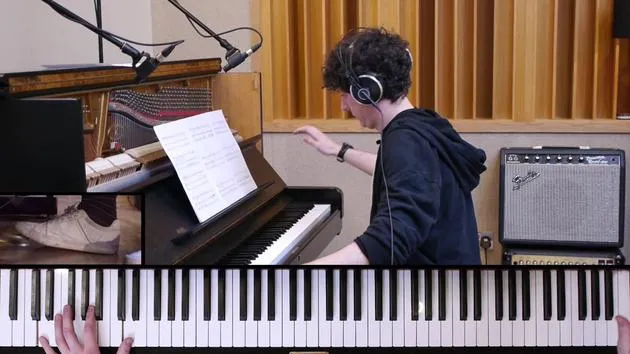
01. Peel Me A Grape, Diana Krall (Interpretación)
Lección gratis6:26
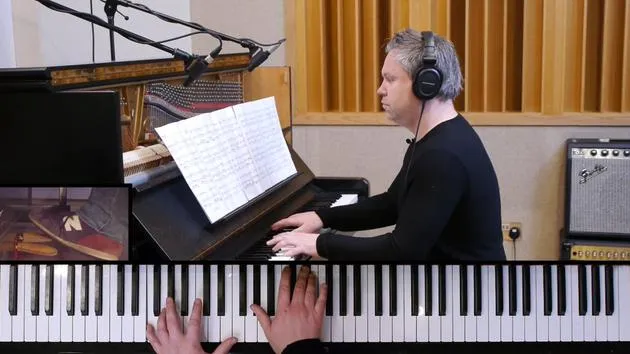
02. Defying Gravity, Wicked (Interpretación)
2:30
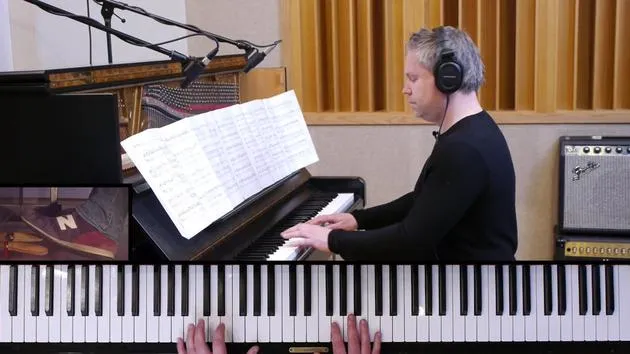
03. The Way It Is, Bruce Hornsby (Interpretación)
5:12
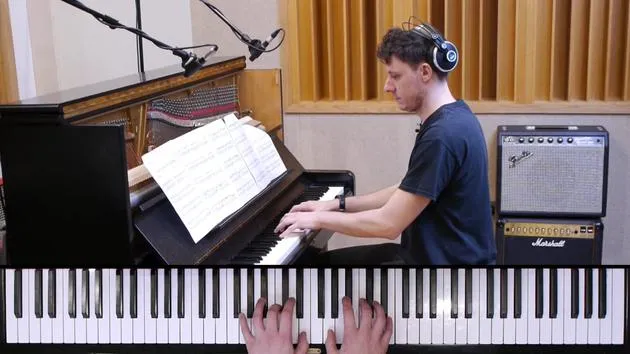
04. Favela, Noam Lederman (Interpretación)
2:45
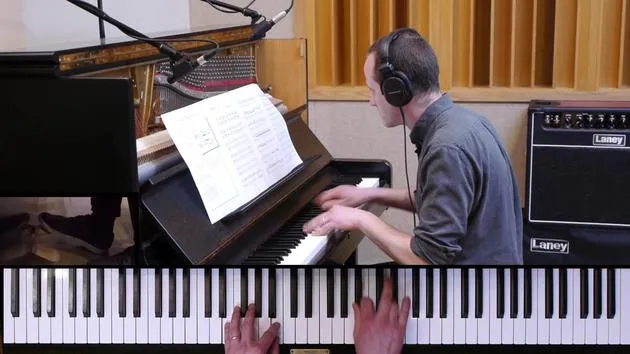
05. Mohair Mountain, Joe Bennett & Kung Fu Drummer (interpretación)
3:03
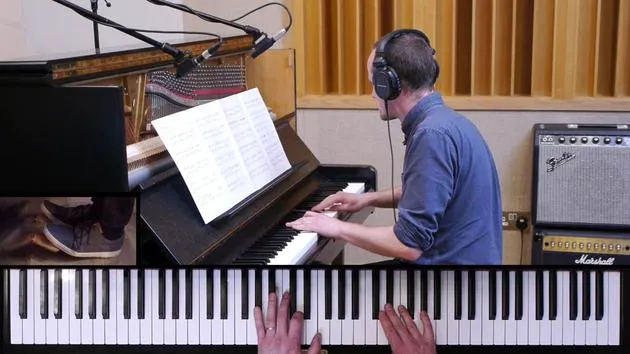
06. Blue Espresso, Deirdre Cartwright (interpretación)
2:38



Transcripción de la lección
Chromatic Notes and Improvisation in Blues
Playing chromatic notes within a solo is a great way to make music sound more natural and vocal. A fantastic way to learn how to improvise is to be able to sing what you play.
Introducing Improvised Blues
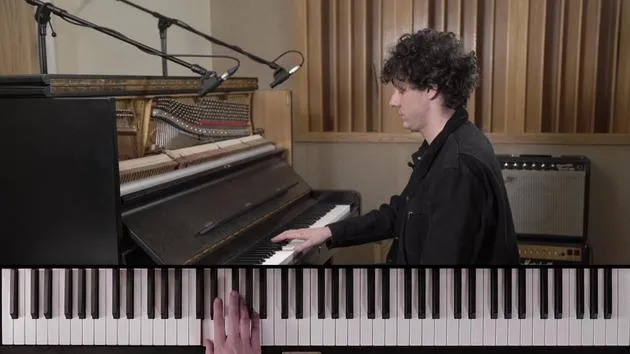
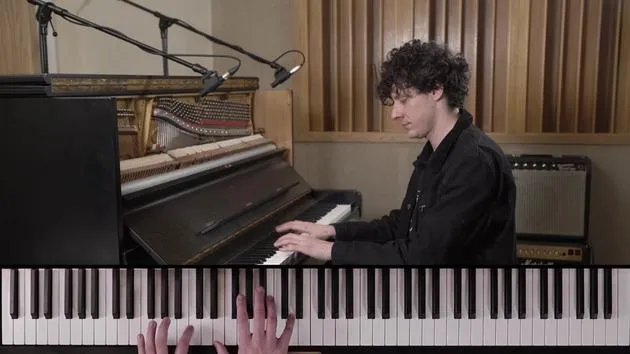
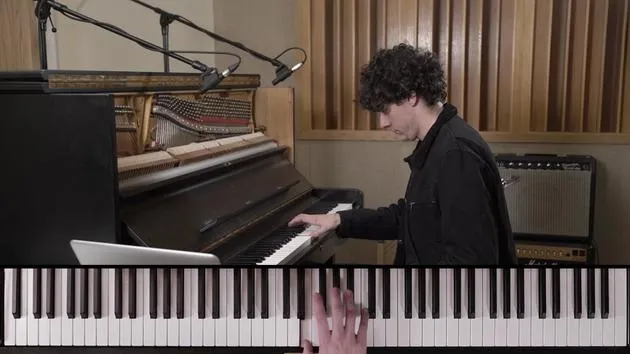
So, I'm going to try and do that right now while playing the blues, incorporating scale chord tones and chromatic ideas. There are quite a lot of interesting things going on:
- We're still using the essential chords of the blues.
- By adding extra elements, the music starts to sound really interesting.
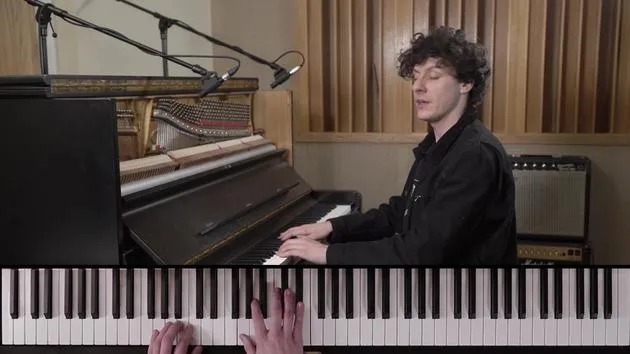
I'll play a chorus of the blues using these formats, and afterwards, there's a backing track that you can listen to and play along with at home. There will be about three or four choruses of this interesting blues structure. Play around with it. Have fun.
The Essence of Improvisation
Improvising is about expressing yourself while using the template and harmony provided to develop your ideas. So have fun with it!
1, 2...
Exploring Interesting Voicings
One essential topic when dealing with more interesting harmony is voicings. It's all very well to play, but sticking to standard voicings can be slightly boring or dry.
Using Chromaticism in Voicings
Great ways to play voicings over these tunes include:
- Using chromaticism within the voicing.
- For example, with F7, we can easily play that with the nine and six included.
Although this crunchy sound may not be pleasant on its own, it really shines when combined together.
Another Voicing Example
Here's another great voicing for B flat 7, the fourth chord in the blues:
- Starting with the 7th
- 9th
- 3rd
- 6th
Many of these voicings can be found in the Rock school pieces and syllabus. However, it can sometimes be tricky to identify them.
Breaking them down and hearing them individually is a tremendous way to expand your musical vocabulary and grasp those harder voicings.
Understanding Chord Voicings
Many voicings that piano players use might not even include the root. For instance, this is a B flat 7 without the root.
There's also a useful minor chord to play over the 2-5-1 heading back to the final I chord of the blues form. It consists of the 7th, minor third, and fifth.
Exploring Different Sounds
This is just a taste of the hundreds of ways you can use voicings and improvisation to explore and create your unique sounds.
The best method is to take different chords, voicings, and scales and apply them to all 12 keys. We're using the blues in F for simplicity, but many musicians play blues in various keys, particularly:
- B flat
- C
- G
If you're playing with guitar players, you'll often find tunes in E since guitar players love those big open strings.
Putting It All Together
I'm going to play another chorus now, using everything we've learned today. After that, I recommend trying a backing track that I've created for you. Explore ideas for yourself:
- Start with your right hand to get a feel for chord tones, the blues scale, and chromaticism.
- Then, use your left hand as a form of accompaniment.
1, 2...
Thinking While Playing
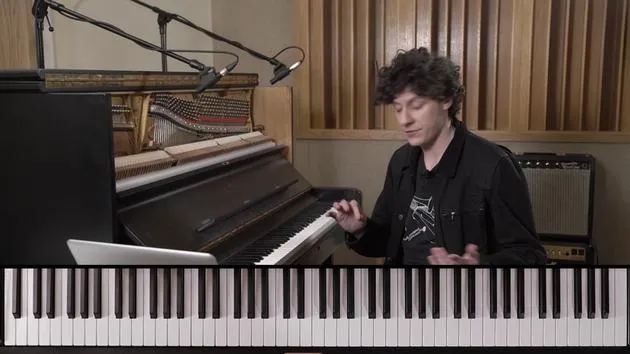
In my previous example, I'm really trying to hear and think about what I'm playing. I'm not merely playing a line or just chord tones; I am integrating all the techniques and skills I've learned throughout these different processes.
The Language of Music
Think of learning music like learning a language:
- We start with words.
- Then, we move to phrases.
- Next, we create sentences.
- Eventually, we have a full conversation.
All of these elements come from the head. A great exercise is to sing the lines of what you're playing.
I'm not a singer, and you don't have to be one either. But if you can hear what you're playing, it creates authenticity in your improvisation.
"I'm going to give you an embarrassing example right now."
As you can see, it might not sound perfect, but it's a valuable way to develop your technique and understand the harmony you're playing.
Summary of Key Concepts
To summarize, we have discussed:
- More interesting chords and harmony within the blues form.
- Using 2-5-1 progressions in major and minor keys and transforming them.
- Incorporating the blues scale, chord tones, and chromaticism into our music.
- Bending notes and utilizing passing chords to create richer harmonies.
Throw it all together, and you've got a fascinating template for harmony.
The Joy of Improvisation
Improvisation is about expressing yourself. So, enjoy the journey!
28 lecciones
2h 28m de lecciones en vídeo estructuradas
Funciones de vídeo avanzadas
Ralentiza, repite un pasaje, sigue la partitura
Móvil, tablet y ordenador
Practica donde quieras
Garantía de satisfacción 100%
30 días de garantía de devolución







