



Freightshaker
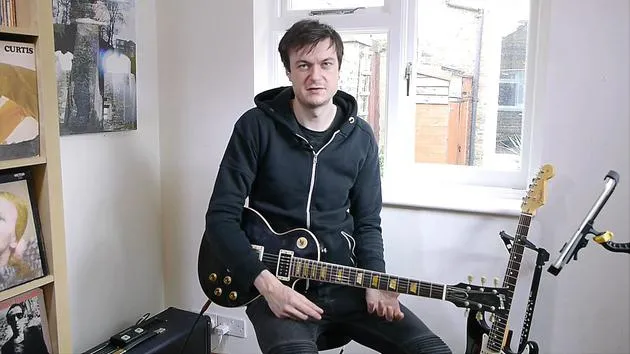
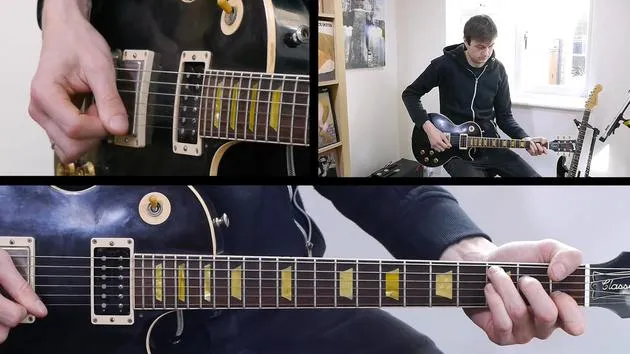
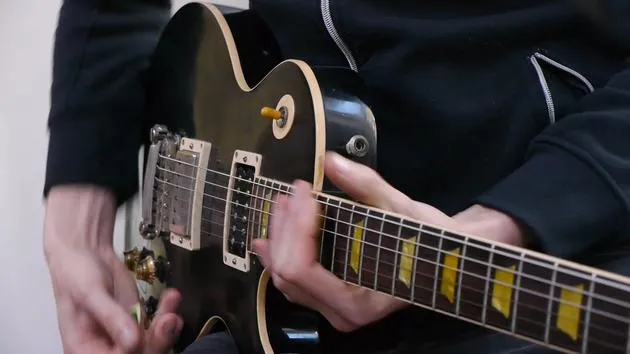
Stuart Ryan desglosa la pieza de Grade 8 "Freightshaker", un shuffle de blues de Texas a tempo rápido lleno de vibrato amplio, double stops y riffs con cuerdas al aire.

Qué incluye el curso
43 lecciones (3h 55m) · 1 gratis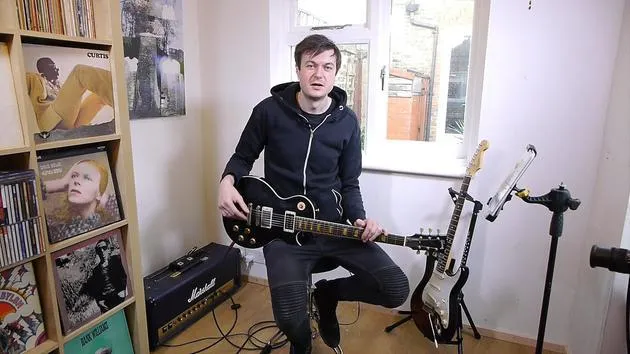
01. Introducción a los enfoques de la improvisación
1:00
02. Adornar una melodía
5:36
03. Reto: Envía tu melodía
0:26
04. Acordes de séptima
6:38
05. Componiendo tu solo
8:53
06. Rasgueo avanzado y adornos
5:40
07. Comping en distintos estilos musicales
8:36
08. Más extensiones y acordes sus
4:19
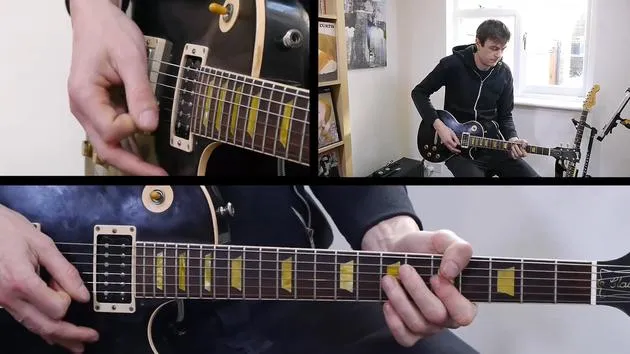
09. Combinar comping rítmico y melódico
4:24
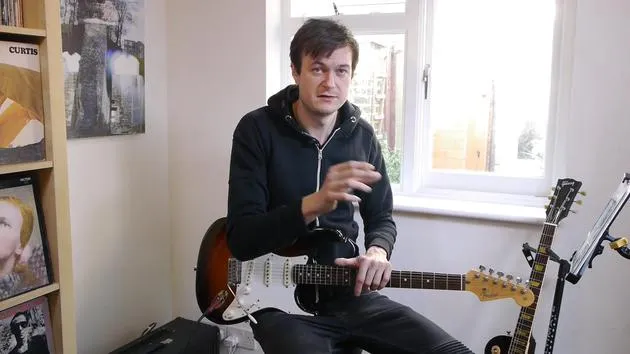
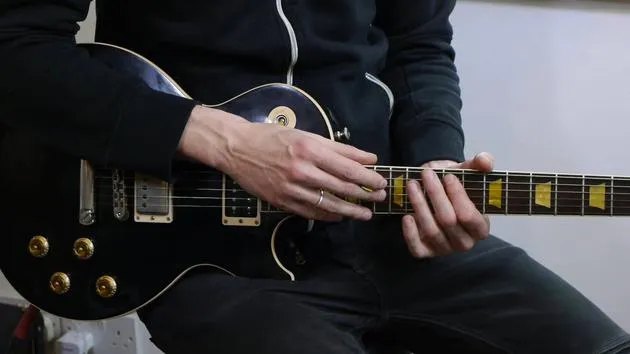

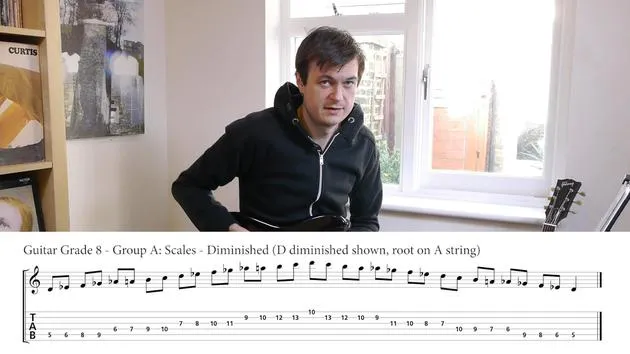
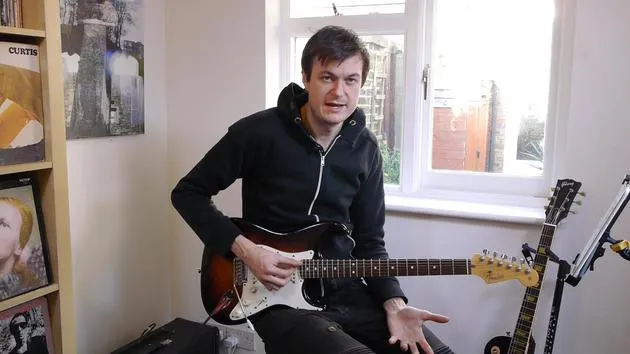
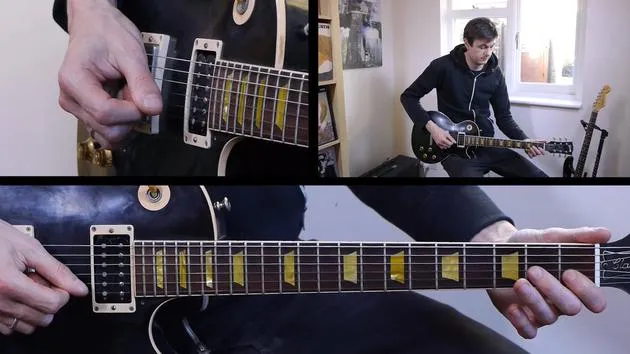
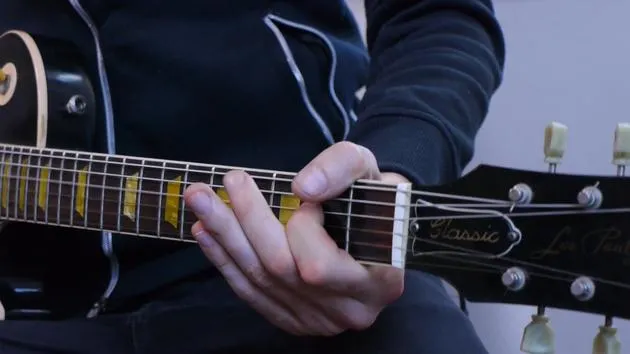
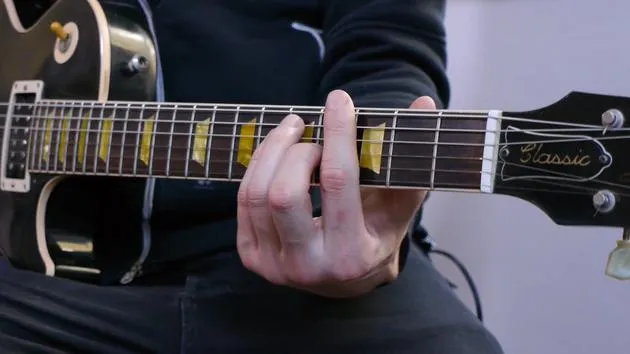
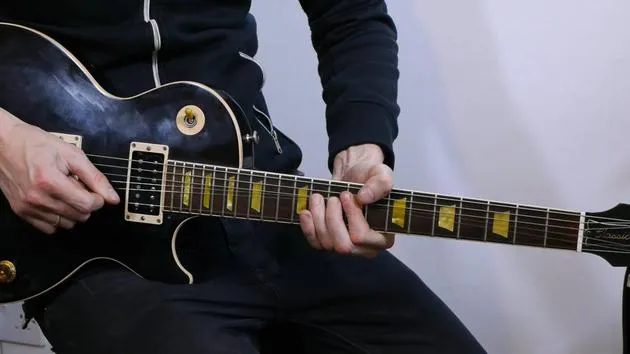
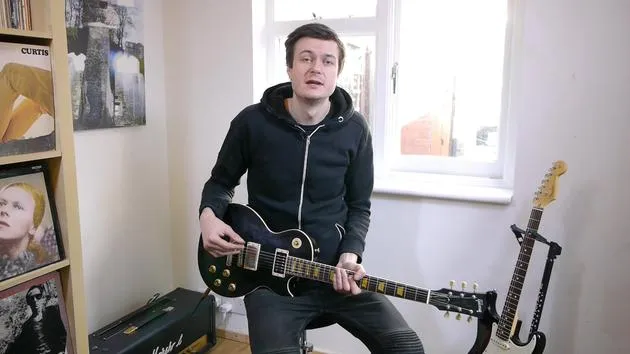
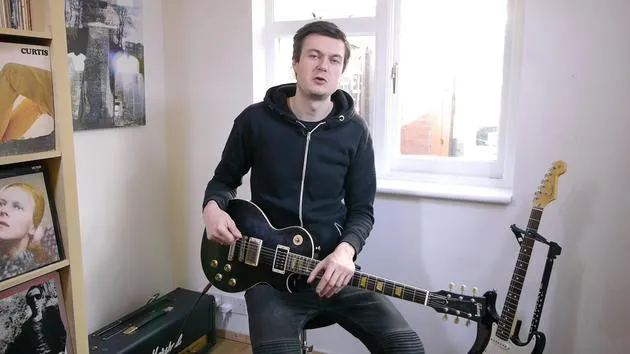
Transcripción de la lección
Grade 8 Freight Shaker Music Lesson
This is a real challenge to play, but it's also great fun. We're dealing with an uptempo blues shuffle, specifically a Texas shuffle. You'll hear modern blues musicians play in this style quite regularly. I'm thinking of guitar players like:
- Stevie Ray Vaughan
- Gary Moore
- Joe Bonamassa
- Walter Trout
The Demands of the Style
It's a demanding style, not least because of the uptempo feel, but also because you have that shuffle feel throughout , a kind of long, short, long, short feel on the notes. There's a great deal of blues vocabulary to get under your fingers here:
- Wide, fast vibrato
- Double stops
- Plenty of open string riffs
- Extended chords (like seventh chords with ninths added to them)
- Chords with thirteenths later on as well
Section by Section Approach
Getting the muted notes in place can be difficult too. It's absolutely critical that you play this one section by section. Build it really slowly before you piece it together, and be aware of where everything is.
Particularly in the B section, for example, you have all those muted strings to contend with.
In the C section, there's a terrifying lick that uses the minor pentatonic but is played with a sequence triplet feel. We have a lot of triplets in here. So, although we're in a four-four time signature, we've got shuffle and triplets. The triplets at this kind of speed are very fast indeed!
Strumming Technique
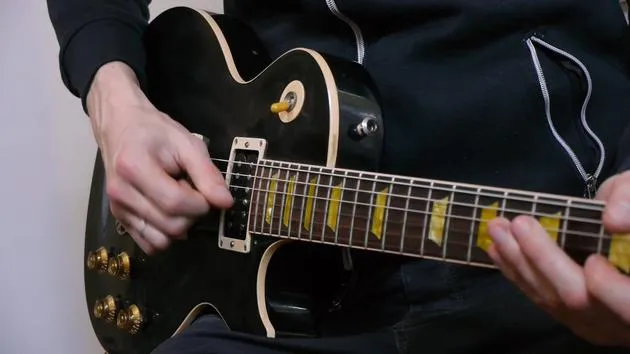
When you're playing the strumming triplets, focus on having a really loose picking hand. Your strumming hand should flick in a down, up, down, up pattern as relaxed as possible.
- Avoid tension: Tension will make it sound choppy and will hinder your ability to smoothly transition between sections.
Creativity and Soloing
There's also quite a lot of room for creativity here. The guitar solo is long, with a typical IV structure to solo over. The bulk of the tune is based around the standard blues I, IV, V progression:
- I Chord: A
- IV Chord: D
- V Chord: E
It's a dominant blues, which means that all the chords are played as dominant sevenths. When you reach the V chord, the twist is that the E7 is played as an E7 sharp 9, adding a real dissonance reminiscent of the Purple Haze chord.
Dynamic Range
We also have a large dynamic range. For the first couple of sections, you're really hitting the top of your dynamic range. But when you get out of the guitar solo and towards the bass solo, everything drops down.
- Volume Control: Rely on your picking hand, keeping it as relaxed and light as possible, while also being able to bring the volume control down to lose the drive tonally.
Guitarists like Stevie Ray Vaughan, Joe Bonamassa, and Gary Moore utilize a lot of gain for this kind of style. Marshall amps perform excellently here, but any clean amp with an overdrive pedal that has plenty of gain will help.
Equipment Preferences
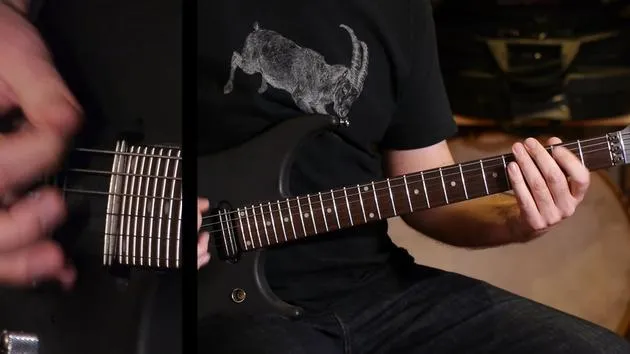
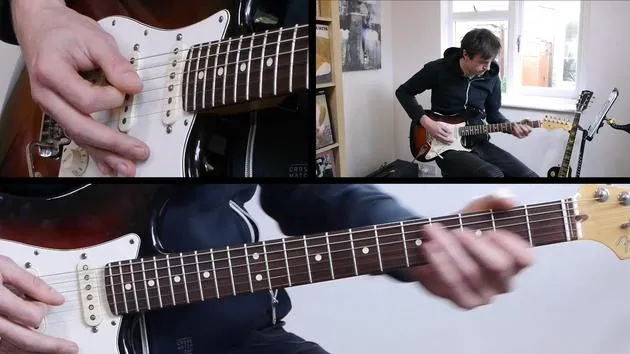
- Guitar Choice: I'd recommend a single coil guitar for clarity and snap.
- Pickup Focus: Focus mainly on the bridge pickup or even the bridge and middle combined for plenty of bite to cut through the track.
Key Features Section by Section
Introduction
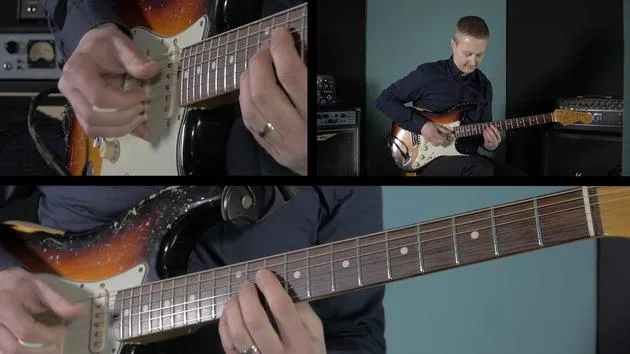
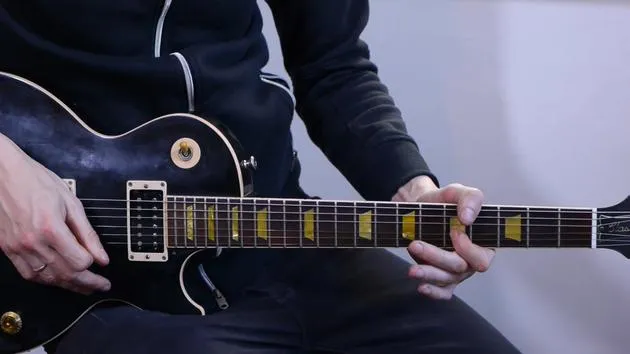
We start off with a really aggressive double-stop phrase and wide vibrato throughout. Focus on using your index finger for this, especially on frets 12 for strings three and two, where you really want to shake those notes to achieve the desired effect.
B Section
When we get to the B section, think about the riff based around the A blues scale and establish that swing feel with the nice Texas shuffle.
Key Features:
- Partial Chord: Move from a D to an A7 by just playing the seventh and third of the A7 chord.
- Trill: Pay attention to the strength in your second finger for the fast hammer-on and pull-off.
- Ending the Section: Close with the E7 sharp 9, the Hendrix chord, and then a tricky D9.
C Section
Moving to section C, there are several significant challenges.
Big Challenges:
- Placing Muted Notes: Work through sections with muted strings slowly with your teacher.
- Difficult Lick: The lick starts on the end of beat four and involves playing two notes simultaneously. Use a technique called hybrid picking with your plectrum and middle finger to pluck those notes together.
Rhythmic Challenge:
Faced with triplet rhythms on the E7, ensure that you practice these phrases with a metronome, starting with downstrokes, and aim to transition smoothly into riff playing.
The Guitar Solo
The guitar solo follows, moving back into rhythm playing, particularly on those ninth chords, and finally calming down.
Arpeggiated Chords
Here we'll look at extended chords, such as E11, which is an E dominant seventh chord with the 11th added (the fourth degree above E).
- Dynamic Control: Play with a lower dynamic range, potentially using a volume pedal makes it easier.
Final Sections
We then navigate through D9, D7 sharp 9, and C13 chords, focusing on counting to keep track.
Accompanying the Bass Solo: During the bass solo, avoid large chords, opting for partial chords or fragments of chords.
- Keep it Interesting: Accompany subtly to add interest without overwhelming the bass player's sound.
Conclusion
After the bass solo, return to the opening motif followed by the closing lick, a tricky lick at tempo, all played in that uptempo triplet feel, leading to a quick muted chord to end.
Going Beyond
Learning to play at high tempos with a shuffle feel is a skill that takes time. Jamming through this with your teacher is beneficial for feedback and direction.
Additionally, explore pieces and licks like "Scuttlebutton" by Stevie Ray Vaughan, which exemplifies high tempo, high-octane blues.
Final Tips for Soloing
The solo in Freight Shaker is relatively short , 16 bars over two chords.
Establish Your Phrases:
- Take your time to develop phrases and gradually reach performance speed, drawing from blues vocabulary, including the major pentatonic and the Mixolydian scale.
- Remember: Mixing Minor and Major Thirds gives the blues its distinctive sound, like incorporating a C with C# over an A.
Practice Legato: Ham runs and pull-offs provide speed with less reliance on the picking hand. Whether you alternate pick or use legato, have phrases ready for improvisation.
Embrace the challenges, and enjoy your musical journey with the Freight Shaker!
43 lecciones
3h 55m de lecciones en vídeo estructuradas
Funciones de vídeo avanzadas
Ralentiza, repite un pasaje, sigue la partitura
Móvil, tablet y ordenador
Practica donde quieras
Garantía de satisfacción 100%
30 días de garantía de devolución







