



Posición de la mano que pisa las cuerdas
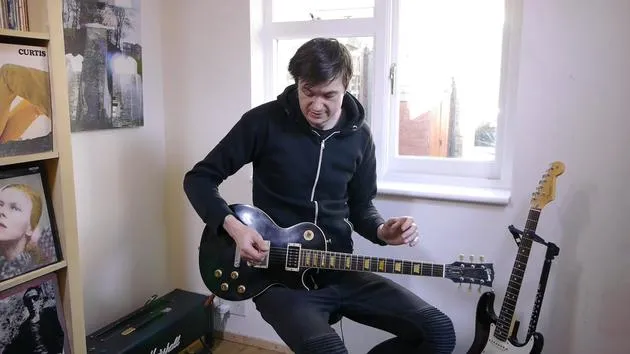
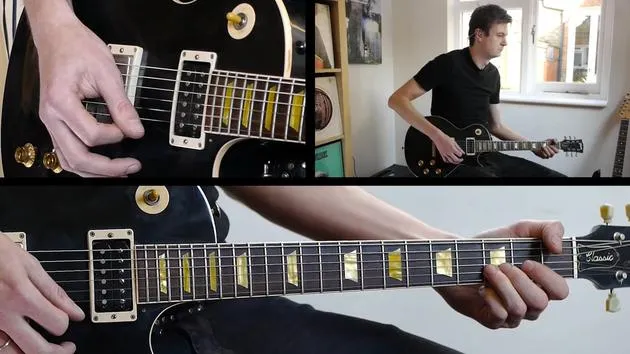
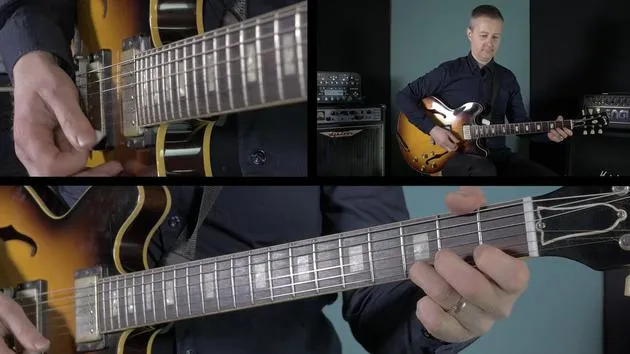
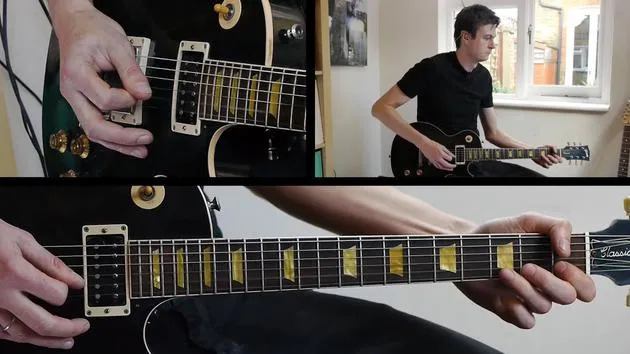
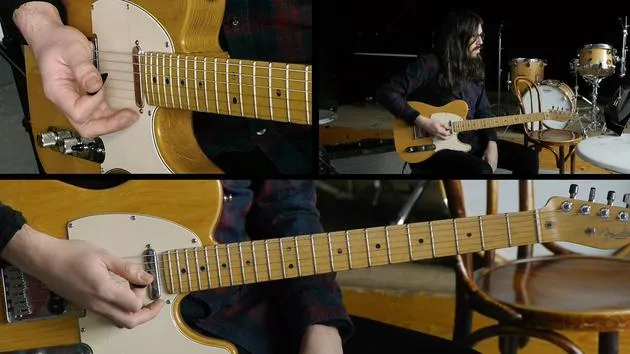
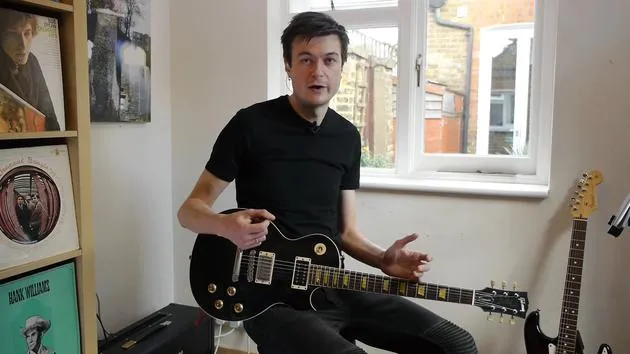
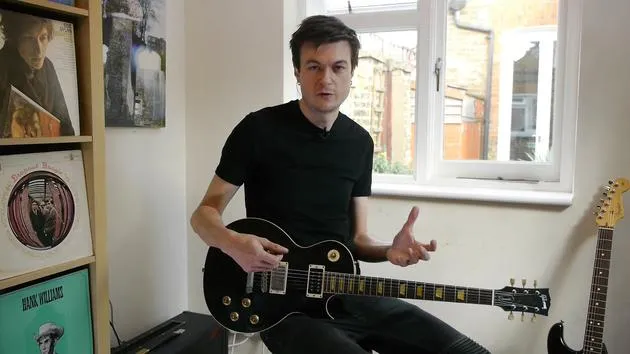
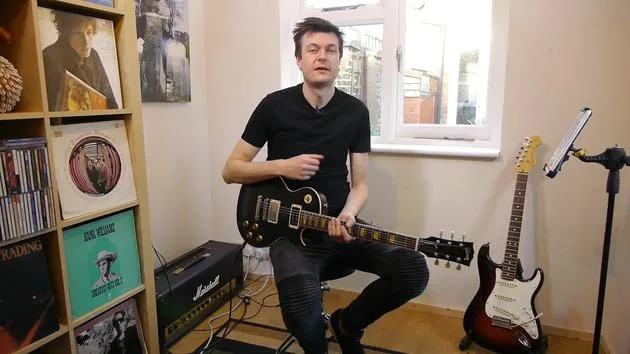
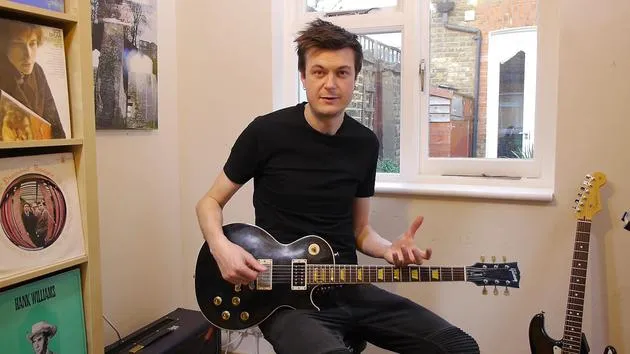
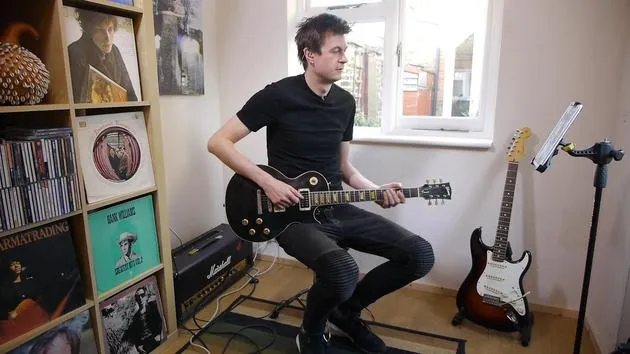
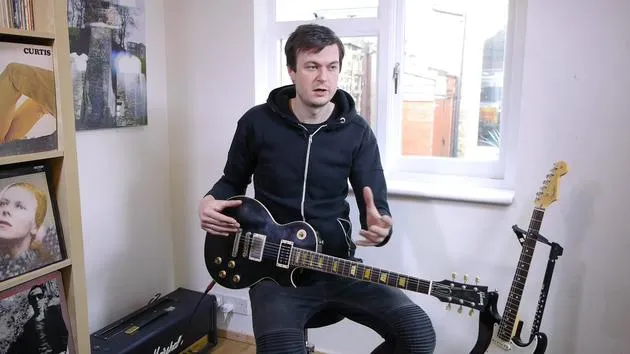
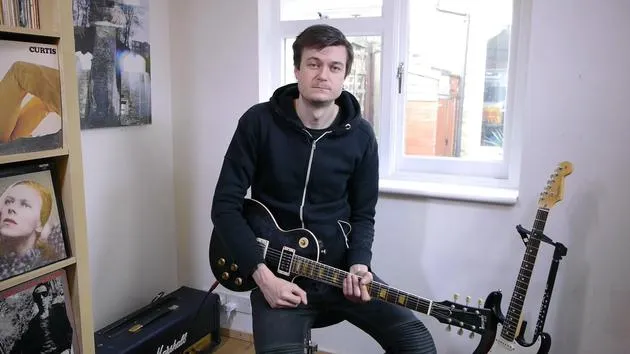
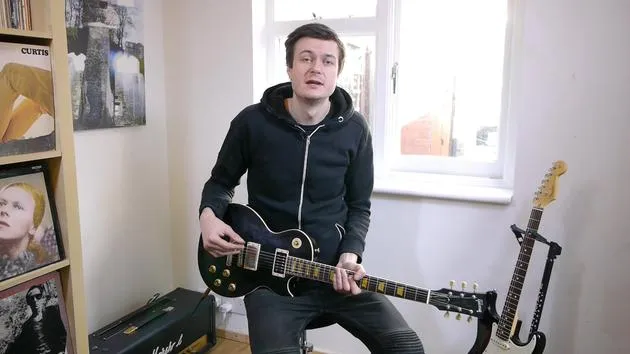
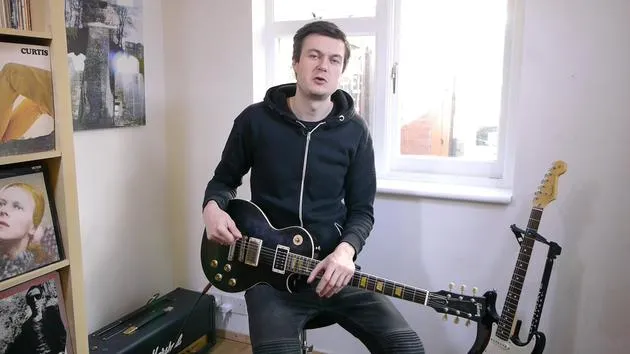
James Barratt muestra cómo colocar la mano que pisa las cuerdas para lograr el sonido más limpio: una muñeca relajada y baja con el pulgar detrás del mástil, y dónde presionar dentro de cada traste.

Qué incluye el curso
29 lecciones (1h 29m) · 1 gratis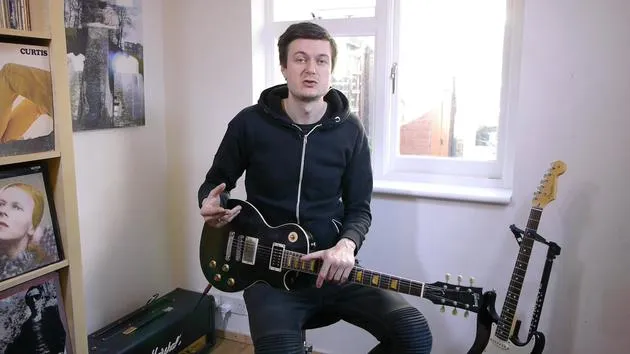
Transcripción de la lección
Fretting Hand Position for the Best Sound
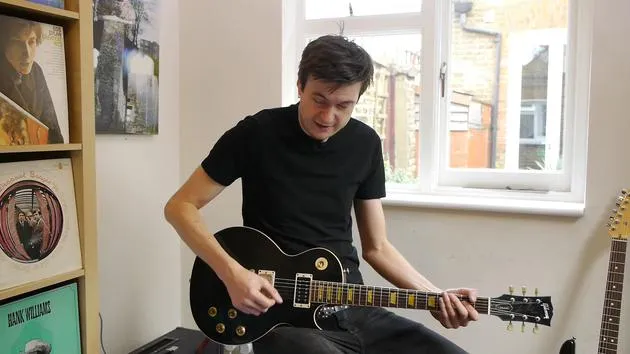
So let's move back to our fretting hand now and just talk about fretting hand position. Where is the best place to fret a particular note to get the best sound?
Relaxed Left Hand
First of all, we want a nice, relaxed left hand. Here are some tips to achieve that:
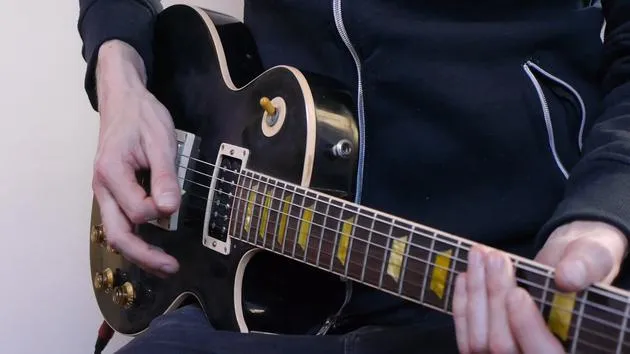
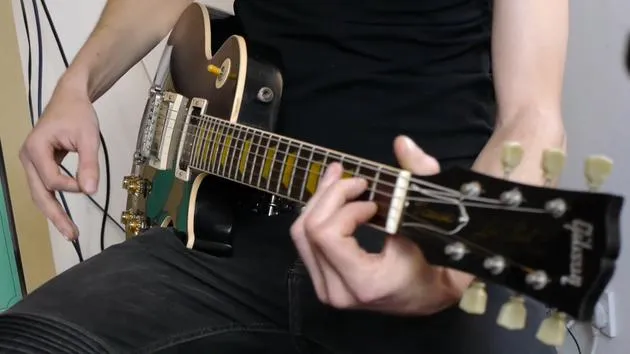
- Imagine you're trying to put a thumbprint in the back of the neck with your fretting hand.
- This will keep your wrist nice and low, maintaining a nice gap underneath.
We want to avoid:
- Grabbing the neck like a baseball bat, as this is very restrictive to the movement of your fingers.
To allow free movement of your fingers:
- Keep the hand relaxed.
- Remember what we discussed about the elbow; it should not be jutted into the side of your stomach.
Fret Position for Optimal Sound
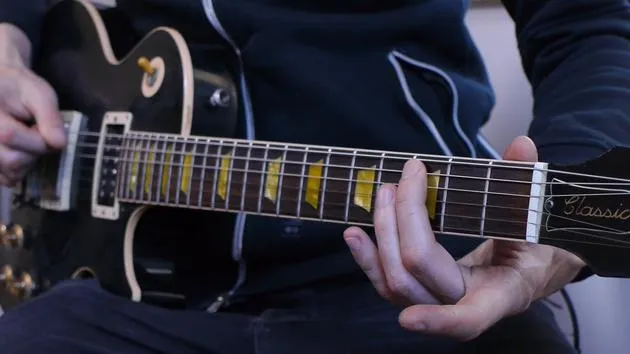
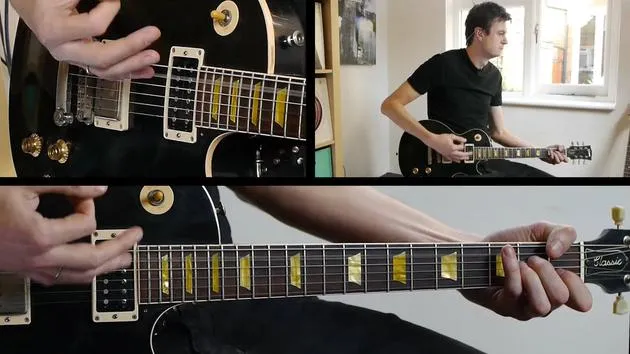
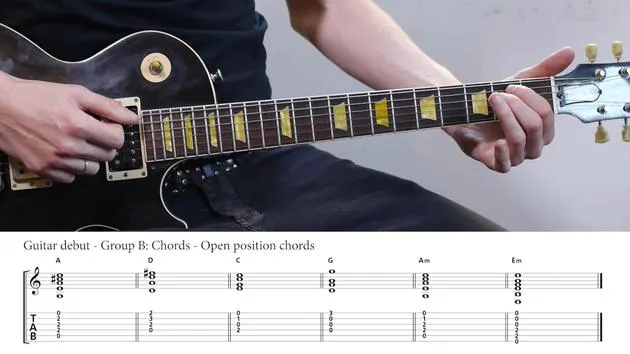
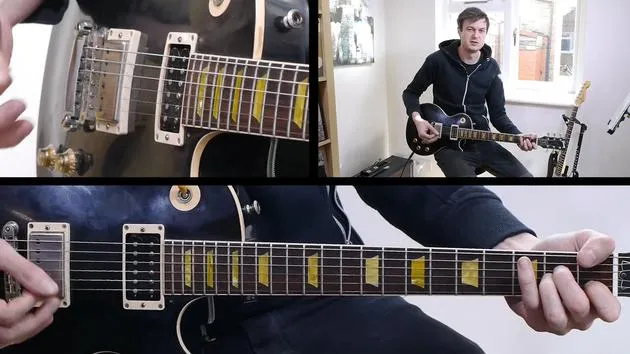
Now we're going to discuss where physically to play a note within a fret to get the best sound. We will start with the third fret on the A string, which is this note here.
Fret Area
- This whole area technically is the third fret.
- You can see that compared to the size of my fingernail, I could probably fit two to three of my fingers in this fret if I wanted to.
Best Position
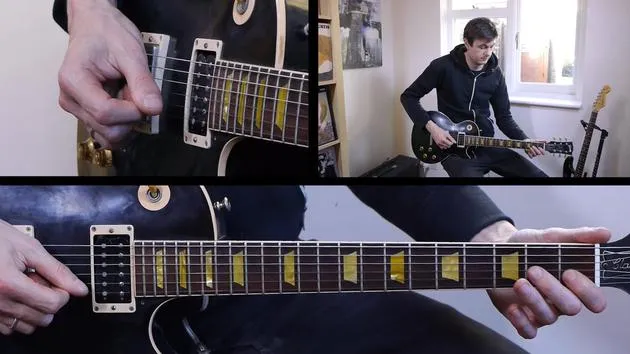
The best position to be in is right up against the fret wire of the third fret:
- Fret Number One
- Fret Number Two
- Fret Number Three
I'm not on top of the fret (which is the metal); I'm just the other side of it.
Minimal Pressure for Clean Sound
When I fret it there, it means that I have the least amount of pressure to apply to the note to get a clean sound.
Listen to this clean note now.
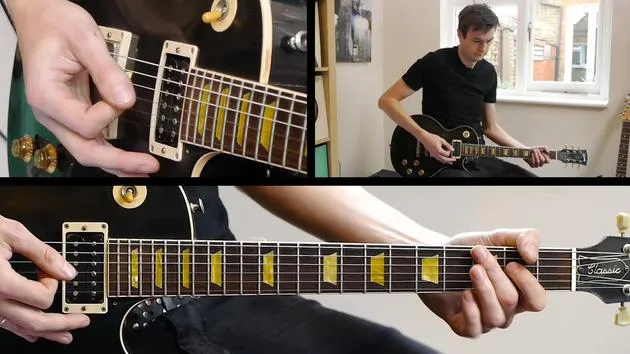
There's no buzzing or anything like that. If I move to the back of the fret and play the same note with the same pressure, I'll get a buzzier sound:
- You can hear that kind of buzziness.
I can fix it by pushing down a lot harder, but that forces the string out of tune a little bit because I have to push down so hard.
Single Notes vs. Chords
Where possible, though it's not always an option with some chords, if you're playing single note passages, you have a choice of where to go within the fret.
The best place to be is right at the top of the fret.
- If you play on top of the metal, you'll get a dull, muted sound.
- On the other side, you will achieve a nice clean tone.
This principle applies anywhere on the neck, but particularly down here where the frets are nice and big, and you have a choice of where to place your finger within the fret.
Always place it as far forward in the fret as you can, if possible.
29 lecciones
1h 29m de lecciones en vídeo estructuradas
Funciones de vídeo avanzadas
Ralentiza, repite un pasaje, sigue la partitura
Móvil, tablet y ordenador
Practica donde quieras
Garantía de satisfacción 100%
30 días de garantía de devolución







