



Folk Rock 1
Con
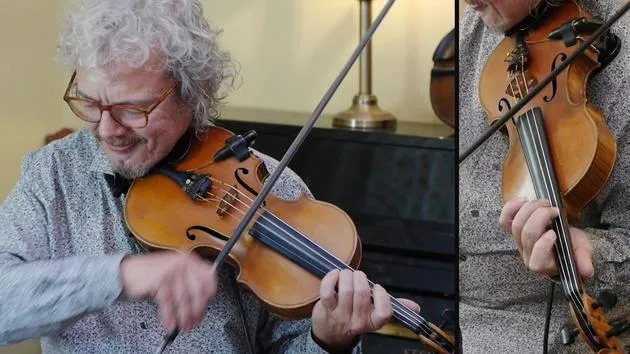
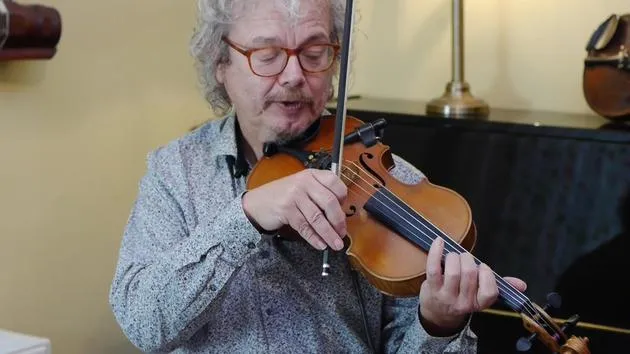
Chris HaighChris Haigh presenta el folk rock al violín, explicando la diferencia entre el folk rock americano y el folk eléctrico británico, y los reels, jigs y hornpipes tradicionales que hay detrás del estilo.
© 2011 Schott Music Ltd, London
Qué incluye el curso
18 lecciones (1h 41m) · 1 gratis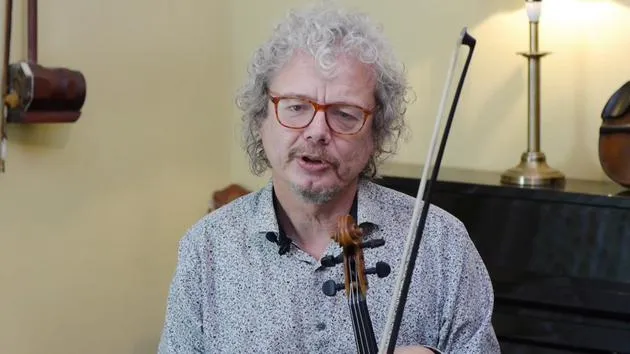
Transcripción de la lección
Folk Rock Lesson
Introduction
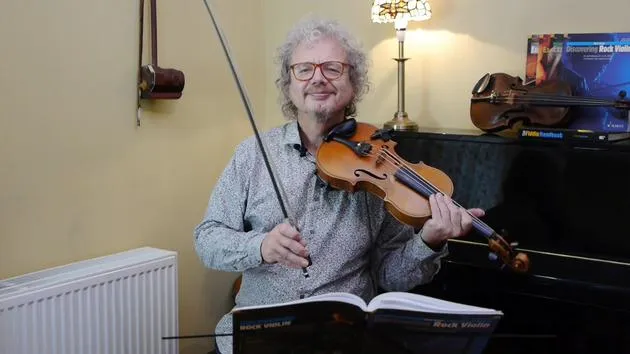
Hi! In this lesson, we're going to talk about folk rock. This genre developed in the 1970s and has two different meanings, depending on whether you're in America or over here in Britain.
Definitions
-
In America:
Folk rock refers to singer-songwriter styles. For example, The Byrds were described as folk rock, which aligns more with country rock. -
In Britain:
We refer to folk rock as electric folk. This involves English, Irish, or Scottish traditional music presented in a folk context, which is our focus today.
Traditional Folk Music
Traditional folk music has its own forms and dance styles, including:
- Reel
- Jig
- Hornpipe
Each of these has a different approach when turned into rock and includes a repertoire of traditional melodies and ornamentations. We'll explore these in the next lesson.
The Evolution of Folk Rock
Folk rock or electric folk performed very well commercially in the 1970s but declined in the face of punk rock in the mid-70s. Both genres had overlapping audiences. Despite this decline, folk rock has persisted to the present day.
Notable Bands
- Steel Ice Band
- Fairport Convention
Watch out for these bands, as they mastered this kind of music.
Tune Introduction
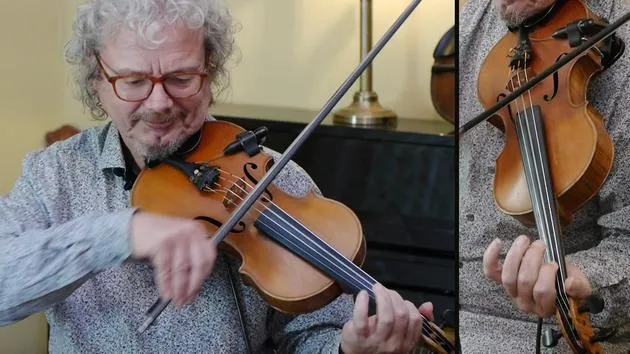
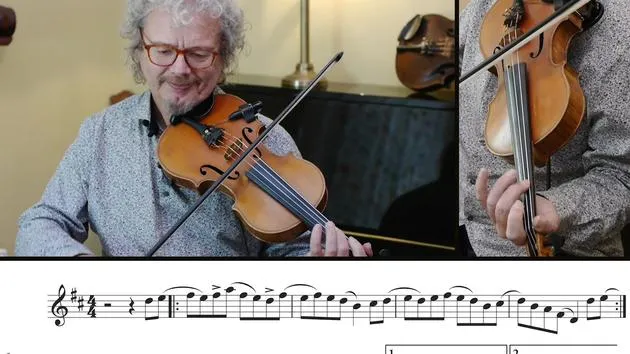
Now, I'm going to play you a tune called "Tempony Bit." I'll start by playing it in a traditional form with rock backing.
Jig Rhythm
You can hear that the jig rhythm, which is a 6/8 rhythm, works effectively in a folk rock context, sounding much like a boogie:
Danka donka takatanka.
It fits perfectly with that boogie rhythm. The jig is a suitable choice for rock, although the reel (which is in 4/4 time) also works well.
Bowing Technique for a Jig
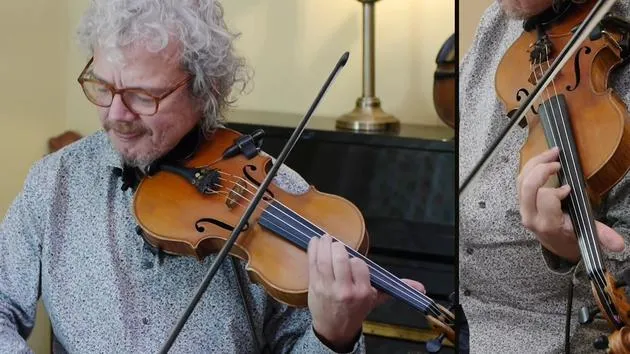
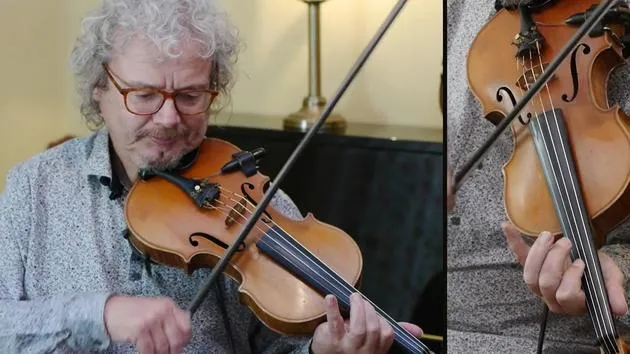
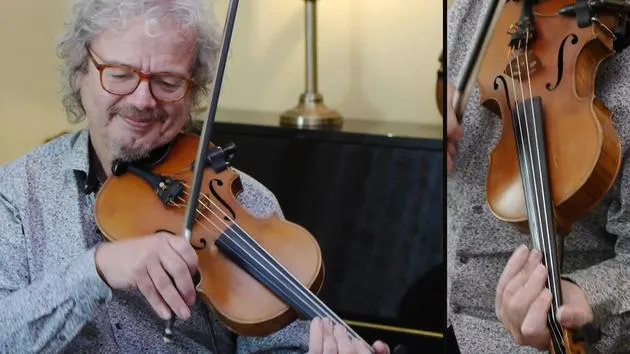
When playing a jig, you'll initially struggle with the bowing technique.
- What to Remember:
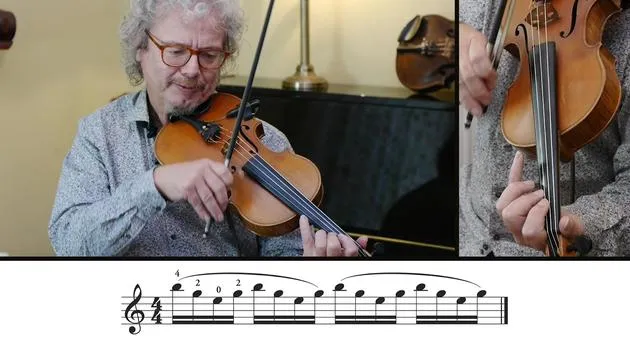
Six quavers to a bar should not be played with equal length bows.
Bowing Pattern
- First Note: Stronger action on the first note (longer).
- Next Two Notes: Play them short.
So, think of this as:
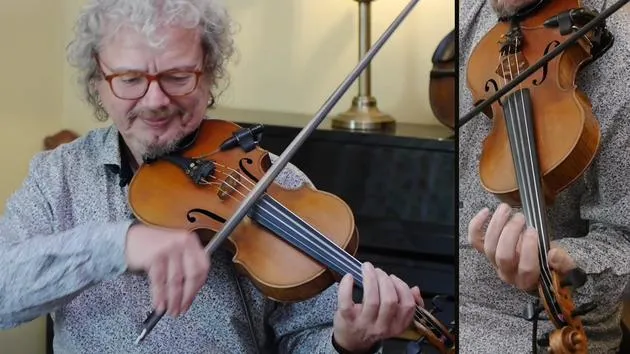
Down (long), up (short), down (short), up (short).
Your priority, especially if you're new to folk music, is to master that bowing technique.
Rock Version of the Tune
Now, let's explore some rock ways to play the tune. Here's the second version, which I'll play through slowly first.
-
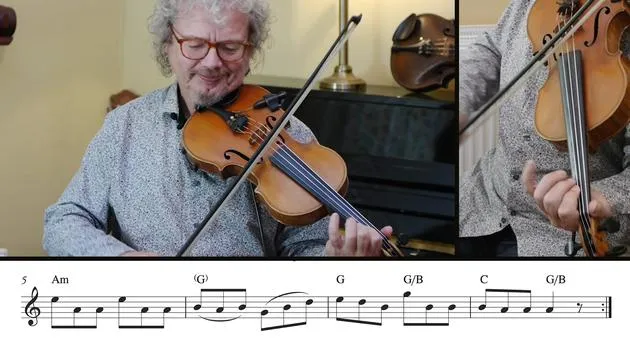
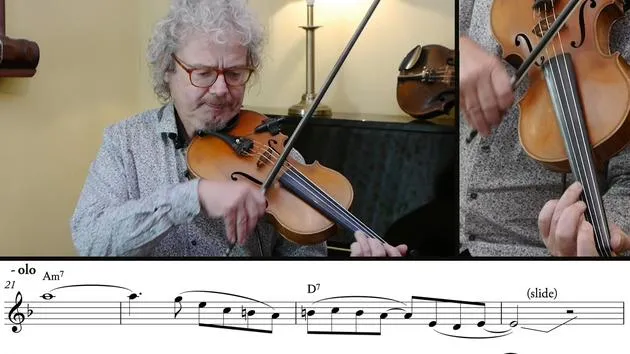
Introductory Riff:
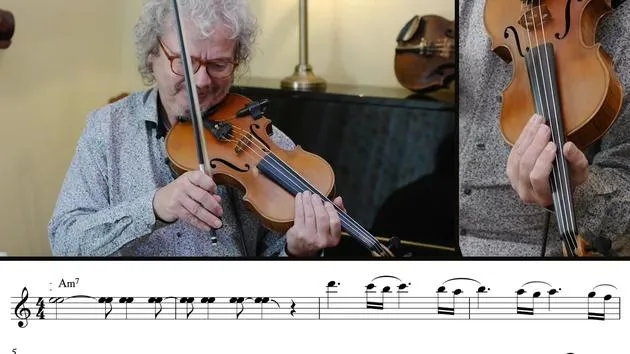
Incorporate a bit of syncopation. Instead of the basic rhythm, we replace it with a double E riff and slide down. -
Variation:
The second half has slight variations, including more syncopation and a rock riff to replace the next three bars. -
Slideshow Ending:
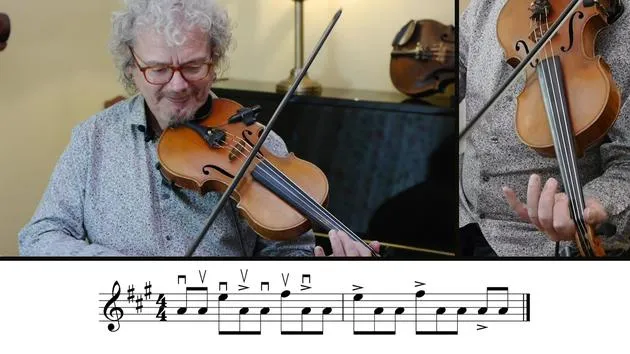
We'll finish off with a slide and a double A.
Let's try that up to tempo with the backing. I think you'll agree it creates quite an exciting sound!
Improvisation
To wrap up, I'll improvise using the minor blues scale over this backing. This is the kind of thing that, in my ceilidh band, we occasionally break into when the audience is enthusiastic and supportive.
Caution:
If you overdo this in a proper Celtic context, you may find yourself in trouble. So, be careful about who you're playing with and for.
Assignment
-
Learn the Melody:
Practice the basic melody of "Tempony Bit" with the backing. -
Try the Second Version:
Play along with the backing. -
Improvisation:
Try improvising using a blues solo over the backing. -
Extended Play:
If you have the chance, create a longer version that moves from the melody into a solo and then back to the melody.
Happy playing!
18 lecciones
1h 41m de lecciones en vídeo estructuradas
Funciones de vídeo avanzadas
Ralentiza, repite un pasaje, sigue la partitura
Móvil, tablet y ordenador
Practica donde quieras
Garantía de satisfacción 100%
30 días de garantía de devolución
Conoce a tu gurú
Conoce a tu gurú
Chris Haigh es violinista profesional desde hace 25 años, con experiencia en muchos géneros distintos. Ha tocado en más de 75 álbumes, trabajando con artistas como Alison Moyet, Bob Geldof, All About Eve, Michael Ball, David Soul, Oumou Sangare, The Quireboys, Riverdance, Morcheeba, James Galway y Steps.
Ha tocado swing y jazz con The Kimbara Brothers, Diz Disley, Le Jazz, The Hot Club of London y los Quecumbar Allstars, y lidera una banda de swing soviético de siete integrantes, The Kremlinaires.
Chris imparte clases y talleres sobre técnica de violín de jazz y ha enseñado violín de jazz en las universidades de Middlesex, Brunel y Newcastle y en el Truro College. Entre sus créditos como autor figuran nueve libros de violín, entre ellos The Fiddle Handbook.
También dirige Fiddling Around (fiddlingaround.co.uk), probablemente la fuente de información sobre violín más completa y visitada de la red.







