



Variar el ritmo
Lesson time: (8min 6sec)
Aporta variedad a tu groove básico añadiendo y quitando golpes y cambiando dónde caen, ampliando el patrón de hi-hat en corcheas de las lecciones anteriores.
Course preview
This lesson is part of the course Mi primera clase de batería
Watch a preview of the full course below.
Lesson transcript:
Lesson Five: Adding Variation to Our Groove
Hello and welcome back!
Recap of Lesson Four
In lesson four, we learned how to add quavers over our pre-existing crotchet beat. Quavers are played on the hi-hat, while the bass drum and snare drum continue with crotchets, sounding like this:
- Bass Drum: Crotchets
- Snare Drum: Crotchets
- Hi-Hat: Quavers
Overview of Lesson Five
In lesson five, we will add some optional extras and may also take out some beats to bring variety to our basic groove.
Key Points to Remember:
- Aim for consistency in sound.
- Play heel up, mostly on the bass drum, aiming for the center of the snare drum.
- Maintain steady time, avoiding speeding up or slowing down.
Adding an Extra Bass Drum
Let's start by adding an extra bass drum on beat three.
This is how it sounds:
- Bass Drum on Beat Three: Sounds simple, but can be tricky once the hi-hat is back in.
Demonstration:
I'll play it once, then we'll go through it slowly:
- With Bass Drum:
- "One and two and three and four.
- One and two and three and four."
Slow it down if you need to. The slower you practice, the quicker you'll get it right.
Adding Snare Drum:
Once you've got the bass drum down, let's add the snare drum.
It will sound like this:
- With Snare Drum:
- "One and two and three and four."
This adds variety to the beat.
Changing the Beat
Now, let's modify the beat further by:
- Quaver Beat 1: The original beat.
- Quaver Beat 2: The addition of the bass drum on beat three.
- Quaver Beat 3: Take away the bass drum on beat two.
New Exercise:
- This might confuse some players at first, as beat three is your anchor.
Example:
- "One and two and four and
- One and two and four and."
Slowly practice while remembering that beat three is silent for now.
Creating Variations
Now that we've gone through three variations (Beat 1, Beat 2, and Beat 3), let's create an exercise.
Exercise Steps:
- Play each beat four times and transition from one to the next.
Counting:
- "1, 2, 3, 4.
- 2, 2, 3, 4.
- 3, 2, 3, 4.
- 4, 2, 3, 4."
Practice:
- After practicing groove one, we will shift to:
- "One, two, three, four.
- Two, three, four.
- Three, two, three, four, four, two."
Continue moving through the beats while counting.
Moving Forward
After mastering the first two grooves, we will add beat three to our practice:
- "One, two, three, four.
- Two, two, three, four."
Remember:
- Keep counting, and always be aware of how many bars you've played.
Final Exercise
- Practice it slowly first, as this will save you time later.
- Stay relaxed! Tensing up can hinder your playing and lead to injury.
Conclusion
Once you have it all together, we will move on to learn more in lesson six.
Thanks very much for watching! Enjoy your practice!
About the instructor
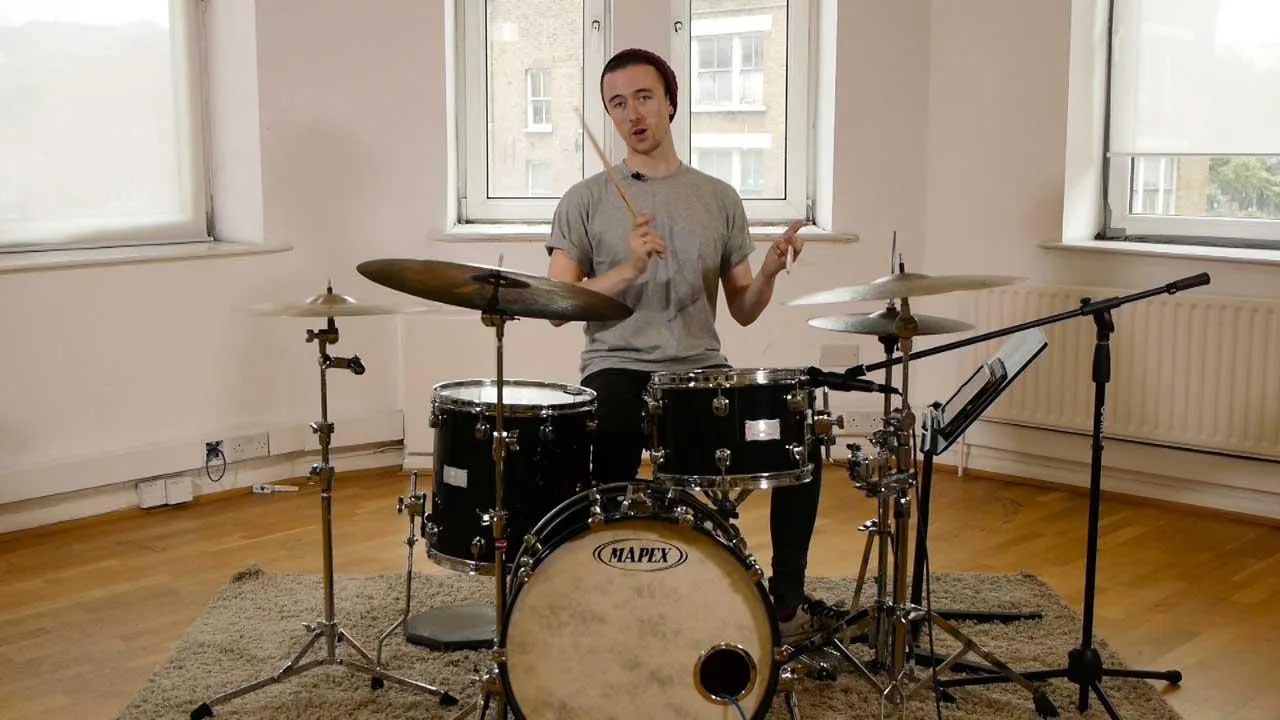
Harry Pope es un baterista londinense y graduado del programa de jazz del Trinity College of Music. Ha tocado con la ganadora del Brit Award Eddi Reader, el guitarrista Jim Mullen, Graeme Duffin de Wet Wet Wet y la Royal Scottish National Orchestra Big Band. Su curso para principiantes empieza desde la batería misma —postura, agarre, mantener el tiempo y tus primeros grooves— a un ritmo que se adapta a cualquiera que coja las baquetas por primera vez. read more