



BONUS: Fills con el double stroke roll
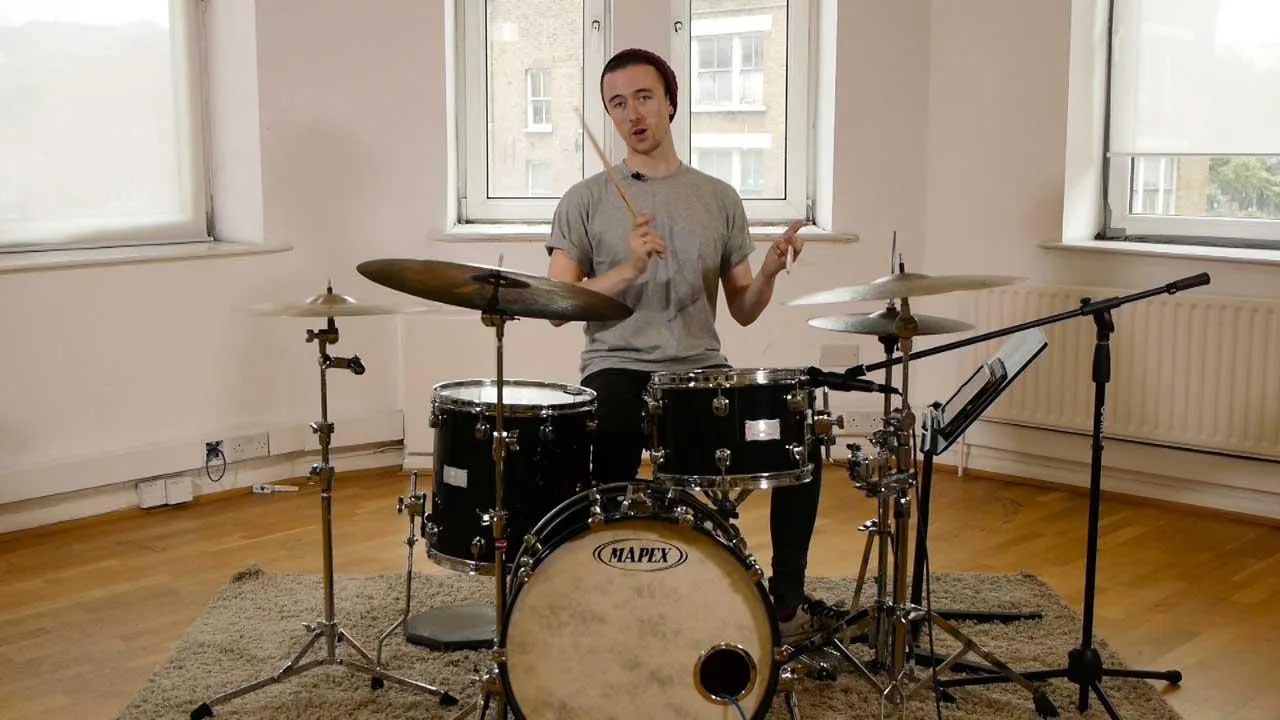
Lesson time: (-4min -46sec)
Course preview
This lesson is part of the course Mi primera clase de batería
Watch a preview of the full course below.
Lesson transcript:
Music Lesson: Using the Double Stroke Roll as a Fill
Hello, welcome back!
In the last video, we learned the double stroke roll. Today, I'll show you a couple of ways to use it as a fill, which can sound a bit more interesting than just the plain old technique.
Utilizing the Toms
We've got these toms here, so we may as well use them! Here's what we're going to do:
- Beat One: This will remain exactly the same.
- Beat Two:
- Move your right hand to the floor tom and play 2e.
- Then move your left hand to the rack tom and play and A.
This will sound like:
One E and A. Two E and R.
Beats One and Two
- Beat One: Exactly the same.
- Beat Two: Move the right hand to the floor tom.
- Then move the left hand to the rack tom for.
So, beats one and two will sound like:
(Beat One) ... (Beat Two) ...
Beats Three and Four
- Beats three and four will be exactly the same as beats one and two:
Three E and A. Four E and A.
Putting It Together
So now we have:
- Beats One and Two
- Repeated for Beats Three and Four.
That's your fill!
Practicing the Fill
Let's try it with our quaver. Beat number one will go like this:
- If you feel like putting a crash cymbal after the fill to get back into the beat, feel free, it sounds great!
Important Tips
- I cannot emphasize how important it is to stay relaxed while doing this.
- Practice it slowly, almost painfully so.
- There's absolutely nothing wrong with playing something slowly and actually getting it right.
- Once you've played it slowly, you can start to speed it up.
And then, you know, you might hit a point where you can't play any faster. That's good! This means you've got something to practice.
Final Demonstration
Let's use that as a fill one more time. Crash it after the fill, and we'll come back with a beat to do the whole thing again.
I'll demonstrate it for you once, and then you can practice it yourself.
Thank you very much for watching, and I will see you in the next video, hopefully soon!
About the instructor
Harry Pope es un baterista londinense y graduado del programa de jazz del Trinity College of Music. Ha tocado con la ganadora del Brit Award Eddi Reader, el guitarrista Jim Mullen, Graeme Duffin de Wet Wet Wet y la Royal Scottish National Orchestra Big Band. Su curso para principiantes empieza desde la batería misma —postura, agarre, mantener el tiempo y tus primeros grooves— a un ritmo que se adapta a cualquiera que coja las baquetas por primera vez. read more