



Improvisar en compás de 7/4 - con Unsquare Dance, Earthrise

Lesson time: (17min 41sec)
Darius y Mike exploran ideas para construir solos en 7/4, incluido cómo usar las subdivisiones del compás para frases rítmicamente interesantes.
Course preview
This lesson is part of the course Domina los compases irregulares
Watch a preview of the full course below.
Lesson transcript:
Music Lesson on 7/4 Time Signature
There's really not a lot of difference between what we said about 5/4 and what we're going to say about 7/4. It's just getting used to a different beat, which is why Unsquare Dance is a good place to start.
The Basics
- You have this very explicit beat.
- You have this very strong subdivision of the measure.
- You can play over it, or you can just reinforce it rhythmically.
Of course, Unsquare Dance has a set progression. It has three chords; it's a minor blues.
Explore the Galaxy
Take Five. You have this galaxy to explore. You can play for as long as your audience can take it, or until your ideas run out. Never hit a deadline.
Does Unsquare Dance lend itself to that? It's like the melody itself: it's better for playing licks, little short statements, clear ideas, probably reinforcing the rhythm.
Understanding 7/4
It's good to remember that 7/4 always has three accents in the bar.
- Not evenly distributed, but whether you're counting 4, 3, or 3-4, at least in jazz, we tend to hear it as:
- 1, 2, 3, 4, 5, 6, 7
- or
- 1, 2, 3, 4, 5, 6, 7
One of them is going to be the downbeat. Depending on when you shift, 4, 3, or 2, 2, 3, there's going to be:
1, 2, 3, 4, 5, 6, 7.
On Unsquare Dance, the hand claps are on the off beats, but in 4/4 and jazz, they're on the off beats, too. It's just kind of paraphrasing what we're used to or transposing it into a different rhythm.
Practical Application
So, in your solo, Mike, you were kind of basing part of it on that idea of three strong accents, weren't you?
Yeah, I was thinking of a little simple nursery song, Three Blind Mice. Starting on the first beat of the bar, much like the melody of Unsquare Dance.
Let's Try It
Okay, let's do it.
1, 2, 3, 4, 5, 6, 7.
- Develop it from there, moving it.
- Not just using the melody, but playing a nursery rhyme, of course.
- Move it up or down, change a note.
Experimentation
So let's try that.
1, 2, 3, 4, 5, 6, 7.
You can do all kinds of little things with it, but again, of course, make notes longer or shorter, articulate them, use dynamics, change your register, and again, keep it simple.
You can break it down further. Sometimes, you can find the tension a little tricky to handle. But one of the things you can do is just play every second note, but if you're...
Etc.
So you're superimposing kind of a two feel.
Now, if you take those beats and break them down to something manageable, I've gone back to playing the accent pattern. This gives me a little more freedom and a little more rhythmic interest just by cutting the notes in half. You can be more adventurous than that, but I would suggest trying to play some eighth note patterns.
The Piece de Resistance
Finally, the piece de resistance that inspires me, I forget if I really executed it well but it's still a good thing to try, is dividing the 7/4 bar in the middle.
That's going against the accent pattern because it's three and a half.
How do you get to three and a half? Well, it's two fast sevens. So it isn't as tricky as you might first think, but it's not easy unless you have some inspiration.
People in my generation will have found their inspiration here:
Gina, Lola, Brigida.
That gives you a double-time figure.
Slow it Down
Here it is slowed down:
Gina, Gina, Lola, Brigida could be scale-wise, or you can go wonk.
I was using that as a lick.
I would not in my wildest dreams be counting to three and a half and really trying to nail it. Just having a phrase like that is essential. As always, you can invent your own, but that's one that appeals to me.
The Importance of Clich?s
It's a useful clich?. And don't disdain clich?s; they are your friends. Believe me, a lot of jazz vocabulary is based on things that musicians worked out for themselves generations ago, and the reason they're still here is that they sound good.
Moving Forward
Just to take it a step further, you can even look at the scale a little slower to hear it and think it.
1, 2, 3, 4, 5, 6, 7.
Now, with Earthrise, we talked about it having an altogether different atmosphere.
Larger Units
Playing on that, I actually try to think in the larger unit. Yes, the three accents are there, but one of them is syncopated.
So I'm playing some things that are reinforcing the groupings, but like those little runs and flourishes, if you transcribe them, they don't have any obvious relationship to the meter. They're largely ornamental but fairly essential to the kind of expression that I'm conveying.
What enables me to do that isn't a trick like Gina Lola Brigida. It's more like just knowing I have from now until the next chord change, and it's just a span of time that could be filled with nothing, with a long note, or with lots of notes. It can be filled with anything you pour into that container.
Key Takeaways
Coming out of this session, here's what you can use:
- Play along with Unsquare Dance.
- Try playing the melody, improvising on it.
- The Gina Lola Brigida lick is worth attempting in that context.
- Earthrise doesn't have a play along, but you can play along anyway. Focus on the baseline and the way the changes flow.
- Seven From Heaven is a completely different feel and really came out of an etude that Mike developed, which you can find in the book.
Additional Resources
If you look at it, it's included as a play along in this series. It's a dominant 7/4 etude on page 66, chapter 5. You'll hear the melodic fragments from Seven From Heaven and how I developed that composition using the blues form.
The interesting thing about it is that this etude goes through all 12 keys, and it's fun to play over. It's not too fast, and it's got that fun New Orleans second line feel. You can be marching around the house playing in 7/4 while practicing your dominant etude in all 12 keys.
Conclusion
During this series, we focused on 5/4 and 7/4.
Now, anyone who can do arithmetic will rightly guess that there are other time signatures using odd numbers, but 5/4 and 7/4 are pretty commonly used in jazz. It's something you might be expected to play nowadays, as much as it was revolutionary a generation ago.
Different Feels
The different feels are important, just as when you play in 4/4, you play very differently depending on whether you're playing swing, rock, funk, or bossa nova.
We tried to illustrate that by playing tunes that are in 5/4 and 7/4 but sound very different. If you're a civilian, you're not there counting. You might hear Earthrise as a very different piece from Seven From Heaven, even though we know there are structural similarities and the meter is the same.
District 5 and Take 5 might not seem to have that much in common. But of course, you know it's a three-plus-two kind of 5/4 count.
If it becomes something that you relate to more organically as you play through etudes, exercises, and play along, then finally, you'll start to do what I recommend at the end of my opening chapter in the book:
Take Chances
Take chances! Play anything you think might work, and when you're in the zone, it's amazing what you can do.
So, with Mike Rossi's help, we've covered the pedagogical aspects of the course, but there's more to come. You can listen to us recorded especially for this series.
Thanks for watching this, and I hope what you've heard us discuss will give you more insight into how it works, and more importantly, gives you a platform from which to begin your own practice in odd time signatures.
About the instructor
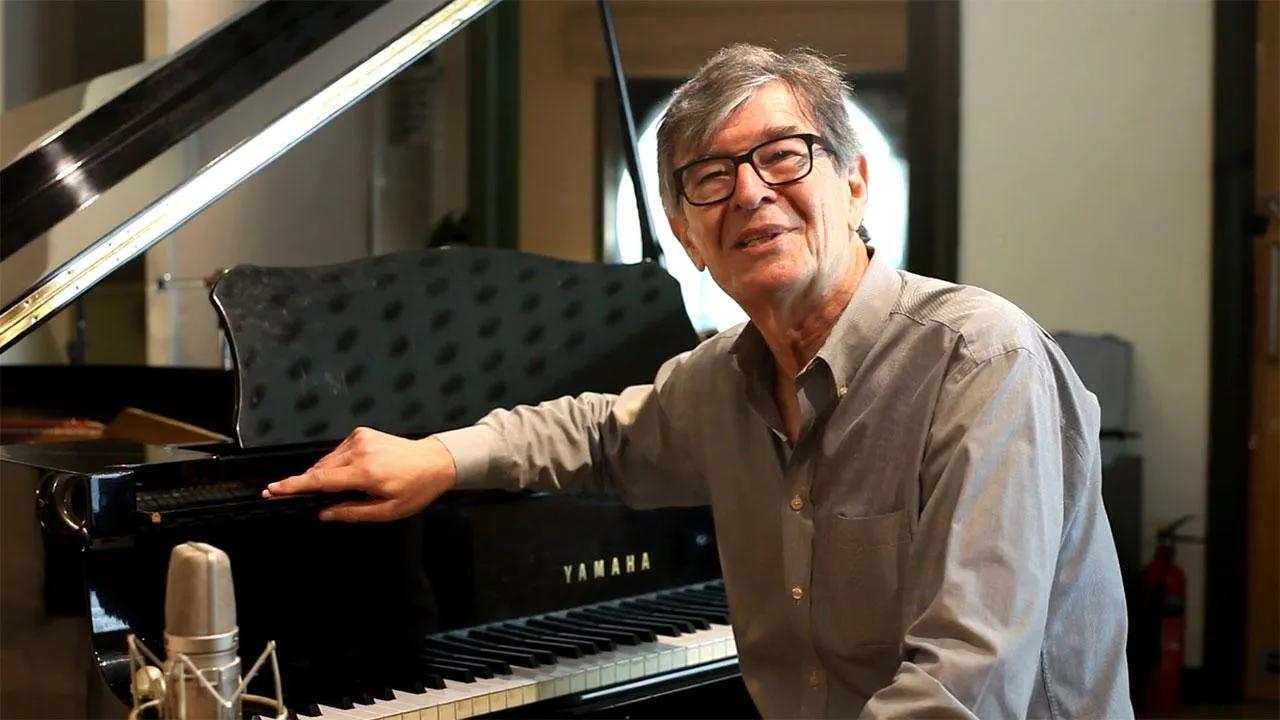
Darius Brubeck es un reconocido pianista de jazz y pedagogo. Ha publicado numerosos álbumes como líder, ha girado por todo el mundo con sus propias formaciones y ha colaborado con sus hermanos en Brubecks Play Brubeck. Darius ha sido profesor visitante Fulbright en Rumanía y Turquía. Puso en marcha el primer título en jazz ofrecido por una universidad africana, en la University of KwaZulu-Natal de Sudáfrica, donde enseñó hasta 2005. Darius colabora a menudo con Mike Rossi, saxofonista y profesor de música en la University of Cape Town. Entre los logros de Mike se cuentan numerosas grabaciones y apariciones en escenarios internacionales como líder, solista y acompañante junto a Tony Bennett, Dave Liebman, Winston Mankunku Ngozi, George Russell, Clark Terry y Alessio Menconi, entre otros. Con Darius como guía, irás directo a lo esencial. En Harmony 101 desmitifica la armonía del jazz para que puedas empezar a aplicarla rápidamente, y en Mastering Odd Times desglosa cómo tocar e improvisar con confianza en compases irregulares. read more