



Ideas avanzadas para improvisar en compás de 5/4 - feat. Take Five, District Five
Lesson time: (16min 36sec)
Darius y Mike exploran técnicas de improvisación más avanzadas que funcionan en temas de compases irregulares, e introducen distintos feels a través de 'District Five', el tema de Darius de inspiración sudafricana.
Course preview
This lesson is part of the course Domina los compases irregulares
Watch a preview of the full course below.
Lesson transcript:
Take Five: An Improvisational Exploration
Introduction
"Take Five" is such a beautiful improvisational vehicle. Even though I play it practically every time I perform in public, it remains interesting and presents a challenge to make it new.
The Freedom of Take Five
People often ask if I get tired of playing "Take Five," and actually, I don't. Here's why:
- It is so free.
- With just a pedal, you can superimpose ideas from different keys.
- You can borrow from other tonalities.
Like Coltrane, who frequently used an underlying drone or repeated lower figure, "Take Five" allows for great liberties because you're not bound by functional harmony. You're not dealing with destinations and deadlines.
Expanding Your Improvisation
To expand and deepen your improvisation from a keyboard perspective, consider superimposing everything you can think of over a pedal.
- Nothing sounds bad in that context because it's not harmonically determined.
You can see what I'm doing chord-wise, just over a pedal. I will make a bold prediction: what we're playing together is going to work well. I don't even know what he's going to play, nor does he know what I'm going to play. But that pedal is going to be going on underneath, and we are going to try to use some side slipping techniques, bringing in other implied scales and tonal centers over the pedal.
Transitioning to Advanced Gestures
Now that you've worked up to simpler ideas, let's introduce some further-out gestures. Let's imagine we've already been playing this for six minutes, and here we are.
1, 2, 3, 4, 5...
Coltrane Influences
"What you were doing was a little Coltrane in there."
It's okay!
- I started off using a bit of a Phrygian scale, which gives us the raised root and the raised fifth.
- Once you have those notes, like hitting my C sharp (concert B), you can play B minor on top of that.
- That note is out of the chord, but it's part of the Phrygian scale.
- This can lead you to B minor, which connects similarly to the raised 6th in E flat minor.
Exploring District 5
"District 5" is almost the opposite of what we just heard. You've just heard a fragment of a tune that is not "Take Five."
- It's called "District 5" and is meant to show that using an odd time signature isn't necessarily modal.
- In minor, it has a completely different mood and influences.
- It's written in a South African township style and, while harmonically simple, it follows a strict harmonic cycle: it really is in song form.
Geographic Awareness
If you're not aware of where you are, you become very exposed, especially since the bridge goes up a half step, similar to the bridges in "So What" or "Impressions." This forces you to consider the geography of the tune.
Melodic Conflict with Rhythmic Patterns
Notice how the melody and bass line conflict with the 5/4 time signature. Even though it's still in 3/2, it reaches beyond modal structures.
- If you only heard five quarter notes, it wouldn't sound syncopated.
- The pitch and accent pattern being the opposite of what you expect causes it to move across the beat.
Playing District 5
So, Mike, let's play a bit of the "District 5" head. Observe how the beat seems to shift because the accent pattern is divided into twos.
- I'll start with the intro; you can count out loud, and then we'll play up to the key change, skipping the change itself.
1, 2, 3, 4, 5...
1, 2, 3, 4, 5...
1, 2, 3, 4, 5...
1, 2, 3, 4, 5...
1, 2, 3, 4, 5...
2, 3, 5...
1, 2, 3, 4, 5...
Melodic Elements of Take Five
This melody, if we think of "Take Five," is also very angular.
Engagement with Audience
"Yeah, you know what that is? That's a South African police car!"
Let's talk more about improvisation.
Insights from Mike
I'd like to hand over to my co-author and colleague, Mike, because he played a great solo on it.
- What were you thinking about during your performance?
"I was focused on really nailing the key change while also embracing the groove of the tune. It's influenced by South African music, so I incorporated gestures from that style, like sliding into some notes, while playing around the key of G."
Common Devices in Improvisation
When improvising, one common technique is to use a sequence:
- Take three or four notes and repeat them while moving up the scale or changing the pitch.
- Another might be to take a sequence and move it down, say a half step.
- You can also create rhythmic sequences.
In relation to "District 5," you can move those fourths around because they are ambiguous. But be cautious where you are in the form to avoid sounding lost, especially with key changes coming up.
Structuring Solos
Let's play a little from the end of my solo that I did on "Take Five" this morning. Here we go:
1, 2, 3...
Chromatic Lines and Ideas
We can also look at some ideas from the book, specifically some chromatic lines from page 55.
- I'll play it first by itself, perhaps for use over "District 5" in the key of G.
- Let's take the first bar or part of it for experimentation.
1, 2, 3, 4...
This approach helps to start structuring a solo. By getting an idea and exploring what you can do with it through pitch manipulation, you can lead yourself to unexpected places.
Mental Preparation
It's also important to have a mental idea beforehand; try singing it first before playing it.
- This technique is common among drummers: they build their solos around an idea or rhythm popping into their heads.
- The same applies to melodic instruments; even a simple idea can lead to surprising developments when you play with it.
About the instructor
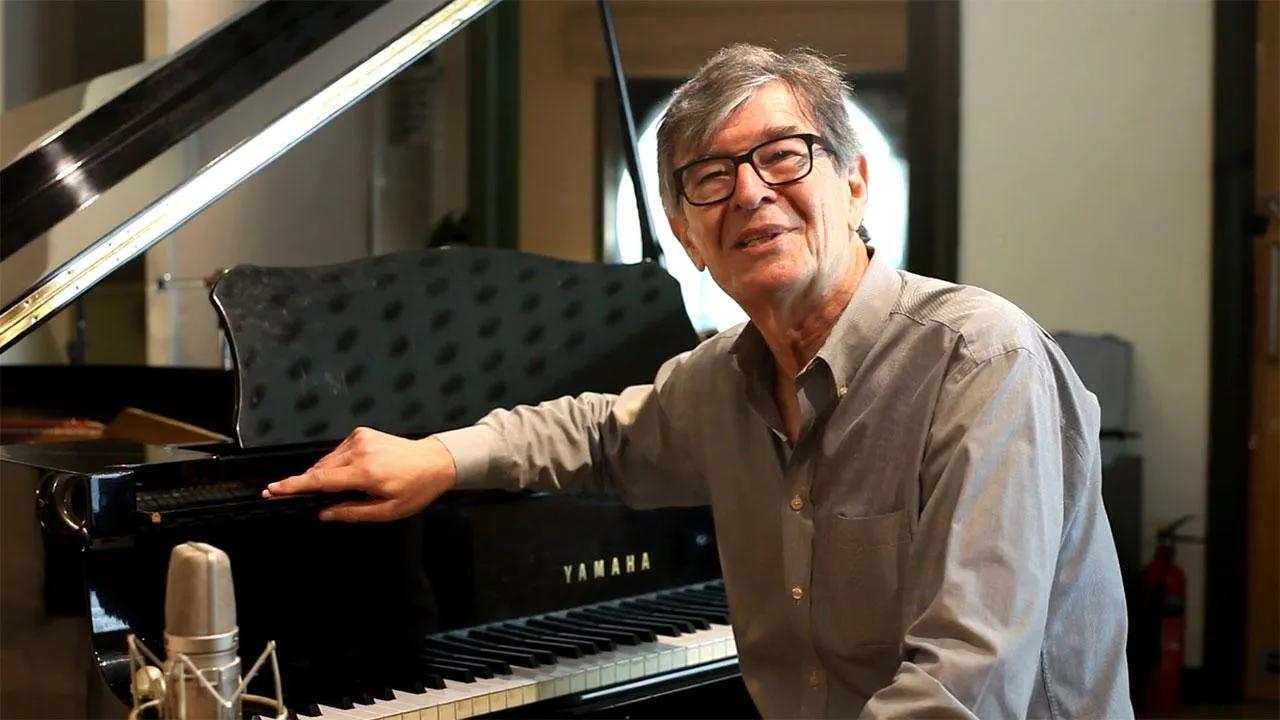
Darius Brubeck es un reconocido pianista de jazz y pedagogo. Ha publicado numerosos álbumes como líder, ha girado por todo el mundo con sus propias formaciones y ha colaborado con sus hermanos en Brubecks Play Brubeck. Darius ha sido profesor visitante Fulbright en Rumanía y Turquía. Puso en marcha el primer título en jazz ofrecido por una universidad africana, en la University of KwaZulu-Natal de Sudáfrica, donde enseñó hasta 2005. Darius colabora a menudo con Mike Rossi, saxofonista y profesor de música en la University of Cape Town. Entre los logros de Mike se cuentan numerosas grabaciones y apariciones en escenarios internacionales como líder, solista y acompañante junto a Tony Bennett, Dave Liebman, Winston Mankunku Ngozi, George Russell, Clark Terry y Alessio Menconi, entre otros. Con Darius como guía, irás directo a lo esencial. En Harmony 101 desmitifica la armonía del jazz para que puedas empezar a aplicarla rápidamente, y en Mastering Odd Times desglosa cómo tocar e improvisar con confianza en compases irregulares. read more