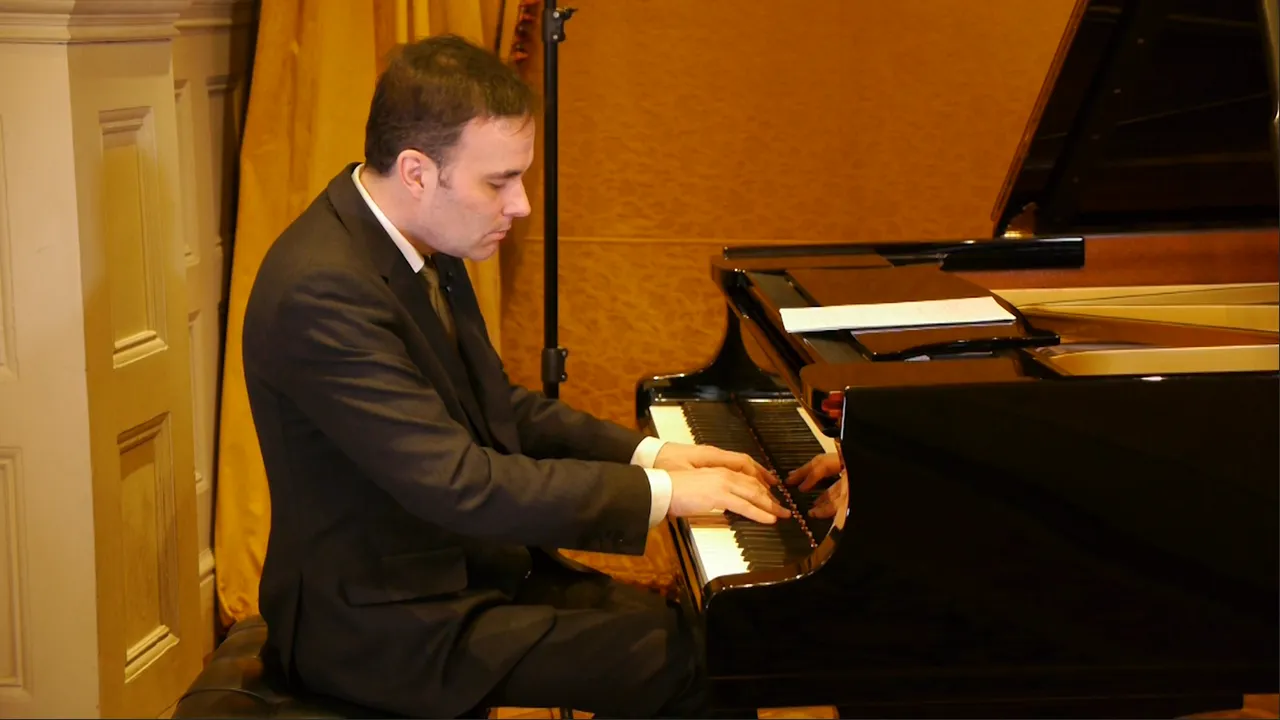
Dinámica
Lesson time: (5min 15sec)
Andrew explora la dinámica como recurso interpretativo —crescendo, diminuendo y acentos— y por qué solo cobra vida realmente en el contexto de la interpretación.
Course preview
This lesson is part of the course Aprende y disfruta del piano: un método fast track para principiantes y quienes retoman
Watch a preview of the full course below.
Lesson transcript:
Exploring Dynamics in Performance
With articulation comes dynamics, the louds and the softs.
Understanding Dynamics
The really crucial thing about dynamics, and why this technique is such a great way of exploring them as performance tools, is that often in instrumental learning, not just at the piano, we see dynamics as an instruction on a page.
- For those who already have great notation skills, that will already be there.
- If you don't have notation skills, there's no need to worry.
Sometimes dynamics are written in English, sometimes in Italian, German, or even as abbreviations. However, this lesson isn't focused on those written instructions. In fact, it's about the opposite.
The point is: a dynamic can only really exist within the context of performance. It has to have something that came before it and something that comes after it, and it has to be felt naturally from the inside out.
Exploring Different Ranges of Dynamics
Using the same techniques we've discussed, we can explore different ranges of dynamics.
Starting with a Crescendo
- Begin with a very soft dynamic.
- Create a long crescendo, building to a loud dynamic through the cluster technique we talked about earlier (the layers of notes).
By using a technique we've already developed physically, we can now explore different aspects of performance, in this case, dynamics.
Structure of a Crescendo
As I went from soft to loud, I thought about how I structured that crescendo. Along the way, I also considered using my wrist. This should feel natural, and hopefully, you will discover it organically as you use this process.
To achieve those louder sounds:
- Start very close to the keys with your repeated notes, using one hand or both, whichever suits you.
- Allow your wrists movement, like a door hinge, gradually giving your hands more weight into the keys to create louder sounds and explore this through improvisation.
Sudden Dynamics
Within dynamics, we can often have sudden changes. For example:
- A gradual crescendo, as demonstrated.
- A decrescendo, getting softer bit by bit.
- Sudden accents or other moments where a composer might ask for a quick change.
We can explore these sudden dynamics without any notation, purely through our own improvisation.
Improvisation with Accents
I'll demonstrate using the black keys and our note patterns and pulse. The idea is to create an improvisation that is primarily soft but includes certain accents at different times.
While improvising:
- Because you're creating those accents yourself, you'll naturally learn about them more deeply.
- When you later approach your repertoire and the composer asks for an accent, you'll know exactly how to make it work.
Experimenting with Sound Quality
Using note patterns and the accents you throw in, start simply. You can explore accents in various ways:
- Use just a couple of notes to experiment.
- If an accent isn't working, or if you're making an undesired splash, focus on one note (perhaps with your thumb) to achieve the quality you want.
Because this is a creative process, it's more interesting:
- Lift your finger as far above the key as you can.
- You're freed from worrying about reading music, allowing you to scale down or simplify your approach as desired before moving to more complicated territory.
For example, consider using your fifth finger while experimenting with the sound quality of accents. Engaging with this creatively makes it more organic and exciting than exploring accents through a technical exercise.