



Slap y pop en el bajo
Lesson time: (61min 5sec)
Continuando con la lección anterior, sigamos con el slap y el pop. Es un estilo que se remonta a los años 60 y a Larry Graham, que lo creó. Todavía hoy lo tocan bajistas como Stanley Clarke, Marcus Miller y Victor Wooten. Es muy divertido y puede aportar un sonido y una sensación realmente interesantes a tus líneas. Para preparar este capítulo, repasa los ejercicios de 4x4 de la Lección 1.
Course preview
This lesson is part of the course Teach Me Bass Guitar vol.3: Encuentra tu propio estilo
Watch a preview of the full course below.
Lesson transcript:
Music Lesson: Advanced Slap Bass Techniques
Introduction to Double Thumbing
Okay, now I'm going to treat that thumb like a guitar pick. In other words, I'm going to do a downstroke with my thumb and the upstroke with my thumb. This is called double thumbing. Players like Victor Wooten, Stanley Clarke, and Marcus Miller use this style.
It'll feel like I'm playing with a guitar pick, same movement:
- Down, up, down, up, down, up.
The only difference is I'm getting rid of the pick and just using my thumb for that.
Key Point: Remember, what's creating the sound of the slap is really the string hitting the fingerboard. I'm using those backstops.
Exercise: Four by Four with Double Thumbing
I'll do eighth notes. This is kind of advanced; you might want to save this and work on it a little bit later as you're getting more comfortable with slap.
Count: 1, 2, 3, 4.
Introduction to the Pop Technique
Now, let's move on to adding the second portion of this called the pop. The bass player credited with developing this style is Larry Graham. He developed it back in the late 60s and later popularized it with a band called Sly and the Family Stone, and also with Graham Central Station.
Background on Larry Graham
Essentially, Larry was playing in a trio with a piano player and a drummer. One day, the drummer didn't show, and he had to figure out a way to create a drum sound on bass. He thought hitting with a thumb is about like a bass drum. He needed a way to create a snare sound, which he achieved by hooking his finger right under a string and lifting it up.
Note:
- There's just a little corner of that, about an eighth of an inch under there.
- The sound is created when the string releases and comes back into contact with the board.
Example Sounds: Thumb pop, thumb pop.
Isolate Right-Hand Technique
A lot of times when I'm working on right hand technique with this style, I'll isolate the right hand only. I won't even allow a note to be played; I'll just lay my forefingers across to create a dead sound. This gives me percussion because essentially a lot of this style is thinking like a drummer.
Practicing on E and D Strings
I'm going to work with the thumb and the pop on the E and D strings: the bottom string in terms of pitch (the one closest to me) and the D (skipping a string). Then I'll do the same thing on the A and G strings.
Practice Count: 1, 2, 3, 4.
- Did you get that?
A and G Count: 1, 2, 3, 4.
Now, I'm going to add a second hit to the bottom note, which would be about like a bass drum:
- Boom, jack, boom, boom, jack.
I'll give you 60 beats per minute. Let's count it in: 1, 2, 3, 4.
Move to A and G Strings
That was on the E and D. Let's go to the A and G and do the same thing. Remember, I'm keeping the strings dead with my fingers, don't use just one finger, or you'll get a harmonic.
A and G Count: 1, 2, 3, 4.
Combining Techniques
Are you comfortable with those? A lot of times on these more advanced concepts, we'll do it at three tempos. Let's put it dead in the middle at about 80, and we'll just play the rhythms again.
Exercise: Boom, check, boom, boom, chuck rhythm.
Tempo Count: 1, 2, 3, 4.
Now, let's go to the A and G, remember to keep the strings dead.
A and G Count: 1, 2, 3, 4.
Quickening Tempo Practice
Good, let's do it a little bit quicker. This is quarter note equals 100. Remember, don't play this one until you can play 60 and 80 cleanly and in time.
Count: 1, 2, 3, 4.
Octave Patterns
Now, let's look at how we can use these octave jumps and patterns. I'm going to create a disco octave pattern, common in 70s disco music and funk, by moving octaves around.
Example Pattern:
- Play D for four beats.
- Drop down from D to B to C to C sharp.
Three Tempos Practice
We'll do this at three tempos: slow, medium, and fast.
Slow Count: 1, 2, 3, 4.
Medium Count: 1, 2, 3, 4.
Fast Count: 1, 2, 3, 4.
Left and Right Hand Coordination
Now, you may notice I've changed my left hand technique a bit. When dealing with slap, you have to stop those extra strings from ringing. Arching fingers can make everything blurry, so flatten them out to mute the extra strings.
Practicing with Both Hands
Let's go ahead and look at a few options for your right hand. We'll start slow, medium, and then fast.
Exercise: Two thumb hits and a pop.
Slow Count: 1, 2, 3, 4.
Medium Count: 1, 2, 3, 4.
Fast Count: 1, 2, 3, 4.
Triplets and Advanced Techniques
Now remember all those triplets we've been playing finger style? We'll play them with our slap as well: two thumb hits and a pop. The difference is turning those sixteenths and eighths into even triplets.
Count: One, Triplet, Triplet.
Tempo Practice:
Slow Count: 1, 2, Triplet, Triplet.
Medium Count: 1, 2, 3, 4.
Fast Count: 1, 2, Triplet, Triplet.
Exploring Hammer-Ons and Pull-Offs
After practicing hammer-ons and pull-offs, we'll apply all of these techniques to a more fluid exercise.
Hammer-On Example:
- Hit the A on the fifth fret and hammer the second note.
- We'll first do this on the E string.
Count: 1, 2, 3, 4.
Practice on Other Strings
Let's move to the A string: Count: 1, 2, 3, 4.
Followed by the D string: Count: 1, 2, 3, 4.
Now on the G string: Count: 1, 2, 3, 4.
Working Up to Speed
We will now practice those hammer-ons at medium and fast tempos.
Medium Tempo Count: 1, 2, 3, 4.
Fast Tempo Count: 1, 2, 3, 4.
Final Thoughts
Now that we've discussed a lot of techniques, remember to stay relaxed and practice with the loops and use them to your advantage.
In the next lesson, we'll explore rapid-fire 16th notes in a finger style, influenced by players like Jacob Astorius and Rocco Prestia from Tower of Power.
Stay tuned!
About the instructor
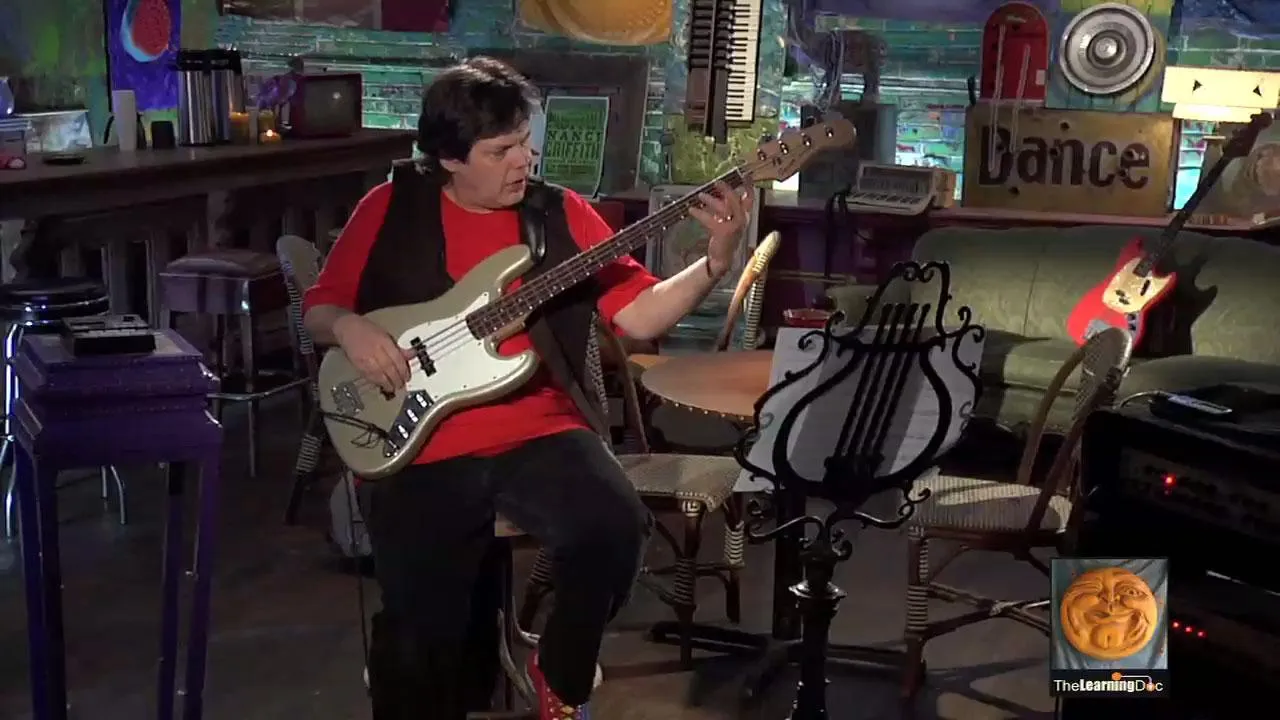
La carrera de Roy Vogt abarca una extraordinaria variedad de escenarios, desde el Headbanger's Ball de MTV, el Montreux Jazz Festival y el Montreal Jazz Festival hasta el London Palladium, el Grand Ole Opry y el Kremlin. Del punk al funk, de la sencillez del country y el blues a la complejidad del HyperJazz y el World Beat, lo ha tocado todo. Roy fue la primera persona en obtener un máster en Interpretación de Bajo Eléctrico, en la prestigiosa escuela de música de la University of Miami, y lleva más de cuarenta años dedicado al arte del bajo. Ha sido mentor de decenas de profesionales de éxito, incluido el legendario Willie Weeks. Eléctrico, sin trastes, contrabajo - lo que quieras: si toca notas graves y tiene cuerdas, Roy es un maestro tocándolo, y enseñando a otros a hacer lo mismo. A lo largo de su carrera de cuatro décadas, Roy ha grabado o actuado con una asombrosa lista de estrellas de primer nivel, entre ellas Larry Coryell, Victor Wooten, Dave Weckl, Tom Scott y la LA Express, Chester Thompson, Miroslav Vitous, Glen Campbell, BJ Thomas, Chet Atkins, Engelbert Humperdinck, Dickey Betts, Tony Joe White, Charlie Daniels, Jerry Reed y muchísimos más. Roy lleva treinta años enseñando a nivel universitario. Desde 1983 ocupa la cátedra de Bajo en la prestigiosa Belmont University (Nashville, TN), una de las poquísimas escuelas que ofrece un programa de grado en música comercial diseñado para convertir a los estudiantes en músicos profesionales que trabajen en lo más alto de la industria. Los alumnos de Roy han girado y grabado con estrellas notables como Trisha Yearwood, Faith Hill, Little Texas, Michael W. Smith, Lady Antebellum, Chick Corea, Sir Tom Jones, Blood Sweat and Tears, Yanni e incontables iconos más de la música. Su serie Teach Me Bass Guitar te acerca ese mismo enfoque de nivel universitario, llevándote desde un arranque rápido para principiantes absolutos (vol. 1), pasando por los fundamentos del ritmo (vol. 2), la búsqueda de tu propio estilo (vol. 3) y una musicalidad seria (vol. 4), hasta un kit de herramientas de intérprete profesional (vol. 5), para que desarrolles habilidades reales paso a paso. read more