



Análisis, explicación y demostración con Håkan Hardenberger
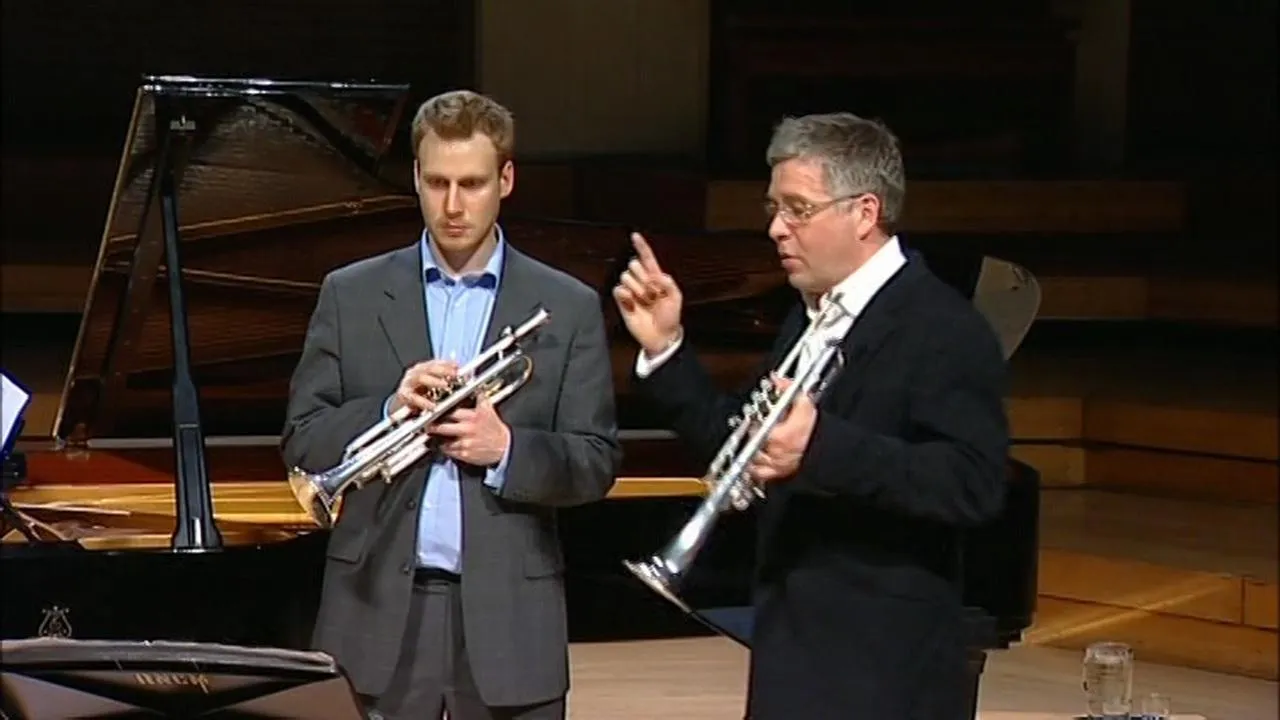
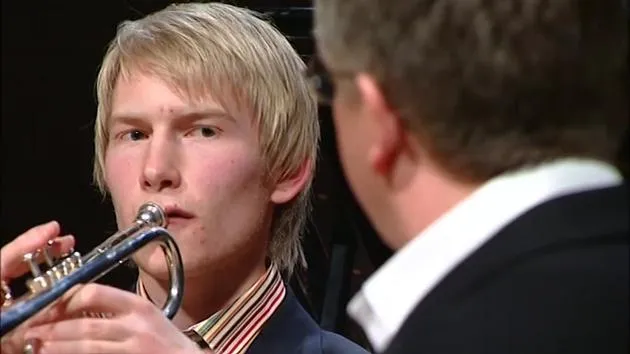
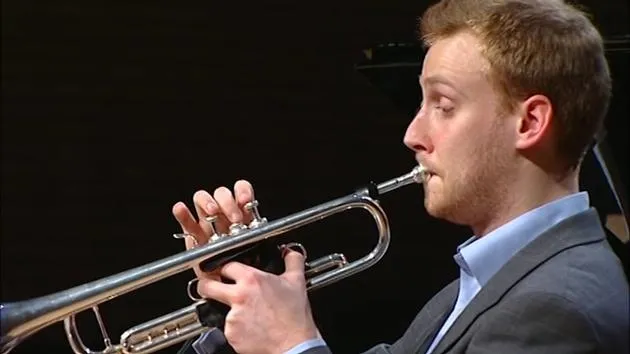
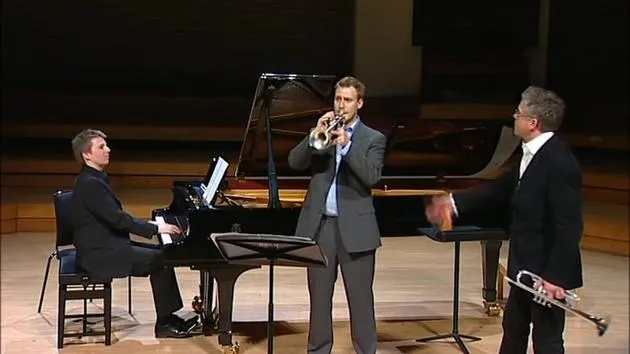
Håkan Hardenberger trabaja la 'Légende' de Enesco con un alumno, sopesando las ventajas e inconvenientes de tocarla con la trompeta en si bemol frente a la de do y cómo eso afecta a la afinación y la comodidad.
Qué incluye el curso
6 lecciones (2h 13m) · 1 gratis
Transcripción de la lección
Music Lesson Formatting
Introduction
I think it would be amongst my worst nightmares to play this piece on the B flat.
Why the B Flat?
Why do you choose to do that? I learnt it on the B flat trumpet, and I've been trying to learn to play it on the C. I find it very strange just being so close to it, not just in terms of intonation. In some places you weren't.
Comfort and Intonation
I'm sorry. I mean, it makes it very tricky in the first place, but it makes it really uncomfortable. I would also say intonation-wise, you know, to have open C's instead of the B flat, which we all know is a much more complicated thing to do.
I would think twice about it for the future. I mean, it's not for me to make your choice, but really it's unnecessary difficulty because you do play. I've heard you play the C trumpet very well, so that's not the problem.
Breathing Choices
Well, now we work with this. Sometimes I find your choice of where you take the breath upsets your music making, particularly in the first phrase and then the last one. I think that was a bit of nerves taking over the music.
Both of them?
Yeah, that does happen. And that is the first thing to make your priority. When you feel nerves, it is really important to write down where you're going to breathe or think a lot about and really make that your number one priority.
Personal Experience
I'll never forget when I played the last Night of the Proms, and the producer came in and said, "So and so many hundred million are watching." It was ridiculous! I had to go in and play the Haydn. I remember all I thought about was breathe and take time. Breathing.
I remember I thought the whole tempo was very slow, but then when I heard it, it wasn't. Our perception of reality sometimes is distorted.
Breath Choices Impact
So for the first phrase, I hear very often your choice of breath is off. You were doing,
And to me that breaks the vital point of tension.
Also, it makes this, which he marks as "do,", it makes too much of a major point of that. So instead, if you do:
(Experiment)
I think you could experiment with a wider range of dynamics. If we don't take the risks, what's the point? Cameras are not cameras. Just three beats before whatever, you'll recognize it's a little bit slower even in the first note.
Coloring the Music
There's a whole world. And because you're on your B flat and you have this D that doesn't want to do it, you're not really able to color it. If you follow the colors, that comes out of the piano.
You know there's something in that note that opens up, leading to this minor chord. Just play the first note.
Artificial?
Hear it. How would you describe it? I'm not going to describe it for you. What is your... how do you imagine it?
Imagining the Sound
It's like a sudden gust of wind comes on that bar line.
And how is that?
How is that wind? Is it a cold, freezing Swedish wind or a Manchester wind?
It's warm.
Yeah, yeah. So there's some movement on that bar. You see, I think you need to find a lot more images like that so that first you have an idea that is not necessarily a trumpet idea.
Practical Application
So this is one of the most practical pieces we have. If you have that idea, you're going to practice it. Practice it, practice it until you can do it like that. But before you have the idea, it's not going to happen.
Playing Warm
For every little corner in the piece. So now play it like that, warm. You know why? Because you do it too early. You do a little crescendo before, so you've taken away. You're doing this.
So we have a second one, and then it's gone, you know, gone with the wind. Space in the places where there is space.
Breath as Part of Music
Take your breaths; make them part of the music. You know, we are playing a wind instrument. We need to take air. There's nothing worse than a string player who doesn't breathe or a pianist who doesn't breathe.
This one does.
You're setting it up beautifully then, and then you're gonna risk it and take it all the way back so that you have, then you have these two bars to really grow all the way.
Articulation
Go, bimbo, speak.
No, no, no, no, no, no, no. You. You're doing a slur here and one other slur that's not there. You slurred from that note to that one, and then you slurred those two.
Did I?
Yes, you did.
Speak the Language
Okay, you know, speak. It's a language. He's written it for you. Say it, you know, from the sun. And not too long. Don't go into the next chord, dark.
I'm sure you used to play a lot in orchestra and ensembles, and you respect certain things. But here, for once, you're in charge.
Close to a Song
It's as close as to a song as you will ever get. You're telling a story, and you can, without a problem, take time on that one to create a tension that you release with this low.
It sounds like it's played on the...
You know, if you could play just the three beats before. You know, by using the silence, I'm creating the atmosphere that I want.
And you are too concerned about getting it right.
Yeah, the same place.
Very good, very good. So much easier.
Tradition in Music
Also, tradition this...
Remember, there are a few things that are tradition in French music. I mean, this has to be considered French music, even if he was Romanian.
You would roll a rhythm like that, the dotted eighth note in there. Also you create this question mark. What's happening?
**But very good, your lads. So do it again. Again. I hear, **
I hear the good student. He's a very well-behaved student. It's very subdivided, yes.
You know, you can do it a million different ways. It's not only one legend; it's a thousand legends in two little sheets of music.
Know Your Text
You have to believe, as long as you know what you do. If you first know the strict text, you can gradually free yourself from that. And you will be surprised what you can do.
Try again without me necessarily showing you what you should do. Try another version of that and really, really sing it.
Gorgeous Phrase
Really try to tell a story with that phrase. It's a gorgeous phrase of music. Enjoy it! Because of the B flat, we get all these flat D's, and it's not so nice.
Also, there are some pure musical rules that you are ignoring. It's a balancing act, just to enjoy.
Point of Tension
But then there are little hints in the music. It feels like this should move forward toward...
But you have one major thing that you ignore that comes already very soon.
Where is the first suspension?
Here.
Yes. And you honestly, you phrase it like this, you go like it was the first beat of a bar. Use the points because if you find those points, there is tension.
Managing Tension
And what do I do with this tension?
And then here, maybe I can move again.
If we think of an image like you did with the warm wind in the beginning, what happens toward the end of the phrase? We have this expansion to the forte and then we see diminuendo, and you've actually...
No, it goes down to mezzo piano.
Yeah, but what happens... feeling?
Imaginary World
What's your feeling?
I sort of use the same image twice. I use it for this, for the E coming earlier. And here it's almost like the sun sort of breaking through clouds or something.
Glimmer.
Yes.
Ending Clarity
So then at the end of the race, what happens for you in your imaginary world?
I hadn't really thought about it actually.
So you just think of the sun coming through, and then it's all happy. It's just fading away again.
Yeah.
Because that's where you're not clear with what you want to do with the end.
Yeah.
I think I'm just listening to the sound and nothing else, not really thinking about it. I mean, to me, it gets fragile.
Very un-trumpet-like ending.
It's almost... it's a little bit folklore also.
Finding Clarity
Yeah. You know, find all these things. What is it, what is there in the text, and you'll be much clearer with yourself. And then that will help you technically.
Playing the Phrase
One more time: the phrase.
The same. Wolfen the.
Yep. Sing, sing, sing.
Don't. Yeah, go on.
Technical Challenges
That one is difficult. That's technically...
You know, if you really want to do that, you come from it's a super example of...
And only on four notes.
Okay, so if you play just...
Oh, no, come on, you know the piece.
No, no, no, no, no. My house is burning down!
It's not slurred.
Soft Double Tonguing
That was a very, very soft double, a very, very, very soft double.
Yeah, yeah, yeah.
I also don't believe in Santa Claus.
This is Enesco, the violinist.
You know, try to sound less like a trumpet player.
Okay.
Sounds like a bit of a fanfare. That.
And it's not really...
No, you know, it's all this. This is all piano with crescendos. But, you know, it's your...
Listen to the Accompaniment
I mean, just listen to the compliment once. This is the world you're in.
Gracias.
And I know...
I don't know what you're doing here articulation-wise. Three double tongues, effectively.
Help for Articulation
Yeah. Do the last one single. That usually helps. But the most important...
Can you do just that one?
No funny skill. You're not certain about the turn at the top of it, it seems.
I don't know how you've practiced it, but...
And it's going...
Yes. You found your trampoline. Boom!
You collected the energy in the scale. That's how that whole thing should be practiced. That's the next one.
Self-Preparation
Yeah, yourself.
Yeah. It's not that fast, you know...
From this. And again, it's that rolled feeling.
Do just that.
Energy for the Performance
Your trampoline is in the wrong place. And then your next trampoline is the F, not your top E. G.
Yeah. More trampoline. Put it together. Prepare more.
Yes. Okay, go on. What are you trying to do there?
I don't understand anything.
I'm using some very, very, very soft tonguing.
It doesn't really come across at all, does it?
No. And it should be single anyway because it's not first.
And it should be again, this...
Beam, beam. Beep, beep, beep, beep, beep, beep.
Dignified Approach
Yeah, but not big band. More dignified, you know.
You did really well in a dark color.
The notes, you're too lazy with the notes.
Again, where is the suspension in that phrase?
Awareness of Notes
We'll just throw the first three notes.
Don't pass that like you don't see it, you know, it's not just any interval. They have a reason.
Timing
Okay, now, before you play the next one, another traditional thing,
that G is the same as in the beginning. So it's not two notes; it's one.
Okay. And come and look here for your timing.
Beam, beam, beam, pom, jump.
Energy Placement for C
That's where you take your energy for the C.
So no repeated G.
Well, you didn't hear your colleague before.
But the sign of a really good singer is not how they take the high note; it's the next note.
Maintain Energy
Now keep it. You have the muscle; it's no problem. But you have to fight a little bit there.
And again, you have it in the piano because you...
He has a...
Listening
So that's, you know, if it hurts a little bit here, don't think about that. Listen to him.
And how...
Yeah, that's the energy. And now stay hot now while he's playing.
Similar Material
Because this is similar material but completely different, that's why you mentally have to be in what he's playing.
Because if you're not, you will play it like you were playing something else.
Stay Focused
But because he's been doing what he's doing...
Sorry, stay with it.
Always when you have a thing like that, the first note...
Slamming Down the Fingers
Now think of, like a good violinist slams down the fingers on the first position of a thing like that. You're not doing that, you know. But it's to help you from not panicking, you know, the first note a bit longer.
Better Execution
Try just that.
Better. And the next one. Same. Better.
I mean, I'm also pushing your tempo out of the comfortable.
And it's quite on purpose.
Sorry, let's go from fire, fire.
You did the cardinal mistake here last time.
Attention and Character
You know, he was going, bam, bam, bam, bam, and you were always going, "ooh, hold attention for you," you know, not for me.
So that you will play the next bit the way it should be or the way you want it, but you're allowing yourself to fall out of character.
Good Example
I just thought it was a good place to get the meat because it's noisy.
You have plenty of time later, and you have to place it somewhere where it's easy to get.
You know, they say Daniel Day Lewis, fantastic acting, you know, because he never goes out of character.
You go out of character too often.
Before Movement
Maybe go from before that movement.
Now what does that make on the B flat? Horrible.
It's horrible on the B flat. But I mean, whatever you choose to play it on, we should be able to wake you up at 3 o'clock in the morning, and you should go, "blah, blah, blah."
Practice Requirements
That's how much you have to practice it, you know, and the way to practice it is, first let's do it.
Let's do a little...
I'll show you how to do it.
Practice Routine
Have we done this before?
Probably just that, it's a little bit of practice. If you do that over and over and over again, it just...
You just have to.
And it has to work. If you have to think about it, it's too late.
Ending Opportunities
Place like that.
Okay, ending now take the opportunity there with those triplets.
That they are very different because he has to fit in circle Pat.
Very, very even.
Triplets. Very rocking like, again.
Emotions in Music
What are your thoughts?
Don't split. Exactly.
You know, it's like when I play golf, don't hit in the woods. And that's what you do; you hit it in the woods.
You have to think how you want it.
What's the emotion here?
Reflection on Emotion
I never really thought about emotion.
I've sort of...
Maybe you should.
It's just sort of clouded and sort of distant.
That's too simple. I'm not going to let you go with that.
It's like a memory almost.
Memory and Sadness
We're getting there.
Memory of what?
Of what's happened and what happened.
Well, you've got this journey.
Come on, don't be so English about it.
I don't know. I never thought about that.
Don't you feel a little bit sad when you hear that?
Yeah, it's definitely sad.
Okay. Yes.
So a memory that does make you sad.
Resignation in Expression
And there's one word I think that would be very good: resignation. A little bit.
And again, we have this suspension to talk in technical terms, which happens to be the same that we've had three times in the piece.
Difficulty of Performance
If I think one second about how difficult that is to do, it's impossible to do.
You have to allow yourself to think something else.
It's not easy to do on command. This I realize.
Listen to him.
Focus on Companionship
Listen to him. Only to him.
Listen to him and stop with him.
I must stop. It's not full six beats or...
But that's so Maria Callas, you know, in the middle of her dying scene, she...
Take Risks with Timing
She tells the conductor, "Now, that's six pizza." He was helping.
Well, you can.
I mean, if you decide that's how you're going to do it, but that is dangerous.
That's putting yourself under unnecessary stress.
He's a good accompanist. He will hear when you're dying.
Yes.
Take that extra step. You can.
Good. Thank you.
6 lecciones
2h 13m de lecciones en vídeo estructuradas
Funciones de vídeo avanzadas
Ralentiza, repite un pasaje, sigue la partitura
Móvil, tablet y ordenador
Practica donde quieras
Garantía de satisfacción 100%
30 días de garantía de devolución
Conoce a tu gurú
Conoce a tu gurú
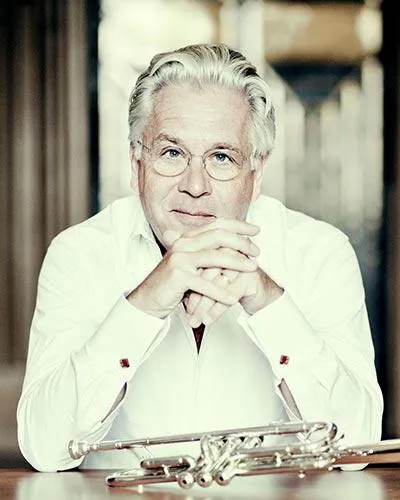
Håkan Hardenberger nació en Malmö, Suecia. Empezó a estudiar la trompeta a los ocho años con Bo Nilsson en Malmö y continuó sus estudios tanto en el Conservatorio de París, con Pierre Thibaud, como en Los Ángeles con Thomas Stevens.
Está considerado el mayor solista de trompeta de la actualidad. Junto a las interpretaciones del repertorio clásico, es el pionero más destacado de nuevas obras para trompeta. Muchas de ellas, escritas para Hardenberger y defendidas por él, figuran hoy como hitos clave del repertorio, entre ellas obras de Sir Harrison Birtwistle, HK Gruber, Hans Werner Henze, Rolf Martinsson, Olga Neuwirth, Arvo Pärt y Mark-Anthony Turnage.
Entre las obras de nuevo encargo de la temporada 2007/08 figuraron un concierto de Luca Francesconi con la Accademia Nazionale di Santa Cecilia dirigida por Antonio Pappano (coencargado con la VARA/Netherlands Radio Philharmonic y la Gothenburg Symphony), un concierto de Kurt Schwertsik estrenado y encargado por la Tonkünstler Orchestra y Kristjan Järvi en el Musikverein de Viena, y una nueva obra de HK Gruber para trompeta, banjo y orquesta de cámara (coencargada por la Amsterdam Sinfonietta y la Swedish Chamber Orchestra).
Håkan Hardenberger actúa con las principales orquestas del mundo, entre ellas la Los Angeles Philharmonic, la Chicago Symphony, la Vienna Philharmonic, la London Philharmonic, la London Symphony Orchestra, el Orchester des Bayerischen Rundfunks, el Orchestre National de France y la NHK Symphony Orchestra. Entre los directores con los que colabora se cuentan Pierre Boulez, Thomas Dausgaard, Alan Gilbert, Daniel Harding, Neeme Järvi, Ingo Metzmacher, Esa-Pekka Salonen, John Storgårds y David Zinman.
En el recital, Hardenberger mantiene varias asociaciones clave: con los pianistas Aleksandar Madžar y Roland Pöntinen; una singular colaboración con el poeta sueco Jacques Werup y el pianista de jazz Jan Lundgren; y con el percusionista Colin Currie. A Hardenberger y a Currie se les puede escuchar en un CD publicado en 2007, y ha actuado junto a Currie por primera vez en Estados Unidos (San Francisco), donde también regresa para actuar con la Cincinnati Symphony y Paavo Järvi.
De la extensa discografía de Hardenberger en los sellos Philips, EMI y BIS Records, en 2006 se publicaron dos discos más: obras para solo para BIS, y un disco de obras de Turnage, Gruber y Eötvös con la Gothenburg Symphony Orchestra y Peter Eötvös para Deutsche Grammophon, que ha recibido merecidamente grandes elogios.
En su clase magistral de trompeta, Hardenberger comparte el arte que hay detrás de esa reputación, trabajando sobre Bohuslav Martinů, Hans Werner Henze y Georges Enescu para mostrarte cómo moldea el sonido, el fraseo, la respiración y la interpretación, de modo que puedas aportar el mismo pensamiento musical a tu propia forma de tocar.







